Showing posts with label Folk Islam. Show all posts

Monday, October 8, 2018

Introducing our New Book | Margins of Islam: Ministry in Diverse Muslim Contexts

On behalf of Gene Daniels, I’m excited to introduce our new book Margins of Islam: Ministry in Diverse Muslim Contexts. Here is the book description:

What do you do when “Islam” does not adequately describe the Muslims you know? Margins of Islam brings together a stellar collection of experienced missionary scholar-practitioners who explain their own approaches to a diversity of Muslims across the world. Each chapter grapples with a context that is significantly different from the way Islam is traditionally presented in mission texts. These crucial differences may be theological, socio-political, ethnic, or a specific variation of Islam in a context—but they all shape the way we do mission. This book will help you discover Islam as a lived experience in various settings and equip you to engage Muslims in any context, including your own.

One of the most succinct and descriptive endorsements comes from Timothy Tennent, President of Asbury Theological Seminary:

In a marvelous tour de force, Margins of Islam exposes the widely held, but false assumption that the house of Islam is a monolithic religious entity which either resists or responds to missiological strategies. Collectively, these authors offer up case studies and rich and textured “on the field” experience which reflects the true variegated diversity of Islam. This book is contextual missiology at its finest.

The project was the brainchild of Gene Daniels. I vividly remember sitting next to him on a bus discussing it with him on our way to a conference center from a hotel a couple years ago. His big idea was to gather missionary scholar-practitioners serving in various Muslim settings to explain how they take context seriously and how they deal with the phenomenon that we call “Islam.” I was genuinely surprised and honored when he asked me to be his coeditor!

We immediately started networking and looking for contributors. Gene already had several people in mind. My job was to help edit each chapter and then to produce a concluding chapter that explained the themes of the book. It was a rich learning experience. As I researched for the book, I found myself often disagreeing and pushing back on evangelical treatments of Islam.

My criticism began to take shape and eventually became an introductory chapter—most evangelical missiological treatments of Islam are reductionistic with what I call a “top-down” approach, meaning that Islam (and subsequently, Muslims) can be adequately understood by addressing the Qur’an, hadith, and history of Islam. From this textual understanding, it is assumed that Muslims believe what Islam teaches, and thus there is a “Muslim worldview” and strategies on how to engage it. In this framework, Muslims are often simplified as cultural and spiritual clones of one another.

Many workers have read books based on this top-down approach, but when they begin to engage Muslims in their context, they quickly discover that the Muslims they are working with believe very different things from what “Islam” teaches. While the top-down approach is incredibly valuable, it can also distort our understanding of Muslims if it is our only lens. We also need a “bottom-up” approach that explains the historical evolution of the Islamic phenomenon and the sociological perspectives that accounts for the diversity of Islam today. Ergo my chapter two: How Muslims Shape and Use Islam: Towards a Missiological Understanding.

As I was editing the chapters (which do a wonderful job of combining the top-down and bottom-up perspectives) and after I wrote the introductory chapter, I started to reflect on how recent developments in postcolonial theory, anthropology, and religious studies have influenced mission to Muslims. Gene and I later decided that I would write a theory piece again for a concluding chapter which I titled Adaptive Missiological Engagement in Islamic Contexts. Gene then did a masterful job tying the themes of the book together in the final chapter, “Conclusion: Learning from the Margins.”

Here are the contents of the book:

Foreword, David Garrison

Introduction, Gene Daniels

PART 1: CONCEPTUALIZING ISLAM

1 Who Represents Islam?, Evelyne A. Reisacher

2 How Muslims Shape and Use Islam: Towards a Missiological Understanding, Warrick Farah

PART 2: ENGAGING MUSLIMS

3 The Donkey and the Straw: Reaching South Asian Sufis with the Gospel, Kevin Higgins

4 Secular Muslims in Bosnia and Herzegovina, Ted Esler

5 Egalité, Fraternité, and Cous-cous: Ministry to Muslims in the Context of a Resurgent Islam and French Laïcité, Rick Kronk

6 Biblical Approaches to the Nurcu Gülen Movement in Turkey, Yakup Korkmaz

7 Magical Mystical Muslims: Sufi-oriented Islam and African Traditional Religion, Robin Dale Hadaway

8 Ordinary Muslims in Pakistan and the Gospel, Warren Larson

9 Ministry to Hui Muslims in China: An Approach to Dual-layered Cultural Settings, Enoch Jinsik Kim

10 Context as Flypaper: The Island of Java in Indonesia, Michael A. Kilgore

11 Liberating Liminality: Mission in the North African Berber Context, Patrick Brittenden

12 Russified Muslims of the Former Soviet Union, Gene Daniels

13 The Queen’s Muslims? Muslim Identities in the UK, Phil Rawlings

14 In the Shadow of a Buddhist Temple: Muslims in Thailand, Alan Johnson

15 Uyghurs of the Tarim Basin: Muslims in Northwestern China, CG Gordon

16 Muslim Youth in a Glocal World, Arthur Brown

PART 3: REFRAMING MISSIOLOGY

17 Adaptive Missiological Engagement with Islamic Contexts, Warrick Farah

18 Conclusion: Learning from the Margins, Gene Daniels

As our endorsements were rolling in, one from JD Payne stood out in particular that helped us identity the biggest potential takeaway from this book:

Margins of Islam takes readers on a global journey revealing the multiple expressions of the Islamic faith… We no longer have any excuse to train others to reach all Muslims in the same way.

I want to thank Gene for this incredible opportunity, and also for our excellent group of contributors who have taught me so much about the variety of Muslims and the varieties of biblical mission in the world today. Go ahead and buy the book on Amazon, and please help us spread the word—you can easily share this from the button on the bottom of the post on the blog. Thank you for considering! We feel this volume represents a significant encouragement for the mission of the church.

SM Post 1

Saturday, July 12, 2014

Two Triangles: the Gospel for Animists

Christopher Johnson modified his original presentation called Victorious Jesus and put it on a website called, “Two Triangles: the Gospel for Animists.”  Here is his introduction:

I shared the gospel countless times with Muslims, and for some reason they didn't seem interested. After creating the two triangles, I realized I had stumbled onto something that could change the way we share the gospel with Muslims and with anyone who believes in the devil.

Watch him explain his approach here:

Monday, March 24, 2014

“Victorious Jesus” Presentation, by Christopher Johnson

The below is a gospel presentation that attempts to paint a big picture of the work of Jesus, primarily for a Muslim audience.  It was developed by a friend of mine, Christopher Johnson.  Feel free to discuss its strengths and weaknesses in the comments below.


Victorious Jesus, by Christopher Johnson

Why I Came up With This

My friend and I went to coffee with a couple Muslim-background college students in order to share the gospel. We successfully steered the conversation to spiritual things and were able to share a little of our testimony and then went on to share the good news of Jesus Christ’s forgiveness for our sins and the gift of eternal life. When we got to the end, we looked at our friends hoping for some kind of response and one of the guys said with deep interest, “So are cars really cheaper in America?” This was our first indication that they didn’t care at all about what we’d said to them.

I shared the gift of forgiveness of sins and eternal life with a lot of people, but in my experience, people were uninterested in what I had to say. They didn’t understand why what I was saying was relevant to their lives, and they had their own theoretical theological systems that had other answers for the problems of our sins and the afterlife.

My friend and I shared about how nobody in our city seemed interested in the gospel with a man who was visiting us to do some consulting on church planting. He said, “Well, maybe you’re sharing the wrong gospel.” This was a man who is firmly committed to the Word of God and to Jesus, so I knew he wasn’t saying that we should make up something unbiblical just to give people what they want to hear, but in his statement I understood that we were not describing Jesus in a way that people would feel compelled to come into relationship with Him.

Jesus said the kingdom is like a merchant looking for pearls (Matt 13:45). When the man found a pearl of value, he sold everything he had and bought it. If we don’t show people the value of Jesus in a way they can understand, they will never be willing to give up all that people have to give up in order to follow Him. After reflecting on this truth, I realized that I would need to go on a journey to understand how to communicate Jesus to people so that they could know his ultimate and supreme value.

A Doorway into Greater Revelation

As I reflected on what the gospel is and how people come to know Jesus, I realized that nobody gets the fullness of the Gospel the first time.

For example, we know that it is important at some point to understand the image of Christ as the bridegroom and the church as his bride. But rarely do we share the importance of this image with people who do not yet know Jesus. It is something that is later revealed as we grow deeper in our relationship with God.

I see Gospel-sharing as a room with Jesus standing in the center. There are many doors to enter the room, and there is an old-fashioned knocker in the shape of a cross on every door. But every door has different designs and different colors and is more or less interesting to people from different cultures and backgrounds.

Thus, the cross is the center of all conversion. You cannot get to Jesus without understanding what he did for you on the cross, repenting of your sins, and believing and trusting in Him. But Jesus accomplished many things at the cross. He died to bring us into deeper relationship with God, to forgive us for our sins, to set us free from addictions, to bring us emotional and physical healing, to set us free from the devil, to deliver us from an eternity in hell, to restore our relationships with our neighbors, to restore the glory of God on earth, to identify with and show his victory over injustice, and to demonstrate love to a world that had never experienced such deep, sacrificial love.

Every presenter of the Gospel chooses a few of these benefits of the cross and emphasizes them as the Gospel is presented. Ultimately, we want people to understand all these things. But when people first hear about Jesus, they always hear only a portion of all that he did.

So I began to explore the heartfelt needs of people who are in more non-Western cultures. I started asking questions like, “What drives them? What is important to them? What are they seeking?” Because I believe Jesus is the answer to every problem, I began to use answers to those questions to shape the way I would help them understand Jesus.

Today, Not Tomorrow

There is a saying in the culture where I lived that Muslims pays for their sins after death, and a person of that local people group pays for her sins during this life. This statement sets forth a fundamental conflict that most of Islam has with animistic types of cultures: Islam offers a solution for your afterlife but has little power to affect the life you are living today.

Most people in animistic cultures are just surviving. They are trying to pull enough money together to pay for their food and necessities, and they are consumed with the basic problems of life such as the health of their children and the ability to keep their families safe from evil spirits. These are not future problems. They are today problems. And typical people aren’t thinking about eternal consequences. They’re thinking about current issues in their lives.

When a Westerner comes in and tries to communicate the Gospel, we typically emphasize the future. “Do you know what would happen to you if you died today?” Then we spend the next 30 minutes trying to convince them why this question is important and why they have a problem.

The problem of what happens to us after we die is a legitimate problem and it must be presented as a part of what Jesus has to offer us. But if it’s the only thing we present to people, we miss out on all the other kingdom benefits that Jesus wants to present to people, and we also present a gospel that doesn’t meet the real-life needs of people that we encounter.

As I began to think about this problem about the future nature of most methods of gospel-sharing, I realized that I wanted to develop a model that would emphasize the presence of the Kingdom while continuing to demonstrate how important it is that Jesus offers us a free invitation into eternity with the Father.

Christ the Victor—A Model for Sharing the Gospel

Many people have heard of Christ the Victor as a model for gospel sharing. It’s the idea that Jesus is victorious over sin, the devil, and death, and that he paved the way for us to be freed from sin, the devil, and death through his death and resurrection. I had heard that this form of the Gospel was effective with people from animistic backgrounds.

But why use a model in the first place? I decided to create a model for sharing the Gospel based on Christ the Victor for several reasons. Initially, I created it for myself. I wanted an easy way to share with people that I could use over and over again so that I wouldn’t leave out something important. I made it visual because I had seen the power of tools such as the bridge diagram and the pictures that are found in four spiritual law tracts.

I also wanted a model to help train my disciples. As a foreign worker whose longevity in the field is subject to many unforeseen variables, I want to be certain that locals are effectively able to share the Gospel. If I can’t train others to evangelize, then my work is only as effective as how much time I have. If I can train others to share the Gospel with their friends and family simply and in a way that is relevant to them, then I can move away from simple addition and move into the realms of multiplication and movements.

A Note About Power

If we’re going to proclaim that Jesus has power over sin, the devil, and death, then we must walk in that power ourselves. Theoretically, every believer has this kind of power. But the reality is that some people do not understand its importance in Gospel-sharing and so rarely ask God to do things that are outside of what they could accomplish without His help. The purpose of this manual isn’t to talk about power and authority in the Spirit, but I would encourage you to pick up this method of sharing the Gospel with a deep hunger to see God demonstrate His power through you.

God gave me this model for sharing the Gospel when I was thirsty and hungry for breakthrough, and I have shared it often in the context of praying for others. Paul said, “And my message and my preaching were not in persuasive words of wisdom, but in demonstration of the Spirit and of power, so that your faith would not rest on the wisdom of men, but on the power of God” (1 Cor 2:4-5 NASB). May the same be true of our ministry as we strive to clearly communicate the word of God accompanied by confirming signs and wonders.

One of the main reasons I came up with this method is that I wanted a way to explain to people what Jesus could do for them so that they weren’t just interested in the power that God would minister through me. Oftentimes, before I am about to pray for somebody I will say, “I would love to pray for you for healing. But before I do, would you mind if I showed you something? I want to share something with you that is much more important than anything that I could ever pray for you. I would like to show you why I think the world is so messed up and how these problems came about in the first place.”

Most people say yes, as they are at least willing to sit through what I have to say so that they can receive the prayer. Everybody wants prayer, but not everybody initially wants to hear the gospel. But many people, after hearing the gospel, want all of what Jesus has to offer and not just the healing.


God Is the King of the Universe

God is the King of the entire universe (Psalm 47:7). When He originally created the earth, He created people to represent Him here and to rule over the earth. He blessed Adam and Eve and he commanded them to subdue the earth and rule over it (Genesis 1:28). The destiny of every human being originally was to live a life of authority and to be in a perfect love relationship with God.

Originally, people were supposed to walk in authority over the devil. The devil was here on the earth when they were created, but God’s intention was for Adam and Eve to subdue him as they were to subdue the whole earth. Write the word “Devil” in the top box.

There also was no sin here in the earth. People were created never to sin. They weren’t supposed to struggle with sin or constantly do bad things. They were supposed to have power over sin. Write the word “Sin” in the middle box.

Finally, God’s original intention was for there to be no sickness or death. Adam and Eve didn’t know what sickness was, and they weren’t supposed to die. Write the word “Death” in the bottom box.

All the problems we see in the world that are caused by the devil, by sin, and by disease and death were never supposed to exist.

clip_image002

The Covenant

But the devil tempted Adam and Eve, and they sinned, and all of a sudden everything changed (Genesis 3). Flip the page.

Whereas before they lived in power over the devil, now the devil had power over them. Write the word “Devil” in the bottom box. It says in the Bible that the whole world lies in the power of the devil (1 John 5:19). The devil now rules here in this earth. (Eph 2:2) We see the results of this everywhere. For example, many people experience the results of curses. Other people hear voices in the night. Still others have unexplained fear or panic attacks and encounters with demons. Apart from these more supernatural occurrences, most people give in regularly to the temptations that the devil brings. This is because the devil has ownership over that person. Every person has given into him and thus made a covenant with him so that he has the right to cause all kinds of problems in that person’s life.

It is possible to tell specific stories here of people that you know who have been bothered by the devil or curses

But it’s more than that. Adam and Eve, when they gave into sin, also gave the right for sin to come and reign in the world (Romans 5:12)). Write the word “Sin” in the middle box. Sin isn’t just a decision of whether to do good or bad. It’s something that owns you, like a master and a slave (Romans 6:16). Even if people want to change, everyone has a hard time doing what is right. And so we see the results of sin everywhere in our world, whether it’s alcohol or drug addiction, adultery, greed, or selfishness. What makes things worse is that the Bible talks about sins not just being external but internal. Even people who appear to be good people on the outside are often consumed by lust or anger or hatred and jealousy towards others. Many people desire a way out of these patterns of behavior and thinking, but sin has been allowed to have power over people in this world. They are hopelessly enslaved.

It’s helpful to use sins that are relevant in whatever culture where you are located. Also, notice here that I talk about sin’s current impact on our life without trying to argue that you were a sinner from birth. At some point they need to know that their sinfulness started before they ever had the power to make a decision, but it is challenging to convince people of what is really more of a theoretical concept. It’s easier to convince people that sin reigns in their lives today.

The result of the devil and sin’s entry into the world is that sickness and death also came too. Write the word “Death” in the top box. In the Bible, it says that the result of our sin is death (Romans 6:23, Romans 5:12). This manifests itself in all kinds of diseases and physical death. But it also has an eternal component. Death reigns eternally over all who have fallen victim to the sin and devil, and they are made to live eternally separated from God and subject to death in a place called hell.

clip_image004

People do all kinds of things to try to solve this problem. To overcome the devil, they go to witch doctors or tarot card readers in order to get free of curses or to help people who are bothered by demons. But this generally doesn’t help and often makes the problem worse. People do all kinds of rituals in order to protect themselves from evil spirits, but most of the time people end up living in fear and not seeing any victory. People also do all kinds of things to change themselves and try to be better people, but even if they can come to a place where it appears that they are a good person, they can’t deal with the sins that they have on the inside.

Emphasize specific rituals or things that people do in your culture in order to try and be free from the devil

The power of the devil, sin, and death in people’s lives is like a heavy weight that people carry around and they are unable to do anything to become free. This heavy burden keeps people from having a good relationship with God and with other people.

Jesus

God loves us like a parent loves his children, except he loves us much, much more than a parent could ever love a child here on earth. Good parents, when they see their children struggling, will do everything that is in their power to help them overcome the situation. God sees this problem that we brought upon ourselves, and he didn’t leave us without a solution. He loved us enough to send Jesus (John 3:16). Flip the page.

When Jesus came to earth, he had complete victory over the devil, sin, and death. Write “Devil” in the left box. Any time somebody came to Jesus who was possessed by a demon, he would cast the demon out with a simple command. One time Jesus approached a boy who was living in a graveyard who had gone completely insane due to the presence of a demon. Nobody was able to help this boy, but Jesus cast out the demon and after that, he was found completely in his right mind (Mark 5:1-17). When the devil came to tempt Jesus, unlike any person before or after him, he resisted the devil and did not give into his temptations (Mattew 4:1-11).

Jesus also had complete authority over sin. Write the word “Sin” in the middle box. He never sinned and lived a completely holy and clean life (Hebrews 4:15).

Jesus walked in complete authority over death and disease. Write the word “Death” in the right box. He healed people with all kinds of diseases (Matthew 4:23). He even raised three people from the dead (Luke 7:11-15, 8:49-55, 24:5,6).

You can choose a healing story from Jesus’ life here in order to emphasize his power to heal.

clip_image006

Jesus demonstrated to us that he has authority over the devil, sin, and death. Flip the page.

Death and Resurrection

When Jesus died on the cross, he took upon himself all the consequences of our sin and our covenant with the devil.

The devil had the right to curse us because of the covenant we made with him. But when Jesus died, he took that curse upon himself so that the devil’s power was destroyed (Gal 3:13, Col 2:15, Hebrews 2:14-15). Write the word “Devil” in the bottom box.

Jesus also took our sin upon himself when he died upon the cross, thereby breaking sin’s power in the world (1 Peter 2:24). Write the word “Sin” in the middle box.

Most importantly, he took our death upon himself. He died for us (Romans 5:8). Write the word “Death” in the top box.

clip_image008

When he rose from the dead, he showed that even the power of the devil, sin, and death could not hold him down. Flip the page. He rose in victory and now is in heaven where he reigns over our enemies: the devil, sin and death. Write the word “Devil” in the top box, “Sin” in the middle box, and “Death” in the bottom box.

clip_image010

Two Steps

Jesus changed things in the world so that we could live differently and have a right relationship with God. Any person who does two things can live a different life.

1. Repent – Every person has to make a decision to turn away from the devil and from sin, to break the power of the curse and the covenant that was made with the devil. You must ask forgiveness for your sins and for all the ways that you have given yourself to sin (Mark 1:15).

2. Believe – Believe in Jesus and what he did for you on the cross. Accept the gift of his death for you and what he accomplished for you there. Trust in Jesus and obey His commands for Your life (Romans 10:9).

If you repent and believe in Jesus, you are restored to that place of authority over the devil, sin and death, and you are restored back into relationship with God. Flip the page.

Restoration

The first thing we receive is authority over the devil. Write the word “Authority” in the top box. Jesus promised that if we pray in His name, that we will see victory over the devil (Mark 16:17). I have experienced many battles with the devil, but time and time again, through Jesus, I have seen victory over the devil. I have prayed for many people who have suffered from problems with the devil, and by praying in Jesus’ name, I have seen people set free from many kinds of problems.

It’s important here to share testimonies of times when you or someone you know has overcome the devil.

Jesus also provides us with forgiveness for our sins. Write the word “Forgiveness” in the middle box. The worst feeling is to feel shame before God, to feel that we can’t look up at Him when we pray to Him. Because Jesus died for all our sins, when we confess our sins to Him, we experience a type of cleansing that takes away the shame that we were feeling before (1 John 1:7-10). We can worship God without feeling guilty because we know we stand completely cleansed before Him.

Jesus also gives us freedom from our sins. Write the word “Freedom” in the middle box. Because he broke sin’s power, we have the ability now to make decisions that are honoring to Him (Romans 6:6-7). It doesn’t mean that we will never sin again, but it means that we are no longer victims to whatever sin wants to do in our lives. I have many times prayed to be set free from a sin and seen Jesus bring deliverance.

It’s important to have stories of times when Jesus has given you freedom from a feeling of guilt or from a specific sin.

Because Jesus broke the power of death, he can release life into us, which includes healing in our emotions and in our physical bodies (Mark 16:17, James 5:14-15). Write the word “Healing” in the bottom box. I have experienced many times where Jesus has healed me specifically of something and has even healed others through me.

Tell stories of being healed emotionally or physically or seeing somebody else healed.

The most important thing Jesus does is to give us eternal life (Romans 6:23). Write the words “Eternal Life” in the bottom box. Because he has the power over life and death, when we believe in what He did for us, we receive eternal life in heaven with God. When we die, we know we will be in heaven with God.

clip_image012

Pray with Me

There is a simple prayer that anyone can pray. If they pray this prayer with a sincere heart, God honors that and He gives them all these things: authority, forgiveness, freedom, and eternal life. God comes and breaks the root of the problem, so we can begin to live differently. It doesn’t mean a perfect life with no battles, but we begin a process of living like we were intended to live. The prayer goes like this:

“God, forgive me for my sins. I know that I have turned away from You and haven’t followed you and have allowed the devil to rule in my life. I place my faith in Jesus, I receive what he did for me on the cross, that he broke the power of the devil, sin, and death for me. I receive your love and forgiveness and blessing in my life. I receive the authority that you give me now over the devil, sin, and death. In Jesus’ name. Amen.”

Everyone I pray this prayer with who prays with a genuine heart feels a sense of relief—a lightness—because they go from a place of being burdened by the weight of all these things into a place of victorious living.

Would you like to pray this prayer with me and receive forgiveness for your sins and authority over the devil and eternal life?

Sunday, November 6, 2011

Thinking Missiologically About Dreams

imageA woman my wife was discipling had an amazing dream about Jesus where he gave her the Injeel and told her to read it.  She was excited for a while but she didn’t seem to grow.  Incredibly, she also didn’t seem to read the Bible!  She came over to our house again last month and said that she dreams about us all the time. 

Stories about Muslims having dreams can be amazing.  But as Bob Blincoe says, “Dreaming is not discipling.”  Dreams don’t sustain spiritual growth or health.  So how should we think missiologically about our Muslim friends having dreams (and visions)?

Here are a couple thoughts to ponder (remember this is just an amateur blog post):

  1. Dreams happened in the Bible.
  2. Dreams are happening today.  In the Dudley Woodberry study on Muslim conversions to Christ, dreams were on the list of influential factors. (1. The lifestyle of Christians, 2. Answered prayer, 3. Miracles and the power of God in specific situations, 4. Healing 5. Dissatisfaction with the form of Islam or individual Muslims they had experienced, 6. Dreams and visions.)
  3. Asians and Africans have lots of spiritual dreams.  And they usually attach more emphasis to their dreams than Westerners do.  I’ve had Muslims tell me that Mohammed appeared to them in a dream.  I’ve also had Muslims tell me of Americans who have had dreams of Mecca and then converted to Islam.  Dreams are more important to my Muslim friends than they are to me.
  4. There are two errors in regards to dreams, and both are related to “split-level Christianity.”  One error is to deny that God uses them, and the other is to say that God is only working if dreams are present.
  5. Everyone has a different, unique path that they travel to Christ, and there are various factors that lead people to him. In Asian and African cultures (not just Islamic), dreams are a more common conversion factor than in Western cultures.
  6. Dreams can come from God, Satan, or they can come from our imagination.
  7. When John Piper says he is “suspicious” of Muslims hearing the gospel and responding in faith in a dream about Jesus, he is not saying dreams don’t happen.  He’s saying he is suspicious that they are usually the decisive conversion event.  I’ve never heard a story where someone heard the gospel and responded in a dream (have you?).  In the first-hand and second-hand stories I’ve heard, the dream pointed to something, either Jesus, the Bible, or a worker who would share the gospel.
  8. Even the charismatic Paul who had a knocked-on-your-back type conversion event said the gospel is to be communicated through human messengers so that it can be heard and responded to in faith (Rom. 10:13-17).
  9. New research shows that we might be making too much of dreams.  In his study into Palestinian conversions to Christ, Ant Greenham says, “missiologists might find my discovery on dreams useful. Less than half the fifteen Palestinian respondents mentioning dreamlike experiences did so of their own accord [22 converts were interviewed]. Those doing so reflected the key role the experiences played in their conversions. The others associated dreams with their conversions but did not experience them as life-changing encounters. Consequently, dreams or dream-like experiences only stand out when they are a primary vehicle for a convert’s transforming encounter with Christ. This insight on the Palestinian Muslims’ dreams may not be mirrored exactly elsewhere, as other researchers will record the incidence of converts’ dreams (and other phenomena) differently. However, it seems fair to claim the sheer presence or absence of a dream-like experience is unimportant. The essential element to look for is a convert’s transforming encounter with Christ” (pg 174, emphasis mine).

So how should we integrate these insights?  Here are two words of advice:

  1. Those of us who get all uptight about dreams need to embrace the fact that our Muslim friends will have them.  We need to use the dreams (and all events in their lives) to point them to Jesus himself.
  2. Those of us who get all hyped-up about dreams need to refocus on Jesus himself.  Dreams are expendable (Greenham says “unimportant”), but hearing and experiencing the good news of Jesus is not.

Ok, so these are my initial thoughts.  Go ahead and practice 1 Thess. 5:21 and weigh in on the comments below so we can learn from each other.

Tuesday, July 5, 2011

Hiebert on why it’s not always God’s will to heal

In the very influential article by Paul Hiebert “The Flaw of the Excluded Middle,” Hiebert uses a case study of an Indian pastor named Yellayya in Muchintala whose village had an epidemic of smallpox.  The village elders decided a water buffalo should be sacrificed to appease the angry Goddess of Smallpox.  A crisis developed when the Christians in the village refused to chip in for the cost of this sacrifice and when a Christian girl became sick herself.  Hiebert reflects on his prayers for healing for this little girl:

Church and mission must guard against Christianity itself becoming a new form of magic. Magic is based on a mechanistic view — a formula approach to reality that allows humans to control their own destiny. Worship, on the other hand, is rooted in a relational view of life. Worshipers place themselves in the power and mercy of a greater being.

The difference is not one of form, but of attitude. What begins as a prayer of request may turn into a formula or chant to force God to do one's will by saying or doing the right thing. In religion, we want the will of God for we trust in his omniscience. In magic we seek our own wills, confident that we know what is best for ourselves.

The line dividing them is a subtle one as I learned in the case of Muchintala. A week after our prayer meeting, Yellayya returned to say that the child had died. I felt thoroughly defeated. Who was I to be a missionary if I could not pray for healing and receive a positive answer? A few weeks later Yellayya returned with a sense of triumph. "How can you be so happy after the child died?" I asked.

"The village would have acknowledged the power of our God had he healed the child," Yellayya said, "but they knew in the end she would have to die. When they saw in the funeral our hope of resurrection and reunion in heaven, they saw an even greater victory, over death itself, and they have begun to ask about the Christian way."

In a new way I began to realize that true answers to prayer are those that bring the greatest glory to God, not those that satisfy my immediate desires. It is all too easy to make Christianity a new magic in which we as gods can make God do our bidding.

Thursday, April 21, 2011

Birds Don’t Fly Over Mecca

A Western Christian friend of mine was having a heated discussion on matters of faith with an Arab Muslim friend of his when suddenly the Muslim said forcefully, “You know what- birds don’t fly over Mecca,” as if to prove once and for all that Islam is the true and final revelation of God.

This was humorous to me until I read this:

The concept of baraka pervades Muslim minds. It matters not whether it is a question of fulfilling the formal, religious duty of hajj, or of giving expression to the more magical attitudes towards Baraka as a power for healing.

Baraka is seen as ‘good’. It could, however, be ‘too good’ for one. At the very center of Islam, in Mecca itself, is a very dangerous possibility that must be avoided. If a pilgrim were to look up into the sky right above the ka’ba, he might have a glimpse into paradise and as a result suffer mental derangement; he would have been exposed to too much Baraka. That is why, if you look carefully, you will see that doves never fly across the roof of the ka’ba. It is, consequently, the place pilgrims choose to walk round and round constantly. If human pilgrims are not available, then angelic ones replace them. The gate to heaven is above the ka’ba. Never could a believer be physically closer to God. Precisely there, however, where Baraka exists in its most concentrated form, it is also unpredictably dangerous. Baraka is not to be played with.

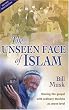
From The Unseen Face of Islam: Sharing the Gospel with Ordinary Muslims at Street Level by Bill Musk, pgs. 238-239 (emphasis mine).

Saturday, October 24, 2009

Propitiation as the Ground for Christus Victor

The "Christ the Victor" approach is a helpful way to present the Gospel to Muslims because, among other things, it goes straight to many Muslims' felt needs- a fear of Satan, demons, and jinn.  Many Muslims in the world live in constant anxiety of the unseen world, so sharing Jesus as the one who has defeated Satan can be helpful starting point for talking about the cross.  Interestingly, the Christus Victor theme appears first in the Biblical storyline of the Messiah (Gen. 3:15).

But it is important to relatize how Jesus' victory over Satan relates to Jesus' substitutionary death for our sins.  "Whoever makes a practice of sinning is of the devil, for the devil has been sinning from the beginning. The reason the Son of God appeared was to destroy the works of the devil" (1 John 3:8).  How does Jesus' death constitute a victory over Satan? Keep reading.


Propitiation as the Ground for Christus Victor: "
John Murray:

Redemption from sin cannot be adequately conceived or formulated except as it comprehends the victory which Christ secured once for all over him who is the god of this world, the prince of the power of the air . . .

[I]t is impossible to speak in terms of redemption from the power of sin except as there comes within the range of this redemptive accomplishment the destruction of the power of darkness.
(Redemption—Accomplished and Applied, p. 50)
Colossians 2:14-15 is a key verse in this regard.

Paul lists two results of Christ’s work on the cross: (1) Christ disarmed the rulers and authorities, and (2) he publicly shamed them.

How? By triumphing over them in himself.

So how does Christ bearing God’s wrath for sinners, taking their sin as a substitute, constitute a victory over Satan?

George Smeaton (1814–1889), Professor of Exegetical Theology at New College, Edinburgh, provides the answer.

Sin was (1) the ground of Satan’s dominion, (2) the sphere of his power, and (3) the secret of his strength; and no sooner was the guilt lying on us extinguished, than his throne was undermined, as Jesus Himself said (John 12:31). When the guilt of sin was abolished, Satan’s dominion over God’s people was ended; for the ground of his authority was the law which had been violated, and the guilt which had been incurred. . . .

[A]ll the mistakes have arisen from not perceiving with sufficient clearness how the triumph could be celebrated on His cross. (The Apostles’ Doctrine of the Atonement (Edinburgh, T. & T. Clark, 1870), 307–308; my emphasis and numbering)
In other words, Satan’s power is based on sin and guilt; Christ’s death meant the ultimate death of sin, guilt, and death itself; and thus Satan was ultimately defanged by Christ’s atoning work.

As Smeaton says, “it was on God’s part at once a victory and a display of all God’s attributes, to the irretrievable ruin, dismay, and confusion of satanic powers.”

So it’s not Christus Victor (Christ defeating his enemies) instead of propitiation (Christ bearing God’s wrath)–rather, it’s Christus Victor because of propitiation. Both are gloriously important, but only in that order."

What are the other benefits of the "Christus Victor" approach in sharing the Gospel with Muslims?

Saturday, June 27, 2009

Is "Folk Islam" the Correct Terminology?


From the Summer 2009 edition of the Zwemer Journal for Muslim Studies, pgs. 15-16:

"Beware of worn-out interpretive stereotypes, such as "folk Islam." Christians in Muslim lands are in the habit of using the term "folk Islam" for any belief or practice that varies from Islamic doctrine, often termed "normative Islam" or "orthodox Islam." Folk Islam has become a catchall term used for practices such as divination, jinn cults, healing and exorcism, pilgrimages to holy places, and hanging a blue bead to protect against the evil eye.

When you view the lives of ordinary Muslims as folksy, deviant, or inconsistent with "normative Islam," you attribute a kind of ontological status to the Islam of Qur'an and Sunna. Do really want to be perceived by the people as having imbibed the Islam of the 'ulamā [scholars], who tend to belittle the ignorant ways of their people? Why should you join them in such judgments? Neither as Christians nor as ethnographers is it our business to decide what the true Islam is.

In your church do you sit on pews? Do you pass an offering plate during worship? Do you bury the dead in a casket? Do you think of "winning them one by one" as divinely ordained? Does one form of worship or singing bless you more than others? The scriptural basis for such beliefs and preferences is doubtful; therefore, if we were to apply to ourselves the same standard often applied to Muslims, many of us would be labeled "folk Christians." Ask yourself how such a label feels before applying it to Muslims.

It is best to avoid the term Folk Islam and speak instead of the "Muslim culture and life ways" of a specific people, time and place. If you are interested in the spirits Muslims believe in, then "the spiritual world of Arab Muslims in Cairo" is a good rubric.

Anthropologists now see the framework of "great tradition" and "little tradition" which was once used to distinguish between "orthodox" and "folk" Islam as an impediment to good ethnographic interpretation. There is a problem also with the assumption that the spirit beliefs of Muslims are survivals of a native "animistic" or "tribal" culture. Sometimes this kind of indigenization of Islam in local forms is demonstrable, but one must be careful, because historical evidence for Islam's assimilation of local spiritual practices may be lacking. What is more, comparative evidence may suggest that Muslims in geographically diverse places share the same or similar ideas and practices, in which case it is unlikely that the source is local animism. ("Animism" may not always the best word either; "spirit beliefs" is more generic and safer.)

Along with anthropologists, Christians should be careful about this kind of religious profiling. We follow Jesus, who loved and honored simple people. He listened carefully to the beliefs of the Samaritans (never calling them "folk Jews") but was often at odds with the theologically adept Pharisees (the 'ulamā of the Jews). Christianity shares at least one conviction with anthropology, that it is unwise to take sides with the powerful, when doing so would preclude trusting relationships with the people."