Showing posts with label Coming to Christ Series. Show all posts

Sunday, September 21, 2014

A Patron–Client View of the Gospel in “Misreading Scripture with Western Eyes”

I have previously blogged on A Patron – Client View of the Gospel as a key way to understand MBB journeys to faith in Christ, and, by implication, how we can share the gospel with Muslims.

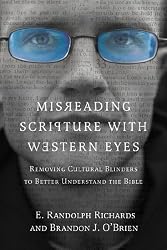
Based on some feedback I’ve received from the article, it seems extremely difficult for most Westerners to grasp the concept.  In that respect, I highly recommend Misreading Scripture with Western Eyes: Removing Cultural Blinders to Better Understand the Bible, which does a fantastic job of explaining culture and interpretation in an enjoyable and edifying way. 

Here are some selected quotes on the concept of patronage as it is found in the New Testament:

Joining words together, though, can be far more significant than merely vocabulary. Some words have special meanings when they are paired with other words. In the New Testament, for example, the word charis means "grace." Pistis means "faith." What we didn't know until recently-what went without being said in Paul's day- was that those two words together described the relationship between a patron and his or her client.

In the Roman world of the New Testament, business was conducted through an elaborate system of patrons and clients.' When we watch the movie The Godfather, we are seeing the modern remains of the ancient Roman patronage system. Like Marlon Brando who played the godfather in the movie, the ancient patron was a wealthy and powerful individual (male or female) who looked after his or her "friends" (clients). The complex world of Roman governmental bureaucracy, the far-reaching tentacles of the banking system (usually temples) and the pervasive and powerful grasp of the trade guilds made it impossible for ordinary craftspeople or farmers to conduct business on their own. They were entirely dependent upon their patrons. Like most unwritten cultural rules, everyone knew what was expected of a patron and a client, even though expectations weren't engraved on a wall. Everyone knew a patron's role was to solve problems for his or her clients, whether it was trouble with the local trade guilds, refinancing a loan or smoothing over tensions with city leaders. When Paul was staying in Thessalonica, it was reasonable to expect Jason to handle the "Paul problem," which he did by asking Paul to leave town (Acts 17).

In that world, an ordinary craftsman or farmer didn't have the social skills or connections or wealth to negotiate with the various powerbrokers of a city. He would seek out an individual, a patron, to help. Marlon Brando captures the sentiment well. The local merchant wants help. The godfather says, "So you want me to do you this favor?" Both sides understand the agreement: the godfather solves the problem, and the merchant now must be loyal to the godfather and be ready to help if he is ever summoned. In the Roman system, likewise, the client couldn't earn the "favor"; the patron showed "kindness" to help. Seneca, a philosopher from Paul's time, said the patron and the client had a relationship, a form of friendship.6 The client was now a "friend" of the patron, but not a peer. The client was expected to reciprocate with loyalty, public praise, readiness to help the patron (as much as he could) and, most importantly, gratitude.' This kind gift had strings attached. (All gifts in antiquity had strings attached.) Seneca called it "a sacred bond."' The recipient of the gift was obligated to reciprocate. Paul introduced Lydia to Christianity (Acts 16). She reciprocated by hosting Paul and his team at her estate.

The language of patronage permeated everyday life. We know well the Christian terms grace and faith, but these were common before Paul used them. They were part of the language of patronage. When the patron gave unmerited gifts of assistance, these were commonly called charis, meaning "grace/gift.."10 The client responded with faithfulness to the patron, called pistis, or "faith."" We see that when Paul explained our new relationship with God, he used something everyone understood: the ancient system of patronage.12 Taken together, this vocabulary-so central to the Christian faith-means something different than the sum of its parts.13 (Kindle Locations 847-866).

Now Paul wasn't opposed to the patronage system; he probably couldn't imagine a world without it (Kindle Location 1802).

Because it was impossible to escape the patronage system, Paul worked within it, even in his explanation of the Christian message of salvation. Patronage had its own vocabulary. Words we usually consider particularly Christian terms-grace and faith-were common parlance before Paul commandeered them. The undeserved gifts of assistance the patron offered were commonly called charis ("grace" and "gift").' The loyalty the client offered the patron in response was called pistis ("faith" and "faithfulness").9 Roman philosophers noted that when one received a god's favor (charis), one should respond with love, joy and hope.10 When Paul sought to explain the Christian's new relationship with God, then, one of the ways he did so was in terms of the ancient system of patronage - something everyone understood. In other words, it went without being said that relationship is the premier and determinative aspect of charis, grace (Kindle Locations 1808-1813).

I believe that relationships today in Africa, the Middle East, and throughout Asia are largely defined by patronage, whereas in the liberal, democratic cultures of North America and Europe, relationships are defined by equality and freedom (except in politics).  If this is even remotely close to reality, how can Westerners use the concept of patronage to share the gospel with Muslims?

Thursday, October 24, 2013

How are Muslims coming to Christ?

imageThis series, “How are Muslims coming to Christ?” has attempted to synthesize common contours that researchers throughout Asia, the Middle East, and Africa are discovering.  I believe these missiological categories enable us to better understand the phenomenon of conversion (a term I don’t like) for Muslims who have embraced Biblical faith.  This series has been adapted from my article:

Farah, Warrick. 2013. "Emerging Missiological Themes in MBB Conversion Factors." International Journal of Frontier Missiology no. 30 (1):189-196.

After the Introduction, here are the 8 themes:

  1. Conversion is a Contextual Process
  2. The Prominence of the Affective Dimension
  3. The Silent Witness of Love and Integrity
  4. A Patron – Client View of the Gospel
  5. Conversion in Layers of Identity
  6. The Congruence of Cultural Values
  7. The Differing Female Experience
  8. The Beauty of the Written and Resurrected Word

Some concluding remarks on the series, from the article:

The last decade of ministry to Muslims has been very exciting. David Garrison reports that more than 86 percent of all the Muslim movements to Christ in the history of Islam have occurred in the last 12 years (2013). However, the fraction of MBBs around the world in the House of Islam is still very small. It could be that the firstfruits who are embracing Biblical faith are more of the “fringe” people of Muslim societies, and thus the researchable conversion factors may not represent the mass-movements of Muslims into the kingdom that we are all hoping and praying for. Therefore, each of these themes will need continued contextual research for their validity in future Jesus movements among Muslims…

Summary

The recent growth of conversion factor studies reflects the exciting fact that Muslims are embracing Biblical faith more so now than any time in history. The broad themes of these factors facilitating conversion have important implications for Kingdom witness that are relevant for diverse settings. The future of conversion research can investigate these themes more closely, as we continue to learn from precious MBBs like Hanaan, Qaasid, and Yehia.

I hope you have found this series helpful! If so, please share this post with your friends and colleagues.

Friday, October 18, 2013

The Beauty of the Written and Resurrected Word (Part 8 in the “How are Muslims coming to Christ?” Series)

Previous posts in this series: How are Muslims coming to Christ? Introduction, Part 1: Conversion is a Contextual Process, Part 2: The Prominence of the Affective Dimension, Part 3: The Silent Witness of Love and Integrity, Part 4: A Patron – Client View of the Gospel, Part 5: Conversion in Layers of Identity, Part 6: The Congruence of Cultural Values, Part 7: The Differing Female Experience.

Circumpolar is about making sure the glorious Messiah is continually visible before Muslims.  What should our mantra be? Point Muslims to Jesus and the Bible. Point Muslims to Jesus and the Bible. Point Muslims to Jesus and the Bible. This is our final theme of factors that influence Muslims to embrace Biblical faith (from this article):

8. The Beauty of the Written and Resurrected Word

imageThe hearing or study of the gospel in the Bible and a desire for an intimate relationship with God in Christ is central in MBB conversions. MBBs are fascinated by the beauty of Jesus’ personality and the cross. Once I watched the Jesus Film with a Muslim seeker. Afterward, when I asked for his thoughts, he replied, “Well, Jesus is everything.”

Anthony Greenham’s study of Palestinian MBBs found that although conversion is influenced through various means, “the person of Jesus is always central” (2004, 227). Commenting on the centrality of Christ in conversion, Abraham Durán also speaks of attraction to the “beauty of Jesus” as a key evangelistic factor (2006, 274). In John Marie Gaudeul’s study of MBB testimonies, the most prominent factor was attraction to Jesus (1999).

David Maranz studied dozens of conversion experiences of Muslims born in 33 countries and concluded that all but two included references to the importance of the Bible. He concludes, “In most, the role of the Bible or some passages of Scripture were central to conversion. How could it be otherwise?” (2006, 61). Fruitful Practices research similarly notes that “Fruitful teams use a variety of creative means to communicate Scripture… It is their primary means of sharing the gospel” (Adams, Allen, and Fish 2009, 79). James Bultema’s research in Turkey was similar: “The written Word of God surpasses other causes of conversion to Christ” (2010, 28).

Implications?

The Beauty of the Written and Resurrected Word – Above all else, effective mission among Muslims means pointing them to Jesus and the Bible.

I don’t mean to be overly simplistic, but I do feel the main thrust of mission is sometimes lost among much pontificating (I’m as guilty as anyone). However, we can rejoice that missiological research says we can all rally around this – point Muslims to Jesus and the Bible.

Next: The Conclusion.

Thursday, October 17, 2013

The Differing Female Experience (Part 7 in the “How are Muslims coming to Christ?” Series)

Previous posts in this series: How are Muslims coming to Christ? Introduction, Part 1: Conversion is a Contextual Process, Part 2: The Prominence of the Affective Dimension, Part 3: The Silent Witness of Love and Integrity, Part 4: A Patron – Client View of the Gospel, Part 5: Conversion in Layers of Identity, and Part 6: The Congruence of Cultural Values.

I believe that perhaps the largest unreached people group in the world is Muslim women. It could be possible that 80% of MBBs around the world are male (just a guess).  Most of our outreach/strategy/teaching is geared towards men. This is partly because Muslim women are, by the nature of “Islam,” more inaccessible.  But we need more research on how women are coming to faith.  And we need to be more intentional.  From my view, there are three things to consider in female MBB conversions (from this article):

IMG_1131

7. The Differing Female Experience

Unfortunately, most studies on conversion haven’t considered the importance of gender (Gooren 2007, 348). It does appear, however, that there are in fact significant differences. North African women MBBs in Evelyne Reisacher’s research felt that gender related issues in the Muslim world created more barriers to conversion for women than men, but they also felt their faith was more resilient than male MBBs because of the price women paid to follow Jesus (2006, 110-113). Women are more concerned about how their conversion will affect their social relationships, particularly with males in their immediate families. A positive factor influencing conversion was the honor Jesus gave to women. “Women were attracted to Jesus because they were touched by the way he dealt with women in the Gospels” (2006, 113).

Similarly, Miriam Adeney notes that Muslim women come to faith for many of the same reasons as men, but it is the “awareness of Jesus’ affirmation of women” that strongly influences women (2005, 287).[i] Adeney also notes the significance of familial social relationships in conversion. In a study of South Asian Muslim women who were coming to faith, Mary McVicker found that while theology is important, “participation and experience are essential” (2006, 136). Strähler found that female MBBs in Kenya were shaped more by affective elements than were the males (2010, 67).

Thus, female conversions are strongly influenced by an awareness of Jesus’ treatment of women in the gospels, include greater degrees of practical and experiential factors, and are complicated by the role of males in their immediate families. Hanaan’s father, a devout Muslim and loving man, eventually became convinced the Jesus was revealing himself to Hanaan. He gave her the intellectual freedom she felt she needed to investigate further, although he never followed Christ himself. As with other female MBBs, Hanaan’s experience would be dramatically different had her father persecuted her curiosity of Jesus, rather than foster it.

Implications?

The Differing Female Experience – In ministry to Muslim women, we should:

  1. tell the specific stories of Jesus’ treatment of women in the Gospels,
  2. pray with them and for their needs, and
  3. pay attention to their relationships with males in their families.

One book my wife really likes is A Worldview Approach to Ministry Among Muslim Women.

Next: Part 8, The Beauty of the Written and Resurrected Word.

Wednesday, October 16, 2013

The Congruence of Cultural Values (Part 6 in the “How are Muslims coming to Christ?” Series)

Previous posts in this series: How are Muslims coming to Christ? Introduction, Part 1: Conversion is a Contextual Process, Part 2: The Prominence of the Affective Dimension, Part 3: The Silent Witness of Love and Integrity, Part 4: A Patron – Client View of the Gospel, and Part 5: Conversion in Layers of Identity.

Rather than getting bogged down in a debate about contextualization and syncretism, I think Greenlee’s term “The Congruence of Cultural Values”  better fits this sociological theme of factors that influence Muslims to embrace biblical faith (from this article):

6. The Congruence of Cultural Values

imageContinuing with the sociological discussion of conversion, some missiologists argue that a paradigm shift is happening in church planting and evangelism strategies (Gray and Gray 2010a). Previous strategies argued for an aggregate (or “attractional”) model of church planting, where new believers/seekers who do not previously know each other are gathered together in fellowship. In contrast, the social network[i] (or “transformational”) model seeks to implant the gospel into a group of people who have previously formed social relationships, and thus not try to introduce unknown believers to one another. “The ‘church’ meets when the normal social network gathers” (Gray and Gray 2010b, 278).

This idea of spreading the gospel through social networks is very similar the “homogeneous unit principle” (HUP) posited by Donald McGavran, who famously stated that “People like to become Christians without crossing racial, linguistic, or class barriers” (1990 [1970], 163). Arguing against this as a strategy for mission, René Padilla declared that the HUP is not only counter to the example of Jesus and the apostles who intentionally worked with an aggregate model, but also fails to take the ministry of reconciliation seriously and has “no biblical foundation” (1982, 29).

However, since research shows that “facilitating the movement of the gospel through natural social networks [contra the aggregate model] seems to be correlated with planting more churches” (Gray et al. 2010, 94), it seems best to think of social network theory as a provisional, temporary strategy until there are more robust forms of church that reach the biblical goal of the so-called “Ephesian moment” (Walls 2002), where people of different caste, race, gender, etc., who have little in common except Jesus are reconciled together in fellowship through him. In any case, a key theme in factors that influence conversion is the congruence of cultural values between the MBB and the values of the witnessing community.[ii]

Implications?

The Congruence of Cultural Values – Contextualization is not a dirty word. It is inevitable, and we need to work hard at it. But even more so, MBBs need to contextualize as they share the gospel through their social networks. We have much to learn from MBB local theologizing. 

Next: Part 7, The Differing Female Experience.

Tuesday, October 15, 2013

Conversion in Layers of Identity (Part 5 in the “How are Muslims coming to Christ?” Series)

Previous posts in this series: How are Muslims coming to Christ? Introduction, Part 1: Conversion is a Contextual Process, Part 2: The Prominence of the Affective Dimension, Part 3: The Silent Witness of Love and Integrity, and Part 4: A Patron – Client View of the Gospel.

This next theme in MBB conversion factors is probably the most significant missiological breakthrough in the last few years. The question, “Can a someone be a Muslim and a follower of Christ?” is overly-simplistic. We shouldn’t be surprised that this wrong question has led to a polarized (and politicized) debate. There is  better way at look at the issues (from this article):

5. Conversion in Layers of Identity

image

Rebecca Lewis argues that we should “free people groups from the counter-productive burden of socioreligious conversion and the constraints of affiliation with the term “Christianity” and with various religious institutions and traditions of Christendom” (2007, 76). Georges Houssney disagrees, “You cannot claim to be a follower of Christ and deny being a Christian. This would be dishonest, confusing and not true. To follow Christ is to be a Christian” (2011). This debate concerning socioreligious identity often seems to be more based around semantics and one’s view of “Islam” than actual Biblical exegesis and theology.

Muslims who consider embracing Biblical faith and MBBs themselves often feel torn between the ill-defined, binary categories of “Muslim” and “Christian.” In light of this struggle, the sociological theories of identity put forth by Kathryn Kraft[i], Jens Barnett, and Tim Green in Longing for Community (Greenlee 2013) have the potential to significantly reduce the polarization of views in the current debates. (These theories are summarized in Greenlee’s article in this issue). Identity is far more complex and dynamic than is unfortunately portrayed by many evangelicals on all sides of the issues. Layers of identity abound for people in every culture, and belonging to multiple traditions is a reality in today’s globalized world.

As the research seems to show, identity is multidimensional, the titles “Christian” and “Muslim” mean various things to different audiences, and new MBBs, especially in unreached contexts, inevitably need time and space for their identities to transition. Dissatisfaction with and rejection of “creedal” Islam precedes most MBB conversions, but many of these same MBBs remain in “cultural” Islam.[ii]

Implications?

Conversion in Layers of Identity – There are two twin errors I see being made in mission praxis when it comes to the identity issue. The first error is to ask Muslims who are considering embracing Biblical faith to identify as “Christians.” The other error is to insist that MBBs continue to call themselves “Muslims.” Both errors over-assume the role of the Kingdom worker in local theologizing. And both errors also point MBBs to socio-religious identity, when we should instead be making sure MBBs are grounded in the Christ of the Bible.

Do you think this helps us move beyond the so-called “insider” debate?

[A side note: I think identity is more complicated than these layers portray. See here, for example – more research is needed...]

Next: Part 6, The Congruence of Cultural Values.

Monday, October 14, 2013

A Patron – Client View of the Gospel (Part 4 in the “How are Muslims coming to Christ?” Series)

Previous posts in this series: How are Muslims coming to Christ? Introduction, Part 1: Conversion is a Contextual Process, Part 2: The Prominence of the Affective Dimension, and Part 3: The Silent Witness of Love and Integrity.

If the gospel is news about a new relationship, then how we socially understand relationships will inform our view of the gospel.  Do Asian, Arab, and African MBBs view the gospel in a different form than Western Christians? I think we’re beginning to see this emerge in missiological research (from this article):


4. A Patron – Client View of the Gospel

Like Yehia, Hanaan grew up very disillusioned with the hypocritical lifestyles of some fundamentalist Muslims she knew. One night a man in a brilliant white robe holding a staff appeared in her dream and told her that she was correct to doubt Islam. The next morning she described this event to her loving and devout Muslim father, who told her the person from her dream was Isa al Masih. Eagerly she went to the Qur’an and read everything she could about Jesus, who continued to show up in dreams for many years at key moments in her life.

According to her testimony, Hanaan joined herself to Jesus long before she met another Christ follower who studied the Bible with her for the first time. Like Hanaan, MBBs appear to bond themselves to Christ in a patron-client relationship as they initially begin to understand His lordship and even the atonement.

A biblical, missiological view of conversion must take into account the social context of the first century Mediterranean world (Asia and Africa are much closer to this worldview today than is the West). Relationships were conceptualized around the concept of “patronage,” where “they saw their gods as patrons and benefactors and their own conduct as clients” (Crook 2004, 254). “In this hierarchical society, where the status of the person you follow and to whom you give allegiance is very important, the position of Isa becomes the focus of reconsideration” (Edwards 2013, 84). MBBs relate to Christ in ways that are difficult for Westerners to understand, but make sense in their worldview. Yet this understanding of salvation is commonly found in the writings of the Apostle Paul. Christ is our ultimate Patron (the Divine Lord), we must be found “in him” and part of the new people of God.

Implications?

1. A Patron – Client View of the Gospel – There is only one gospel, but it is always expressed in only one of its various forms (Keller 2008 – [this is a foundational article in missiology]). The legal, moral guilt presentation of the gospel, while definitely biblical, has been over-emphasized by Westerners in Muslim lands. Can we begin to use the Patron-Client form…: Through faith, we are joined with the glorious Messiah in his life, death, and resurrection. He gets our loyalty (praise, glory, and honor) and we get his life in us, removing our shame and defilement. Could this be the form of the gospel that is most relevant to Muslims?

There is a lot more to discuss about patronage. For now, use this concept as a hermeneutical key to understand Paul’s talk about being “in Christ.”  See also this helpful, brief video about the patron-client relationship in anthropology (missiology is the intersection of theology and the social sciences):


Next: Part 5, Conversion in Layers of Identity.

Saturday, October 12, 2013

The Silent Witness of Love and Integrity (Part 3 in the “How are Muslims coming to Christ?” Series)

Previous posts in this series: How are Muslims coming to Christ? Introduction, Part 1: Conversion is a Contextual Process, and Part 2: The Prominence of the Affective Dimension.

Now we look at a missiological theme closely related to the affective dimension of worldview (from this article):

3. The Silent Witness of Love and Integrity

imageAlthough this is clearly related to the affective dimension theme, I believe the compassion and love from Kingdom workers to Muslims is significant enough to warrant inclusion. The godly lifestyle of Christians and the experience of genuine love significantly and positively change Muslims’ attitudes towards Christ and Biblical faith. This is perhaps true in every context, but even more so for Muslims. The lingering effects of the Crusades coupled with the war on terror create the lasting impression that “Christians” are imperialists who wish to destroy Muslims. Kingdom workers simply living lives of integrity and compassion among Muslims have done much to dispel this harmful misconception.

In Dudley Woodberry’s massive global survey of MBB conversions, the lifestyle of Christians was the most important factor facilitating conversion (Woodberry 2006). Like the stories of Qaasid and Yehia, I have not personally found a MBB who did not have a positive interaction with “Christianity” and Christian believers somewhere in the past.

Implications?

Live and love like Jesus. Enough said.

Next: Part 4, A Patron – Client View of the Gospel.

Sunday, October 6, 2013

The Prominence of the Affective Dimension (Part 2 in the “How are Muslims coming to Christ?” Series)

imageThe previous post examined the contextual and gradual nature of MBB faith journeys. In this post we look at the second theme of factors that influence Muslims to embrace Biblical faith (from here):

2. The Prominence of the Affective Dimension

The affective dimension of worldview is usually more prominent in MBB conversions than the cognitive.[i] It is a subjective experience, often meeting a felt need, and often in the form of the supernatural such as a dream,[ii] a tangible answer to prayer, a miracle, a healing, or an overwhelming feeling of the presence of Jesus. Factors in the affective dimension are more frequent in MBB conversions than those in cognitive/intellectual search for truth. Interest in Christ is sparked by affective experiences, and understanding seems to come later in the process.

Early one-dimensional evangelical models of conversion tended to be overly cognitive (cf. Tippett 1977; Hesselgrave 1990, 617-73). Engel and Søgaard revised the “Engel Scale” to include the affective dimension (Søgaard 2000), noting that conversion is not just about correct beliefs but also about positive feelings and attitudes towards Christ.[iii] The most comprehensive model that describes the process of conversion, especially for Muslims, is found in Reinhold Strähler’s article A Matrix for Measuring Steps in the Process of Conversion (2007) (also in Longing for Community (Greenlee 2013).

Strähler has classified four types of processes involved in conversion for MBBs. Notice that cognitive or belief issues are less prominent at the beginning of the processes for types two, three, and four. The four types are (1) intellectual – cognitive issues are extremely high and the convert studies and compares various religious options; (2) affectional – characterized by personal relationships and emotional elements; (3) mystical – characterized by a passive convert who is “surprised by God,” usually in the form of the supernatural; and (4) solution seeking – asking Jesus for help with spiritual or practical problems (2010, 84-100).

David Fraser suggested that MBBs tend to be less rational or intellectual in their conversion experiences, so that “understanding of the fundamentals of the gospel is an event that comes after they have confronted Christ and decided he is indeed Supreme Lord. All they know at the point of conversion is that Jesus is powerful enough to deal with their problems” (1979).

During his childhood years, Yehia remembers an older American Christian woman who made sure he got to school safely each morning. She later befriended his family and helped out during several times of need. Yehia loved her like a mother. Later in life when he became very disillusioned with Islam while studying to become an Imam, he remembered this Christian woman. Additional positive experiences with Christians led him to investigate the Bible and eventually begin to follow Christ. Like most MBBS, Yehia’s conversion was a long process with many contributing factors in the affective dimension.

Implications?

1. The Prominence of the Affective Dimension – Without denying the essential need for truth encounters, we need to prayerfully depend on the Holy Spirit to impact the Muslim heart in whatever way our friends need most. Apologetics and rational persuasion have their place, but are not as prominent with Muslim seekers as divine interventions in their lives. Praying for and with Muslims in the name of Jesus seems to be quite impactful.

Additionally, I would like to add Hiebert’s insights:

We need to remember that we are not God’s lawyers in proving the gospel.  We are witnesses to a new life, and the affective dimensions are often what first attracts people to the gospel. In discipling it is hard to convert feelings, partly because our discipling processes focus on cognition.  Feelings are caught, not taught, and in discipling we need to include them more in times of informal fellowship and in personal sharing.  Feelings, like knowledge, are parts, not the whole, in the process of spiritual transformation (312-13).

Next: Part 3, The Silent Witness of Love and Integrity.

Saturday, October 5, 2013

Conversion is a Contextual Process (Part 1 in the “How are Muslims coming to Christ?” Series)

imageIn this post we move on from the introduction and consider the first theme of factors that are influencing Muslims to embrace Biblical faith (from this article):

1. Conversion is a Contextual Process

Conversion and regeneration are two sides of the same coin (Stott 2008, 169). While united, the two are easily and often confused. There are three reasons the distinction between regeneration and conversion is necessary: (1) regeneration is God’s act, whereas conversion is man’s response, (2) regeneration is unconscious, whereas conversion is normally conscious, (3) regeneration is an instantaneous and complete work of God, whereas conversion is more a process than an event (168-171).

James Engle notes that although conversion can be regarded as sudden, unconscious, or gradual, gradual conversion is the most common form of conversion for those in unreached, non-Christian areas who come to Christ. Conversion “may climax in what appears to be sudden conversion, but the act of turning or decision is secondary to the process itself” (1990).

The idea that conversion is only an event (i.e., “one-step decisionism” (Conn 1979, 101)) is deeply embedded in the evangelical mind, and is a result of a “punctiliar” emphasis on conversion from the “revivals” in Protestantism during the seventeenth and eighteenth centuries (Smith 2010, 1-20). Although rare, point-in-time conversion experiences are more common in Christian societies than in non-Christian societies where one could have a “revival” experience (Lutz 2007).

The overall experience of Muslims, however, is that conversion is a gradual process that takes place over many years (Haney 2010, 68; Larson 1996a; Teeter 1990, 307-308). Gordon Smith notes that Muslim conversions to Christ “do not tend to rest or pivot on a decision or a particular act of acceptance. Rather, it has been well documented that these conversions are slow and incremental” (2010, 84). Qaasid cannot point to the moment of his conversion, but he knows he is a disciple of the Messiah. Thus, conversion is a process that transpires over months or years. The sometimes apparently sudden decision to “follow Christ” is only one essential step in this process.

Yet the context where conversion happens plays a key role. Two million Muslims in Java converted to Christianity in the 1960s (Willis 1977). Initially, this began as a protest against tribal and village Muslim leaders in the aftermath of a massacre of communists by fellow Muslims; many of the converts had communist family members who had been killed by Muslims. “What had begun as an act of political rebellion…eventually took on a deeper meaning” (Hefner 1993, 117). These converts were further drawn into conversion by an experiential, personal encounter with Christ through prayer and Bible study that “had no precedent in the traditional village religion” (1993, 116).

Furthermore, when these converts professed faith officially, they did so without understanding the fuller consequences of their decision. “Public profession of the faith had inspired an interior rationalization quite unlike anything that would have occurred on a purely individual basis” (Hefner 1993, 120). Eventually the converts came to realize that many of “their local traditions [were] incompatible with their new Christian faith” (1993, 122).

Finally, the “social psychology” of the Javanese context in the 1970s had finally cleared away the perception that Christianity was a foreign (Dutch) religion thus making conversion more possible on a wider scale. The Javanese were, to some extent, “able to establish a free space in which conversion would not immediately result in severe social stigmatization” (1993, 120). In the conversion process, political motivations and social stigmas concerning religious identity are important contextual factors. This Java case study demonstrates the importance of context: genuine conversion does not always begin with spiritual or intellectual motives.

I understand the the phrase “contextual process” might sound awkward. My point is to emphasize two items: 1) that in each place where Muslims come to faith there are going to be unique factors that influence them (we have to get beyond the cookie-cutter, one-size-fits-all, lazy kind of missiology that says if you just do A + B + C you will be fruitful), and 2) that conversion is a gradual process (this should really challenge you if you believe evangelism = getting people to the “sinner’s prayer”).

So what are the implications for kingdom witness among Muslims?

1.   Conversion is a Contextual Process – Kingdom workers are only one expendable step in the process of conversion. This should promote both humility and anticipation. God is at work long before we “show up,” but He does use us.

Can you think of other implications?  There should be many. How does the Arab Spring fit in? Think of Java above. Please comment and feel free to disagree.  Stay tuned for part 2, “The Prominence of the Affective Dimension.”

Monday, August 26, 2013

How are Muslims coming to Christ? Introduction

I haven’t been blogging much lately. Part of the reason is because I’ve been busy with a research project that examines MBB conversions in my context.  Recently I met the editor of IJFM (a fellow missiology junkie) at a conference and pitched an article idea to him. The idea is basically taken from a chapter of my in-progress dissertation on the topic.  This thus begins a multi-post series on Circumpolar, “How are Muslims coming to Christ?”

Below is the introduction from my article “Emerging Missiological Themes in MBB
Conversion Factors.”  The series will consist of 8 posts.  Each is a missiological theme of how Muslims are coming to faith in Isa the Messiah.  I want to thank Duane Alexander Miller, David Garrison, and David Greenlee for their helpful insights and counsel on this topic.

You’ll notice that the tone below is dry and wannabe academic.  In this series, however, I’ll try to reflect more personally in the usual blog-voice.  I sincerely hope that you will weigh in on each post with your thoughts. We need to learn from each other: I don’t pretend to be an expert on this topic!

Here is the introduction (you can view the references and footnotes on the article):

Qaasid’s[i] mother often reminded him that it was the Christians who “saved him from death” when he was treated as an infant at a Western-run medical clinic for a life-threatening illness. Growing up in a conservative Muslim society that lacks any indigenous church, Qaasid learned weekly at primary school that Christians were among those who had turned away from God. This deeply troubled Qaasid, “How could people who did such great things for me be so misguided?”

One day Qaasid happened across a Christian radio broadcast in his dialect, and he was hooked. He prayed and asked God for a Bible, but in his heart he believed he would have to travel to a Western country to learn more about Jesus. Surprisingly, not too long after his prayer, he was able to buy a Bible from a boy who, ironically, was selling them on the street near his home! The rarity of this experience twenty years ago in his country (he never saw that boy again), unheard of even today, led Qaasid to believe that God had destined him to become a follower of Christ.

Qaasid eventually met a foreign Kingdom worker living in his country who could answer his many questions. Qaasid’s story doesn’t end there, and he has grown in his faith since then. But as he did with Qaasid, God is indeed using many factors to draw Muslims around the world to faith in the Messiah.

The Growth of MBB Conversion Studies in Evangelical Missiology

David Greenlee was among the first to do major missiological research into Muslim Background Believer (MBB) conversions[ii] (Greenlee 1996).[iii] Since then, many have followed suit and many of their contributions can be found in two very helpful edited books on MBB conversions (Greenlee 2006b, 2013). Today, many others including myself are writing theses and dissertations on conversions in their Islamic contexts. In 2014, David Garrison will be releasing a book in which he asked 1,000 MBBs around the world “What did God use to draw you to faith in the Messiah?”[iv] Research into conversion factors is extremely helpful for missiology, because as the axiom goes, “How we conceive of conversion determines how we do evangelism” (Peace 1999, 286). The “consequences” of conversion, another important aspect of conversion, have also recently been researched by Kathryn Kraft (2012), Duane Miller (2013), Tim Green (2012), and Roy Oksnevad (2012).

However, even though no two conversions are the same, it appears to me that MBBs throughout Asia and Africa tend to follow a similar pattern[v] as they come to Christ. While it is anthropologically messy to compare contexts, it does in fact seem that different contexts are yielding similar results. Do we need more research into MBB conversion factors[vi] (cf. Miller 2012)? Or are we nearing a “saturation” point in conversion factor research, where we are not learning too much from new data?

This article is my attempt to offer a synthesis of the emerging missiological contours in MBB conversions. The various factors that influence Muslims to embrace Christ can be grouped into categories or themes. I believe we may be closer to forming a theory of MBB conversions from the extant literature on the subject. However, these eight themes (which are not ranked in order of prominence) are only preliminary suggestions and will need to be examined in various settings.

Refer to the footnotes in the article itself to see how I biblically define conversion (a term I don’t really like that much). 

Stay tuned for Part 1, “Conversion is a Contextual Process.”