Friday, October 1, 2010

Lausanne III – The Most Diverse Gathering Ever

Both Abdul Asad and I will be attending Lausanne III in Cape Town this month.  Please pray for us. 
If you’re interested in the required reading for the Congress, check out www.lausanne.org/prepare.
Below is a recent article from CT about Lausanne- The Most Diverse Gathering Ever: Lausanne III is pulling a cross-section of 4,000 world leaders to keep the gospel front and center:
The Lausanne movement's third global gathering will feature a younger, more ethnically diverse, and more geographically varied consortium of evangelical leaders than ever before.
The Third Lausanne Congress on World Evangelization, known as Cape Town 2010, will take place next month, October 16β5, with 4,000 leaders from 200 countries. Planners have made sure that 55 percent of participants are under age 50.
Billy Graham convened the first International Congress on World Evangelization in Lausanne, Switzerland, in July 1974, drawing 2,700 evangelicals from 150 nations. The parley comprised mostly white Western leaders at a time when the massive growth of Christianity in the developing world had just begun. British pastor-theologian John Stott served as chief architect of the Lausanne Covenant, which resulted in multiple alliances and spawned many other conferences. The second gathering, held in Manila in 1989, drew an influx of attendees from Eastern Europe and the former Soviet Union, and also incorporated Pentecostals and charismatics.
This time around, Americans aren't dominating the behind-the-scenes preparation or the on-stage program. Only 5 of the 25 members of the congress's Advisory Council, which has developed a theological foundation and strategic vision for the event, are from the U.S.
Two-Thirds World Showcased
Program Committee Chair Ramez Atallah, general secretary of the Bible Society of Egypt, pushed for a discussion format of seating six attendees per table, discussing speeches that will be shorter than those from years past.
"We don't want people to come because of big names," Atallah says. "We're not choosing the stars of the evangelical world to speak. People coming to be entertained by great speakers and great music will be disappointed. They could get that sitting at home, watching television."
Executive Chair Doug Birdsall, an Asian Access missionary based at Gordon-Conwell Theological Seminary, doesn't have the name recognition of his Lausanne predecessors. But he has painstakingly guided the event planning to include a cross-section of pastors, scholars, academics, missionaries, educators, and business leaders. Two-thirds of the speakers and presenters are from Africa, Latin America, and Asia, where two-thirds of today's evangelicals live.
"If it's the whole church, it needs to be people from north, south, east, and west," Birdsall says. "These leaders, carefully chosen from thousands of applicants, will represent the demographic, theological, and cultural realities of the global church."
Leighton Ford, program chairman for Lausanne 1974 and chair of ongoing committees 15 years later, says Americans will leave Cape Town understanding the importance of listening to and being helped by leaders from other parts of the world.
"Back then we thought we had quite a bit to give—and we did," says Ford, based in Charlotte, North Carolina, and adviser for this year's Lausanne. "Now we have a great deal to receive. It's an attitude change that will result."
Atallah says Western evangelical leaders tend to be goal- and result-oriented, adopting a view of Christian work and life that mimics a business model. He hopes Americans focus on ministry relationships rather than donor responses.
"When Americans evaluate things, they do so from a grid that is counterintuitive to the New Testament," Atallah says. The grid "goes counter to the relational model that Africans and many other cultures espouse."
Birdsall says evangelism and social justice must go hand in hand. In light of pluralistic societies and the New Atheism, he says, Christians are more likely to embrace justice and mercy matters at the expense of the foundational truths that Jesus is the only way to God and that Scripture is the ultimate authority. It's never hard to find enough American churchgoers to build a house, but drawing interest in a Bible study is another matter, says Birdsall.
"There is a concern that our message is offensive, so there is a tendency to downplay it because respectability and likeability are important to us," Birdsall says. "If we do everything but proclaim the message, that's just a partial gospel."
Korean American Michael Oh, president of Christ Bible Seminary in Nagoya, Japan, embodies the way the global church has changed since Lausanne I. The 39-year-old is responsible for shepherding the younger leaders at Lausanne III.
"We hope to witness in Cape Town a strengthening of healthy generational cooperation and, Lord willing, the beginning of a more deliberate generational transition globally in terms of leadership," Oh says. "It will be an incredible opportunity for younger leaders to pray, worship, repent, and strategize alongside more experienced leaders."
Birdsall is optimistic that Cape Town 2010 will feature a proper blend of wisdom from veteran leaders who make well-informed decisions, and energy from younger Christians to carry them out.
This is the first time such a global gathering will be truly global via technology. Not only can individuals watch proceedings on the Internet, there will also be 400 anchor sites providing global links in 60 nations. Participants at theological institutions, mission sites, and churches worldwide will be able to interact with those at the congress.
Islam and other Strategic Challenges
Questions facing the church from within and without are enormous. Cape Town 2010 will tackle key issues that confront the church's effectiveness in world evangelization, ranging from consumerism to child sex trafficking. Birdsall says the congress will deal with three themes: the impact of secularism; the challenge of other faiths; and the nature of the church, specifically the problems of fragmentation and superficiality among evangelicals.
Islam is at the fore of challenges from other faiths. "Islam is a globally coordinated and unbelievably well-funded aggressive movement," Oh says. "The church needs to ask whether it will be reactionary or proactive in engagement."
"It's a great temptation to look upon Muslims as enemies rather than as people God loves," Ford says.
Rick Warren, whose Saddleback Church in Lake Forest, California, has trained 400,000 pastors from 64 countries, advocated for Cape Town as the host site. He is on the Lausanne III Advisory Council.
"The church is truly the only global organization on the planet," Warren said in June at one of twelve pre-congress gatherings at U.S. churches. "My prayer for Lausanne is that we show why we do what we do."
Cape Town 2010 is designed to be a catalyst for church leaders to form partnerships to spread the Good News and to make disciples. Still, unity within a less homogeneous contingent than the first Lausanne might be easier to declare than to implement.
"The issue of cooperation and partnership is just as vital as it was back then—and sometimes just as hard to achieve," Ford says. "The church is growing rapidly among the poor, and we have a great deal to learn from them."
At this point, Birdsall believes he and other planners have done everything humanly possible to make sure Cape Town 2010 goes as planned.
"We want to make sure we don't plan so carefully that we leave God out of it," Birdsall says. Now he's focusing on asking for prayer from the faithful.
John W. Kennedy is a contributing editor for Christianity Today. To join the conversations at this year's congress, visit Lausanne.org/globalinkreg.

Thursday, September 30, 2010

Is Allah God? A Relevant Issue?

Here are three similar and complimentary ways to look at the issue, is the God of Islam the God of the Bible?  But perhaps an even more important question- is this even a relevant question for us to invest our time debating or being divided over?

First, from an interview with J.D. Greear:

Theologically speaking, there is of course only one God. But as I note throughout the book, we see several places where Jesus or the Apostles confronted someone who believed wrong things about God, yet Jesus and the apostles engaged them with the common ground of, “let’s talk about that God you think you know and He is really like.”

For example, in John 4, when Jesus deals with a Samaritan woman who was considerably off on several points about God, Jesus told her that the problem was she did not understand the God that she claimed to worship. Many of the Jews to whom the Apostles spoke did not believe in the Trinity and found it blasphemous. Does that mean that the Jews worship a different God? A better, and more Biblical approach (in my view) is to take the God that they claim to understand and show them what His true revelation is like…

With Muslims, I would say that more often than not it is more helpful to use the Arabic name for God. They understand that to be the God of Adam, Abraham, Moses, David, and Jesus. That’s a good place to start. Then you can say, “This God you worship, here is what He is really like, according to the revelation…”

Second, here is short take on the issue from Carl Medearis:

Here’s the point – all of us, before we have a real relationship with the real God, have some form of a “fake god” in our heads. But because the real God hears the sincere prayers of sinners (thankfully), He hears us when we call out to him.

So here’s what I say – it’s a moot point to claim that Muslims believe in the wrong god. Since whenever they call out to god (whatever and whoever that is in their minds) with a sincere heart – the real God hears. Just like he did with us!

There is really no good reason for us to insist that Muslims believe in a different God! There’s only One. And when we call out to Him, he comes running!

And thirdly, from Rick Love:

I believe that anyone who affirms monotheism—whether Muslim, Jew, Sikh or Tribal—are worshiping the true God. How can it be otherwise, since there is only one God? But I hasten to add that these monotheists are worshiping in ignorance and they are not saved. I like how the Masai Creed from Africa describes this: “We have known this High God in darkness, and now we know Him in the light.”

So the issue is, how do you come to know this true God personally resulting in salvation and everlasting life? The answer, of course, is the gospel.

The only way to know God is through Jesus.  A genuine personal relationship with God can only be Christological and Trinitarian.  All other worship of God outside of Christ is “in vain” (Mk. 7:7).  So whether or not Muslims believe in a different God is somewhat of a irrelevant issue, because in fact no one knows God apart from Jesus.  All conceptions of God, whether they are American, Muslim, Asian, Agnostic, Pagan, Mormon, or even “Christian,” all of them are incomplete and inaccurate without the gospel revelation of the Son (Heb. 1:2).

Tuesday, September 28, 2010

Orality Strategies

Welcome to Orality Strategies

Check out www.oralitystrategies.org:

Our passion is to provide you with resources that help you communicate God’s truth to those who learn best by oral means.

What is Orality?

"Orality" refers to reliance upon the spoken, rather than written, word for communication. Orality is an ancient phenomenon that continues to the present. Before writing was developed, cultures passed along their cultural traditions, including their history, identity, and religion, through their stories, proverbs, poems, songs, riddles, etc. These are all oral art forms; that is, they are spoken, sung or chanted. They were (and still are) often woven into ceremonies, dramas and rites of passage. Purely oral societies pass along everything that matters from one generation to another without putting anything into writing. They rely on the spoken word (including its sung and chanted forms).

That reliance on the spoken word is "orality." But the term means more than that to the experts who study this phenomenon. When people live by orality, it affects a great many things about their culture. If they do not write anything down, for instance, they have to work more on remembering things, so they tend to repeat well-known, treasured sayings and stories. Oral cultures prefer the familiar. It follows that oral cultures may be slow to accept new information, particularly if it does not come in a memorable format.

Oral cultures work at putting every important truth or piece of information into easily-remembered forms. Proverbs are pithy, memorable ways of storing truths. Poems and songs are often easier to remember than simple lists of truths or facts. Oral cultures develop standard ways of structuring proverbs, poems, and stories. Those patterns of organizing spoken language for ease in recall and presentation are also part of "orality."

These are just two facets of orality, but they illustrate that if we want an oral culture to understand a message, it would be helpful to present it in forms that are more familiar to them. By studying orality we get a better understanding of how oral cultures function. That understanding helps us find the best way to present the Bible's message so they can understand it, retain it, benefit from it and pass it to others.

Spiritual Heritage

Contextualization is about making Christianity the spiritual heritage of a particular people.

-Cody Lorance, Contextualization in Church-Planting Missions: What is it?

Monday, September 27, 2010

Kingdom Worker Attrition

For those who would like to study missionary attrition, here are some helpful resources.

What is attritionExamining the Faces of Attrition, by William Taylor in Mission Frontiers (1999):

Acceptable Attrition

"Acceptable" attrition arises from such causes as normal retirement, issues related to children (although some issues are a cover for unresolved parental conflicts), a legitimate job change, or health problems. In North America, with an older mission force, these are the top four reasons for attrition.

Preventable Attrition

Some attrition causes could be dealt with before or during field service: lack of home support (not just financial), problems with personal concerns, lack of call (dealt with before field service), inadequate pre-field training, poor cultural adaptation, and some others. The younger mission force faces their own causes of attrition, all perhaps preventable: lack of home support, lack of call, inadequate commitment, and disagreement with the agency.

Desirable but Unrealized Attrition

No formal study that I know of documents this fact, but some missionaries stay who should leave, and they compound the tragedy, in that their staying makes some of the better people leave. It can be a healthy thing to reduce the number of missionaries allowed to stay on the field, but this requires courageous, proactive leadership from the agency or responsible church.

Attrition Among the Vulnerable

Finally, there are "those vulnerable to attrition." What factors in a particular mission society or in a subteam of that agency, perhaps different from one national context to another, cause this segment to be vulnerable to attrition? Mission leaders are wise to address this issue right away.

What are the stats? From Frontline Ministries:

1 career missionary in 20 leaves the field every year.

47% leave their work within the first 5 years!

71% of these losses are for preventable reasons.

International, long-term missionary force estimated at 150,000 (very conservative), 7,650 missionaries leave the field annually!

Over a 4-year term, this number jumps to 30,600!

Over 21,000 of these losses are PREVENTABLE!

In one study, 49% of cases caused by relationship problems.

Top five causes of preventable attrition involve issues of character and relationships.

What are some ways to prevent attrition? A report from the “Reducing Missionary Attrition Project” (2005).

image 

See also Preventing Discouragement and Keeping Church Planters Productive on the Field.

Wednesday, September 22, 2010

Is Islam Violent or Peaceful?

A short post by Warren Larson.  From the intro:

Today there is a polarization as to the nature of Islam: Some say Islam is violent; others insist it is peaceful.  The truth lies somewhere in between those two statements.

The conclusion:

Perhaps we should let both Muslims [peaceful and violent] stand up and concentrate on how we can reach them for Christ.  Such an approach means we let Muslims be the teacher while we are the learner.  We allow Muslims to tell us what they believe rather than assuming we know because we listen to select news media.  We ask Muslims what Muhammad means to them and look for felt needs so that we can present the Gospel with love and understanding.

Read the whole thing.

Monday, September 20, 2010

Concept Creation

There are times when aspects of the gospel and Biblical faith are not foreign to Muslims simply because they’re miscommunicated, but because they’re new concepts altogether:

As we think seriously about contextualizing the message of the Bible, let’s remember that we must also labor to bring about, in the minds of our listeners, conceptual categories that may be missing from their mental framework. If we only use the thought structures they already have, some crucial biblical truths will remain unintelligible, no matter how much contextualizing we do. This work of concept creation is harder than contextualization, but just as important.

- Preaching As Concept Creation, Not Just Contextualization

Which Biblical categories are missing from the Islamic mental framework?

10 Good Reasons to Marry a Muslim

I always like reading people with a good sense of humor.  Here is a post from Elan: The Guide to Global Muslim Culture titled 10 Good Reasons to Marry a Muslim, by Fareeda Ahmed:

Single ladies and bachelors, listen up! The world is melting! Nationality is just not what it was before. In a world where we can have wars on intangible forces ("terror," “obesity,"..."Hannah Montana") it’s clear that borders just don’t mean what they used to. This post-modern nationless world, coupled with the rise of intermarriage - aka “people-flower cross-pollinization,” - has rendered the question “so where are you from?” as obsolete as “so, when was your last polio vaccination?” or “How ‘bout them Crusades?”

Always the trendsetters, Muslims as a people have helped propagate this blurring of borderlines since their emergence from the deserts of Saudi 1,600 years ago - Islam spread as its followers travelled, and its singles mingled with indigenous populations. As a result, Muslims are all over the globe today. And the trend is growing. Muslim genes are spreading faster than viral videos, and it’s not the broadband (though that might be part of it...internet dating, etc).

So are you looking for a long-term relationship? Don’t fight it, people. You read about us in the news every single day - we’re freakin’ famous! Come and melt with us!  Give you one good reason? Sure thing! Here are 10 good reasons to marry a Muslim.

1. Cool Kids’ names - Muslim names are awesome! Don’t get me wrong. I think John, and Jackson, and Bob are all nice names...but when your kids’ names are Jahangir (conquerer of the world), Jalal-ud-Din (the majesty of religion), and Bahar Bano (blooming princess), you’ll be itching for them to fall of the swings so you can yell their names proudly across the playground. i.e. Zahratun Nisa (Women-Flower) ! Get down from those monkey bars this instant!

2. In with the In-Crowd
- Get with it! Muslims are the second-largest religious community in the world. Join the club! Loser.

2a. Diversify Your Gene Portfolio - Tagging onto #2 - the world Muslim population is enormously diverse and varied. It’s sort of like a Whole Foods buffet for genes - you get a little Chinese, a little Italian, and some North African too.

3. Wedding of Your Dreams - Small courthouse ceremony? Or awesome wedding extravaganza with bejeweled camels and a weeklong music and dance festival. (And here’s one way to do it without breaking the bank!)

4. Instant Celebrity- What other group of people is in the news more? Your choices are basically: join a reality tv show (hello psuedo-celebrity Apprentice), become Barack Obama, get fake lost in a flying balloon and hide in your parents’ attic...or become Muslim! If you want to be talked about - Muslim is the way to go!

5. Pull the “M” Card- people have lots of misconceptions about Islam. While we all do our duty to educate them about fasting, prayer, and our traditions, another boon of marrying a Muslim is you get to psych them out too - like, “oh what’s that? That huge paper is due on Monday? Oh right, well that’s a religious holiday for me, a Muslim one. No can do. Sorry.” Or “I’m so bummed I can’t eat that delicious looking roasted intestine sausage link. I’m fasting. What’s that? Yeah, it started uhh right now, like 5 minutes ago. Whattashame.” Or “Oh...heyyyy.....how are...you......yeah, I totally meant to call you, but phones are against my religion.”

6. Family Drama and Not Just Yo’ Mamma- Think you’ve got family drama with your 2 evil cousins and weird uncle? Marry into a Muslim family and you’ve just entered stage-right of a saga of epic proportions, complete with evil eyes, cursing of generations, and ancestral feuds. Plenty of fodder if you’re a writer...or a therapist.

7,8,9 &10. You totally thought I was going to list something about ”multiple wives,” didn’t you? Didn’t you? Like saving on wedding expenses by doing 4 brides-in-1, or creating a dynasty of little you’s in one-quarter the time. You were just waiting for it, weren’t you?

Well, sorry, I couldn’t resist: Reasons 7,8,9, &10 = Wives 1,2,3 & 4.

Polygamy: expanding the Muslim empire since 600AD.

You’re welcome, World.

Thursday, September 16, 2010

The Prophets’ Story – Video Resource

Here is a great new 7 minute evangelistic video in English developed for a Muslim audience (originally done for SE Asians).  I hear they have plans to translate this into other languages. 

You can also download the youtube video above using www.keepvid.com and just save it in whatever format your mobile phone uses (most use 3gp).  Then you can bluetooth it easily.  Share these with your Muslim friends and comment below.

Saturday, September 11, 2010

The Next Christian Response to Islam

From Christianity Today, for the American context:

Debate over the so-called Ground Zero mosque, followed by the inflammatory press attention paid to Pastor Terry Jones's threat to burn Qur'ans on September 11, has stirred an excess of angst over the Muslim presence in America. Opportunists have exploited that anxiety for political advantage. The overheated debate may be moot: while the legal standing of the planned Muslim community center is solid, its financing is reportedly shaky.

What is not settled is the place of Muslims in American society. Anxiety about Islam has spread in response to proposed mosques in Wisconsin, California, and Tennessee, where an arsonist set construction equipment ablaze. Muslims who wish to build places of prayer meet resistance, both violent and verbal. How should American Christians respond?

Twenty years ago, Terry Muck, then CT's executive editor, wrote presciently about the presence of world religions in America. In Alien Gods on American Turf, he noted that the 1980s influx of Muslims, Hindus, and Buddhists caused little concern. Nevertheless, Muck observed that "the strain of this diversity" was moving Christians who were traditionally "bedrock supporters" of religious freedom to begin questioning the limits of First Amendment guarantees. "Ten or twenty years from now," he warned, "the full force of non-Christian religions will be felt."

Just 11 years later, terrorists from Islam's Wahhabist fringe attacked the Pentagon, destroyed the World Trade Center, and created an acute awareness of Islam's adherents in the United States.

Muck did not foresee 9/11, but he was certain that the relative invisibility of non-Christian religions would evaporate. He urged American Christians to work out an understanding of their relationship to these faiths. We have not done that well.

America's founding generation faced similar questions. In the article "The Founding Fathers and Islam," the Library of Congress's James Hutson tells how Thomas Jefferson, George Washington, Benjamin Rush, and Richard Henry Lee (who made the motion in Congress that the colonies declare independence) argued for religious freedom for "Mahomitans" to make them feel welcome in the new nation.

Not everyone in that era welcomed Islam. One preacher proclaimed that the religion "breathes nothing but arms [and] is propagated by arms." Yet the president of Yale praised Islam for its strong morality. Islam, like Christianity, taught a system of future rewards and punishments. The architects of America welcomed Muslims because they deemed belief in a carrot-and-stick afterlife essential to their experiment in liberty. If the new state were to prosper, it had to attract moral citizens who worked hard, supported their families, and sacrificed for the common good.

American Christians can adopt the Founders' pragmatism. We can admire the modesty of even the most progressive Muslim women as they resist our amoral society's immodesty. We can affirm the piety that prays five times a day, gives alms, and fasts. We can applaud Muslim efforts to build strong families.

However, Christians must move beyond both fear and mere pragmatism. We must probe our own principles and ask what they lead us to do.

First, Jesus' principles of neighbor love and the Golden Rule demand that we put ourselves in the place of American Muslims. How would we want to be treated if we were nurturing new faith communities and building new churches? At the least, we would want to be known as persons. Christians in communities where new mosques are planned could, for example, create chances for Muslims and Christians to discuss best how to raise their families in an increasingly secular society. Focusing on common challenges can replace fear and division with understanding and cooperation.

Second, concern for fellow Christians living in Muslim-dominated countries should make us cautious about saying or doing things that could worsen their lives. News of anti-Muslim sentiment in the West only complicates their situation. The burden of being Christian varies in severity, but nearly all Christians in Muslim-majority countries live under significant disadvantage. To say, as Newt Gingrich has, that we should allow no more mosques in the U.S. until Saudi Arabia allows Christian churches is to be untrue to our principles. We must model religious freedom as a human right and not fashion our lives after repressive regimes.

Third, as Christ's witnesses, we consider every encounter an opportunity to show non-Christians the grace of Christ. Treating all Muslims as potential jihadists does not open opportunities for sharing the Good News. Suspicion is no foundation for evangelism. On the other hand, befriending American Muslims and defending their freedoms can tear down obstacles.

Like the apostle Paul, we no longer regard anyone from a worldly point of view. In our relationship with American Muslims, we must give concrete form to our calling as servants of reconciliation and ambassadors for Christ (2 Cor. 5:16-20).

Thursday, September 9, 2010

What Does Syncretism Mean?

From a web-only resource at Mission Frontiers, What Does Syncretism Mean?, by a Native American, Casey Church (Hole in the Clouds):

I am suggesting that, in the light of the writings of Alan Tippett, in Christopaganism or Indigenous Christianity, edited by Tetsunao Yamamori and Charles Tabor (1975), Dean Flemming, Contextualization in the New Testament, Patterns for Theology and Mission (2005), Scott Moreau, Evangelical Dictionary of World Missions (2000), Eunice Irwin, “The Status of Syncretism in Missiological Studies and a Modest Proposal for the 21st Century From the Perspective of Fourth World Peoples” (2006, Unpublished Paper) and Charles Stewart and Rosalind Shaw, Syncretism/Anti-Syncretism, The Politics of Religious Synthesis (1994), a viable, biblically valid view would be that syncretism is a normative stage in the process of spiritual and cultural transformation, not a fixed end-state (though it could be). Our current evangelical definitions have tended to view syncretism in terms of being a final product – static – the result of people mixing good and evil beliefs or practices.

Charles Kraft notes the question faced by Christian witnesses is, however, “whether any given undesirable state is but a step in a continuing process or whether the changes have virtually come to an end and the people are settled in their present beliefs and behavior” (Kraft 1996, 376). Is someone simply passing through on his or her journey, or have they decided to settle in and dwell there? Another consideration is that syncretism just means mixing, so the church is highly syncretistic and rightly so, since the gospel always gets inside culture (parable of the yeast and the dough, parable of the mustard seed, parable of the wheat and the tares). So, the questions are: is this a step or the end product? And, is this a kind of mixing that respects God and culture, or the kind of mixing that eliminates either God (what most people mean by syncretism) or culture (what the conservatives end up doing).

Peter van der Veer suggests that the term syncretism refers to a “politics of difference and identity” and that as such the notion of power is crucial in its understanding. At stake is the power to identify true religion and to authorize some practices as ‘truthful’ and others as ‘false’ (van der Veer 1994, 196). Syncretism came to be used by defenders of “the true faith” as a protection against illicit contamination - a sign of religious decadence, betrayal of principles, or the corruption of the truth. What it attempted to do was establish itself as the single source of authentication (van der Veer 1996, 197).

True conversion, becoming conformed to the person of Jesus, is a gradual process of socio-cultural change or acculturation. It is not an evenly paced change, but varied, uneven, erratic, messy, unpredictable and fluctuating.

There does exist a legitimate concern about syncretism that I refer to as “negative syncretism,” that is, the rejection of the centrality of the Biblical, historical Jesus Christ as savior, redeemer, reconciler, sacrifice, provider, healer, intercessor, mediator, atoner, protector, etc. The rejection stems from an assumption that other religious beliefs / spiritual practices are equally dynamic in fulfilling God’s intended purposes for creation through Jesus. This syncretism flows out of uncritical religious pluralism. Because of this erroneous or misdirected assumption, negative syncretism is a blending or mixing of traditional non-Biblical religious beliefs with Christian faith, producing a differing hybridized and truncated gospel. To equate these beliefs as synonymous is syncretism because it takes away from the real message of communion - the redemptive death and resurrection of Christ.

Syncretism is problematic when it directs one's allegiance to other than Jesus Christ by reason of a person's participation in a new religious system - one created from the blend, which dilutes or redirects faith to someone/something other than Christ. Kraft (referencing the work of Alan Tippett) refers to this condition as “Christopagan Syncretism” (1996, 376). This occurs when people hear and adopt the stories of the bible in the foreign forms of the missionary, but interpret them in local ways, which might result in, as Kraft notes, “anything but Christianity” (1996, 376).

And so it is often today that church leaders who are “in control” in their respective positions of church polity often interpret new movements as in contradiction to “authentic” Christian faith, because it often flows outside the confines of their culturally informed and shaped traditions of Christianity; this is certainly true in Native ministry throughout North America. When rethinking and defining cultural adaptation as normative, an honest threatening fear of syncretism often surfaces, not because of a mistrust of the Word, but because of the long arm of mission history (Gilliland 1989,13).

There is a trend to define syncretism as simply mixing.  So all churches and Christians would be “syncretistic” to a varying degree.  Abu Daoud calls this “organic syncretism.”  But, in my opinion, I think we would be better would refer to this “mixing” as contextualization or enculturation.  Defining “syncretism” in such a broad way “results in a term that looses its analytic meaning” (Moreau, p. 924).  What this article defines above as “negative syncretism” is how we should plainly define “syncretism.” 

The gospel is cultural permeable by God’s design.  We cannot articulate the gospel or embody Biblical faith in a way that transcends culture (Carson).  The incarnation shows us how God can “mix” with humanity and be without sin, still holy and ultimate and perfect while nevertheless fully human at the same time.  I don’t think it makes linguistic sense to say Jesus was syncretistic.

Of course, we need to watch out for “negative syncretism,” i.e. “syncretism” in our ministries.  But inevitably, Biblical faith and the gospel will always be contextualized.  This is also called contextualization without compromise, done both by indigenous believers and ex-pats, either consciously or unconsciously.  Over-contextualization and under-contextualization can both lead to (negative) syncretism.  Local and imported cultures can each dilute the essential elements of the gospel.

Syncretism is akin to idolatry.  We all have our own idols.  But we shouldn’t, of course.  God is jealous.  However, the process of avoiding or eradicating syncretism is extremely complicated.  I can’t even figure it out in my own life; I need other believers, even ones from other cultures, as well as a correctly interpreted Bible illuminated by the Holy Spirit to see my fake gods.  But indigenous believers will actually be much better at spotting idolatry in their beliefs and practices than outsiders. Expatriates shouldn’t be the only ones who identify something as syncretistic.

Tuesday, September 7, 2010

The Vanguard of all Mission Activity

From Church Planting, Prayer and the Sovereignty of God, by Matt Green:

Our response to the plight of the unreached reveals the depth of our view of God. Do we truly believe it is the mission of God to reconcile the nations to himself? And, as counterintuitive as it may seem, do we believe that our proclamation of the gospel is the means that he has ordained to accomplish this? The Indonesian church planters I met are deeply aware of this truth—and it is what gives them faith when their efforts seem frail in the face of spiritual opposition.

It is what drives them to prayer—the vanguard of all mission activity. As S.D. Gordon writes:

We can do no thing of real power until we have done the prayer thing. Here is a man by my side. I can talk to him. I can bring my personality to bear upon him, that I may win him. But before I can influence his will a jot for God, I must first have won the victory in the secret place. Intercession is winning the victory over the chief, and service is taking the field after the chief is driven off. Such service is limited by the limitation of personality in one place. . . . Prayer puts man into direct dynamic touch with a planet.

Thursday, September 2, 2010

Islamophobia in the Church?

From Trevor Castor, Assistant Director of the Zwemer Center for Muslim Studies:

Islamophobia: Fear of Muslims and Islam. On 9/11 of this year a pastor in Gainesville, Florida is calling for all Christians to participate in what he is calling “International Burn a Qur’an Day.” This month Christians gathered outside a mosque in Connecticut to inform worshippers that “Jesus hates Muslims.” The Christian Action Network recently erected a billboard on I-26 near Orangeburg, South Carolina featuring a picture of a fierce Muslim and caption: “Islam Rising, Be Warned.” The Church is becoming obsessed with Islam but often for the wrong reasons.

God’s heart for Muslims in some contexts is being overshadowed by hate-filled media, demonizing Muslims for political reasons. Many conservative “Christian” websites and blogs have jumped on this bandwagon, playing on the fears and emotions of constituents. These politically-motivated organizations have become increasingly hateful towards Muslims and are well-funded in their efforts. Too many Christians have been captivated with their misguided call for patriotism, demanding that Christians rise up in opposition. We are called to declare the glory of the Lord among the nations but some churches are not interested in seeing or being a part of that vision. In contrast, here is an excerpt of an encouraging letter we recently received from a pastor:

“I have become increasingly aware of the possibility that your biggest challenges are not in presenting the Good News to Muslims…it is more likely challenging the ever-growing fears of the American church. My prayer is that God will give you much wisdom and endurance in that effort.”

The pastor’s note was much appreciated. The unwillingness of some churches to support Muslim ministry and the increasing animosity of Christians towards Muslims has become a burden on my heart. Fear and misguided patriotism are two biblical themes that prevented Israel from bringing God’s light to the nations. Will the Church choose to do the same? We must not operate out of fear but from faith. We must not allow the media and political leanings to mold our hearts what to believe about Muslims lest we forget that Jesus has purchased men for God from every tribe and language and people and nation. We need people who are passionate about the Great Commission to join with us to see the Gospel penetrate the Muslim world. A seemingly impossible task that Samuel Zwemer addressed with these words 100 years ago: “Faith has the genius of transforming the barely possible into actuality. Once men are dominated by the conviction that a thing must be done, they will stop at nothing until it is accomplished… “I will do as much as I can, says one. Any fool can do that. He that believes in Christ does what he cannot do, attempts the impossible and performs it.”

Tuesday, August 31, 2010

What are the questions Muslims are asking of God?

clip_image001Every culture has a worldview, they all ask: What is human? What is important? What is life? What are we supposed to be doing in this world?... etc. Cultures have a set of answers to those questions and that makes up a worldview. Christianity changes the set of answer to those questions.

“Contextualization is not giving people what they want. It is giving God’s answers (which they probably do not want) to the questions they are asking and in forms they can comprehend.” –Tim Keller

So, what are the questions Muslims are asking?  Here are some of the major, common ones that I have experienced.  Of course everyone is different, and Islam varies from place to place, but in general, the Islamic worldview wants to know:

  1. How can I be clean before God?
  2. Am I following the guidance of the straight path?
  3. How can I be protected from Satan? 
  4. Will my mediator (Mohammed) view me as a true Muslim on Judgment Day?

I would love to hear your thoughts and ideas about this.

Saturday, August 28, 2010

The “Seven Selfs” of Indigenous, Contextualized Churches

True indigenous church principles are in reality New Testament church principles.” —Melvin L. Hodges, Indigenous Church, pg. 58.

You’ve heard of the “Three Self” church before?  Well, here here are the “Seven Selfs” of indigenous or contextualized churches:

  1. Self-governing
  2. Self-supporting
  3. Self-propagating
  4. Self-identifying
  5. Self-teaching
  6. Self-expressing
  7. Self-theologizing

These are explained in Discovering Church Planting, by J.D. Payne, pgs. 18-24:

Though there are many ways to plant churches, it is wise to plant contextualized churches. A contextualized or indigenous church springs from the soil and manifests many of the cultural traits and expressions of the people themselves, rather than being a church that consists, primarily, of an outside culture imported onto the new believers.

For example, I grew up in southeastern Kentucky. Many of the churches there had a great appreciation for the use of a piano in the worship services. They also believed that a vital part of church life required a fellowship hall where the congregation periodically gathered for meals. Though the people in my hometown still favor these elements of church life, a piano and fellowship hall would probably be seen as an oddity in a church planted among a nomadic people group of Africa.

In the nineteenth century, missiologists Rufus Anderson and Henry Venn discussed these matters and developed what became known as the “Three Selfs” of indigenous churches: self-governing, self-supporting, and self-propagating. A self-governing church makes its own decisions. Though seeking the wisdom of others is helpful, there is no need to consult an outside body in all matters of church life. There is no governing official or authority overseeing the local congregation and mandating what that particular church will do or not do. For example, the local congregation is free to govern itself regarding the purchasing of property, appointing leaders, organizing its own order of service, and developing ministries.

A self-supporting church supports itself financially. If the congregation needs a new building, the congregation provides the money for such a structure. If it is necessary for the church to provide a full salary for the leaders, the church provides the income. A self-supporting church is not dependent on outside funds to meet the day-to-day financial requirements for ministry.

A self-propagating church is able to spread the gospel across its own local geographic area and throughout the world. Everything the local church needs in order to share the good news with others is already present among the members. No outside and separate authority (e.g., Western missionaries) is needed for the church to carry out the Great Commission.

Though Venn and Anderson popularized the Three Selfs, over the years other missiologists—those who study the science and art of missions— have included other characteristics in the list. For example, a self-identifying church has its own identity as the local church in its area. To be considered a church, those who gather as a group must identify themselves as the local expression of the body of Christ. The group is not a mission, chapel, Bible study, or a preaching point. The group is not seen as a ministry of another congregation or a second campus. Self-identifying is the concept that the membership of a congregation has come together to clearly identify itself as the local church in its area.

Charles Brock, in his book Indigenous Church Planting, a Practical Journey, wrote about churches being self-teaching and self-expressing. Self-teaching means that the individual members of the church family are able and willing to teach one another (Romans 15:14; 1 Corinthians 14:26, 31). For example, members can share with one another what the Lord reveals to them during their time in the Word.

Brock also noted that indigenous churches have the freedom to express themselves in a worship style according to the guidelines of the Scriptures. Therefore, churches in African contexts should have the freedom to express themselves through music with African instrumentation, rather than using a North American praise team. If a Nepalese congregation desires to sing psalms, hymns, and spiritual songs in accordance with its melodies, harmonies, and meters, then it should have the freedom to do so. If believers from a Muslim background want to use a preaching methodology that expects elders to sit on the floor while teaching the Scriptures, rather than standing in a pulpit area, then such freedom must be allowed. Some churches may expect their pastors to preach sermons in a monologue manner; other churches may find this insulting and expect sermons that involve dialogue with the people.

Self-expressing also includes the idea of the church being able to organize itself according to culturally appropriate patterns. For example, many Western churches operate with numerous committees in place and periodic business meetings. Such structures are not appropriate in other cultures of the world.

Indigenous churches should be self-theologizing as well. This means that they have the freedom to develop their own theologies regarding the unique cultural issues of their contexts. Self-theologizing is not the liberty to decide what parts of the Bible they will follow and what parts they will reject. The Scriptures establish the parameters whereby all theologies rise or fall. And though there is value and importance in church tradition and community wisdom, the Scriptures are paramount. No church has the freedom to tamper with, adjust, add to, or discard the teachings of the Scriptures. However, there are certain localized issues that impact churches but are not transcultural.

For example, churches in certain parts of Africa—particularly areas where there are large numbers of Muslim converts—struggle with the practice of polygamy. In the United Kingdom and in the United States, however, polygamy is not a widespread matter of ecclesiastical concern. Rarely would a systematic theologian address this topic for a Western audience, because the Church in the West is not being significantly affected by this issue. However, African churches need to have the freedom to allow the Holy Spirit to guide them in understanding how they should think about the issue of polygamy according to the Scriptures and how they should practice their faith in their contexts. So, a self-theologizing church, under the guidance of the Holy Spirit, is able to apply a biblically guided ethic to the local issues of the day.

It should not be assumed that these seven selfs advocate that indigenous churches be self-sufficient and isolated from other churches and from the empowering Holy Spirit. Though church planters should work toward planting autonomous churches, no church is an island unto itself. The Scriptures are clear that local churches are interdependent with other churches. Such interdependence includes healthy cooperation among churches for fellowship, accountability, and the propagation of the gospel.

Concerned that church planters would think that indigenous churches are to be self-sufficient, Brock emphasized that these selfs should be seen as “Christ-sustained” activities. That is, only by the power of the Lord himself is the church able to live according to a kingdom ethic in the world. Therefore, these seven selfs only come about as the Lord gives the ability (Ephesians 2:10; cf. Philippians 1:6; Jude v. 24).

Read the entire book on-line.

Friday, August 27, 2010

Keller’s Case for Urban Mission

Profile ImageFrom the Lausanne Global Conversation and an advance reading paper for the upcoming congress, Urban Realities: What is God’s Global Urban Mission?, by Tim Keller:
The reasons urban ministry was so effective [in the NT] can be summarized as follows: 

  • Cities are culturally crucial. In the village, someone might win its one or two lawyers to Christ, but winning the legal profession requires going to the city with the law schools, the law journal publishers, and so on. 
  • Cities are globally crucial. In the village, someone can win only the single people group living there, but spreading the gospel to ten or twenty new national groups/languages at once requires going to the city, where they can all be reached through the one lingua franca of the place. 
  • Cities are personally crucial. By this I mean that cities are disturbing places. The countryside and the village are marked by stability and residents are more set in their ways. Because of the diversity and intensity of the cities, urbanites are much more open to new ideas—such as the gospel! Because they are surrounded by so many people like and unlike themselves, and are so much more mobile, urbanites are far more open to change/conversion than any other kind of resident. Regardless of why they may have moved to the city, once they arrive there the pressure and diversity make even the most traditional and hostile people open to the gospel.

The early church was largely an urban movement that won the people of the Roman cities to Christ, while most of the countryside remained pagan. Because the Christian faith captured the cities, however, it eventually captured the society, as must always be the case. Rodney Stark develops this idea in The Rise of Christianity:

"To cities filled with the homeless and impoverished, Christianity offered charity as well as hope. To cities filled with newcomers and strangers, Christianity offered an immediate basis for attachments. To cities filled with widows and orphans, Christianity provided a new and expanded sense of family. To cities torn by violent ethnic strife, Christianity offered a new basis for social solidarity....People had been enduring catastrophes for centuries without the aid of Christian theology or social structures.  Hence I am by no means suggesting that the misery of the ancient world caused the advent of Christianity. What I am going to argue is that once Christianity did appear, its superior capacity for meeting these chronic problems soon became evident and played a major role in its ultimate triumph...[for what Christians] brought was not simply an urban movement, but a new culture" (61-62).

Christian mission won the ancient Greco-Roman world because it won the cities. The elites were of course important, but the Christian church did not focus on them alone. Then, as now, cities were filled with the poor, and the urban Christians’ commitment to the poor was visible and striking. Through the cities, Christians changed history and culture by winning the elites as well as identifying deeply with the poor.

And here is Keller’s vision about what urban mission looks like:

Christians live in the city in a posture of service. New businesses and nonprofits renew their slices of culture in large and small ways. Believers integrate their faith with their work so that every vocation becomes a kingdom activity. Campus ministries and other evangelistic agencies organically produce new Christian leaders who stay in the city and move into the churches and networks. People use their power, wealth, and influence for the good of others on the margins of society, to advance ministry, and to plant new churches. Churches and individual Christians support and commission the arts. Let’s break this down.

  1. New churches form the heart of these gospel ecosystems. They provide spiritual oxygen to the communities and networks of Christians who do the heavy lifting, over decades, to renew and redeem cities. They are the primary venue for discipleship and the multiplication of believers, as well as being the financial engine for all the ministry initiatives. This ecosystem is, therefore, a critical mass of new churches. They must be gospel-centered, urban, missional /evangelistic, balanced, growing, and self-replicating in diverse forms, across traditions, integrating races/classes. This is the most basic core of the ecosystem.
  2. The ecosystem also fosters networks and systems of evangelism that reach specific populations. In addition to campus ministries, which are especially important as a new leader development engine, other very effective, specialized evangelistic agencies are usually necessary to reach the elites, reach the poor, and reach Muslim, Hindu, and other particular cultural/religious groupings.
  3. Networks and organizations of cultural leaders within professional fields, such as business, government, academia, and the arts and media, are part of this ecosystem, as well. It is crucial that these individuals be active in churches that thoughtfully disciple and support them for public life. These leaders must also network and support each other within their own fields, spawning new cultural institutions and schools of thought.
  4. The ecosystem is also marked by agencies and initiatives produced by Christians to serve the peace of the city, and especially the poor. Hundreds and thousands of new non-profit and for-profit companies must be spawned to serve every neighborhood and every population in need. United and coordinated church alliances and institutions also serve Christian families and individuals and support their long-term life in the city (e.g., schools, theological colleges, and other institutions that make city living sustainable for Christians over the generations). 
  5. Additionally, this ecosystem has overlapping networks of city leaders. Church movement leaders, theologians/teachers, heads of institutions, and cultural leaders and patrons with influence and resources know one another and provide vision and direction for the whole city.

Read the whole thing (8 pages).

I’m thinking, “What would this look like in a city that is 99% Muslim?”  Keller mentions that this would take place “over decades.”  What if there are no churches to begin with and believers only exist in handfuls?

Wednesday, August 25, 2010

On Learning Evangelistic Techniques

From the Lausanne Movement Global Conversation, A Fresh Approach To Witness For The 21st century: A Global Perspective, by Rebecca Manley Pippert & Bishop Benjamin A. Kwashi:

There has been a tendency in the West to focus evangelism training on simply learning techniques. But techniques do not motivate us at a deeper level. Nor are they effective in building authentic relationships. This isn’t to diminish the importance of offering practical help. But the practical must be framed within a deeper theological understanding. Our effectiveness in witness does not come from learning new methods but from understanding the message. Our freedom to witness comes from understanding the author of the message, God Himself!  In other words, our theology must impact our methodology. Understanding the character of God will be the deepest motivation possible for witness. Knowing Christ well drives us to want to make Him well known.

Wednesday, August 18, 2010

Developing a Biblical Missiology Among Muslims

The blog Biblical Missiology posts a set of questions that the missions committee at Bethlehem Baptist Church (Piper’s Church) uses when considering supporting a missionary.  For the most part, answering these questions, plus maybe a few others, would amount to forming a Biblical missiology for working with Muslims:

    1. How will you help a new believer express his identity in Christ within his community?

    2. In your ministry context, what aspects of the local culture may be retained and which aspects must be rejected?

    3. As a minister of the Gospel, how will you communicate your identity in Christ to those among whom you seek to minister?

    4. How will you communicate the identity of Jesus in the language and culture of the context in which you minister?

    5. What will cross-bearing look like for new believers in your context? Are new believers truly ready to suffer for Christ? How will you prepare them?

    6. How will you present the gospel in such a way that Jesus is the stumbling block (not cultural practices, leadership style, dress, customs, habits)?

    7. How will you proclaim the gospel with gentleness, respect, and with all boldness in your host context (especially in highly restricted areas)?

    8. How will you demonstrate the supreme and exclusive authority of the Bible among peoples who revere other sacred texts as supreme authority?

    9. How will you instruct the new believer in Christ regarding his relationship to his community and mosque?

    10. How and when will you distinguish the intrinsic differences between God as he is revealed in the Bible and as he is written about in the Qur’an?

Some of these questions appear to assume that the foreign missionary should tell the MBB what to do.  E.g. #9 could have been worded better.  However, it is often unavoidable that we will be asked questions like this, and most of these questions hit at core issues we face everyday. 

What questions do you think need to be modified? Are there any other questions you think would be crucial or helpful for developing a biblical missiology among Muslims?

Tuesday, August 17, 2010

Why so few churches among Muslims? Livingstone’s 30 Theses

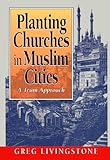
Greg Livingstone, author of Planting Churches in Muslim Cities: A Team Approach, posts on the The Lausanne Global Conversation, Why so few churches among Muslims?:

  1. Thesis One:  Only God Himself can “open eyes” and convince a Muslim to ‘bow the knee’ to Isa Al Masih as Saviour and Master. Matt.16:17; John 6:44.  Historically, however, God has chosen to do that when and where His messengers are in long term residence spreading the teachings of Jesus in their heart language.
  2. Thesis Two: Relatively few appropriately gifted messengers have focused on Muslims.
  3. Thesis Three: Opposition and close-mindedness to the claims of Jesus Christ are rooted more in historical events than in theology. People called Muslims and people called Christians have been at war or otherwise violating each other for 1400 years!
  4. Thesis Four: Unless both the messenger and the recipient of the message succeeded in clearing away the barrier of historical offenses, it has been very difficult for a Muslim to seriously listen and internalize what the messenger was presenting.
  5. Thesis Five: The most basic reason Muslims have still not responded to the claims of Christ if OFFENSE was FORGIVEN is that those Muslims were still not acquainted with respected persons in their own society who had put themselves under the living Messiah’s authority.
  6. Thesis Six: It is the Koran-believing Muslim’s duty to oppose any teaching that gives preference to any teacher over Mohammed and the Revelations from God given to Mohammed. Therefore, the more articulate Muslims are commonly bent on converting a Christian as opposed to listening to one.
  7. Thesis Seven: Muslims follow those they respect most in their extended family or community. Since Muslims have no (or too few) examples of a ‘significant other’ putting their reliance on Christ’s act of atonement, and making the resurrected living Christ their utmost authority, s/he has not been able to conceive of such a radical departure from their community or tradition.
  8. Thesis Eight: Unless what it means to be an obedient follower of Christ was understandably distinguished from the behavior of the so-called “Christian masses”, especially Westerners, the Muslims have perceived very little ‘good news’ in our message. Muslims have been unceasingly told by their leaders that “Christianity doesn’t work”.
  9. Thesis Nine: “Christian mission” since Constantine, 300 A.D. and before the Protestant Reformation was not “regeneration”, but most often no more than pressuring non-Christians to be baptised as an act of switching their allegiance to a particular ecclesiastical Bishop, Pope or Patriarch plus some minimal confessions and practices deemed most important by those rulers.
  10. Thesis Ten: Until the late 1700s, the conviction that all men everywhere must consciously confess their reliance on what Jesus of Nazareth did on the Cross, [sacrificing Himself to atone for their rebellion and evil motives and behavior] and his resurrection from the dead, surrendering to Him as their daily Master- is a concept of mission that was nearly absence from the minds of the few spreading the Christian religion to Muslims.
  11. Thesis Eleven: Even among those who recognized what Evangelicals understand as “the Great Commission”, very few saw it as pertinent for their day or community of believers until the evangelical revivals of______and _____in Europe and North America.
  12. Thesis Twelve: Among the tiny percentage of Protestants determined to “preach the Gospel to every creature”, extremely few considered residential efforts to ‘make disciples’ among Muslims to be advisable or even possible.
  13. Thesis Thirteen: Missionaries among Muslims have been typically only ones and twos-‘lone ranger’ types with significant gaps of time between them and the next ones to take up the task.
  14. Thesis Fourteen:  Those missionaries most gifted in evangelism went to Latin America or Africa, where they were welcome. The few taking up residence among Muslims, historically, have tended to be gifted as scholar-teachers or medical personnel.
  15. Thesis Fifteen: Because missionary visas were created by colonial powers, Muslim countries gaining independence withdrew such visas.  From 1945 to 1975, countries not issuing missionary visas were considered “closed” and therefore off limits for missionary endeavor by church and agency leaders.
  16. Thesis Sixteen: In both the Catholic efforts and in Protestant era between 1790-1900, what Latourette calls ‘the Great Century” missionaries sailed PAST the Arab world, Turkey, Persia. In Russia, China, India, and Southeast Asia, they avoided the Muslims to concentrate on Tribals, low-caste Hindus, Chinese, or non-evangelical Christians.
  17. Thesis Seventeen: Historically, even where there has been some witness TO Muslims, there is little precedent for attempting to establish churches wherein the Muslim background believers were the majority. There was failure to recognize the H.U.Principle…Muslims did not want to associate with Hindus, or nominal Christians.  Yet, unless seekers can experience a new ‘family’ committed to seeing their needs for a spouse, house, work, education, and protection provided, it has been considered unsustainable to identify with the Christians.
  18. Thesis Eighteen: Until very recently, existing churches in countries with a Muslim majority have NOT welcomed Muslim seekers, assuming their motives to be sinister and/or that allowing them fellowship would bring violent retaliation from other Muslims.
  19. Thesis Nineteen: Historically, due to poor communication methodology, even where some daringly proclaimed the “Good news”, it was not heard as good news, but rather as BAD news. E.g. “do NOT honour your father and mother” or “reject your community’s traditions”.
  20. Thesis Twenty: Because Muslims have tended to react violently or at least with violent threats, Muslim believers historically have been ‘sent away’ to a safe place; extracted from their community, usually never to return. This practice intending to be good shepherding resulted in missionaries getting a reputation as ‘kidnappers’, and breakers up of families.
  21. Thesis Twenty One:  Missionaries have tended to invest in the first available seekers. These tended to be persons already marginal in their society unable to influence others and/or persons with the wrong motives.
  22. Thesis Twenty Two: Unless there have been a sufficiently large group of Muslim believers, [critical mass] fear both among the handful of converts and the messengers has prevented the believers from meeting openly enough to invite or attract other Muslims. Hence reproduction or church growth/reproduction has typically been thwarted.
  23. Thesis Twenty Three:   The doctrine of the worth of the individual believer, unintentionally produced an individualistic, unaccountable missionary who if s/he won a Muslim, discipled him also as one with little accountability or commitment to the rest of the believers. Only community can reproduce community.
  24. Thesis Twenty Four: A corollary of individualism has been the Protestant insistence on individual confession and baptism. Muslim societies however, tend to make corporate decisions including religious alliances. It is not considered noble to ‘stand up against the crowd’ in Eastern societies.
  25. Thesis Twenty Five: Since the 1970s, church growth theory has encouraged workers to ‘go to the responsive’. This notion automatically excludes most Muslims peoples from receiving church planting teams.
  26. Thesis Twenty Six: Historically, those missionaries intrepid enough to venture into Muslim communities most often had no models and therefore little idea how to proceed in church planting among Muslims. Coaching has been minimal.
  27. Thesis Twenty Seven: The specific goal of establishing separate MBB churches with their own leadership in the same areas where churches of NON-Muslim believers exist was NOT endorsed by agency leadership until the 1980s.  To avoid bringing the MBBs into the non-Muslim background churches was considered violating the unity of the Church by Western missionaries.
  28. Thesis Twenty Eight: Missionaries, historically, were unwilling to take animistic practices seriously, [e.g. that jinn (demons) are part of a Muslim’s everyday life] thus they often seemed irrelevant in their message to folk-Muslims. Protection and power, not forgiveness, has been the felt-need.
  29. Thesis Twenty Nine: Too few messengers has taken up residence among Muslims because of a weak theology of suffering. If one has the goal of avoiding suffering, s/he will avoid proclamation to Muslims.
  30. Thesis Thirty: the 1960-70s, birthed a fresh concern for the peoples of the world among evangelicals. Since the oil embargo of 1975, and especially after the end of the cold war with Communism, evangelicals have become aware of the many Muslim peoples of the world as never before in history. Awareness breeds concern which leads to involvement.

What do you think? Did any of these stand out to you? Any you disagreed with with?

Sunday, August 15, 2010

The Death of Jesus

Christ's penal substitution is not the whole of Christ's work, but without it nothing else matters.

–Michael Horton in Why "Substitutionary Atonement" Remains Crucial

I have been reading a bit of The Mission and Death of Jesus in Islam and Christianity, by A. H. Mathias Zahniser.  A review at IBMR says this about the book:

Christians and Muslims have historically differed on the question of the nature of Jesus’ mission and his death. Evidence for this disagreement appears in the Qur’an and in the earliest debates between them from the ninth century. Understandably, a lot has been written on this subject. Christian positions on these points have shifted significantly over the years from absolute disagreement to attempts to reconcile the qur’anic position with the Christian. In the latter case, the differences have been attributed to the intervening history of Muslim-Christian relations. Recognizing the apparent impossibility of bridging the gap between the different narratives and purposes of the Qur’an and the Bible, and those of Muslims and Christians, there has also been an attempt simply to avoid these issues altogether. As intractable questions, they are seen to obstruct the allegedly higher purposes of reconciliation and pragmatic joint engagement in society.

This book is forceful in challenging this activist view and draws readers into a substantial evaluation of the fundamental differences. First, though, it considers the equally substantial common grounds, which include our shared notions of God, Scriptures, Jesus, and apostles and prophets (pp. 1–14). It then considers the verses in the Qur’an that apparently deny crucifixion (pp. 15–31), reexplores these questions in the classical and modern commentaries and the traditions (pp. 32–78), considers the question of whether someone else was crucified in place of Jesus (pp. 79–94), and reviews early marginal Christian beliefs about these questions (pp. 95–114) before proceeding to closely examine the relevant New Testament references that tell us about Jesus’ “final days” (pp. 130ff.).

This is a valuable resource for those who wish to revisit the impasse between Christians and Muslims over the questions of Jesus’ “mission and death.” Its value lies in honestly acknowledging that these differences exist and in exploring them squarely across the foundational sources of the Muslim-Christian traditions. The book was published under the Faith Meets Faith series of Orbis, which seeks to “promote inter-religious dialogue.” I do not doubt its potential for achieving this goal on a subject close to the heart of both Christianity and Islam.

The Mission and Death of Jesus in Islam and Christianity is primarily a scholarly book written to engage Muslims with the claims of Christianity over the most important issue, the death of Jesus.  Both Dudley Woodbury and Kenneth Bailey endorse the book on the back cover.  Woodbury says, “This book is a model of sensitive dialogue and apologetics that starts with common ground.”  There is a lot to be learned from this book.

Zahniser’s central thesis about the meaning of the cross is that Muslims will not identify with penal substitution, but instead with the “suffering that resulted from Jesus’ authentic faithfulness… His death was the price he paid for revealing God’s order [against the prevailing social structures of dominance and subservience] and acting consistently with it” (240).  He continues:

Jesus put himself in grave danger, then, in that he confronted the religious establishment, the revolutionary nationalists, and the wealthy elite.  His death was partly a function of his faithfulness to his messianic and prophetic vocation to reveal and abide by the values of God’s kingdom (241).

There is a lot in Zahniser thesis that is true, but I do question his desire to repeatedly criticize penal substitution without ever referring to any of it’s main texts (e.g. Is. 53:4-6; Rom. 3:21-26; Gal. 3:13; 2 Cor. 5:21; 1 Jn. 2:2).  Of the strengths of the penal substitution theory is the multitude of texts that fit the model.  I’m not saying that penal substitution is the only view of the atonement, but that it is the central theory that makes other views possible (and beautiful!).  Substitution lies at the heart of every view of the death of Christ, including Christus Victor- Jesus is fighting for you, in your place (I first heard that from Keller).

Actually, hints of substitution appear in the Qur’an, in the story of Abraham's near sacrifice of his son, “We redeemed him with a great sacrifice” (As Saffat 37:107).  And Muslims seem to understand, in my experience, that God’s perfect holiness and justice demand punishment.  Each person is responsible for his own sin, but, as I say, we are powerless to purify ourselves.  Good works don’t clean a person.  Sorry, but if you think your prayers will save you then you’re proud and you don’t need God!  That’s why the gospel is good news for Muslims.  There is something that removes sin- Jesus’ blood.  He is our mediator.  So I would disagree with Zahniser that penal substitution is irrelevant for Muslims. 

Here is a helpful chart from the ESV Study Bible, which shows a plethora of substitution views on the meaning of the death of Christ (I added “Adoption” in the Language of personal relationships).  What Jesus has done for us is beautiful and multi-faceted and mysterious!  All we can do in response is worship.

Type of Language Biblical Words Human Need The Result
Language of OT sacrifices Blood, lamb, sacrifice We are guilty We are forgiven
Language of personal relationships Reconciliation, Adoption We are alienated from God We are brought back into intimate fellowship with God
Language of righteous anger at wrongdoing Propitiation We are under God's holy wrath God's wrath is satisfied/quenched
Language of the marketplace Redemption, ransom We are enslaved We are set free
Language of the law court Justification We are condemned We are pardoned and counted as righteous
Language of the battlefield Victory, deliverance, rescue We are facing dreadful enemies We are delivered and are triumphant in Christ

Related posts:

Friday, August 13, 2010

Why do Muslims fast?

From Discover Islam:

“O believers!  Fasting has been prescribed for you as it was prescribed for those before you in order that you become more conscious of God.” (Quran 2:183) [Another translation would say, “in order that you become more pious” or Y. Ali says “that you may learn self-restraint.”  The verb is تَتَّقُونَ and refers to taqwa.]

Although in most religions, fasting is for expiation of sin or atonement for sin, in Islam it is primarily to bring one closer to God, as stated in the above-mentioned verse.  Since God-consciousness is the prerequisite for righteousness, great stress is placed on fasting in Islam.  Thus, it is not surprising to find that when Prophet Muhammad, (peace be upon him) was asked:

“Which is the best deed?”  He replied, “Fasting, for there is nothing equal to it.” (Reported in Al-Nasa’i)

Read the whole thing.  The post reminds me of the verse, “Christ died for sins once for all, the righteous for the unrighteous, that he would bring us to God” (1 Pet. 3:18).  For us, fasting is a response of faith that renews a hunger for God because we have already been brought close to him in the death of Christ.

Here is a music video (HT: His Peace Upon Us) that explains the benefits of fasting for Muslims.

See The Essence of Ramadan (and Islam) for more on how Muslims view fasting.

Monday, August 9, 2010

The Cordoba House - Islam, Fear, and the Gospel's Demand

There's certainly been a lot of attention paid to the debate surrounding the Cordoba House these days.  It is a proposed Islamic center/mosque that is to be built near Ground Zero in Manhattan.  This attention has led to a larger discussion in the West about the fear that many people have of Islam.  My question for Western Christians then, is this: as followers of Christ, how are we to respond to the new reality of Islam in our neighborhoods?

Ted Esler of Pioneers has this to say:
I have a friend who works in a country where Islamic law governs life. The small house church he had established was in the hands of national leadership, and he was not present when the religious police broke in and arrested the entire church, sentencing all of the men to prison.

One day soon after, an angry mob assembled at the local mosque and marched toward my friend’s home. He gathered his wife and children together, locked the doors, shuttered the windows, and went upstairs. His wife shook in fear as they prayed together, asking for deliverance and praying for those who were marching down the street toward them. The shouts and insults against Christians grew as the mob drew closer to their home.

To his amazement, the crowd passed by and continued down the street. He then came to the realization that they had never intended to visit him that day. They were unaware of his involvement with the small, persecuted house church.

As we consider Islam and its reach into our own country this story helps me understand where many of our hearts might be. The news is filled with angry mobs and it appears that they are headed our way. How should we think about this?

It is easy for us to assume, like my friend did, that they are coming for us. But we are not the reason for their anger.

Paul wrote, "Many, of whom I have often told you and now tell you even with tears, walk as enemies of the cross of Christ" (Philippians 3:18). The dangerous anger of Islam does not burn foremost because of our culture, our freedoms, or our "way of life." It is an attack on the cross first and foremost. Our response should be based on this fact.

Watching the news one might be led to conclude that anger is the best response to Islam. Another response might be fear, such as that felt by my friend (an understandable, human response).
Jesus taught another response. "You have heard that it was said, 'You shall love your neighbor, and hate your enemy.' But I tell you: love your enemies …" (Matthew 5:43, 44).
For many evangelicals, the threat of Islam—both real and perceived—has sometimes distracted from obedience to the demands of the gospel. While radical Islam certainly has a political agenda that should not be minimized, we should, in obedience, follow Jesus' command to love them.

How best should we love Muslims? We can pray, we can show them tangible acts of love, and we can send emissaries to them. While it is very disconcerting to see Islam grow within the borders of the USA, our hearts should break more over the fact that 1.2 to 1.5 billion people don’t know Jesus and will never experience the joy it is to know him. Most will never meet a disciple of Christ unless some of us go.

That is why Pioneers, the organization I serve with, exists.
Ted, I couldn't agree more!  I should also note that New York City already contains over one hundred mosques.  Thus I believe the issue of the Cordoba House is not so much that a mosque (albeit a very very big mosque) is being built as much as it is about the location of that mosque (two blocks from Ground Zero).  However, I think the larger discussion that it has opened in the West is imperative for Evangelicals to weigh in on.  As I told one close friend when he bemoaned the fact that a mosque was being built in his neighborhood, "As a Christian who is supposed to obey Christ's Great Commission, you should be thankful that Muslims are coming to you, it saves you a lot of money on plane tickets."

HT: Desiring God

Sunday, August 8, 2010

“Son of God” in Bible Translation for Muslims

Here is an article in SFM by J. Scott Horrell, an expert in theology of the Trinity at DTS in Dallas, who writes about the term Son of God, its meaning and history, and how this should impact Bible translations for languages of Muslims: “CAUTIONS REGARDING “SON OF GOD” IN MUSLIM-IDIOM TRANSLATIONS OF THE BIBLE: SEEKING SENSIBLE BALANCE.”  Here is the conclusion:

We began with the question of how fidelity to Scripture and classical Christian confession of Jesus as the “Son of God” can be held together with Muslim-sensitive translations? Ingrained in Islamic cultures, the words “Son of God” elicit the image that Jesus is God’s offspring through physical relations with a woman. Conversely, central to Christian faith is the invitation to “believe that Jesus is the Christ, the Son of God, and that by believing you may have life in his name” (John 20:31). I have addressed the following questions:

First, exegetically, are non-word-for-word renditions of Jesus as the “Son of God” omitting too much? My response is that the multi-layered meanings of “Son of God,” as in the Gospels, often point beyond the limited concepts of those in Jesus’s immediate world. Replacing Sonship language—as uttered from heaven at the baptism and the Transfiguration, by Satan in the temptations, and by demons as early testimonies to Jesus’s supernatural origin—can detract from the canonical text’s post-Easter implications. Jesus’s own Father-Son language reaches the deepest levels of divine self-disclosure.

Second, should the traditional centrality of “Son of God” terminology in both Eastern and Western Christianity be set aside for non-Christian religious and cultural concerns? I reviewed early second-century witnesses such as Ignatius, Shepherd of Hermas, Barnabas, Aristides, and Justin who give strong place to describing Jesus as the “Son of God”—this in the midst of Jewish and pagan misinterpretations. The Nicene Creed (325) later codified the meaning of “the Son of God” as “from the substance of the Father…true God from true God.” The full deity of Christ as God’s Son is the fundamental doctrine of all major Christian traditions. In that name millions have faced discrimination and martyrdom. For that reason, Muslim-idiom translations that replace literal “Son of God” terminology are often perceived by long-standing national Christians in such cultures not only as accommodating another religion but also as betraying the church that has endured under oppressive regimes.

Third, from a theological perspective, what does it mean to confess Jesus as the “Son of God”? And how does this relate to biblical translation? We first observed the analogous nature of God-language, yet how the names “Father” and “Son” (more than any others) transcend merely this-world significance to allow us into the heart of Trinitarian relations. To confess Jesus as the “Son of God” is finally to recognize both his essential equality with the Father and his eternal filial relationship. As for translation of the “Son of God,” all translation is unavoidably interpretation. Biblical translation carries the special responsibility of bridging not just from the text to the receiving culture. It further functions as an invitation to enter the Christian faith—the faith of the church. Therefore, especially in regard to the phrase “Son of God” when related to Jesus, extreme care should be exercised lest the rich meanings of the deity of Christ and his eternal relationship with the Father be subverted.

I offer these thoughts as cautions to Muslim-idiom translators who are sometimes zealous to circumvent barriers to communicating the gospel of Jesus Christ. Such a motive is wholly commendable, with over one-fifth of the world population in the balance. Both national and expatriot translators suffer hardship, opposition, and long hours of tedious linguistic analysis. Nonetheless, no Christian worker is autonomous from the greater body of Christ. No translator can ignore (and most do not) the basic precepts of Christian theology or the long history of the church. Fresh translations of the Bible are vital and consequential, whether in contexts of an existing church or where the word of God has never been heard. My exploration of the questions are intended to contribute to greater balance in approaching the translation of Sonship terminology for Muslim readers. To replace the grammatically accurate and traditional translations of “Son of God”—a phrase central to Christian confession—should be done with the full corpus of exegetical and historical factors in view, and then only with reverence and reserve.

Tuesday, August 3, 2010

American Muslims Make Video to Rebut Militants

Click through to Circumpolar if you can’t see the video.

I’m frequently asked by Christians in the West whose view of Islam is formed primarily by militant, violent, jihadist Muslims, “Where are the Muslims in the world who condemn terrorism?  Why don’t they ever speak up?”  Well, here are some of them.

HT: Muslim Matters (also posting a NY Times article about the making of the video).

Bob Blincoe's New Blog

Bob Blincoe of Frontiers has joined the blogging ranks. I encourage you to have a look at his new blog and glean some wisdom from him.  Bob has an uncanny ability to infuse his incredible faith in God's promises to draw Muslims to himself into others.  Whenever I am around him I get a dose of it.  So reading his blog from a distance should prove to be nearly as good!