Friday, April 27, 2012

Challenges to Engaging Unreached Muslim Peoples

An email I received today from a friend:

All seem to agree: it is a day of unparalleled opportunity in world evangelization. The global church has never had more resources than she has today.  Yet, there are 1,214 totally unengaged/unreached Muslim people groups in the world– right now.  197 of these have populations over 100K.

Question: From your personal or ministry perspective, what do you believe are the three greatest roadblocks or challenges that stand in the way of the global church engaging every one of these Muslim people groups in the next five years?

How would you answer?

Wednesday, April 25, 2012

Divine Sovereignty: The Fuel of Death-Defying Missions

David_PlattHere is a recent sermon from David Platt, author of the popular book Radical: Taking Back Your Faith from the American Dream, when speaking at a recent T4G event.  So many people have recommended this to me I just had to pass it on.  Watch the video, listen to the audio, or read the transcript.  Here is a line that stood out to me:

Brothers and sisters, if there are 6,000 people groups that have still not been reached with the gospel of Christ, then we have missed the point of the atonement.

Tuesday, April 24, 2012

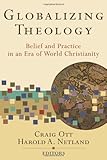
Review of Globalizing Theology (Ott and Netland, 2006)

As opposed to 100 years ago, the Christian faith today is no longer simply white, rich, and western, but is instead more accurately described as brown, poor, and southern. Coupled with the phenomena of globalization, this demographic swing has profound implications for the globalizing Church (not “globalized Church”: there are still thousands of unreached peoples!). With such an intertwined world and a diverse Church, different Christian theologies are bound to clash with each another. Globalizing Theology: Belief and Practice in an Era of World Christianity is a collection essays written in honor of the late missiologist Paul Hiebert meant to show how both the nature and task of theology is being redefined by the phenomenon of globalization.

Part 1 of the book examines the global status of theology today. Tiénou, Whiteman, and Walls make the case that Western theology arrogantly self-perceives itself to be the universal standard of theology for the rest of the world. Meaningful dialogue, the necessary ingredient for learning from each other, will not be possible until the West learns that its own theology is itself contextual and based largely on Greek and Enlightenment categories. The West needs to approach non-Western theologies not from a position of power, but as unique and important equals to be learned from.

Part 2 proposes a methodology for globalizing theology. The chief tension is how theology can be both contextual and yet simultaneously transcend the local expression. Each author explores this tension between the particular and the universal in different ways. Vanhoozer proposes that theology must adhere to the canonical principle (in accordance with Scripture), and the catholic principle (the diversity of the worldwide church enriches and enlarges theology). Strauss looks at the universal and contextual nature of the creeds; the creeds are themselves products of historical situations and need to be interpreted as such. Priest contrasts philosophy and anthropology as conversation partners with theology, and argues that “experience-near” theologizing (using indigenous thought forms and language) best describes how missional theology impacts the human condition in context. Perhaps Van Engen says it best: “The glocal church's task of critical theologizing involves a dialectical tension: The gospel can be known only within cultural frameworks, yet the gospel is always distinct from - sometimes affirming of and often prophetically critical of - all human cultures” (178).

Part 3 examines the multifaceted implications globalizing theology has on the church. Whether it’s economic theory, idolatrous nationalism, or even a missionary reporting to her sending church, the repercussions of the diversity of Christian theology are unmistakable in today’s world. The church must be prepared to deal with these conflicts in a way that edifies and honors fellow Christians in other cultures, as well has challenges blind spots in one’s own culture.

Why is the message of Globalizing Theology essential for Westerners who translate the gospel among Muslims? Islam is a global and culturally diverse faith (despite the fact that the Qur’an cannot be translated!), and has a robust theological system which has often been over-simplified as a works-based idolatry. Although it is true that Islam is perhaps the most resistant worldview to the gospel that the church has ever seen, Muslims today are indeed beginning to trickle into the kingdom. As this trickle becomes a river, the body of Christ will be enriched and enlarged by the unique contributions of Muslim background theologians (e.g. Lamin Sanneh). Perhaps we are not too far away from seeing how theologically baptized Islamic concepts can provide deeper Biblical understandings of the tri-unity of God (tawheed), the community of believers (ummah), and peace (salaam). Islam as a theological culture is not just something to be replaced; it is impossible to minister independent from cultural context. Ministry among Muslims will include utilizing the thought forms and expressions of Islam in ways Globalizing Theology exemplifies in other contexts. And in the end, outsiders (like me) may only be temporary catalysts leading to deep, indigenously-led movements to Christ. It will be the theologically unique but Biblically grounded Muslim background church that finally reaches the Muslim world.

Thursday, April 19, 2012

Love Your Enemies

Here's Carl Medearis speaking at the Veritas Forum at Tufts University in Boston last month.  Carl is one of the best at examining this issue in real life. 


Thursday, March 29, 2012

Qur'anic Variants

From Unchanging Word:
There is a mistaken idea perpetuated in some circles that the Topkapi and Samarqand manuscripts in Turkey and Uzbekistan are "original" copies. However, experts agree that these are not Uthmān's copies, as they are written in the Kufic Arabic script which only appeared in the late eighth century. Furthermore, even the Uthmānic copies themselves were not originals, for they were compiled many years after Muhammad's (pbuh) death to standardize the variety among Qur'ānic texts.
Here are two charts that show some of the minor differences in some of the oldest copies of the Qur'an that we have.  The important thing is this - the minor differences (in red) do not necessarily change the overall meaning of a given passage, but they do prove that traditional Islamic teaching that the Qur'an descended from Heaven and is perfectly preserved in every way until the present is simply not true. (click to enlarge)


Not included in these charts are the variants found in the Sana'a Manuscripts, the contents of which are still being processed by scholars. Yemeni authorities, however, seem to be blocking scholars access to them because of their potentially devastating blow to traditional Islamic teaching on the incorruptibility of the Qur'anic text, so we may have to wait a while for more details.  In any event, the Sana'a Manuscripts, written in the Hijazi script and dating from the 8th C. AD / 2nd C. AH, appear to be the oldest copies of the Qur'an ever found.  They too contain numerous variants, including layered revisions of the text which are clearly visible. (shown here) 


For more on the topic of Qur'anic variants, click here

p.s. For our Muslim friends who read this blog
Dear brothers and sisters, please do not think that this post is an attempt to shame or humiliate Muslims, Islam, or the Qur'an.  Rather, it is simply meant to display the actual facts about this issue. You must decide for yourself what these facts mean about Islam and the Qur'an.

Saturday, March 17, 2012

Who was St. Patrick?

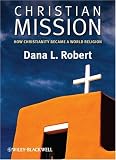
Saint_patrick3He wasn’t Irish.  A Brit born in the 4th century, a third generation Christian, Patrick was the victim of an attack on his homeland and enslaved by the Irish when he was 16.  He escaped 6 years later.  After becoming a priest, he felt called by God to return to Ireland in order to win them for Christ.  How could a Brit be so honored by the Irish?  His ministry was really successful, because, according to Dana Robert (Kindle Locations 2006-2009):

Patrick's own writings give hints as to why his message appealed to the Irish. The first was the deep level of identification he felt with them. As do all good missionaries, he spent years among the Irish learning about their culture: he interpreted his enslavement as part of God's larger plan for his life task. He understood the Irish and knew their language. He spoke in idioms they understood, as is shown by the reference to his role as "hunter." He translated the deeper meanings of Christianity into Irish modes, helped no doubt by the Celtic roots he shared with them.

Patrick’s story is absolutely fascinating.  And so is the missiological analysis on him by Dana Robert.  I encourage you to read her chapter devoted to St. Patrick in Christian Mission: How Christianity Became a World Religion (2009).

Thursday, March 15, 2012

Cranmer on Bible Translation Controversy

Below are some insightful excerpts on this issue from the well respected conservative blog Cranmer:
One of the problems (if not the principal one) is that the sound-bite ‘Wycliffe have removed the Son of God from the Bible’ is a much easier message to impart than a nuanced discussion about the nature of the Trinity, the vagaries of language and the imprecision of meaning. There are complex and legitimate questions to be asked about the way in which terms such as the ‘Son of God’ are translated in some contexts. These cannot easily be discussed on febrile blogs or in 140-character tweets. And those who have pledged to withhold their tithes as a result are acting like children.
All of Wycliffe’s translations are checked according to a set of standards agreed internationally by all Bible agencies. They would never publish a translation which systematically removed Jesus’ relationship to the Father and they certainly would not make translation choices in order to mitigate the offence of the Gospel of Christ. When many risk their lives in some hostile societies, the allegation of diluting or dumbing down Scripture is absurd.

The notion that translation can be effected by internet petition (by people many of whom will have very little understanding of the host culture situation) seems like the very worst kind of Western Christian arrogance. We may know what ‘Father’ and ‘Son’ mean in English, but it does not follow that they must have the same semantic range in another language. Who but the Greek and the scholar of Greek can know what is meant by huios? Who but the indigenous and the participant observer can begin to grapple with the difference and distinction between biological and social familial terms?
There is a long-standing convention in the missionary world that organisations do not give out the names or locations of those working in sensitive areas. All missionary organisations have agreed to this and it has been respected, until now. Some websites critical of Wycliffe and some of the emails in circulation make it possible to identify some of the people, missionaries and local believers who are in very sensitive situations. This is utterly irresponsible: indeed, it is an assault upon the work of God.
Read the whole thing here.

The article doesn't deny that perhaps some thorough examination of translation practice needs to happen as a result of all this.  There may be, in fact, serious revisions needed.  But the point is, this is not such a clear-cut "win" or "lose", "right" or "wrong" issue as the petitioners would have us believe.  And it and has caused no small amount of tension in the body through finger pointing, name calling, and other knee-jerk reactions by all sorts of individuals, churches, and ministries who either don't understand the real issues, or disagree with the view of others.  Thankfully, Wycliffe and Frontiers have not resorted to this kind of behavior, and their leadership is to be commended for that. 

Tuesday, March 13, 2012

Miraculous Movements: An Interview with Jerry Trousdale – Part 2

Yesterday I began an interview with Jerry Trousdale about his new book Miraculous Movements: How Hundreds of Thousands of Muslims Are Falling in Love with Jesus.  Read Part 1 here.

4. The church planters in your book are all Africans. What role do Western missionaries have in Africa?

Our experiences in Muslim background church planting in Africa since 2005 is spread across 45 people groups that are 99-100% Muslim (with 3,586 simple churches) and 31 more peoples that are 60-98% Muslim, in addition to less Islamized peoples in 18 countries of West Africa, the Horn of Africa, East Africa, and Central Africa.

Since 2009 all of the leaders of Cityteam International’s African team are Africans. Some of our 350 partner ministries in Africa have Westerners on their disciple making teams but collectively the vast majority of them are Africans.

In our experience a novice inside leader is usually much more effective than a highly trained outsider. One of the historic challenges in the global missionary enterprises is that outside-the-culture leaders (whether African or Western), regardless of their training and sophistication are usually frustrated in their efforts to achieve only insiders-to-the-culture can do naturally, powerfully, and virally.

In spite of that we believe that Westerners can have a very relevant role in Disciple Making Movements everywhere. However in distant cultural contexts that role is most often in seen in training, coaching, and mentoring leaders, plus strategic support functions as opposed to direct field engagement.

There are certainly some notable and successful exceptions to that statement in Muslim contexts however. And without being too specific for obvious reasons, we have sometimes observed, and can envision even more creative roles of Western colleagues in facilitating compassion ministries and honest, strategic business as mission opportunities around the world.

5. Many stories and examples in your book come from very near-culture believers taking the gospel to unreached areas. What advice would you give to someone laboring in, say, Libya or Yemen, where there are no examples of near-culture believers nor churches where local seekers can hear the gospel?

You are correct in observing that Miraculous Movements as a popular-treatment book tells mostly stories of near-neighbor engagements because that will be likely be most relevant and appropriate for the majority of readers. But there are certainly more than 1,500 churches among Muslims in regions that are definitely not near-cultural contexts. These are in places that we don’t really discuss publically and did not hint at identifying in the book.

The principles of disciple making movements have now been found successful on multiple continents beyond Africa, and among not only Muslims, but Hindus, animists, Christo-pagans, and others. For sure virtually any ministry model is most easily engaged by a near-culture neighbor. But we do see some good examples of disciple making movements being launched in very challenging places by people who are not near-cultural disciple-makers.

To answer your question, I think that the testimony of growing numbers of replicating churches among least reached or formerly unengaged Muslim peoples gives us a reason to imagine that engaging lostness across severe cultural barriers in places like North Africa will at least be enhanced by a highly intentionally use of Jesus’ own ministry model and specific instruction, including: much prayer, engaging with genuine compassion and service, finding a person of peace that God has already prepared to bridge the gospel in restricted areas, obedience based discipleship, discipling people toward conversion, plus creation to Christ discovery Bible study with a DNA of an embryonic church from the first meeting.

6. While the vast majority of those in Africa who came to faith in Christ expressed deep dissatisfaction with Islam, your book hints at a couple movements who didn’t want to identify themselves as “Christians.” Where would you put the various movements described in your book on the C-Scale? Is there a variety? Is there evidence of any C5 or “Insider” ministries or movements in Africa? Why or why not?

The great majority of Muslim background churches in the Disciple Making Movement streams that I have visited are not at all allergic to the term “Christian.” And those that might avoid that word would not do it because they are confused about whether or not they are still Muslims, because they have experienced a life transformation as Followers of Isa al Masih.

For some years, even before I reengaged working with unreached Muslim people, I found myself preferring to self-describe myself in terms of a “Christ Follower” in North American contexts precisely because the term “Christian” seemed to me have lost the meaning of “a fully obedient follower of Jesus.” So sure, a minority of the Muslim background Followers of Isa al Masih in Africa sometimes prefer more descriptive language like that to avoid the tragic cultural and dishonorable baggage that the word “Christian” may evoke in some Islamic contexts—much more problematic there than in North America in fact.

However, it is my experience that none of the Muslim Background Christ Followers I know anywhere In Africa would avoid the term “Christian” because they still self-identify as a Muslim, or still relate to Mohammed as a prophet, etc.

When these Followers of Isa have a challenge with the name “Christian” it is because the dominant Muslim culture has redefined the connotations of “Christian” in ways that are not only un-biblical, but perhaps even immoral and disrespectful to God.

When people become Christ Followers through a process of obedience-based discipleship to salvation, they often experience God the Father’s love, God the Son’s grace and forgiveness, and God the Holy Spirit’s empowering and transformation. There are not argued into a doctrine, they experience God fully. And if they stay in a mosque for a season it is usually because they feel called by God to be there because it is the place He has assigned them to look for more people of peace who will bridge the Gospel into new families.

We are of course fully aware of the multiple issues under discussion under the rubric of C5 “insider” movements along with the related familial language Bible translation questions. However in our own context we strongly discourage “any” outsider to attempt to coach a local Muslim background church in how to contextualize the gospel in that church’s unique context. In fact we believe that this might be a form of inserting our own theories between a church of new Christ Followers and the Holy Spirit’s leading of that group.

Candidly we feel that in our context, trying to apply or impose the C Scale brings as much confusion as clarity so we don’t seek to shape or categorize the churches. In Disciple Making Movements each gathering of Christ Followers is encouraged to follow God’s will as revealed in His Word and allow the Holy Spirit to take them as far and as fast as He wants to on their journey to be fully mature followers of Jesus.

What this “outsiders’ hands off” approach has produced among more than 6,000 Muslim background churches in Africa in the last seven years has been what you would expect: a range of range of contextualization practices across the spectrum with the great bulk of the churches probably in the middle—and the Holy Spirit providing some local churches in highly volatile regions with some remarkably wise, courageous, and creative strategies for engaging their communities.

The common end of disciple making processes is making a disciple who makes disciples, and planting churches that plant churches. In a classic disciple making movement that process of planting a new church is facilitated by an outsider coaching a leader God is raising up in a family. But that outsider should never attempt to contextualize the gospel for that group because disciple making movements are predicated on a radical assumption that the Bible and the Holy Spirit are adequate to lead, mature, and protect a growing local church anywhere!

Thanks Jerry for your time.  God bless you and your ministry!

Monday, March 12, 2012

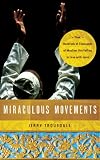
Miraculous Movements: An Interview with Jerry Trousdale – Part 1

Jerry Trousdale is author of Miraculous Movements: How Hundreds of Thousands of Muslims Are Falling in Love with Jesus and Director of International Ministries for CityTeam.  A website about the book can be found here: www.miraculousmovements.com

I am grateful for Jerry’s responses to the questions I’ve asked him which might be of interest for readers of Circumpolar.  Either Jerry or one of his colleges will be able to interact with your questions or concerns about the book, so feel free to comment below.  I’ll post Part 2 tomorrow where I ask him about the role of expats and his take on C5.
1. Why did you write the book? Who is your audience? What is the main thing you want your readers to take away from the book?

Bad news overwhelms our lives. In one European country the broadcast news services are now mandated to end each newscast with at least 30 seconds of something cheery to balance the daily barrage of crime, economic doldrums, political conflict, global terrorism and drugs.

“Disciple Making Movements” does not sound much like something that could be a vehicle for creating really good news, and an extraordinary reminder that the 1st century biblical term “gospel” in the 21st century is meaning great news for hundreds of thousands of people who had never rejected Jesus, they had just never before had a “Jesus option” where they live.

For most people it is almost unbelievable to imagine that in multiple countries, and among scores of different Muslim people groups, Isa al Masih (Jesus the Messiah) is being discovered, embraced and obediently followed by Muslim individuals, whole families, and entire communities. And this spiritual tidal wave is spreading from one Muslim community to the next with dramatic accounts of amazing transformations of whole communities and thousands of new Muslim background Christ Followers who are rising up to carry the disciple making initiatives into new regions.

So for Christians especially, today there is a flood of extraordinary disciple making movements and amazing stories coming from more than 6,000 of the most unexpected communities… inside the Muslim world. And this not just interesting and informative—it is inspirational and potentially transformational for all of us. Miraculous Movements was written to tell this story.

And there is a second story here about the totally counter-intuitive way in which this is happening. It is not being led by professional Christians, or by Western organizations on the ground. It is not dependent on large doses of outside funding. It is not about building church buildings and church programs. It is empowering both ordinary people and also drawing the unexpected help of hundreds of former imams, sheiks, and even people who have come out of Islamic terrorist cells. It is discipling people from the first day of encountering the Bible to obey everything that they personally discover about God will for their lives. It is a revival of an intentional focus on making disciples the way Jesus made disciples and churches follow as a natural byproduct.

And when Muslim communities are being transformed from what they were to places of much joy, peace, and celebration of God’s love then that is very, very good news. Good news for Muslim people groups, and good news for Christians who can find much to learn about spiritual renewal from the true stories of former Muslims who are now Followers of Christ.

This book was specifically written as a popular-treatment, mass-market book aimed at ordinary Christians.

Over the last ten years or so the global Christian missionary enterprise has become aware of movements called disciple making movements or church planting movements which have successfully penetrated and multiplied among people groups and regions where the Gospel had not previously been planted. In an easy-to-read format Miraculous Movements takes readers inside scores of these movements in Africa where they will discover the stories of real people in the movements—stories which illustrate and clarify the biblical values and practices that Jesus used in the first century and which are working again in the twenty-first century to engage lostness effectively and multiply disciples rapidly.

We are already seeing adoption of the biblical values and principles of disciple making movements in hundreds of ministries in the global Christian enterprise. But this book is for ordinary people who would like to learn how to engage lostness the same way Jesus modeled and taught his disciples. The principles can be applied anywhere, among all kinds of people. It just happens that the vehicle of this book is the story of how this is impacting Muslim populations.

2. What distinguishes your book from Garrison’s Church Planting Movements and the P.O.U.C.H methodology?

David Garrison’s 2002 book Church Planting Movements dramatically introduced Christians to the first signs that the Spirit of God was beginning to create some dramatic momentum of church planting in places that the Gospel had never gone before. It was a wonderful gift to the body of Christ! It articulated some key biblical principles that undergirded each movement and provided illustrative stories of people from inside several of those movements. POUCH churches are described in the book as focusing on five core principles focused on participative Bible study, resulting in obedience to God’s Word, led by unpaid workers in small cell churches, typically meeting in homes.

With the coaching of David Watson, whose work in India (along with his Indian colleague, Victor John) was among the case studies that Dr. Garrison wrote about, Cityteam International has focused major attention for the last eight years or so on catalyzing disciple making movements/church planting movements especially in Africa by deploying our own pioneer teams in unreached people groups, and also mobilizing, training coaching, and mentoring more than 350 different ministries that are successfully implementing the biblical paradigm shift. This has happened in more than 150 different people groups across more than 20 countries of West Africa, Central Africa, East Africa, and the Horn of Africa and includes more than 18,000 new churches and more than half a million new Christians.

That body of experience has harvested a great deal of additional understanding of the essential, biblical elements that are always necessary to see critical mass in movements. We have also come to understand that obedience-based discipleship growing out of discovery Bible studies is the single most important element that undergirds all quality replication and transformation. It is a non-replaceable core value in successful movement. And along the way we continue to get more clarity regarding how to create models of never-ending, on-the-job, non-extractive, and just–in-time leadership development.

These sorts of discoveries really needed to be shared with the larger body of Christ because we believe, as do many other colleagues in other ministries, that they will transform people and churches anywhere in the world.

3. Hiebert and others have emphasized that we have to go beyond simply changing beliefs and behavior; instead we should focus on transforming worldviews. If I’m reading you correctly, the disciple-making philosophy in your book has a heavy emphasis on behavior (obedience). How has the relationship of knowledge, obedience, and worldview transformation played out in the movements among Muslims in Africa?

Recently a senior missiologist told me that after visiting some Muslim background churches on the field he felt that the most critical message that Cityteam International had for the Church of Jesus Christ is simple: a highly intentionally focus on obedience-based discipleship--discovering and obeying God’s will in every passage of His Word. He felt that this is the key biblical value that is missing in knowledge-based discipleship. When this happens it creates movements.

Obedience-based discipleship is the only type of discipleship commanded in the Bible, very different from the knowledge-based model so common today. In John 14 and 15, Jesus articulated in fifteen different ways how loving and obeying God invites God’s transformation of the human personality. These are absolute biblical values and one of the unique themes developed throughout the pages of Miraculous Movements. And obedience-based discipleship not only is biblical, it dramatically changes individuals, families, and whole communities.

And this is not a theoretical model. It is Jesus’ promise of what happens when His people love and obey Him, and He fulfills his promises with dramatic exclamation points. And that transformation is attractive, winsome, and one of the most critical element of rapid multiplication—it is the absolute reality inside these movements. This is the reason that we have seen the impossible—Muslim towns asking for the “storytellers” that brought change to nearby communities—so attractive that dozens of imams themselves have asked for Chronological Bible storying to change their own communities.

Worldview issues are of course critical. The worldview perspective about Allah starts changing from the first time people see miracles of God, when they see transformation in a new Christ Follower, and when the “discover truth and obey it” processes starts in Genesis.

By the way, we don’t believe that you can start in Matthew and get an adequate worldview shift required about the nature of God. Worldview shapes the answers to critical questions like: Who am I? Where am I? What has gone wrong here? and What can be done about it?

And people get their worldview from stories, from narratives that shape how we see ourselves in the world. Change the guiding stories and a person’s worldview is changed. We believe that the ultimate answers to these questions are found in the process of discovering Creation to Christ stories of the Bible, internalizing them within a group, and together obeying whatever they learn about God’s will.

Part 2 tomorrow…

Sunday, March 11, 2012

What do Halloween costumes for pets and world missions have in common?

Americans spent the same amount of money in 2011 on Halloween costumes for their pets that they gave to unreached peoples missions - $310 million.  This $310 million (going toward UPG’s) represents only 0.001% of the $30.5 trillion income of Christians.  Another way to look at it is for every $100,000 that Christians make, they give $1 to the unreached. So it begs the question - is it God's fault that the unreached are still unreached with the Gospel, or it is the fault of Christians?  Who knows, if you don't want to deal with the facts, and adjust your life accordingly, you just might end up writing a book like "Love Wins" to justify your non-involvement in this staggering reality.

Detailed statistical breakdown from The Traveling Team below:

World Wide

World Population: 6.83 Billion (joshuaproject.net)
  • 6,928,198,253 - as of July 2011 according to the CIA World Factbook, accessed December 14, 2011 at https://www.cia.gov/library/publications/the-world-factbook/geos/xx.html
  • Median age - total: 28.4 years
  • Life expectancy - total population: 67.07 years

Hey TTT, what is “7 Billion”?  Click below to read the whole thing, you won't be disappointed.

Thursday, March 8, 2012

Miraculous Movements Trailer

Jerry Trousdale, author of Miraculous Movements: How Hundreds of Thousands of Muslims Are Falling in Love with Jesus (March 6, 2012), has graciously agreed to an interview for Circumpolar.  I’m asking him some tough questions, and I hope to post his responses soon.  Until then, watch this trailer:

See some more videos of Jerry talking about the book at CityTeam’s YouTube channel.

Sunday, February 26, 2012

Found in Translation: A New Missiological McCarthyism

There is a strange new form of witch-hunting going on in the world of missiology these days.  It reminds me a lot of Senator McCarthy's infamous search for Communists in America during the Cold War.  Recently an online petition was started to "Keep Father and Son in the Bible".  The claim was that certain new Bible translations are removing the familial terms in Scripture in order to avoid persecution and make the Bible more palatable for Muslims. Even though I agree that we should certainly keep these core, self-revelatory terms of God in the Bible, here is why I won't sign this petition:

1. The claims of the petition are a gross misrepresentation of the actual texts they purport to have a problem with.  The first, a Turkish translation of Matthew, does in fact retain the terms "Father" and "Son" in an interlinear form right underneath the original Greek text in the left column of the book, while the right column has a translation that is akin to "The Message" in Turkish.  Is that a sin?  Are the translators demons for doing it?  The authors of this petition would have the Christian public believe so.  And many a Christian who can't read Turkish and hasn't even seen this text is ready to jump on the McCarthy bandwagon and demonize the missionaries who were behind this translation. 

2. The second text in question is an Arabic translation of the Gospels and Acts.  In this text, when the Greek term υιός του θεού ("Son of God") appears, it is translated literally as ابن الله ("Ibn Allah" / "Son of God") in Arabic.  However, when only the Greek word "Son" appears, the translators took some liberty by using حبيب الله ("Habib Allah" / "Beloved of God")  to make it clear that Jesus is not the result of human procreation (I'd prefer a literal rendering with a parenthetical note, but I'm not going to demonize the translators for it).  This translation is, again, much like "The Message" essentially.

3. Nobody wants to take "Father" and "Son" out of the Bible, with the exception perhaps of an infinitesimally small percentage of fringe people.  I agree that we need to make sure we keep "Father" and "Son" in the Bible.  I would have signed the petition if what it claimed was actually true.  But the exaggerations and misstatements in the petition were many, which is why I didn't sign it.

4. Using a secular, activist site like change.org and posting the names and emails of the people who the petitioners deemed responsible is, in my opinion, very irresponsible and unprofessional.
 
5. Finally, consider the following example from Mark 1:1 in both the ESV and The Message:

"The beginning of the gospel of Jesus Christ, the Son of God."  - Mark 1:1 (ESV)
"The good news of Jesus Christ - the Message!" - Mark 1:1 (The Message)
[emphasis added by me for the Greek term υιός του θεού ("Son of God")]

The ESV is a translation.  The Message is an idiomatic paraphrase.  Everyone understands the difference.  The translations in question by the new McCarthys are no different than The Message.  They are simply idiomatic paraphrases designed to allow more people to connect with the Bible who otherwise might not.  Personally, I don't enjoy The Message.  But that doesn't mean I think we should attack what Peterson has tried to do with it.  And for the record, I don't enjoy the newer idiomatic translations for Muslims either.  But that doesn't mean I want to derogate those who do!

Why don't the initiators of the "Lost in Translation" petition start a new petition and charge Eugene Peterson with heresy and defame him all over the internet too?

Monday, February 20, 2012

Sunni and Shiite Islam: Do you know the difference? Take the quiz

From The Christian Science Monitor:

Most of the world's major religions are made up of multiple sects or denominations, and Islam is no different. Islam's two major sects are the Sunnis and the Shiites, and the division and interplay between the two is a major factor in the geopolitics of the Middle East. How well do you understand Sunni and Shiite Islam? Take our quiz and find out!

Tuesday, February 14, 2012

Mohammad as a Valentine

rasulullah-saw-300x276In order to learn how Mohammad-centric Islam is, it’s important to understand the depth of Muslims’ love for their Prophet.  Here is the summary of the post today at Muslim Matters, Love the Prophet – Follow Him:

Let's follow the Prophet ṣallallāhu 'alayhi wa sallam (peace and blessings of Allāh be upon him) to prove that we love him. Let's celebrate him every day. Let's engrave those beautiful stories of his life, which we memorize and narrate, on our actions. Let's check if our deeds are compatible with our claims of love towards him. In following him, lies the secret of Allāh's love, mercy and forgiveness for us.

Say, [O Muhammad], ''If you should love Allāh, then follow me, [so] Allāh will love you and forgive you your sins. And Allāh is Forgiving and Merciful.'' [Al-Qur'ān 3:31]

Muslims are commanded in the Qur’an to follow Mohammed and God will love them and forgive their sins.

Watch this short video from the post (talk about revisionist view of Islamic history!) that explains why anyone would want to follow Mohammed:

For Muslims to consider following someone other than Mohammed is a radical idea.

Sunday, February 12, 2012

Prayer Calendars for the Unengaged

From a friend:

We are excited to share that you can now download prayer calendars for the unengaged from Joshua Project on PDF at http://www.joshuaproject.net/prayer-resources.php . We hope you will take advantage of this wonderful resource and share it with those in your communities.

Saturday, February 11, 2012

Quarrelling and Blog Arguing

I have been following some blogs lately that attempt to “expose” unbiblical models of ministry.  The idea in itself can be commendable.  God is truth and we should love the truth.

The irony is that heresy hunters almost always become unbiblical themselves, both in their manner of arguing (judging fellow believers i.e. Rom. 14) and the peripheral issues they choose to attack.  Especially to Christian fundamentalists, a heretic is anyone who does things different than you- every issue becomes essential.

I say all this because I myself am tempted to quarrel with fellow believers in the blogosphere over unprofitable issues!

Here are some verses I was meditating on this morning:

Romans 14:1:  As for the one who is weak in faith, welcome him, but not to quarrel over opinions.

2 Corinthians 12:20: For I fear that perhaps when I come I may find you not as I wish, and that you may find me not as you wish—that perhaps there may be quarreling, jealousy, anger, hostility, slander, gossip, conceit, and disorder.

1 Timothy 2:8: I desire then that in every place the men should pray, lifting holy hands without anger or quarreling;

1 Timothy 6:4: he is puffed up with conceit and understands nothing. He has an unhealthy craving for controversy and for quarrels about words, which produce envy, dissension, slander, evil suspicions,

2 Timothy 2:14: Remind them of these things, and charge them before God not to quarrel about words, which does no good, but only ruins the hearers.

2 Timothy 2:23: Have nothing to do with foolish, ignorant controversies; you know that they breed quarrels.

Titus 3:2: to speak evil of no one, to avoid quarreling, to be gentle, and to show perfect courtesy toward all people.

Titus 3:9: But avoid foolish controversies, genealogies, dissensions, and quarrels about the law, for they are unprofitable and worthless.

James 4:1: What causes quarrels and what causes fights among you? Is it not this, that your passions are at war within you?

Friday, February 10, 2012

The War on Christians and the Arab Spring

Along with other followers of Christ, I am among the first to stand up for Muslims whose human rights are violated (just read some of my earlier posts).  However, why the silence from others when Christians' rights are violated?  Once again, Ayaan Hirsi Ali gets it right regarding the true nature of what is going on around the world in the Feb. 13th issue of Newsweek.  If you live in the Middle East as I do, you are accustomed to regular, first-hand accounts of Christians being massacred by Muslims.  These stories are real.  And they happen every single day.  It's time for the media to take note.  Thank you Newsweek.  Thank you Ms. Ali.  I'd love to see some Islamic voices come out and condemn this violence as well, but I won't hold my breath.

Incidentally, in the aftermath of the Arab Spring, expect this persecution to increase dramatically.  Democracy is not on the horizon for the Muslim World - increasing religious fanaticism is.  Trust me.  Or at least trust John Bradley.  The Islamists are better organized, and more importantly, better armed.  The student initiators of the revolutions don't stand a chance against them.  We must pray that as people in Tunisia, Libya, Egypt, Yemen, Syria, and beyond are brought face to face with Islam in its purest form (i.e. the Wahabi and Salafi brand), they will see that neither democracy nor Muhammad is the answer to their hearts' desires - Jesus is.  In the mean time, let us plead for strength for our brethren in these lands who already follow Jesus.  And keep praying for Ayaan Hirsi Ali to become a follower of Jesus herself. The peace and decency she seeks as a former Muslim is not to be found in America, democracy, or agnosticism, but in Christ!


Monday, February 6, 2012

Miraculous Movements: How Hundreds of Thousands of Muslims Are Falling in Love with Jesus

51VP7SzLUHL__SS500_

You’ve probably heard of the CPM that has been happening among Muslims in East Africa by now.  Thankfully, they have put many of their stories and lessons learned in a book.  I just started reading an advance copy it looks really promising. You can pre-order on Amazon-> Miraculous Movements: How Hundreds of Thousands of Muslims Are Falling in Love with Jesus:

How do the people most resistant to the transformative power of the gospel come to be its most devoted followers? Miraculous Movement recounts an amazing change taking place within Muslim communities where the truth of Jesus Christ is turning around the lives of many thousands of Muslims from more than twenty people groups. Discover through the sometimes humorous, often sobering, but always enlightening and encouraging true stories how imams, sheikhs, and entire mosques are forsaking Islam and embracing Christ.

This close look at what the Lord is doing to spread the gospel highlights the key scriptural principles that help Christians reach out in love to share the gospel in their own community. The authors outline the principle of service to others that open doors of opportunity to the work of the gospel.

Author Jerry Trousdale works with CityTeam Ministries, an organization dedicated to helping disciples make disciples through CityTeam's own ministry and through training other ministries in more than thirty countries.

Features include:

  • Outlines important principles on how to share the gospel with non-Christians
  • Explains how ordinary people can lead neighbors to Christ in love and humility
  • Tells many exciting and encouraging stories of Muslims who have accepted Jesus
  • Describes CityTeam's unique program focused on God's work through disciple-making movements, a strategy that harnesses the power of disciples making disciples and churches planting churches

Endorsements:

With Miraculous Movements, Jerry Trousdale and his colleagues at CityTeam have made an invaluable contribution to the body of Christ!

-David Garrison, PhD Author: Church Planting Movements

As a church planter for the last 10 years, our family has made it our mission to go where no one else wants to go. This book, Miraculous Movements, very much aligns with this mission of getting to know the community around you and then sharing the teachings of Jesus rather than trying to go in and hope people come to a church or, in some cases, a home church, just because you set up shop. This book shows how to attract people to follow Christ, not try to convert them to simply know Christ. If you want to read stories that will change the way you think about church plants and churches built outside our Western models, this is the book for you. Whether you are a church leader or a person who is curious to see what God is up to in other parts of the world, you won’t be disappointed.

-Charles Hill, Church Planter, National Speaker

Wednesday, February 1, 2012

Aquinas on Islam

Here is Thomas Aquinas' take on Islam in a nutshell.  What do you think?

The point is clear in the case of Mohammed. He seduced the people by promises of carnal pleasure to which the concupiscence of the flesh goads us. His teachings also contain precepts that were in conformity with his promises, and he gave free rein to carnal pleasure. 
In all this, as is not unexpected, he was obeyed by carnal men. As for proofs of the truth of his doctrine, he brought forward only such as could be grasped by the natural ability of anyone with a very modest wisdom. Indeed, the truths that he taught he mingled with many fables and with doctrines of the greatest falsity. He did not bring forth any signs produced in a supernatural way, which alone fittingly gives witness to divine inspiration; for a visible action that can be only divine reveals an invisibly inspired teacher of truth. On the contrary, Mohammed said that he was sent in the power of his arms—which are signs not lacking even to robbers and tyrants. 
What is more, no wise man, men trained in things divine and human, believed in him from the beginning. Those who believed in him were brutal men and desert wanderers, utterly ignorant of all divine teaching, through whose numbers Mohammed forced others to become his followers by the violence of his arms. . . . he perverts almost all the testimonies of the Old and New Testaments by making them into fabrications of his own, as can be seen by anyone who examines his law. It was, therefore, a shrewd decision on his part to forbid his followers to read the Old and New Testaments, lest these books convict him of falsity. 
It is thus clear that those who place any faith in his words believe foolishly. 
Thomas Aquinas, Summa Contra Gentiles, Book 1, Chapter 6 (trans. Anton C Pegis, University of Notre Dame Press, 1975, pp. 73-75)
I have long said that the best way to know that Islam is a man-made religion is to ask any man to sit down and dream up his perfect system/religion - the result would look a lot like Islam.  This hypothesis is helped even more when picturing men in 7th century Arabia.  Think al-wecht al-Jahaliyya "the times of Ignorance" (i.e. before the coming of Islam supposedly brought knowledge to heretofore uneducated desert tribes).  A similar argument could be made for Mormonism and Joseph Smith - another good deal  if you are a man.

Related Post: Islam and Mormonism

Sunday, January 29, 2012

How do we respond to the mobile phone revolution?

Mobile phone media resources are a strategic complement to our work in sharing Jesus with unreached peoples.  Just yesterday I bluetoothed a 6 minute summary video of the Jesus Film that was recently completed in our dialect.  My friend was glued to his phone as he watched a video in his heart language, something he never gets to see. 

Here is an informative 5 minute video from www.mobileadvance.org that explains how the Church can respond to the mobile revolution:

Visit their website to learn more.

Related Post: Mobile Phone-Empowered Ministry

Thursday, January 26, 2012

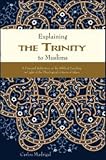
Explaining the Trinity to Muslims

Explaining the Trinity to Muslims: A Personal Reflection on the Biblical Teaching in Light of the Theological Criteria of Islam 

From Mission Catalyst: “by Carlos Madrigal, a Spaniard serving in Turkey, is a useful presentation for both Muslim and Christian readers.”

From William Carey Library:

This book is a culturally relevant presentation of the truth of the Trinity to the Muslim mindset. Originally it was issued through a Turkish secular publishing house and had a countrywide repercussion, even in Islamic circles. It is a useful presentation for both Muslim and Christian readers, providing fundamental keys for understanding and explaining the Trinity.

Wednesday, January 25, 2012

Christology in Contextualization, by Kyle Meeker

A paper presented to the Evangelical Theological Society, 2010 Southwestern Regional Meeting, titled:

Christology in Contextualization:
Another Look at Paul’s Motivation, Methods, and Message
at Mars Hill (Acts 17) in light of the Missiological Debate
surrounding Muslim - Christian Dialogue

Introduction and Abstract:

Acts 17 is often referenced as a key text in the Christian Scriptures for emphasizing the common ground in Muslim-Christian dialogue. While this text certainly tills the ground for fruitful discourse, the context emphasizes Paul’s telos - Jesus as the Person of Completion for issues in the Athenians’ world-views. Paul’s motivation, methods, and message also entails points of contention between ideologies. Without being unduly contentious, Paul’s ultimate objective is clarity in communicating his concept of Jesus. His goal of clarity drives his interactions, especially in regard to making the ‘Unknown’ known.

While stressing the distinctions, this appears to be a hindrance in Christian-Muslim Dialogue. But, if properly engaged, distinctions will provide a more robust dialogue and deeper understanding, especially for those from the respective communities listening in on the conversation.

Read the whole thing (14 pages).

Thursday, January 19, 2012

Prayer: the Work of Missions

From the famous sermon by John Piper in 1988, Prayer: the Work of Missions:

Not only has God made the accomplishment of his global purposes of salvation hang on the preaching of the Word; he has also made the success of the preaching of the Word hang on prayer. God's goal to be glorified in a world full of white-hot worshippers from every people and tongue and tribe and nation will not succeed without the powerful proclamation of the gospel by people like you and me. And that gospel will not be proclaimed in power to all the nations without the persevering, earnest, global, faith-filled prayers of God's people. This is the awesome place of prayer in the purposes of God for the world. They won't happen without prayer.

Listen to the whole thing.

Monday, January 16, 2012

I Have A Dream!

This adaptation of MLK's famous "I Have A Dream" speech was written by my friend Tim in 2006.  I hope your reaction is similar to mine when I first read it; I was impressed, I wept over it, I prayed about it, then I went out and tried to do something about it. 

Saturday, January 14, 2012

4,000 Churches Planted in 3 Years in Ethiopia

I’ve blogged on this before, but the below post is a great summary worth sharing again.

From Roger Thoman at Simple Church Journal aka House Church Blog: 4,000 Churches Planted in 3 Years in Ethiopia:

My thanks to David Watson for passing along Dave Hunt’s dissertation (Download 2009huntcpmdissertation) on church planting movements in East Africa.  There is so much of Hunt’s experiences that I relate to, albeit on a smaller scale and budget, that I am excited to see this compilation of what he has been involved in.  There are so many wonderful principles here that can be applied in any context!

Here are some of the concepts that Dave Hunt’s dissertation highlights:

1. True church planting is not the planning and implementing of programs but the natural, organic process that emerges spontaneously when the Gospel in its core essence is proclaimed and lived in word and deed.

Church planting becomes the natural and essential expression of the missional church as the gospel is proclaimed in word and deed, and believers are gathered together for fellowship, worship, and mission. What the Church needs to do according to Christian Schwarz is to “concentrate on the removal of obstacles to church growth and multiplication within churches. Then church growth can happen all by itself…

Believing that church planting is the work of God and that churches emerge spontaneously and naturally, perhaps the term catalyst best describes the human part in this process of church multiplication.

2. In many cases, the church has been hindered by the institutional model that has come from the West.

What we found in East Africa was a church of highly committed mostly “uneducated and untrained”1 workers, passionately in love with Jesus, but who were often bound within an institutional church structure that restricted rather than released and empowered their zealous witness of the gospel.

Much of this church planting strategy has to do with removing the barriers so that the church can more easily emerge. These barriers are largely those systems, structures, and demands which are added to the biblical requirements for doing church. When these are removed, people are introduced to and fall in love with Jesus. As they are discipled to obey all that He has commanded them, they will naturally want to gather together in fellowship to worship, learn, support and encourage one another and work together to spread the good news. As such, they become the continuing presence of Jesus in the dark places of the world.

3. The dynamic multiplication of churches is not dependent on education-level nor are long periods for disciples to mature needed before they can become involved in discipling others and starting new churches.

In this East Africa project the movements have been characterized by young believers still in a discipleship and maturing process themselves, passionately in love with Jesus who go from their newly established community of believers to make new disciples in a new region from which a new community of believers quickly emerges.

4. Church planting movements are fueled when believers discover Jesus as the head of the church rather than maintaining an unhealthy dependency on human leadership.

The believers are taught not to obey the church planter but rather to discover for themselves what the Word of God says and to obey the Word. The image of the church as the body helps to bring understanding to this critical element. The believer is not a member of an organization led by a pastor, but part of a body with Christ as the head. In Christ lies all the authority for the church.

5. Teaching simple obedience produces mature disciples rather than knowledgeable converts.  This is the key to replication.

Much of modern day discipleship is based on the acquisition of knowledge… Books, tapes, videos, and materials of all sorts have been produced to support the discipleship process.  Much of this leads to knowledgeable converts but does not make mature disciples.  Converts may be religious, but they may not be obedient.  What is a mature disciple?  It is one who is obeying all the commands of Jesus… and teaching others to do the same.  A mature disciple is a disciplemaker… Disciples replicate by making other disciples.

I will share more in future posts or you can download the entire dissertation for yourself here.