Monday, November 21, 2011

The Arab Spring, Democracy, and the Gospel

From Trevor Castor at the Zwemer Center:

Democracy does not always equate church growth and is not necessarily the most conducive political system for the spread of the gospel. Often times the gospel flourishes under harsh regimes and therefore we do not need to be fearful if Egypt or any other country moves in that direction. We pray for peace but we also pray for the harvest. Let’s be sure that our first concern is for the people of Egypt and other Arab nations to come to a saving knowledge of Christ whether that is politically good or bad for America. Too often our first priority is temporal comforts rather than eternal things. Whatever political power wins the day we pray that the Church will be strengthened and grow in the Arab world.

The Iranian revolution in 1979 began a couple years earlier as a populist uprising.  Khomeini came in to save the day and provided the leadership it needed.  The result was the formation of an Islamic republic.  And since then perhaps more Muslims have come to Christ in Iran than in any other Muslim people or country.  Even though I think people should be free and religious freedom should be universal, I agree with Trevor that we need to be very careful about cheering for democracy.

Saturday, November 19, 2011

“I am an Atheist and a Muslim”

How can these identities coexist?  I’ll tell you my tentative conclusions at the end of the post.  (Please note that many Atheist Muslims are not postmodern.)

First, read this excerpt interview of Hamed Abdel-Samad in Spiegel Online (HT: JS William):

SPIEGEL: You advocate a milder form of Islam. What remains of the core of the religion?

Abdel-Samad: My dream, in fact, is an enlightened Islam, without Sharia law and without jihad, without gender apartheid, proselytizing and the mentality of entitlement. A religion that is open to criticism and questions. As far as I'm concerned, I converted from faith to knowledge some time ago.

SPIEGEL: You became an atheist.

Abdel-Samad: No.

SPIEGEL: You might as well admit it. Being an atheist is nothing to be ashamed of.

Abdel-Samad: But it isn't true.

SPIEGEL: Not a single imam, Catholic priest or rabbi would believe you. Believing in God means accepting that something exists beyond knowledge. If you don't share this belief, why do you insist on calling yourself a Muslim?

Abdel-Samad: Believing in God can also mean being at odds with him. I don't pray regularly, and I don't fast during Ramadan. In that sense, I'm not religious. But I perceive myself as a Muslim. It's my cultural community. For me, Islam is also my homeland and my language, and my Arabic can't be separated from all of that. You can distance yourself from Islam but remain within the heart of Islam. I don't want to yield to the fundamentalists who preach violence. They are on the rise.

Next, see these quotes from a very interesting paper from Paul Froese called “I am an Atheist and a Muslim: Ideological Competition and Accommodation in Central Asia.”  The study shows how Central Asian Muslims retained and accommodated their Islamic beliefs and identity during the era of Soviet Communism.  During this era:

“Muslims were not willing to disown their religious members for publicly advocating atheism. As one committed Kazakh communist explained, “I am an atheist but also a Muslim, because all Kazakhs are Muslims and I cannot deny my forefathers”” (25).

“Muslims… differ from Christians in terms of how they understand their religion and their religious identities. The doctrine of Islam is more flexible in terms of how it defines true believers than most Christian churches” (31).

Finally, Malise Ruthven also notes the existence of Atheist Muslims:

The label Muslim indicates their ethnicity and group allegiance, but not necessarily their religious beliefs. In this limited context (which may apply to other Muslim minorities in Europe and Asia), there may be no contradiction between being Muslim and being atheist or agnostic…

So what does it means to be a Muslim?  Islam allows a lot of diversity.  It seems to me that Western Christians think of the terms “Islam” or “Muslim” primarily in theological categories, but many Muslims themselves understand the terms primarily in cultural categories.

So what?

Tuesday, November 15, 2011

Interacting

Abu Daoud has posted some thoughtful answers to the questions I asked on this post.  I would love to hear some more feedback from readers.  Go ahead and weigh in on the comments below or on Abu Daoud’s site.

I posted my initial response here.

Monday, November 14, 2011

World Mag Interviews Afghan Convert

I first posted on this story with some reflections here: Advocacy Increases Persecution.  Now a year and half later World Mag posts this interview, Holding Fast:

As churches around the world prepare for Persecution Sunday this month, Afghan Christian Sayed Musa tells how he survived government-led imprisonment and abuse.

As a case study, there are several issues here worth considering:

  1. People can be persecuted for Christ, or they can be persecuted for Western Christianity by calling themselves “Christians.”  Of course the difference between the two is really difficult to discern, and I don’t pretend to know in Musa’s case here.  But some persecution is unnecessary and more a result of association with the immoral West than with the glorious Jesus.  I do wonder about Sayed Musa and this Somali MBB- what if they chose not to call themselves “Christians”?
  2. The language of “conversion” is politically loaded, and whenever persecution hits international headlines there are always other factors involved, as the article clearly shows.  The NT language is really rich and diverse in describing the concept of conversion.  Is there a better English word?
  3. Public advocacy for the persecuted usually puts governments in very awkward situations with the end result usually ending in deportation.  How should we stand for religious freedom without shaming Muslim governments into overreacting?

(These are not rhetorical questions.)

Saturday, November 12, 2011

Teams and the Refining Work of God

From Appendix 3: “For Team Leaders” in Spiritual Survival Handbook for Cross-Cultural Workers:

When we begin as team leaders we believe we are on board with God’s agenda—an agenda to reach a lost people group, a lost city and to help build His church. This is indeed His agenda, but it isn’t His only one. He has another agenda. One that feels often like it is competing with the one we already own, but which in reality is there to enhance it. This agenda is to invest our lives into a group of teammates so that as a healthy team His work can be accomplished and His love shown. Sometimes this investment takes much sacrifice—a laying down of our own “work” in order that our efforts might be multiplied in others. These teammates aren’t there just as tools to be utilized in completing our vision. They are there to be loved and related to. They are there to refine us and for us to refine them. They are present not to strain us or frustrate us, but to more fully represent Jesus in our location than we could ever do by ourselves. By embracing this reality we honor God, honor our calling and are engaged in the charge given to Peter which is also given to us—“Feed my sheep.”

This is a good reminder that even though they can be difficult and frustrating sometimes, teams are God’s idea.  We mainly hurt ourselves if we think we don’t need the leadership, accountability, and sharpening that teams provide.  Of course we can always take God’s idea of “team” and mess it up (unfortunately we do this all the time), but bad examples don’t mean we can individualistically go as a “lone ranger” just “do our own thing.”  We are communal creatures made in the image of our triune God- we need each other in teams.

Related Posts:

Thursday, November 10, 2011

I Against My Brother: A Somali Story - video resource

Here is the website, Somali Story.


This story is increasingly common, thanks to the diaspora which is exposing more Somalis to cities and the outside world.  May the Lord bless and build his church among the precious Somali people!  Amen.


Wednesday, November 9, 2011

Shenk’s Review of Three Books

David W. Shenk, Global Missions Consultant with Eastern Mennonite Missions, reviews three books in the January 2007 issue of IBMR (requires free login):

Muslims and the Gospel: Bridging the Gap. By Roland E. Miller. Minneapolis: Lutheran Univ. Press, 2005. Pp. 452. $35.

Unveiling God: Contextualizing Christology for Islamic Culture. By Martin Parsons. Pasadena, Calif.: William Carey Library, 2005. Pp. 400. $29.99.

From the Straight Path to the Narrow Way: Journeys of Faith. Edited by David H. Greenlee. Waynesboro, Ga.: Authentic Media, 2006. Pp. 333. $19.99.

These three very dissimilar books have a common vision: bearing faithful witness to Jesus Christ among Muslims. They are an essential resource for those who want to understand the world of Muslims and all who are committed to faithfulness in bearing witness to Christ among Muslims.
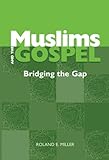
Roland Miller ’s Muslims and the Gospel will occupy a central place on my reference shelf and is a “must read” for those committed to bearing witness among Muslims. The book is organized in three major parts: “The Context— Pivotal Muslim Views,” “Bridges for the Crossing,” and “The Task—Connecting Muslims and the Message.”

The opening chapter, “Key Principles for Understanding Islam,” moves beyond the familiar pillars of belief and duty to explore a dozen key themes that form the Muslim worldview. Two especially provocative themes Miller explores are “Success” and “Sense of Perfection.” Miller writes as a friend of Muslims with an empathetic insightfulness that Muslims will appreciate.

The author brings to bear a lifetime of experience, as well as a lively acquaintance with the foundational literature (Qur’an, Hadith, Shari‘a). He is conversant with centuries of theological debates among Muslims. Furthermore, he introduces a broad stream of Christian engagement with Muslims, from the earliest years (e.g., John of Damascus) to modern times (e.g., Henry and Mary Esther Otten). Here I would have appreciated reading more about persons whose roots have been Muslim and who are committed to bearing witness to salvation in Christ.

The final part is an exploration of practical steps for Christians committed to ministry among Muslims. Especially engaging is chapter 11, “The Profile of a Sharing Friend.” In fact, “friend” is the theme that gives this fine book cohesion, with relevance for all of us. Although Miller is a thorough scholar, this book is fully accessible. The personal anecdotes enliven the chapters.

Unveiling GodMartin Parsons’s Unveiling God complements Miller’s volume, for he attempts to develop a Christology that is contextual and understandable and that can be received within a Muslim worldview. He describes the Western church’s creedal Christology as a development within the Hellenistic world, whereas New Testament Christology was honed within a Jewish/Semitic worldview. He focuses on Second-Temple Judaism, which in his view has continuities with Islam. He therefore believes that New Testament contextual Second-Temple Christology provides indicators of how to do Christology within a Muslim context. He demonstrates that in both communities the concept of God was bounded and extrinsic and argues that a relevant Christology must fit within that parameter.

Parsons also develops insights into Islamic theological development. He is in touch with Muslim interpretations of the Qur’an as it relates to God and revelation. He demonstrates a rich acquaintance with the Hadith literature that has relevance to Christology. In fact, in my judgment, this is a seminal contribution of this book. He demonstrates that the Christological questions that Muslims bring to the table force Christians to repent of distorted Christology.

This book invites discussion! A key question for me is his neglect of addressing the incarnation, choosing rather to focus on what he calls the “God side” of Jesus. Does this approach take us in the direction of a Docetic Christology? Parsons relies considerably on epiphany to interpret Jesus. Does such a focus lend itself to a Gnostic understanding of Jesus? There is little reference to Jesus as Messiah, and Jesus as Son of Man is not addressed, although this latter name is the one Jesus most often used to describe himself. The purpose of this book is narrowly focused on making the case for the divinity of Christ and a Trinitarian theology rooted in the oneness of God. The incarnation is not addressed (p. 253).

If Parsons has tested emphasizing the God side of Jesus with Muslims, it would be instructive to know their response. He recognizes that the local church in mission within the Islamic context must develop its own contextual Christology. To what extent has he tested his efforts at contextual Christology with those local churches? What do Muslims themselves say of Jesus the Messiah after they have read the Gospels?
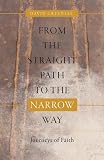
From the Straight Path to the Narrow Way, edited by David Greenlee, addresses such questions. This book explores what it is about Jesus the Messiah that attracts Muslims to faith, and what happens within their worldview when they meet Jesus. The book comprises essays from twenty-two contributors who were participants in a forum of fifty people from twenty countries, a number of whom had recently journeyed from the Straight Path to the Narrow Way. Several years of research preceded the conference.

The presentations of most contributors were an interpretation of their research. The chapters are salted with narrative. The book is in four main sections: “Missiological Overview,” “Understanding the Experience of Coming to Faith,” “Understanding Some Movements to Faith,” and “Concluding Reflections.”

A concluding statement by David Smith embraces three central themes: (1) Muslim converts have seen and experienced sacrificial love shown by Christians; (2) Muslim converts have read some portion of Scripture; and (3) Muslim converts have experienced a special manifestation of the power of Christ. All who are seriously committed to bearing witness among Muslims will want to read this book and be challenged and encouraged thereby.

A pertinent theme that was not explored in the book is reasons that Christians convert to Islam. Equally pertinent would have been consideration of the societies in which very few Muslims are choosing to enter the Narrow Way; little reference is made to such groups. That said, I commend this readable and insightful book; it is pertinent to the mission and calling of the church among Muslims.

-David W. Shenk

Tuesday, November 8, 2011

Two Approaches to Using the Bible in Mission

imageFirst, from Charles Van Engen, in Mission on the Way (introduction):

[Missiology] attempts to allow Scripture not only to provide the foundational motivations for mission, but also to question, shape, guide, and evaluate the missionary enterprise.

Second, from Rebecca Lewis (pg. 36, note u):

Missiology must be based on seeing what God seems to be doing and evaluating that in the light of scripture (copying the apostolic process in Acts 15).

I believe there is a very big difference in these two approaches which explains why people in disagreements (e.g. insider movements) seem to be talking past each another.  In the first approach, the Bible is integral to mission.  In the second approach, the Bible is mainly used for evaluation.

Sunday, November 6, 2011

Thinking Missiologically About Dreams

imageA woman my wife was discipling had an amazing dream about Jesus where he gave her the Injeel and told her to read it.  She was excited for a while but she didn’t seem to grow.  Incredibly, she also didn’t seem to read the Bible!  She came over to our house again last month and said that she dreams about us all the time. 

Stories about Muslims having dreams can be amazing.  But as Bob Blincoe says, “Dreaming is not discipling.”  Dreams don’t sustain spiritual growth or health.  So how should we think missiologically about our Muslim friends having dreams (and visions)?

Here are a couple thoughts to ponder (remember this is just an amateur blog post):

  1. Dreams happened in the Bible.
  2. Dreams are happening today.  In the Dudley Woodberry study on Muslim conversions to Christ, dreams were on the list of influential factors. (1. The lifestyle of Christians, 2. Answered prayer, 3. Miracles and the power of God in specific situations, 4. Healing 5. Dissatisfaction with the form of Islam or individual Muslims they had experienced, 6. Dreams and visions.)
  3. Asians and Africans have lots of spiritual dreams.  And they usually attach more emphasis to their dreams than Westerners do.  I’ve had Muslims tell me that Mohammed appeared to them in a dream.  I’ve also had Muslims tell me of Americans who have had dreams of Mecca and then converted to Islam.  Dreams are more important to my Muslim friends than they are to me.
  4. There are two errors in regards to dreams, and both are related to “split-level Christianity.”  One error is to deny that God uses them, and the other is to say that God is only working if dreams are present.
  5. Everyone has a different, unique path that they travel to Christ, and there are various factors that lead people to him. In Asian and African cultures (not just Islamic), dreams are a more common conversion factor than in Western cultures.
  6. Dreams can come from God, Satan, or they can come from our imagination.
  7. When John Piper says he is “suspicious” of Muslims hearing the gospel and responding in faith in a dream about Jesus, he is not saying dreams don’t happen.  He’s saying he is suspicious that they are usually the decisive conversion event.  I’ve never heard a story where someone heard the gospel and responded in a dream (have you?).  In the first-hand and second-hand stories I’ve heard, the dream pointed to something, either Jesus, the Bible, or a worker who would share the gospel.
  8. Even the charismatic Paul who had a knocked-on-your-back type conversion event said the gospel is to be communicated through human messengers so that it can be heard and responded to in faith (Rom. 10:13-17).
  9. New research shows that we might be making too much of dreams.  In his study into Palestinian conversions to Christ, Ant Greenham says, “missiologists might find my discovery on dreams useful. Less than half the fifteen Palestinian respondents mentioning dreamlike experiences did so of their own accord [22 converts were interviewed]. Those doing so reflected the key role the experiences played in their conversions. The others associated dreams with their conversions but did not experience them as life-changing encounters. Consequently, dreams or dream-like experiences only stand out when they are a primary vehicle for a convert’s transforming encounter with Christ. This insight on the Palestinian Muslims’ dreams may not be mirrored exactly elsewhere, as other researchers will record the incidence of converts’ dreams (and other phenomena) differently. However, it seems fair to claim the sheer presence or absence of a dream-like experience is unimportant. The essential element to look for is a convert’s transforming encounter with Christ” (pg 174, emphasis mine).

So how should we integrate these insights?  Here are two words of advice:

  1. Those of us who get all uptight about dreams need to embrace the fact that our Muslim friends will have them.  We need to use the dreams (and all events in their lives) to point them to Jesus himself.
  2. Those of us who get all hyped-up about dreams need to refocus on Jesus himself.  Dreams are expendable (Greenham says “unimportant”), but hearing and experiencing the good news of Jesus is not.

Ok, so these are my initial thoughts.  Go ahead and practice 1 Thess. 5:21 and weigh in on the comments below so we can learn from each other.

Saturday, November 5, 2011

Happy Eid

Here is a repost from November 2009: Eid al Adha

--------------------------

Eid al Adha or "Festival of the Sacrifice" is coming up on Friday. The cause for the celebration is the remembrance of Ibrahim's near sacrifice of his son in obedience to Allah. I heard some local MBBs in our country consider this Eid to be their "Easter" and the Eid at the end of Ramadaan to be their "Christmas." Ramadaan celebrates the giving of the Word or Qur'an- the local MBBs celebrate the giving of the Word of God who is Jesus (An Nissa 4:171; Al Imran 3:45).

This Eid is a special time for followers of Jesus to witness. Here are two simple points I generally make during Eid al Adha:

1. The Qur'an tells the story of the sacrifice by ending with "we redeemed him with a great sacrifice" (As Saffat 37:107). (Arabic: وَفَدَيْنَاهُ بِذِبْحٍ عَظِيمٍ) During this time I often tell the shaddah from the Injeel: "There is no God except God and no mediator between him and between the people except the man Christ Jesus who sacrificed himself to redeem all people" (1 Tim. 2:5-6). I ask them "How can the ram be considered "great"? Who is great except God alone? The Messiah is our rescuer who sacrificed himself in our place for our redemption.

2. As you may know, the Qur'an calls Mohammed the "seal of the prophets" (Al Izhab 33:40). (Arabic: خَاتَمَ النَّبِيِّينَ) Muslims take this to mean that Mohammed is the last, superseding, and ultimate prophet of God (who in effect makes all previous prophets irrelevant). Taking this phrase, I call Jesus the "seal of the sacrifices" (Arabic: خاتم التضحيات).

Generally, using this phraseology from the Qur'an has been helpful for me. I am interested to hear if it is helpful for you or even what you think about it.

Thursday, November 3, 2011

A Form of Slavery to Books

I confess to my shame that I feel somewhat guilty for NOT reading all the books and articles and blogs I can on Muslim Ministry.  Can you relate?  Here is book I probably won’t read but I thought the interview was helpful: Lit!: A Christian Guide to Reading Books.

From an interview the author gave on his book:

So many Christians treat books [and articles, blogs, etc.] as taskmasters. Most Christians have a stack of unfinished books in their house, maybe on a desk or a bookshelf. Those unfinished books are often a source of low-grade guilt. We’ve been conditioned to think that if we buy a book, we must read it from cover to cover. That’s not true, and I’m trying to loosen Christians from this misunderstanding of what is really a subtle form of slavery to books.

Apart from Scripture, all other books are optional reading. In fact, all other books are tools for us to use in our lives as we see fit. We use books when we need them. This means that we can read books cover to cover if we wish. Or we can read one chapter, or one page. It’s our call. By writing in a book, I claim the book as a tool. I own it; it belongs to me; it was purchased to serve me, and its value to me as a tool far exceeds its resale value. This does not give me license to ignore the truth God teaches me in my reading, but it does liberate me to see books as gifts from God, not as taskmasters. And that’s a very important stage of development for Christian readers.

Of course, I mark all sorts of things in my books, but fundamentally it is a claim of ownership, a claim that reminds me that my books are my tools and that I am not enslaved to them.

Wednesday, October 26, 2011

Factors Influencing Palestinian Muslims Coming to Christ

Muslim Conversions to Christ: An Investigation of Palestinian Converts Living in the Holy LandMuslim Conversions to Christ: An Investigation of Palestinian Converts Living in the Holy Land

Abu Daoud summarizes:

Greenham in Ch 5 provides two lists of categories explaining why Muslims convert:

Lesser Importance are
1) political Instability,
2) Rejection of Islam,
3) Christian Media,
4) Personal Crisis,
5) Community,
6) God’s Honor.

The categories of “Greater Prominence” are
1) Reading the Bible,
2) Role of Believers,
3) Truth of Jesus’ Message,
4) God’s Miraculous Involvement,
5) Person of Jesus.

Tuesday, October 25, 2011

my head is spinning

Just finished this book. I’m interested in your thoughts if you’ve read it.

Tuesday, October 18, 2011

The Qur’an as a bridge to…

People use the phrase “the Qur’an as a bridge…" differently. 

Here is what I have heard:  “I use the Qur’an as a bridge to…”

  1. relationships
  2. the Bible
  3. faith

In your opinion, what could be the implications of view #3?  (Hint: we get the kind of disciples we preach for.)

Friday, October 14, 2011

The Book We've Been Waiting For


For those of you who don't know about Todd Ahrend or The Traveling Team, consider this your invitation to go hear them speak whenever you can.  I consider it a privilege to call Todd my friend, and I couldn't be happier about the book he recently published, The Abrahamic Revolution.  This book concisely, accurately, and passionately handles the most important topic in the Bible - the fulfillment of the promise that God gave to Abraham once upon a time.  Before reading this book, one could perhaps claim ignorance (although I don't know quite how) of this grand biblical theme .  But after reading it, you should remember the words of David Livingstone who said, "Sympathy is no substitute for action."  This is the book that the Church has been waiting for.  Get it, read it, and find your place in doing it.

Thursday, October 13, 2011

New Apologetics Website for MBBs

www.unchangingword.com:

Evidence for God's Unchanging Word is a network of Jesus' followers from across South Asia. We are committed to promoting the seldom-heard evidence for the reliability of God's Word. We believe that God has spoken to mankind through his unchanging Written Word, and we promote the neglected Taurat, Zabur, and Injil. We believe that the Qur'an testifies clearly to the eternal validity of these Scriptures and to the unique role of Jesus as sinless "Messiah" or Savior and Living Word of God. It is through Jesus that we have experience forgiveness and reconciliation with God, and a new meaning and motivation for life.

We are committed to accurately following the Scriptures, not man's cultural traditions. Just as Jesus was wrongly opposed and condemned by Jewish religious authorities, so too Jesus' authentic followers throughout history are regularly condemned by both Muslim and Christian clerics alike, clerics who too often are more concerned with their narrow cultural traditions than with bold obedience to God's Word. Jesus didn't call himself Christian or Muslim, and his followers simply called themselves "the Way."

Wednesday, October 12, 2011

My take on the DG national conference: The difference between evangelism and missions

I wasn't able to get to Minnesota last month for the Desiring God national conference, Finish the Mission, so I did the next best thing and downloaded all the talks. And while I certainly enjoyed them, I was struck by one continual note that was just a bit off key throughout the conference. Although the conference was meant to highlight the "task remaining" in world evangelization, there was a continual blurring of the lines between evangelism and missions. The evangelistic mandate is the call for the local church to preach the gospel to all those in the surrounding culture/vicinity who are not yet saved. The missions mandate is the call for apostolic teams (Greek: apostolos = sent ones) to carry the gospel beyond into cultures and vicinities where there are no local churches to evangelize a given people group.  Both are equally important in Scripture, but they are grossly misunderstood.   John Piper is actually one of the voices within evangelicalism that has consistently gotten the distinction right; and this is perhaps why I was a bit disappointed to hear speakers at his conference such as Ed Stetzer saying that he disagreed with Michael Oh when he referred to Japan as the "mission field" - contending that the USA is an equally valid mission field.  Sure Ed, God loves lost people in America just as much as he does those in Japan, but that's not the point!  The point is, don't blur the lines between evangelism and missions by making it seem as though there isn't a different calling (a different job to be done) in reaching the USA and Japan.  In the former, our role is to help local churches evangelize their own neighbors, while in the latter, our job is to start local churches that don't even exist yet, so they can evangelize their own.   That's the difference, and it's an important one.  If we call everything missions, then nothing is missions!

Here is another way to see the difference, using another of the conference speakers' own ministries: When Michael Ramsden speaks to a  group of secular university students in London, that would be evangelism.  But when he speaks to a group of Muslim students in Southeast Asia, that would be missions.  The reason is that the secular students in London could walk into any church on Sunday if they chose to, and hear the Gospel.  So they are lost, but not unreached.  But the Muslim students have no church to walk into in their city, even if they wanted to, so they too are lost, but they are also unreached.  Missions then, is what it means to take the Gospel to the unreached so that a local church can emerge in their city, whereby they can hear the Gospel from their own people some day.  The issue at hand is access to the Gospel - unsaved people in reached people groups have it, while unsaved people in unreached people groups do not!

I hope this brief post doesn't come across leaving folks feeling as though I did not thoroughly enjoy what each speaker brought at the DG national conference.  To the contrary, I did enjoy every talk.  However, I felt it was imperative that I take a minute to voice this one concern.

For more on this crucial distinction, have a look at this excellent post by Dr. Tim Tennent:
There is a big difference between evangelism and missions.

Wednesday, October 5, 2011

Christ at the Checkpoint

This is exactly the type of conversation that evangelicals need to start having if there is any hope to see a meaningful dialogue and witness for Jesus in the Middle East.  We've got to end the love affair with Zionism!  Check out Christ at the Checkpoint.

Shane Claiborne on Christ at the Checkpoint 2012 from Christ at the Checkpoint on Vimeo.

Sunday, October 2, 2011

Should we be seeking after signs and wonders?

From Strauss, Encountering Theology of Mission (p. 252):

Church history and the testimony of contemporary missionaries suggest that when the gospel first breaks into a people group or geographic area, the miraculous is frequently present. But the question of how normative such signs and wonders should be for evangelism and outreach where the church is already established and the necessity of signs and wonders for a successful church-planting movement is still an issue of debate among evangelicals.

We must remember that miraculous signs can be duplicated by Satan (2 Thess. 2:9). Furthermore, Jesus reserved his harshest criticism for those who demanded a miraculous sign as evidence of who he was and as a precondition for trusting him (Matt. 12:39). Perhaps the most balanced conclusion is that any biblical theology of mission must put God's power at the center of effective mission and must emphasize that prayer and dependence on God are foundational to the missionary task. It is never wrong to pray for God's miraculous intervention, trusting him to provide it in his time and his way. It is always wrong to demand God's miraculous intervention or to believe that without signs and wonders we cannot be effective in planting the church.

Saturday, October 1, 2011

Hoskins on the Hadith

From the conclusion of Ed Hoskins’ article in the Oct 2011 Issue of EMQ, What Muslims Really Believe—The Islamic Traditions (requires subscription):

To Muslims, the hadith are familiar stories that play a practical role in their daily lives. By tapping into these, we have a bridge that makes spiritual conversations relevant and accessible.

I conclude with five thoughts.

1. The hadith fill in the gaps of understanding left blank by the Qur’an.

2. In my field-testing, I found no significant gender, geographical, or language ability differences. Well over ninety percent of all Muslims were familiar with my randomly-selected hadith.

3. Knowledge of the Islamic traditions can give us greater understanding and compassion for our Muslim friends and acquaintances. It did both for me.

4. Using the hadith builds near-instant rapport and facilitates deeper sharing. Every time I mention one, I get a smile. That’s rapport which opens the door to greater sharing.

5. Bridges for communicating biblical truth abound in the hadith. The traditions are packed with topics like the “golden rule,” “control your temper,” “God looks at the heart,” “blessed are the merciful,” “feed the hungry,” “separate me from my sins as far as the east is from the west,” and many more. To date, I have thirty-eight single-spaced typewritten pages of these.

More can be found in Hoskins recent book A Muslim's Mind: What Every Christian Needs to Know about the Islamic Traditions (2011).

Thursday, September 29, 2011

Evangelical Interfaith Dialogue Winter/Spring 2011 Issue

Winter/Spring 2011 Issue:

In the featured article of the winter/spring issue of this journal, Dr. Andrew Wingate describes the changing religious landscape in Western Europe, considers changes within the Christian and Muslim communities, and outlines important implications for Christian engagement in interfaith dialogue. Professors Sunday Agang and George Harinck provide reflections on these realities based on their Dutch and Nigerian experiences respectively. Dr. Andrew Smith makes the case for engaging teenagers in Muslim-Christian dialogue in the UK. Syrian born Chawkat Moucarry argues that mission and dialogue are compatible terms that must shape each other.

Download the issue (20 pages)

Tuesday, September 27, 2011

Radical Love Campaign

www.radicallovenow.com:

Challenging followers of Christ to love Muslims as He does.

Christian relationships with Muslims have often been characterized by conflict, fear and lack of love. This is the opposite of the way Jesus taught his people to live. As his followers, we are promised a love that casts out fear. We are commanded to love neighbor and even enemy. Therefore we resolve to imitate and obey Jesus by making the following pledge:

  • I will repent of any hateful feelings toward Muslims and pursue love.
  • I will pray for Muslims that God will bless them and that they will experience His peace.
  • I will do at least one act of kindness for a Muslim in this next year.
  • I will respectfully share the good news about Christ.
  • I will not spread negative stereotypes about Muslims but will season all my words with grace.
  • I will champion this cause, armed only with love, truth and good deeds.

Be Radical like Jesus. Sign the pledge at www.radicallovenow.com and mobilize 10 friends to do the same.

Champion this cause and change the world.

More on the biblical basis for Radical Love

Saturday, September 24, 2011

MisLinks: Contextualization for Islam

Links to resources on Islam, Muslims, and Contextualization here.

MisLinks

Sunday, September 18, 2011

Islam on Trial

Is Islam peaceful or violent?  How should Christians view the current political discourse on Islam in Western countries? Michael Raiter writes about the nature of Islam here (pages 22-33) by reviewing four recent books written from both sides of the issue.

Wednesday, September 14, 2011

The Purpose (Vision) and Task (Mission) of Missions

What is the purpose and task of missions?  Perhaps no question is more important for those seeking to bless Muslims (or anybody!) in Jesus’ name.  Answering this question would serve as a guide for almost everything we think and do.

Here are a couple quotes from Encountering Theology of Mission that are well worth chewing on.  Here they define purpose of mission (formatting mine):

Doxology is the highest purpose of mission: God is drawing people from every nation to himself who declare his glory and become his worshippers. This worship will endure for all eternity.

Redemption is the foundation of mission in that God himself has reached out in grace to fallen humans by the sending of his Son, Jesus Christ. The work of redemption through his death and resurrection was at the heart of Christ's coming to earth. He thereby provided the way of forgiveness and restoration of the God-human relationship. This was at the heart of the gospel message and the core of the apostolic preaching.

The kingdom of God is at the center of mission in that the work of redemption results not only in personal salvation but in the restoration of God's reign over his redeemed people and through the redeemed community. The new kingdom people, the church, become a living sign of the kingdom in this age as they live under Christ's lordship and work for the cause of holiness, righteousness, and justice in all their relationships and in the world.

Eschatology is the hope of mission because we know that the kingdom will one day come in fullness when Christ returns. In this age the church lives in anticipation of that kingdom by bringing the gospel of the kingdom to the nations. This is done in the confidence that the promise of the Lord will be fulfilled: not only will the gospel be preached to every nation, but from every nation there will be those who embrace the Savior and enter the kingdom.

For this reason the nations are the scope of mission. As revealed in the scriptures, God has a plan to draw the nations to himself. Mission cannot rest until the gospel of the kingdom has been brought to people of every nation, ethnic group, language, and social standing.

Reconciliation is the fruit of mission because mission brings the message of reconciliation to an alienated world. This reconciliation begins with the restored relationship with God and moves outward to restore human relationships, becoming one of the most fundamental signs of the kingdom and evidencing genuine shalom. This too is in anticipation of the fullness of the restoration of all things upon Christ's return.

Finally, the incarnation is the character of mission. Everything the church undertakes in the cause of mission must be characterized by a spirit of humility, selflessness, and sacrifice, for these traits characterized Christ's sending. This is the fruit of the Holy Spirit, who both empowers and transforms for mission.

We conclude by defining mission in this way: Mission is the sending activity of God with the purpose of reconciling to himself and bringing into his kingdom fallen men and women from every people and nation to his glory. Mission is a sign of the kingdom and an invitation to the nations to enter the kingdom and share the hope of the kingdom promised in Christ's return. (Chapter 4)

The purpose of mission should be distinguished and united with the task of mission.  No “vision statement” (purpose) is complete without a corresponding “mission statement” (task).  Why are we here and what are we supposed to do about it?  Something must happen in order for the vision to be realized.  The task of missions is thus summarized in Chapter 6 (formatting mine):

Mission is God’s sending of Christians, the church, into the world as messengers of reconciliation and renewal to bring men and women of every nation into God’s kingdom.  They are to live as salt and light in their communities as a sign of the coming kingdom when all things will be restored under God’s rule.  However, the church has not fulfilled its mission by merely being such a community wherever it finds itself, as great a challenge as that is.  Rather such communities must be multiplied among the diverse peoples of the world, and this is the task of missions.

Thus the task of missions is the sending activity of the church to create and expand such kingdom communities among every people of the earth.  This will be done through evangelism and church planting that is not satisfied with superficial conversion or institutional advancement.  Rather, these new communities must be nurtured and challenged to manifest the reign of God in word and deed, impacting all areas of life – spiritual, social, mental, and physical – thus furthering God’s mission in the world.

I like these definitions because they integrate holistic service with evangelism and church planting while emphasizing that mission is actually God’s undertaking to redeem his creation back to himself.

So could we synthesize and summarize?  Here’s my stab at it… for the biblical mission (purpose and task) of the church:

  • Vision (what does the Bible envision?): to see lives and communities among all the nations transformed for God’s glory
  • Mission (how is that vision realized?): to foster a movement of indigenously-led, multiplying churches that manifest the rule of king Jesus in word and deed

What would be your biblical vision and mission statements be for the purpose of God through the church (there is more than one way to say it)?  You got a problem with mine?