Saturday, February 11, 2012

Quarrelling and Blog Arguing

I have been following some blogs lately that attempt to “expose” unbiblical models of ministry.  The idea in itself can be commendable.  God is truth and we should love the truth.

The irony is that heresy hunters almost always become unbiblical themselves, both in their manner of arguing (judging fellow believers i.e. Rom. 14) and the peripheral issues they choose to attack.  Especially to Christian fundamentalists, a heretic is anyone who does things different than you- every issue becomes essential.

I say all this because I myself am tempted to quarrel with fellow believers in the blogosphere over unprofitable issues!

Here are some verses I was meditating on this morning:

Romans 14:1:  As for the one who is weak in faith, welcome him, but not to quarrel over opinions.

2 Corinthians 12:20: For I fear that perhaps when I come I may find you not as I wish, and that you may find me not as you wish—that perhaps there may be quarreling, jealousy, anger, hostility, slander, gossip, conceit, and disorder.

1 Timothy 2:8: I desire then that in every place the men should pray, lifting holy hands without anger or quarreling;

1 Timothy 6:4: he is puffed up with conceit and understands nothing. He has an unhealthy craving for controversy and for quarrels about words, which produce envy, dissension, slander, evil suspicions,

2 Timothy 2:14: Remind them of these things, and charge them before God not to quarrel about words, which does no good, but only ruins the hearers.

2 Timothy 2:23: Have nothing to do with foolish, ignorant controversies; you know that they breed quarrels.

Titus 3:2: to speak evil of no one, to avoid quarreling, to be gentle, and to show perfect courtesy toward all people.

Titus 3:9: But avoid foolish controversies, genealogies, dissensions, and quarrels about the law, for they are unprofitable and worthless.

James 4:1: What causes quarrels and what causes fights among you? Is it not this, that your passions are at war within you?

Friday, February 10, 2012

The War on Christians and the Arab Spring

Along with other followers of Christ, I am among the first to stand up for Muslims whose human rights are violated (just read some of my earlier posts).  However, why the silence from others when Christians' rights are violated?  Once again, Ayaan Hirsi Ali gets it right regarding the true nature of what is going on around the world in the Feb. 13th issue of Newsweek.  If you live in the Middle East as I do, you are accustomed to regular, first-hand accounts of Christians being massacred by Muslims.  These stories are real.  And they happen every single day.  It's time for the media to take note.  Thank you Newsweek.  Thank you Ms. Ali.  I'd love to see some Islamic voices come out and condemn this violence as well, but I won't hold my breath.

Incidentally, in the aftermath of the Arab Spring, expect this persecution to increase dramatically.  Democracy is not on the horizon for the Muslim World - increasing religious fanaticism is.  Trust me.  Or at least trust John Bradley.  The Islamists are better organized, and more importantly, better armed.  The student initiators of the revolutions don't stand a chance against them.  We must pray that as people in Tunisia, Libya, Egypt, Yemen, Syria, and beyond are brought face to face with Islam in its purest form (i.e. the Wahabi and Salafi brand), they will see that neither democracy nor Muhammad is the answer to their hearts' desires - Jesus is.  In the mean time, let us plead for strength for our brethren in these lands who already follow Jesus.  And keep praying for Ayaan Hirsi Ali to become a follower of Jesus herself. The peace and decency she seeks as a former Muslim is not to be found in America, democracy, or agnosticism, but in Christ!


Monday, February 6, 2012

Miraculous Movements: How Hundreds of Thousands of Muslims Are Falling in Love with Jesus

51VP7SzLUHL__SS500_

You’ve probably heard of the CPM that has been happening among Muslims in East Africa by now.  Thankfully, they have put many of their stories and lessons learned in a book.  I just started reading an advance copy it looks really promising. You can pre-order on Amazon-> Miraculous Movements: How Hundreds of Thousands of Muslims Are Falling in Love with Jesus:

How do the people most resistant to the transformative power of the gospel come to be its most devoted followers? Miraculous Movement recounts an amazing change taking place within Muslim communities where the truth of Jesus Christ is turning around the lives of many thousands of Muslims from more than twenty people groups. Discover through the sometimes humorous, often sobering, but always enlightening and encouraging true stories how imams, sheikhs, and entire mosques are forsaking Islam and embracing Christ.

This close look at what the Lord is doing to spread the gospel highlights the key scriptural principles that help Christians reach out in love to share the gospel in their own community. The authors outline the principle of service to others that open doors of opportunity to the work of the gospel.

Author Jerry Trousdale works with CityTeam Ministries, an organization dedicated to helping disciples make disciples through CityTeam's own ministry and through training other ministries in more than thirty countries.

Features include:

  • Outlines important principles on how to share the gospel with non-Christians
  • Explains how ordinary people can lead neighbors to Christ in love and humility
  • Tells many exciting and encouraging stories of Muslims who have accepted Jesus
  • Describes CityTeam's unique program focused on God's work through disciple-making movements, a strategy that harnesses the power of disciples making disciples and churches planting churches

Endorsements:

With Miraculous Movements, Jerry Trousdale and his colleagues at CityTeam have made an invaluable contribution to the body of Christ!

-David Garrison, PhD Author: Church Planting Movements

As a church planter for the last 10 years, our family has made it our mission to go where no one else wants to go. This book, Miraculous Movements, very much aligns with this mission of getting to know the community around you and then sharing the teachings of Jesus rather than trying to go in and hope people come to a church or, in some cases, a home church, just because you set up shop. This book shows how to attract people to follow Christ, not try to convert them to simply know Christ. If you want to read stories that will change the way you think about church plants and churches built outside our Western models, this is the book for you. Whether you are a church leader or a person who is curious to see what God is up to in other parts of the world, you won’t be disappointed.

-Charles Hill, Church Planter, National Speaker

Wednesday, February 1, 2012

Aquinas on Islam

Here is Thomas Aquinas' take on Islam in a nutshell.  What do you think?

The point is clear in the case of Mohammed. He seduced the people by promises of carnal pleasure to which the concupiscence of the flesh goads us. His teachings also contain precepts that were in conformity with his promises, and he gave free rein to carnal pleasure. 
In all this, as is not unexpected, he was obeyed by carnal men. As for proofs of the truth of his doctrine, he brought forward only such as could be grasped by the natural ability of anyone with a very modest wisdom. Indeed, the truths that he taught he mingled with many fables and with doctrines of the greatest falsity. He did not bring forth any signs produced in a supernatural way, which alone fittingly gives witness to divine inspiration; for a visible action that can be only divine reveals an invisibly inspired teacher of truth. On the contrary, Mohammed said that he was sent in the power of his arms—which are signs not lacking even to robbers and tyrants. 
What is more, no wise man, men trained in things divine and human, believed in him from the beginning. Those who believed in him were brutal men and desert wanderers, utterly ignorant of all divine teaching, through whose numbers Mohammed forced others to become his followers by the violence of his arms. . . . he perverts almost all the testimonies of the Old and New Testaments by making them into fabrications of his own, as can be seen by anyone who examines his law. It was, therefore, a shrewd decision on his part to forbid his followers to read the Old and New Testaments, lest these books convict him of falsity. 
It is thus clear that those who place any faith in his words believe foolishly. 
Thomas Aquinas, Summa Contra Gentiles, Book 1, Chapter 6 (trans. Anton C Pegis, University of Notre Dame Press, 1975, pp. 73-75)
I have long said that the best way to know that Islam is a man-made religion is to ask any man to sit down and dream up his perfect system/religion - the result would look a lot like Islam.  This hypothesis is helped even more when picturing men in 7th century Arabia.  Think al-wecht al-Jahaliyya "the times of Ignorance" (i.e. before the coming of Islam supposedly brought knowledge to heretofore uneducated desert tribes).  A similar argument could be made for Mormonism and Joseph Smith - another good deal  if you are a man.

Related Post: Islam and Mormonism

Sunday, January 29, 2012

How do we respond to the mobile phone revolution?

Mobile phone media resources are a strategic complement to our work in sharing Jesus with unreached peoples.  Just yesterday I bluetoothed a 6 minute summary video of the Jesus Film that was recently completed in our dialect.  My friend was glued to his phone as he watched a video in his heart language, something he never gets to see. 

Here is an informative 5 minute video from www.mobileadvance.org that explains how the Church can respond to the mobile revolution:

Visit their website to learn more.

Related Post: Mobile Phone-Empowered Ministry

Thursday, January 26, 2012

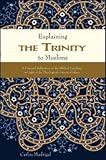
Explaining the Trinity to Muslims

Explaining the Trinity to Muslims: A Personal Reflection on the Biblical Teaching in Light of the Theological Criteria of Islam 

From Mission Catalyst: “by Carlos Madrigal, a Spaniard serving in Turkey, is a useful presentation for both Muslim and Christian readers.”

From William Carey Library:

This book is a culturally relevant presentation of the truth of the Trinity to the Muslim mindset. Originally it was issued through a Turkish secular publishing house and had a countrywide repercussion, even in Islamic circles. It is a useful presentation for both Muslim and Christian readers, providing fundamental keys for understanding and explaining the Trinity.

Wednesday, January 25, 2012

Christology in Contextualization, by Kyle Meeker

A paper presented to the Evangelical Theological Society, 2010 Southwestern Regional Meeting, titled:

Christology in Contextualization:
Another Look at Paul’s Motivation, Methods, and Message
at Mars Hill (Acts 17) in light of the Missiological Debate
surrounding Muslim - Christian Dialogue

Introduction and Abstract:

Acts 17 is often referenced as a key text in the Christian Scriptures for emphasizing the common ground in Muslim-Christian dialogue. While this text certainly tills the ground for fruitful discourse, the context emphasizes Paul’s telos - Jesus as the Person of Completion for issues in the Athenians’ world-views. Paul’s motivation, methods, and message also entails points of contention between ideologies. Without being unduly contentious, Paul’s ultimate objective is clarity in communicating his concept of Jesus. His goal of clarity drives his interactions, especially in regard to making the ‘Unknown’ known.

While stressing the distinctions, this appears to be a hindrance in Christian-Muslim Dialogue. But, if properly engaged, distinctions will provide a more robust dialogue and deeper understanding, especially for those from the respective communities listening in on the conversation.

Read the whole thing (14 pages).

Thursday, January 19, 2012

Prayer: the Work of Missions

From the famous sermon by John Piper in 1988, Prayer: the Work of Missions:

Not only has God made the accomplishment of his global purposes of salvation hang on the preaching of the Word; he has also made the success of the preaching of the Word hang on prayer. God's goal to be glorified in a world full of white-hot worshippers from every people and tongue and tribe and nation will not succeed without the powerful proclamation of the gospel by people like you and me. And that gospel will not be proclaimed in power to all the nations without the persevering, earnest, global, faith-filled prayers of God's people. This is the awesome place of prayer in the purposes of God for the world. They won't happen without prayer.

Listen to the whole thing.

Monday, January 16, 2012

I Have A Dream!

This adaptation of MLK's famous "I Have A Dream" speech was written by my friend Tim in 2006.  I hope your reaction is similar to mine when I first read it; I was impressed, I wept over it, I prayed about it, then I went out and tried to do something about it. 

Saturday, January 14, 2012

4,000 Churches Planted in 3 Years in Ethiopia

I’ve blogged on this before, but the below post is a great summary worth sharing again.

From Roger Thoman at Simple Church Journal aka House Church Blog: 4,000 Churches Planted in 3 Years in Ethiopia:

My thanks to David Watson for passing along Dave Hunt’s dissertation (Download 2009huntcpmdissertation) on church planting movements in East Africa.  There is so much of Hunt’s experiences that I relate to, albeit on a smaller scale and budget, that I am excited to see this compilation of what he has been involved in.  There are so many wonderful principles here that can be applied in any context!

Here are some of the concepts that Dave Hunt’s dissertation highlights:

1. True church planting is not the planning and implementing of programs but the natural, organic process that emerges spontaneously when the Gospel in its core essence is proclaimed and lived in word and deed.

Church planting becomes the natural and essential expression of the missional church as the gospel is proclaimed in word and deed, and believers are gathered together for fellowship, worship, and mission. What the Church needs to do according to Christian Schwarz is to “concentrate on the removal of obstacles to church growth and multiplication within churches. Then church growth can happen all by itself…

Believing that church planting is the work of God and that churches emerge spontaneously and naturally, perhaps the term catalyst best describes the human part in this process of church multiplication.

2. In many cases, the church has been hindered by the institutional model that has come from the West.

What we found in East Africa was a church of highly committed mostly “uneducated and untrained”1 workers, passionately in love with Jesus, but who were often bound within an institutional church structure that restricted rather than released and empowered their zealous witness of the gospel.

Much of this church planting strategy has to do with removing the barriers so that the church can more easily emerge. These barriers are largely those systems, structures, and demands which are added to the biblical requirements for doing church. When these are removed, people are introduced to and fall in love with Jesus. As they are discipled to obey all that He has commanded them, they will naturally want to gather together in fellowship to worship, learn, support and encourage one another and work together to spread the good news. As such, they become the continuing presence of Jesus in the dark places of the world.

3. The dynamic multiplication of churches is not dependent on education-level nor are long periods for disciples to mature needed before they can become involved in discipling others and starting new churches.

In this East Africa project the movements have been characterized by young believers still in a discipleship and maturing process themselves, passionately in love with Jesus who go from their newly established community of believers to make new disciples in a new region from which a new community of believers quickly emerges.

4. Church planting movements are fueled when believers discover Jesus as the head of the church rather than maintaining an unhealthy dependency on human leadership.

The believers are taught not to obey the church planter but rather to discover for themselves what the Word of God says and to obey the Word. The image of the church as the body helps to bring understanding to this critical element. The believer is not a member of an organization led by a pastor, but part of a body with Christ as the head. In Christ lies all the authority for the church.

5. Teaching simple obedience produces mature disciples rather than knowledgeable converts.  This is the key to replication.

Much of modern day discipleship is based on the acquisition of knowledge… Books, tapes, videos, and materials of all sorts have been produced to support the discipleship process.  Much of this leads to knowledgeable converts but does not make mature disciples.  Converts may be religious, but they may not be obedient.  What is a mature disciple?  It is one who is obeying all the commands of Jesus… and teaching others to do the same.  A mature disciple is a disciplemaker… Disciples replicate by making other disciples.

I will share more in future posts or you can download the entire dissertation for yourself here.

Sunday, January 8, 2012

What's the Message of the Bible in One Sentence?

Very interesting post: click here to read the various answers.  It’s very similar to ask what is the gospel or what is mission.  As you read, notice three issues:

  1. Is the main message of the Bible to see Jesus/God ruling/reigning as King and Lord, or is Jesus mainly a Savior to save people from their sins?  We should not bifurcate the two (yes I just said bifurcate), but is one aspect a function of the other?
  2. Is restoring/redeeming creation (not just people) included, or are people the extent of Christ’s work?  Also, are “all the nations” in view?
  3. Is there an element of doxology, or is the storyline about human flourishing? (Again about the bifurcating.)

How would you answer the question? Sound off in the comments below.

Related Posts:

Tuesday, January 3, 2012

Links

Point/Counterpoint: Jonathan McNeil and Kevin Higgins:

EDITOR'S NOTE: Since the “C1 to C6 Spectrum” was first introduced in EMQ’s pages in October 1998, we have published articles advocating a variety of perspectives about contextualized practices in Muslim settings. Most are written by missionaries, so when we received Jonathan McNeil’s interview of Dr. Ali, a Muslim-Background Believer (MBB), we knew that it brought to the table one of the voices that has been noticeably absent from the print discussion available outside of Muslim settings. At the same time, we knew that Dr. Ali’s is only one of the many MBB voices. Thus, we invited Kevin Higgins to respond in a way that represented a different voice. It is our expectation that you will read these two articles together, seeing in them a point/counterpoint approach that will give you a broader perspective on the many issues involved. Together, they illustrate where the sides agree—and where ongoing clarification and discussion are needed.

Contextualization of Essential Christianity: Three Points, Charles H. Kraft:

Essential Christianity needs to be seen as a faith instead of a religion if we are to talk sensibly about contextualization. For only a faith can be expressed in any set of cultural forms. Ours is not intended to be a religion that gets transplanted and, although adapted a bit, is really the same set of forms from culture to culture.

Essential Christianity needs to be seen as personal instead of structural. We seek to communicate a Person, not a system. To do that, we need to be personal and relational, since we are the major part of the message we seek to communicate.

And essential Christianity needs to be seen as a process in which people engage under the direction of the Holy Spirit instead of a product produced in one society and transported to another. We are to seek to plant seeds, not to transplant whole trees. It is this faith, this Person, this process that contextualization is all about.

Western Christianized Identity, Greg Parsons:

How will new believers understand and live out their faith in a situation where there is little or no biblical background?

Translation of Familial Language in the Bible, Andrea and Leith Gray and Rick Brown:

In order to accurately convey divine fatherhood and sonship, translators need to use expressions that are as equivalent in meaning as possible to the Greek and Hebrew terms for social son (huios and ben) and social father (patêr and âb) and to avoid biological expressions of the form God’s Offspring or the Procreator of our Lord Jesus Christ, because these are understood to signify biological relations generated through a sexual act of procreation.

Saturday, December 31, 2011

Larson’s Review of Chrislam (Anti IM/C4-5 Book)

From Review of Chrislam: How Missionaries are Promoting an Islamized Gospel:

Chrislam: How Missionaries are promoting an Islamized Gospel

Joshua Lingel, Jeff Morton & Bill Nikides, eds. i2 Ministries Publications, 344 pages, $25.

–Reviewed by Warren Larson, Former Director of the Zwemer Center, and Associate Professor of Muslim Studies, Columbia International University, South Carolina.

The best thing to be said about this book is that it addresses critical issues in mission to Muslims. Insider movement (IM) proponents have received ample press in the past (Mission Frontiers and IJFM) and this text deems it high time to present another perspective. It calls for careful exegesis (62-76) of passages like I Corinthians 9:19-22. It insists Muhammad was not a prophet in any sense of the term and the Qur’an is not divinely-inspired. It opposes removing familial language for God from Muslim-friendly translations (199-226), and though SIL and Wycliffe Bible Translators have issued new guidelines saying “Son of God” will be translated literally in most cases, sees the loophole large enough to justify many problematic “exceptions.” Many readers will resonate with such concerns but question the content and tone of this text.

Chrislam: How Missionaries are Promoting an Islamized Gospel consists of twenty-five chapters and is written by numerous authors. It contains a foreword, acknowledgements, preface, three appendices, bibliography, and an index. Material is divided up into six sections that deal with various subjects, including hermeneutics, translation, missiology, testimonies/interviews of former Muslims, and resources of IM websites, an index and references from both the Bible and the Qur’an.

On the positive side, sections one and five have the most value: The first section quotes IM proponents extensively, however taken out of context, may give impressions never intended by the authors. Section five gives Muslim converts (mostly Bengali) a voice in expressing strong opposition to IM; however other Bengalis could be called upon for the exact opposite view.

On the negative side, the Preface (iii-iv) is especially troubling: It contains inaccuracies, misperceptions and unbiblical attitudes. A statement in the second paragraph, “… [W]hat is at stake is not our personal relationships with brothers and sisters” suggests it does not matter what we say about fellow-believers, as long as we tell what we think is the truth. A comment in the third paragraph makes a generalization about all IM ministries: “… [N]o churches are planted …” Such sweeping statements set the tone for what is to follow. This book is reactionary, primarily a work of extremes, including an alarmist and inflammatory title. Nor is it put together well: One chapter (100-115) argues that Christians should treat Islam like an Old Testament ban, because after all, it is a pagan religion. And Samuel Zwemer’s article (306-308) on secret believers is misplaced; a more fitting quote would have been: “We must become Moslems to the Moslem if we would gain them for Christ” (The Moslem Christ, 183).

This book demonstrates that evangelical Christians have failed to settle an important question peacefully: To what extent can one remain culturally and religiously “Muslim” while seeking to follow Jesus? The opinion of this reviewer is that differences of opinion on such a controversial topic can only be clarified through careful scholarship, mutual respect and face-to-face dialog.

Thursday, December 29, 2011

Top Ten Circumpolar Posts of 2011

10. Salvation sans Jesus? A good point I wish Rob Bell had considered.

9. The Purpose (Vision) and Task (Mission) of Missions These are the most important questions we can answer.

8. The Qur’an as a bridge to… Do we want MBBs to think the Qur’an led them to faith?

7. “I am an Atheist and a Muslim” When Muslims say “Muslim” they tend to think in cultural categories. When we say “Muslim” we tend to think in theological categories.

6. One Cross, One Way, Many Journeys, Greenlee “How we conceive of conversion determines how we do evangelism.” Enough said.

5. Polygamy and Creation Make points Muslims can agree with.

4. Was Mohammed a prophet? How different people nuance the question.

3. Thinking Missiologically About Dreams What do we do when our Muslim friends dream of Jesus?

2. My take on the DG national conference: The difference between evangelism and missions Good exhortation from Abdul Asad on the importance of the unreached nations.

1. The best article on the C3-C5 debate in the last couple years Get yourself caught up on the debate and learn what the real issues are.

Who Is My Enemy: Questions American Christians Must Face About Islam – And Themselves

From Our Top 10 Books of 2011 by Relevant Magazine:

4. Who Is My Enemy: Questions American Christians Must Face About Islam – And Themselves, by Lee C.Camp

The starting point for Lee Camp’s stunning new book is that Christians should take Jesus at His word when He said, “Love your enemies.” This requires a commitment to self-examination as well as the practice of empathy—“empathy that may not agree, approve, or necessarily even tolerate, but nonetheless seeks to understand.” Camp suggests taking the question that was on everyone’s lips after the 9/11 attacks (“How could they do this to us?”) as an authentic agenda for understanding: “What in their experience, in their presuppositions, in their vision, could contribute to the deeds or words or actions we find so unjust and horrid?” Reading Who Is My Enemy reminded me of the growing pains I’d get as a kid, usually at night. It was going to be uncomfortable for a while, but I knew I was going to wake up bigger.

John Pattison

Tuesday, December 27, 2011

Free Book on Partnerships

This book has been recommended to me at least four times in the last couple years.  Maybe now I’ll get around to reading it!

http://powerofconnecting.net/WellConnected-PhillButler.pdf

HT: PL

Thursday, December 22, 2011

Guest Post: Living with the Wise, Ant Greenham

From Ant Greenham, Assistant Professor of Missions and Islamic Studies at SEBTS, and author of Muslim Conversions to Christ: An Investigation of Palestinian Converts Living in the Holy Land.  See also his research published as an article in St. Francis here: Key factors why Palestinian Muslims became Christians.

-----

My friend Tony Maalouf [author of Arabs in the Shadow of Israel: The Unfolding of God's Prophetic Plan for Ishmael's Line] argues persuasively that the magi, or wise men, who visited Jesus in Bethlehem, were Arabs. They came from the east (i.e. from present-day Jordan, or thereabouts), not from the north, like Babylonians, Persians and Greeks, who imposed centuries of hegemony over God’s people as they waited for their Messiah.

Whether they were Arab or not, the magi were quite likely influenced by Babylonian wisdom, as their name suggests. But they definitely had the wisdom to discern that a particular star, whatever it was astronomically, signified an extraordinary birth. In fact, the infant they went to see was not only King of the Jews, but one worthy of worship (Matt 2:2). How did they know this? While not excluding the supernatural, I would like to suggest they read and believed that portion of the Jewish Scriptures written in Aramaic, almost certainly a language they read with ease. The portion concerned is Daniel 2:4–7:28.

clip_image002Reading just this Scripture, they could conclude two things: From the time of Nebuchadnezzar’s Babylonian Empire, there would be four kingdoms, the last superseded by an everlasting kingdom, set up by God himself (Dan 2:44). The Babylonians, Persians and Greeks had come and gone. They were now in the era of the fourth kingdom, Rome. So it would stand to reason to look for a sign (such as an unusual star) which signified God was about to fulfill his promise. Second, God’s promise was centered in one like a Son of Man, who would be given eternal dominion, and enjoy the adulation of all peoples, nations and languages (Dan 7:13–14). So what else could they do, but respond to the star by going to Jerusalem and inquiring after one who was both human king and divine Lord?

Herod, that impetuous Roman ally, would try to negate God’s kingdom by slaughtering the infants of Bethlehem (Matt 2:16). But God’s word is true, and Jesus was spared to live a perfect life, die on the cross for our sins, rise from the dead, and return one day in glory. The magi, it seems, had the wisdom to understand this. Once they reached their goal in Bethlehem, they worshiped the child Jesus (but not his mother, or Joseph), and presented him with gifts of gold (for a king), frankincense (for a priestly mediator), and myrrh (to foreshadow his death, Matt 2:11).

This advent I am living among a delightful group of Arab believers in Jordan. They certainly have the wisdom to place the Jesus born in Bethlehem, who came to save us from our sins, at the center of attention. As we move into Christmas, it is my prayer that everyone reading this would do so too.

Ant Greenham, December 2011

Wednesday, December 21, 2011

Rick Love’s Top 10 Books of 2011

From his blog:

  1. Speaking of Jesus: the Art of Not-Evangelism by Carl Medearis
  2. Unconditional? The Call of Jesus to Radical Forgiveness by Brian Zahnd
  3. The End of Religion: Encountering the Subversive Spirituality of Jesus by Bruxy Cavey
  4. The Powers That Be: Theology For A New Millennium by Walter Wink
  5. Surprised by Hope: Rethinking Heaven, the Resurrection, and the Mission of the Church by N.T. Wright
  6. The Best Kept Secret of Christian Mission: Promoting the Gospel with More than our Lips by John Dickson
  7. Generous Justice: How God’s Grace Makes Us Just by Timothy Keller
  8. Allah: A Christian Response by Miroslav Volf
  9. Real-Time Connections: Linking Your Job with God’s Global Work by Bob Roberts Jr.
  10. Islam Without Extremes: A Muslim Case for Liberty by Mustafa Akyol

Read his post for an explanation of each book.

Here’s another book that looks very interesting, Textual Criticism and Qur'an Manuscripts.  From Amazon:

In this study, Keith Small applies the principles of textual analysis to twenty-two manuscripts—most of them early—that contain Q. 14:35-41, which describes how Abraham settled his son—presumably Ishmael—in Mecca. Based on a careful and systematic analysis of the manuscripts, Small traces the historical development of the Qur'anic text from the rise of Islam until the 10th century CE. Comparison of the manuscripts with the evidence of literary sources suggests that the text remained open and fluid during the first half of the seventh century, and that the production of a standard text was not completed until the end of that century. This editorial project, sponsored by the Umayyad caliphs, resulted in the destruction of most if not all of the earliest manuscripts, with the result that it is currently impossible to recover the original form of the text. This is an important contribution to scholarship on the Qur'an. (David S. Powers)

Tuesday, December 20, 2011

The best article on the C3-C5 debate in the last couple years

If you’re like me, you’ve experienced a fair bit of fatigue concerning the contextualization debate among evangelical circles over the last couple years.  Sometimes it seems the issue is getting more and more polarized, with some calling the other a heretic, although there is still hope that all the sides can come together.  In any case, I’m kind of tired of reading the same old arguments and trying to cover the blitz of articles coming at us.

So if you want to get caught up on the most recent articles and thinking, and are trying to find a common path that we can (almost) all agree on, then search no more.  Inside/Outside: getting to the center of the Muslim contextualization debates, by J. S. William tackles all these issues and more. (I also want to brag that Circumpolar’s Abdul Asad is quoted a couple times in the article.) 

While not trying to advocate a certain stance per se, J. S. William summarizes the C5 arguments, clears up common misunderstandings about them, and tries to get past the surface arguments to the heart of the matter.  In bold is an extended outline of the 38 page article – with my own personal (and sometimes tangential) comments of the point at hand:

    1. Introduction – There is a firestorm of controversy around the idea of “Muslim followers of Jesus.”  Unfortunately there is often more heat than light.
    2. Basic Positions on the Debate – There is a difference between “insider” and “C5,” although the terms are often (mistakenly) used interchangeably.  Both sides have similar levels of experience, expertise, and conviction.  Critics range from total rejection (sometimes very mean-spirited criticism) of C5 to respectful engagement with it.
    3. Points of Confusion – What the debate is NOT about.
      1. C5 means Christian missionaries saying they are Muslims – Practically no one does this and no one advocates it.
      2. C5 is about avoiding the persecution Jesus promised – C5ers do not try to avoid all persecution.  The point is that persecution, when it does happen, should be because of someone’s faith in Jesus and not for the wrong reasons.  Many insiders themselves suffer for Christ. C6 follower of Christ may temporarily hide, but this is not desirable and usually due to extreme circumstances.
      3. Like the Emergent Church, IM waters down doctrine and/or redefines orthodoxy to the extent of subsuming orthodox Christian doctrine to orthodox Islamic doctrine – The real association between the two is the asking of questions like, “How do we reach a resistant sector of the global society with the Gospel? Is it perhaps our methods that are flawed?”  IMO, the church in every generation needs to self-asses if they are biblical.
      4. IM does not encourage believers to gather as a “Church” –What we need to do is define the biblical term “ekklesia.”  C5 proponents want ekklesia.  There can be missional reasons for a MBB going to a mosque.
      5. All Muslims believe and practice the same thing, so to be an Insider is to believe and Practice those same things – Islam is extremely diverse.  What does it mean to be a Muslim? The answer varies considerably.  See the posts: “I am an Atheist and a Muslim” and Islam is Not a Civilization.
      6. Only one approach is necessary – C5 could definitely be wrong or at least unnecessary in some contexts.
      7. IM advocates manipulative language in order to sneak in Muslim accommodation and undermine Christian orthodoxy – This charge is subjective and judgmental.
    4. Areas of remaining tension and discussion – What the real issues are:
      1. Can meaning and form be separated from one another? Moreover, is it appropriate and necessary to translate words and forms based on “meaning units” (dynamic equivalency) rather than “word-for-word” or “form-for-form” conversion of terms? – The principal of dynamic equivalence actually has broad, deep support among evangelicals.  Fundamentalists are usually against it.
      2. Are meaning-based translations that seek alternative terms from those that have historically offended and distracted Muslim audiences able to maintain accuracy and faithfulness to the intended-meanings of the text? – This is a tough call. The “Son of God” translation issue for Muslims is extremely complicated, and it may never have a clear answer.
      3. Are there significant numbers of true followers of Jesus who continue to identify themselves as Muslims? Is it important that Western outsiders verify and evaluate this? – Yes many Muslim followers of Jesus exist, although just because something happens doesn’t mean it has God’s approval, nor that it needs Western approval.
      4. Is following Jesus a “religion”? If so or if not, what does this mean for our understanding of a religion such as “Islam”? – This is a key issue.  I have actually written a “Worker Scale” (a la the C Scale) that shows 4 different paradigms how we as evangelical workers understand the theology of engagement with other Religions: 1) Destruction Model “Christianity destroys Islam”, 2) Replacement Model “Christianity replaces Islam”, 3) Redemptive Model “Christianity redeems/changes/transforms Muslims”, 4) Fulfillment Model “Christianity fulfills Islam”.  I’m thinking of posting or publishing this W Scale soon.
      5. What are the elements of genuine Christ-centered discipleship? What role do tradition, historical Christian confessions, foreign missionaries, and the Holy Spirit’s leading have in bringing someone into genuine conformity to Christ-likeness? – The process of discipleship is messy, it is messy in every context, but it is a process nevertheless.  The point is to get MBBs firmly grounded in their identity in Christ and in the Bible and in community with one another.  But how MBBs eventually work out their socio-religious identity and how they deal with idols in their culture is a process they need to be prepared for, not just told what to do by a cultural outsider.
      6. To what extent does a follower of Jesus need to visibly relate to the global body of Christ and traditional churches in their regional area but outside of their typical community? – “Most likely, this debate has more to do with the question of “when” not “if.””  They key is to view all movements as transitional in nature.  How many years did it take until “Christianity” was formed in the 1st or 2nd or 3rd Century Mediterranean world?  As Bosch says in Transforming Mission, “Either the movement disintegrates or it becomes an institution, this is simply a sociological law.  Every religious group that started out as a movement and managed to survive, did so because it was gradually institutionalized” (52).
      7. How should Insiders view and talk about Mohamed? – See the post Was Mohammed a prophet? for various ways people try to answer this question.  Continued allegiance or faith in Mohammed will obviously not help MBBs grow spiritually.  MBBs need to be grounded in Christ and Word alone.  But how they talk about him when witnessing is a different matter.  Syncretism is a serious threat for all of us, not just MBBs.  Each culture has it’s idols: Mohammed, Islam, or the Mosque could all be potential idols for MBBs.
    5. Conclusion – Although we will not totally agree with one another (I disagree with myself at times), Rom. 14-15 teaches us not to judge one another.  Love and humility is needed.  JS William closes the article by offering seven statements he hopes we can all agree on (I include them in their entirety):
      1. We aim to see vibrant, Jesus-loving and Jesus-centered communities that are faithful to the Scriptures and living out their discipleship in their community.
      2. We aim to see people meaningfully connected to their unbelieving social networks, without denying or diminishing Jesus' centrality, for the sake of the Gospel.
      3. We aim to see strong, robust, transformed families.
      4. We aim to live out the biblical calling of teaching, rebuking, warning, and loving new believers as Christ is formed in them.
      5. We aim to be listeners and learners in the midst of that process; we know we bear cultural baggage and we want as much as possible for the Gospel to be implanted within the new culture and to avoid setting a foreign cultural standard.
      6. We believe that those who are joined to Jesus will suffer in this fallen world and will suffer especially for their devotion to Jesus. Though some might look to avoid pre-mature persecution, we do not believe persecution can be completely avoided nor that it should be. "All who desire to live a godly life in Christ Jesus will be persecuted." (2 Tim 3:16).
      7. Though our time-frames differ for accomplishing it, we aim to see Jesus-centered communities from Muslim backgrounds connected to and embraced by the global body of Christ.

So go ahead and read the whole thing for some light, leisurely reading during the holidays.

Saturday, December 17, 2011

Christians, Jews, Muslims, and... Lowes?

It's good to see Christians and Jews standing with their Muslim neighbors to support them in this issue.

HT: EP


Tuesday, December 13, 2011

Both Pro Israeli AND Pro Palestinian

Talking about Israel and the Arabs is a minefield among evangelicals.
There is probably no quicker way to be labeled anti this or pro that.

– Mike Kuhn, pg. 109

For anyone working with Muslims the issue of Israel is bound to come up eventually.  So what is the way forward?

For starters, here is a short article: How Evangelicals Are Learning to Be Pro-Palestine, Pro-Israel, Pro-Peace, Pro-Justice and Always Pro-Jesus (HT: JC).

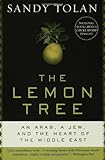
One great secular resource is the very unique book called The Lemon Tree: An Arab, a Jew, and the Heart of the Middle East.  It’s a narrative non-fiction that displays the humanity on both sides of this complex issue.  I have heard that both Palestinians and Jews claim the book is fair.  But more than fair, it’s also an enjoyable, fascinating read!

See also chapter 7 in Fresh Vision for the Muslim World by Mike Kuhn.

For a solid and balanced biblical-theological perspective, see John Piper’s Israel, Palestine and the Middle East.  Piper also has some shorter resources:

It’s nice to know we don’t have to take sides on the Israeli-Palestinian conflict.  The important thing is to use this issue to point our Muslim friends to Jesus, the hope of all and our only lasting peace.

Related Post: Christ at the Checkpoint

Monday, December 5, 2011

Monday, November 21, 2011

The Arab Spring, Democracy, and the Gospel

From Trevor Castor at the Zwemer Center:

Democracy does not always equate church growth and is not necessarily the most conducive political system for the spread of the gospel. Often times the gospel flourishes under harsh regimes and therefore we do not need to be fearful if Egypt or any other country moves in that direction. We pray for peace but we also pray for the harvest. Let’s be sure that our first concern is for the people of Egypt and other Arab nations to come to a saving knowledge of Christ whether that is politically good or bad for America. Too often our first priority is temporal comforts rather than eternal things. Whatever political power wins the day we pray that the Church will be strengthened and grow in the Arab world.

The Iranian revolution in 1979 began a couple years earlier as a populist uprising.  Khomeini came in to save the day and provided the leadership it needed.  The result was the formation of an Islamic republic.  And since then perhaps more Muslims have come to Christ in Iran than in any other Muslim people or country.  Even though I think people should be free and religious freedom should be universal, I agree with Trevor that we need to be very careful about cheering for democracy.

Saturday, November 19, 2011

“I am an Atheist and a Muslim”

How can these identities coexist?  I’ll tell you my tentative conclusions at the end of the post.  (Please note that many Atheist Muslims are not postmodern.)

First, read this excerpt interview of Hamed Abdel-Samad in Spiegel Online (HT: JS William):

SPIEGEL: You advocate a milder form of Islam. What remains of the core of the religion?

Abdel-Samad: My dream, in fact, is an enlightened Islam, without Sharia law and without jihad, without gender apartheid, proselytizing and the mentality of entitlement. A religion that is open to criticism and questions. As far as I'm concerned, I converted from faith to knowledge some time ago.

SPIEGEL: You became an atheist.

Abdel-Samad: No.

SPIEGEL: You might as well admit it. Being an atheist is nothing to be ashamed of.

Abdel-Samad: But it isn't true.

SPIEGEL: Not a single imam, Catholic priest or rabbi would believe you. Believing in God means accepting that something exists beyond knowledge. If you don't share this belief, why do you insist on calling yourself a Muslim?

Abdel-Samad: Believing in God can also mean being at odds with him. I don't pray regularly, and I don't fast during Ramadan. In that sense, I'm not religious. But I perceive myself as a Muslim. It's my cultural community. For me, Islam is also my homeland and my language, and my Arabic can't be separated from all of that. You can distance yourself from Islam but remain within the heart of Islam. I don't want to yield to the fundamentalists who preach violence. They are on the rise.

Next, see these quotes from a very interesting paper from Paul Froese called “I am an Atheist and a Muslim: Ideological Competition and Accommodation in Central Asia.”  The study shows how Central Asian Muslims retained and accommodated their Islamic beliefs and identity during the era of Soviet Communism.  During this era:

“Muslims were not willing to disown their religious members for publicly advocating atheism. As one committed Kazakh communist explained, “I am an atheist but also a Muslim, because all Kazakhs are Muslims and I cannot deny my forefathers”” (25).

“Muslims… differ from Christians in terms of how they understand their religion and their religious identities. The doctrine of Islam is more flexible in terms of how it defines true believers than most Christian churches” (31).

Finally, Malise Ruthven also notes the existence of Atheist Muslims:

The label Muslim indicates their ethnicity and group allegiance, but not necessarily their religious beliefs. In this limited context (which may apply to other Muslim minorities in Europe and Asia), there may be no contradiction between being Muslim and being atheist or agnostic…

So what does it means to be a Muslim?  Islam allows a lot of diversity.  It seems to me that Western Christians think of the terms “Islam” or “Muslim” primarily in theological categories, but many Muslims themselves understand the terms primarily in cultural categories.

So what?

Tuesday, November 15, 2011

Interacting

Abu Daoud has posted some thoughtful answers to the questions I asked on this post.  I would love to hear some more feedback from readers.  Go ahead and weigh in on the comments below or on Abu Daoud’s site.

I posted my initial response here.