Showing posts with label Contextualization. Show all posts

Friday, January 29, 2021

Introducing Hermeneutical Hinges: How Different Views of Religion and Culture Impact Interpretations of Islam | The Religious Other (Langham 2020)

I’m excited to let you know about our new book, The Religious Other: A Biblical Understanding of Islam, the Qur'an and Muhammad which released in December 2020. Here is the book description:

We live at a time when religious diversity has become a fact of life in our globalized societies. Yet Christian engagement with Muslims remains complex, complicated by fear, misunderstanding and a history fraught with political and cultural tensions. These essays, drawn from the 2018 and 2019 Middle East Consultations hosted by the Arab Baptist Theological Seminary's Institute of Middle East Studies, engage the need for a carefully developed theological understanding of Islam, its origins and its sacred text. Weaving together the work of Christian scholars of Islam, the Bible, theology and missiology, along with the insights of ministry practitioners, this book combines scholarly exploration with pertinent ministry practice, offering a rich framework for the church to continue its conversation about its engagement with Muslim communities and its proclamation of Christ worldwide.

I have contributed three chapters in the volume; two of them are new. In this post I would like to highlight my essay in section 5.3, “Hermeneutical Hinges: How Different Views of Religion and Culture Impact Interpretations of Islam.” Here is my introduction.

As Martin Accad has proposed, “Your view of Islam will affect your attitude to Muslims. Your attitude will, in turn, influence your approach to Christian-Muslim interaction, and that approach will affect the ultimate outcome of your presence as a witness among Muslims.” I would like to add a more foundational layer to this proposal, namely, that your understanding of religion and culture will affect your view of Islam. In other words, your view of Islam inevitably hinges upon your approach to religion and culture, and specifically, the relationship between the two.

In this article, I would like to show how these ideas play out in the missiological discourse of ministry to Muslims. In the interest of space, I will not focus on a theology of religion (although the discerning reader will see hints of it throughout). Instead, I will focus on the more basic concepts of religion and culture. As we will see, the contemporary debate concerning approaches of ministry to Muslims is complex, and different presuppositions about culture and religion can lead to drastically different understandings of Islam.

The chapter continues with the following sections:

  • Culture: Secular, Evil or Theological?
  • Religion: Western Invention, Belief System, or Subset of Culture?
  • Epistemological Perspective: Top-Down or Bottom-Up?
  • Form and Meaning: Equated, Separate, or Corresponding?
  • Islam: Cultureligion or Religiolatry?

My approach in this essay offers examples from missiology where different answers to the above questions will take you in diverse directions as you interpret “Islam.”

Here is my final section, Concluding Reflections: Getting Comfortable with Ambiguity:

We are unlikely ever to reach a consensus on a proper biblical theology of religion and culture. With the publication of Christ and Culture in 1951, Niebuhr called this issue an “enduring problem” for the Church through the ages. While we can make some general clarifications, as I have done here, it seems to me that many of these issues can’t be solved at the abstract, theoretical level. There is simply too much knowledge rooted in experience and context making the issues extremely difficult to evaluate in a historically “Western” way, i.e. in the realm of ideas.

Interestingly, during the infamous Jerusalem Council in Acts 15, the assembled reflected on the experience of God’s work among them. A next step in this discussion would be to put approaches of ministry to Muslims in dialogue with the Muslim and MBB experience of Islam (religion? culture? both?), which, as we already know, varies. I am very sympathetic to the charge that this discussion has been dominated by Western voices. And yet I find that non-Westerners and MBBs have similar discussions and similar disagreements around these concepts as well.

Still, we may offer some concluding critiques of the discussion. Many of the approaches to contextualization surveyed here assume that Muslims are practicing, not nominal, Muslims. In my experience, however, many Muslims, if they are practicing at all, use Islamic piety to keep God at a distance, either because they are afraid of punishment or because he is seen as unknowable. A Muslim friend once told me he was looking forward to eternity in Paradise, because in heaven, there “was no more worship.” For him, heaven was a man-centered place of sensual indulgence; God was present only in theory.

Additionally, Muslims do not all share the same attachment to Islam. It should go without saying, that, depending on the context, sometimes you do not have to do anything according to the context! Many Muslims do not desire to follow Christ in ways that are culturally or religiously familiar to them, although some indeed do. And yet, the Gospel has all too often been presented in Western forms, causing it to be rejected as foreign. While this may partially explain some of the tension in our discourse, it does not explain all the historical reasons for the resistance to the gospel in Muslim lands. In some Muslim contexts, there is often a very strong connection between form and meaning. For many Muslims and MBBs, some of the forms are linked with meanings that are nearly impossible to modify.

On the other hand, the automatic equation of form and meaning practically villainizes particular Islamic cultures. For mission in a postcolonial world, we must ensure that our theology of Islam does not speak pejoratively of Muslims and Islamic cultures. Unfortunately, Evangelicals have a long history of failing to obey the Golden Rule of Ethics, “Do to others what you would have them do to you” (Matt 7:12). If we understand Christianity as a religious system, we can also demonstrate that “Christianity” has (at numerous times throughout history) done evil things seemingly rooted in the demonic. Does this also mean that “Christianity” has a demonic source? Furthermore, if God saves us from our culture (as some maintain), to what culture do we turn? What is “Christian” culture? Answers only add to the ambiguity.

So, how can we understand Islam? Islam is a process of “meaning-making,” undertaken by Muslims as they interact in their context with the revelation (according to their tradition) given to Muhammad. Islam includes diverse cultural traditions, access to social networks, a sense of belonging with others, and rituals and ceremonies. Phrases such as “leaving Islam” or “remaining in Islam” are often too vague to be meaningful and can actually be confusing in discipleship. For some, “leaving Islam” could mean that a Muslim who comes to Christ must also leave his culture and community, while for others, “remaining in Islam” could mean it is automatically permissible to participate in Islamic rituals. Issues of socioreligious identity are not always clear either. What does a “Muslim” or a “Christian” identity mean within a specific setting? Answers vary with contexts. When we look at Muslim contexts, Islam is not all we see; it is one strand in the braided rope of Muslim societies.

Finally, we haven’t discussed other important issues, such as the nature of the Kingdom of God, the Church, and the gospel. These are also disputed concepts in evangelical missiology. Although we might not agree, and although we need to become more comfortable with ambiguity and messiness, we should still strive for as much Christocentric clarity as possible as we witness to Muslims in diverse contexts. Let us not forget the command to love one another and to love the religious other as we make disciples of Jesus among all nations.

Buy the book and read the whole chapter here.

Tuesday, March 17, 2020

Hills and Hiding? A Response to Travis Myers | Kevin Higgins

Below is a guest post from Kevin Higgins (President of William Carey International University) written May 1, 2019 but not previously published. It is a response to an article published at Desiring God on April 23, 2019: A City Under a Hill: Five Problems with Insider Movements. Feel free to comment below.


Hills and Hiding? A Response to Travis Myers

Kevin Higgins | May 1, 2019

I recently received the link to the article, “City Under a Hill: 5 Problems with Insider Movements” by Travis Myers (Professor, Bethlehem College & Seminary).

I will primarily use the outline of the five points he raises, however I begin from one of his major subtitles near the beginning of his paper: “When the Gospel hides”.

By highlighting this comment and framing it as a major section of his paper he tips his hand to an assumption he is making about insider movements: they are secretive and hiding the Gospel. This is of course hinted at in his title as well (city under a hill).

While I welcome questions about insider movements and feel the discussions are a healthy process, I find responding to this idea that insider brothers and sisters are hiding their faith is just covering old territory in the long discussions about IM. The claim that insider movements are secretive or silent or don’t share their faith is a claim as old as the discussion itself (back to at least 2004). This has been frequently rebutted, and the number of Muslim followers of Jesus who face persecution and death because of their faith is also witness to the erroneous nature of this straw man argument.

Does every “insider” believer stand boldly? Certainly not. Does every Christian living in Muslim countries do so? Does every Christian in the USA? Of course not.

The real question then is what do godly leaders in such contexts teach and encourage their people to do? In the case of insider movements, the expectation is that disciples of Jesus make other disciples of Jesus. They share their faith and they bear witness.

They do not hide the Gospel.

Now to Myers’ five points. I use his terms, and each of the five is followed by a direct quotation from Myers’ article.

1) Hermeneutics

“IM is predicated on the misguided idea that faith in Jesus as Lord of one’s life can “complete” and be the apex of any religious tradition or religious identity.

Two responses. First, IM is not predicated on this point. Not every IM proponent even holds this position, and in fact, if fulfillment thinking is not true it would not change anything. IM practice or approaches or principles are not dependent on this theme. IM is predicated on many other biblical principles and passages. The literature is full on this point.

Second, in my own thinking the only mentions I have made of “fulfillment” thinking were extremely guarded and tentative and quite clearly distinguished from what we mean when we refer to Old Testament fulfillment. I was raising the point merely to explain how I understood things, because it was already being asked.

My contention is that Jesus does fulfill a number of dimensions of anyone’s cultural and religious backgrounds when a person comes to faith (and personal longings and hopes as well). It is frequently the case that in Jesus people can and do see a number of beautiful aspects of their heritage, including their religious heritage, which now seem to find a new fullness and beauty in Jesus.

Myers’ argument which assumes IM bases itself in fulfillment thinking is a generalization and inaccurate.

2) Integrity and Identity

“Core Islamic doctrine explicitly denies biblical doctrines that are central, and essential, to Christian faith.”

This is true. Core Islamic doctrine does deny biblical doctrines that are essential. No argument on this point has ever been put forward by any insider advocate I know of.

Muslims who follow Jesus (not all, but a number whom I know) do argue that on the basis of the Qur’an and the Bible a number of core Islamic teachings are incorrect and they seek to reform those understandings, including Islamic teaching about Jesus, the Bible, salvation, and more.

This is not at all the same thing as suggesting that Islam does not teach incorrect things. In fact, it assumes the opposite.

3) Discipleship

“The IM approach stunts Christian discipleship and spiritual growth.”

I am guessing, perhaps wrongly, that Myers has not met insiders personally or directly. His conclusions certainly seem to indicate this. The question here really is what are IM movements doing about these issues? How do they disciple believers?

The movements I have known and been involved with are all rooted in ongoing inductive study of whole books of the Bible in community. Also, increasingly, I see leaders focused on reflection on the doctrinal history and themes Christ’s people have wrestled with historically, as these leaders in turn wrestle with issues in their contexts.

This does not mean that every answer Christ’s people have arrived at in other epochs and contexts is simply swallowed whole into such movements. I would argue we don’t do so in the west either, and would add that I don’t think we should do so.

4) Ecclesiology

“One’s identification with Christ should entail identification with all of Christ’s people in the world today and throughout time. That is more fundamental, ultimate, and significant than ethnic, cultural, linguistic, family, or local identity.”

I hear this sort of claim from time to time from critics of IM. I can sympathize with its intentions and heart. However, several things need to be said.

First, what is meant by identification with “all Christ’s people in the world today and throughout time”? How is this even possible? How many Christians identify in this way? We have Christian denominations who do not see others as Christian, will not have communion together, do not recognize one another’s ordinations, and more. We don’t even share (fully) common creeds, confessions or canon of scripture. So, to ask insider believers to hold to a standard that the Christian church has not attained seems hypocritical. I am not suggesting Myers is hypocritical as a person, but that this standard is.

Second, even when we do pursue unity and identification as Christians with others, this happens very much on a small and personal and local scale: through relationships. And this also happens between insider believers and those who we would call Christians. I have seen it and facilitated it. There is no sense among the leaders of IM’s which I know that Christians are not also brothers and sisters in Christ. They welcome thinking of all believers in Jesus as members of the Body.

Finally, I know believers who are “insiders” who also pray regular for Christians. They do so as brothers and sisters.

5) Soils and Strategy

“Though admittedly difficult in many contexts, religious identity and ethno-cultural identity can and should indeed be differentiated. The former must be given up for Jesus and the church. We should reject the conflation of social and religious identity.”

I want to point out where I agree and disagree with Myers here.

First, where I disagree. I understand Myers’ point here but it is, from many points of view, simplistic and impossible to separate religion and culture. We think we can, in the west. And maybe in a western context this may be partly the case, with our assumptions about secular and religious life, and physical and spiritual dichotomies, and assumptions that religions are easily distinguished and identified.

But in most contexts, this simply is not as easy as Myers suggests. In a Muslim context where something as normal to daily life as brushing one’s teeth and using the toilet are guided by religious teaching, what would be culture or religion? Should one brush one’s teeth differently just to show one is not keeping one’s religion? If one continues to brush teeth as they have since childhood, is that keeping their religion or their culture? These are purposely “easy” sorts of examples, in order to show that it isn’t easy.

In the simple examples above most readers will likely be thinking, “well brushing teeth doesn’t matter so even if it is guided by religion, no problem.” This already suggests we are comfortable making distinctions about what is ok and not ok to keep, even from one’s religious heritage.

Where do I agree with Myers?

The fact is that obedient discipleship will require changes. It will require replies of yes and no to all sorts of things, cultural, religious, emotional, personal, relational, attitudinal, philosophical, etc.

Thus, for me, the point is not whether one can keep culture but must jettison religion, or even whether that is a distinction we can make. The point is how do needed changes happen, how are they identified, who makes such decisions, and how do they decide, and for what reasons and motivations?

This is why we have taken great care in the movements I have been involved with to cultivate processes for handling such questions (for example, the questions of should we continue to do this or stop doing that). We have never given a blanket “yes, just keep doing everything”. Neither have we given a blanket no, on the other hand.

What we have done is asked, “what does scripture say on this issue? How do we obey? What does being faithful mean? How do we decide which aspect of our heritage is ‘ok’ and ‘not ok’?”

Conclusion

I have no expectation of being able to persuade every critic of the viability of the biblical faithfulness of IM as movements. And my aim here is not in fact to persuade. But I do hope to explain and, where possible, correct misperceptions and assumptions which result in misrepresentations. I do not for a moment suggest Myers intends to misrepresent anything about IM. But the five points do result in that at the end of the day.

To return to the title of Myers’ article, the IM examples I know of are not “cities under a hill.” They are seeking to both receive and share Christ’s light with all those around them, hoping that Jesus and His Gospel will be impossible to be hide.

Tuesday, April 2, 2019

Outlining a Biblical Theology of Islam: Practical Implications for Disciple Makers and Church Planting | EMQ 2019

Here is full access to my article “Outlining a Biblical Theology of Islam: Practical Implications for Disciple Makers and Church Planting,” that first appeared in EMQ in January 2019.

Taking into consideration the ambiguous nature of religion, a reconsideration of the historicity of Islamic origins, and the diversity of Muslim contexts, I discuss the important topics to consider when constructing a biblical theology of Islam. In the light of authoritative biblical revelation, my approach also illuminates the connections between theology-in-context and our practice of disciple making.

Here are the topics I have paired together:

  • Religion and Kingdom Sociology
  • Biblical Anthropology and Idolatry
  • Prophecy and Muhammad
  • Revelation and the Qur’an
  • Christocentric Doxology and Allah

It is obviously a lot to discuss in just over 3,000 words (EMQ’s limit), but these are the major themes that need consideration in our contextual theology of Islam.

Wednesday, March 6, 2019

My Two Recent Articles in EMQ and IJFM

I currently have two articles out at the moment in EMQ and IJFM.

The first is with EMQ and if you are a member of Missio Nexus (most North American agencies are with Missio Nexus, and if your org is a member then you are too), then you have access. If not, I’ll make it available in April. It is called Outlining a Biblical Theology of Islam: Practical Implications for Disciple Makers and Church Planting and is something I wrote as a kind of promo piece for the annual Middle East Consultation in Beirut, Lebanon (I’ll be giving two keynotes this year). Here are the topics I have paired together in the EMQ article:

  • Religion and Kingdom Sociology
  • Biblical Anthropology and Idolatry
  • Prophecy and Muhammad
  • Revelation and the Qur’an
  • Christocentric Doxology and Allah

It is obviously a lot to discuss in just over 3,000 words (EMQ’s limit), but these are the major themes that need consideration in our theology of Islam.

The second article is Adaptive Missiological Engagement with Islamic Contexts at IJFM. This is also Chapter 17 in our book Margins of Islam: Ministry in Diverse Muslim Contexts. Here is my outline for the article:

Changing Understandings of Muslim Contexts

  • Postcolonial Studies: “The Muslim World” vs. “The West”
  • Cultural Anthropology: Modern Essentialism and Postmodern Relativism
  • Religious Studies and the Fog of “Religions”

A Call for Adaptive Missiology

  • Towards a Missiology of Islam(s)
  • Idolatry and Mission
  • Transforming Relationships

This is a longer article that deals with epistemology and issues which inevitably color our approaches to reaching Muslims.

Let me know what you think in the comments below.


Monday, October 8, 2018

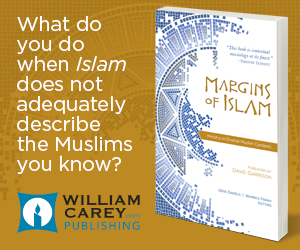
Introducing our New Book | Margins of Islam: Ministry in Diverse Muslim Contexts

On behalf of Gene Daniels, I’m excited to introduce our new book Margins of Islam: Ministry in Diverse Muslim Contexts. Here is the book description:

What do you do when “Islam” does not adequately describe the Muslims you know? Margins of Islam brings together a stellar collection of experienced missionary scholar-practitioners who explain their own approaches to a diversity of Muslims across the world. Each chapter grapples with a context that is significantly different from the way Islam is traditionally presented in mission texts. These crucial differences may be theological, socio-political, ethnic, or a specific variation of Islam in a context—but they all shape the way we do mission. This book will help you discover Islam as a lived experience in various settings and equip you to engage Muslims in any context, including your own.

One of the most succinct and descriptive endorsements comes from Timothy Tennent, President of Asbury Theological Seminary:

In a marvelous tour de force, Margins of Islam exposes the widely held, but false assumption that the house of Islam is a monolithic religious entity which either resists or responds to missiological strategies. Collectively, these authors offer up case studies and rich and textured “on the field” experience which reflects the true variegated diversity of Islam. This book is contextual missiology at its finest.

The project was the brainchild of Gene Daniels. I vividly remember sitting next to him on a bus discussing it with him on our way to a conference center from a hotel a couple years ago. His big idea was to gather missionary scholar-practitioners serving in various Muslim settings to explain how they take context seriously and how they deal with the phenomenon that we call “Islam.” I was genuinely surprised and honored when he asked me to be his coeditor!

We immediately started networking and looking for contributors. Gene already had several people in mind. My job was to help edit each chapter and then to produce a concluding chapter that explained the themes of the book. It was a rich learning experience. As I researched for the book, I found myself often disagreeing and pushing back on evangelical treatments of Islam.

My criticism began to take shape and eventually became an introductory chapter—most evangelical missiological treatments of Islam are reductionistic with what I call a “top-down” approach, meaning that Islam (and subsequently, Muslims) can be adequately understood by addressing the Qur’an, hadith, and history of Islam. From this textual understanding, it is assumed that Muslims believe what Islam teaches, and thus there is a “Muslim worldview” and strategies on how to engage it. In this framework, Muslims are often simplified as cultural and spiritual clones of one another.

Many workers have read books based on this top-down approach, but when they begin to engage Muslims in their context, they quickly discover that the Muslims they are working with believe very different things from what “Islam” teaches. While the top-down approach is incredibly valuable, it can also distort our understanding of Muslims if it is our only lens. We also need a “bottom-up” approach that explains the historical evolution of the Islamic phenomenon and the sociological perspectives that accounts for the diversity of Islam today. Ergo my chapter two: How Muslims Shape and Use Islam: Towards a Missiological Understanding.

As I was editing the chapters (which do a wonderful job of combining the top-down and bottom-up perspectives) and after I wrote the introductory chapter, I started to reflect on how recent developments in postcolonial theory, anthropology, and religious studies have influenced mission to Muslims. Gene and I later decided that I would write a theory piece again for a concluding chapter which I titled Adaptive Missiological Engagement in Islamic Contexts. Gene then did a masterful job tying the themes of the book together in the final chapter, “Conclusion: Learning from the Margins.”

Here are the contents of the book:

Foreword, David Garrison

Introduction, Gene Daniels

PART 1: CONCEPTUALIZING ISLAM

1 Who Represents Islam?, Evelyne A. Reisacher

2 How Muslims Shape and Use Islam: Towards a Missiological Understanding, Warrick Farah

PART 2: ENGAGING MUSLIMS

3 The Donkey and the Straw: Reaching South Asian Sufis with the Gospel, Kevin Higgins

4 Secular Muslims in Bosnia and Herzegovina, Ted Esler

5 Egalité, Fraternité, and Cous-cous: Ministry to Muslims in the Context of a Resurgent Islam and French Laïcité, Rick Kronk

6 Biblical Approaches to the Nurcu Gülen Movement in Turkey, Yakup Korkmaz

7 Magical Mystical Muslims: Sufi-oriented Islam and African Traditional Religion, Robin Dale Hadaway

8 Ordinary Muslims in Pakistan and the Gospel, Warren Larson

9 Ministry to Hui Muslims in China: An Approach to Dual-layered Cultural Settings, Enoch Jinsik Kim

10 Context as Flypaper: The Island of Java in Indonesia, Michael A. Kilgore

11 Liberating Liminality: Mission in the North African Berber Context, Patrick Brittenden

12 Russified Muslims of the Former Soviet Union, Gene Daniels

13 The Queen’s Muslims? Muslim Identities in the UK, Phil Rawlings

14 In the Shadow of a Buddhist Temple: Muslims in Thailand, Alan Johnson

15 Uyghurs of the Tarim Basin: Muslims in Northwestern China, CG Gordon

16 Muslim Youth in a Glocal World, Arthur Brown

PART 3: REFRAMING MISSIOLOGY

17 Adaptive Missiological Engagement with Islamic Contexts, Warrick Farah

18 Conclusion: Learning from the Margins, Gene Daniels

As our endorsements were rolling in, one from JD Payne stood out in particular that helped us identity the biggest potential takeaway from this book:

Margins of Islam takes readers on a global journey revealing the multiple expressions of the Islamic faith… We no longer have any excuse to train others to reach all Muslims in the same way.

I want to thank Gene for this incredible opportunity, and also for our excellent group of contributors who have taught me so much about the variety of Muslims and the varieties of biblical mission in the world today. Go ahead and buy the book on Amazon, and please help us spread the word—you can easily share this from the button on the bottom of the post on the blog. Thank you for considering! We feel this volume represents a significant encouragement for the mission of the church.

SM Post 1

Friday, December 29, 2017

The Muslim Christmas Song

Just think of all the important conversations this video can generate: the nature of religion, the origins of Christmas, appropriation, Islamophobia, contextualization, objectivity, religious plurality, interreligious encounter, etc., etc. If you have any thoughts about this video, please comment below.

Raef - The Muslim Christmas Song (Deck the Halls Cover)


Thursday, June 29, 2017

Polythetic and Progressive Contextualization

A couple notes on George Yip, in his article The Contour of a Post-Postmodern Missiology.

Polythetic is defined as “Relating to or sharing a number of characteristics which occur commonly in members of a group or class, but none of which is essential for membership of that group or class.” Monothetic contextualization assumed that there was such a thing as, for instance, “Arab Culture,” and didn’t make room for diversity. Therefore, in contextualization, one would contextualize to “Arab culture.” But this approach had many problems:

For example, missionaries and missiologists have tried to create the myth that there is a Japanese culture which is homogeneous, that because of Japanese collectivism and their preference for uniformity there is a core of culture and worldview shared by the Japanese. In reality this is far from the truth. Japanese society is, and probably has always been, a society of diversity. Some thirty years ago when I went to Japan as a missionary church-planter I noticed that missionaries did church-planting in many diverse ways, each with a certain degree of success. Many learned the language and culture and tried to contextualize the gospel and plant an indigenous church according to what they perceived to be the Japanese culture. Then there were a few missionaries who did not learn the language well, used English in church-planting, and planted churches similar to American churches. They were able to attract some Japanese, showing that within the Japanese nation there were people who found cultural affinity with the Americans. This example shows that Japan needs many kinds of contextualized churches, including even a non-contextualized form of church. In a society with large intra-cultural variations, polythetic contextualization is more effective than monothetic contextualization. (408-9)

Progressive contextualization seeks to deal with the exceptions and variations within a culture:

There are many methods of Muslim evangelism and many approaches of Muslim contextualization, including the controversial insider movement. All [Yip should say many!] these are based on the assumption that there is a homogeneous and coherent Muslim culture, an assumption that is far from the truth. Both defenders and opponents of the insider movement stand on this faulty assumption. A way out is to use progressive contextualization to study specific cases of insider movements. A number of questions need to be answered. In a context where there is an insider movement, what are the specific culture, structure, and history of that group? What is this situation of power (both hidden and manifested) in that group? The answers to such questions may yield the real cause of the movement, and that may not be the maintenance of Muslim identity. This will help us to make assessments both theologically and pragmatically. (409 Emphasis mine)

I think this is helpful for shedding light on the variations of MBB experiences with “Islam.” Some see it as a form of spiritual bondage, some just as a culture/politic, and some in-between. For instance, see my article on The Complexity of Insiderness. Also note what L.D. Waterman says:

In the Bridging the Divide network, through numerous case studies from scholar-practitioners with a wide range of perspectives and experiences, we have learned of the incredible diversity of contexts within “the Muslim world.” We have noted not only differences of social and political contexts, but also of diverse spiritual alignments and experiences among Muslims. Within these very different contexts, God is working in a variety of creative ways to shine the light of the gospel.

See also: The Essentialist Fallacy.

Saturday, December 31, 2016

Insider Jesus 1: Intro- The Rise of Contextualization

I would like to blog through Dyrness, William. Insider Jesus: Theological Reflections on New Christian Movements (2016). One blurb says this:

"This book is groundbreaking. Conversations have been taking place questioning the ongoing value of the contextualization movement. This is because among evangelicals contextualization has largely been a project conducted by outsiders assisting those who are insiders. This was an essential step in missions, yet the limitations of the movement are obvious. What is exciting is that in our postcolonial era new theological discourses and practices are emerging from within believing communities that seek to be faithful to Scripture and address more specifically and resonate more deeply with the worlds of these communities. Dyrness lucidly and sensitively introduces the reader to these developments and provides the reader with the theological and conceptual categories to understand and appreciate them." (Patrick Krayer, executive director, Interserve USA)

Dyrness is not primarily a missiologist but a noted theologian (who also has a long experience as a missionary), and so this book is a deep theological reflection on the postcolonial and post-Christendom phenomenon of so-called insider movements. Dyrness credits Understanding Insider Movements as a key resource.

Below is an unpolished summary and measure of the first of his six chapters. Feel free to read along with me.

Chapter 1 Introduction: The Rise of Contextualization

The intro gave me a bad first impression. His faulty attribution of Lewis' "insider movement" definition to Moreau on page 1 made me feel that he hadn't taken the missiological conversation seriously enough to make the book helpful, but I'm glad I kept reading, in any case.

The main idea of chapter 1 is that the pluralistic, globalizing, and interreligious nature of the world today offers a new challenge to mission that the contextualization paradigm has been unable to confront. Contextualization is primarily about what is done for other people, but it is unable to capture what happens from within. Accordingly…

contextualization does not adequately capture the hermeneutical and dialogical character of mission whereby various accounts of God’s presence (or that of the gods or spirits) are exchanged and evaluated. (Kindle Locations 123-124)

Here is how he argues his case:

  • The reformation was not primarily a change in beliefs but in a new way of practicing religion. Much of the reformation was good, but some good was also lost:

Instead of providing a holistic frame that determined an entire way of life, including the political and social structure, religion was on the way to becoming an inward and personal (and often an individual) affair… this view of religion seems natural to us. But for many people outside the West, this understanding of religion appears strange, even incomprehensible.  (Kindle Locations 177-180)

  • The Enlightenment furthered the idea that religion is something that one believes, not something that is done. Religion was also seen as a secular concept, something that was separate from politics, economics, philosophy, law, etc. This understanding of religion makes little sense in non-Western places today. [Especially to most Muslims.]
  • In the 80s and 90s the emphasis in missiology shifted from the messenger (and the message) to the hearers and their world. From “subject” to “object.” Bosch played a key role in this transformation to local theologies. All theology is contextual.
  • Hiebert also anticipated this need in “Metatheology: The Step Beyond Contextualization.
  • Anthropology was also advancing the idea people are not simply passive recipients of their culture/religion, but active agents able to change their contexts.
  • In missiology, it was acknowledged that that no one culture has a full understanding of the gospel, and that as the gospel spreads into new frontiers, the Church’s collective understanding of the gospel deepens and widens.
  • This then led to the development of fields such as “intercultural theology” [See for example Intercultural Theology: Intercultural Hermeneutics]:

Mission must take the form of hermeneutics. That is, Christian witness is, among other things, an interpretive process in which each side becomes open and explores the proposals of the other. (Kindle 379-380)

  • I.e., contextualization fails to realize that contextualization of the message by the messenger has already happened. So therefore what is always happening is actually recontextualization, or transculturation.
  • If we simply focus on making biblical faith understandable in a new context, we will be unable to see the possibility of something new emerging. We need to reconceptualize mission as multidirectional:

At this point many will worry that we are saying there is more than one gospel, more than one way to God. But this worry ignores the diversity that is already apparent in the New Testament itself, where the wonderful work of God in Christ is described in multiple ways.(Kindle 448-450)

  • The process of mutual learning is called intercultural theology, not contextualization. Being a rich missionary often puts people into a “teacher” role, not anticipating learning from the people he or she is going to serve.
  • Also, the historical-grammatical hermeneutic is a process of the Enlightenment and puts Scripture into rational categories:

So not only is the discovery of the “one true meaning” of a text impossible; it actually impedes the ability to listen and learn from each other. (Kindle 503-504)

Thoughts:

  • I don’t think he means to throw the historical-grammatical hermeneutic out the window, but only to show it’s limitations, as the Redford chapter shows.
  • He is setting the stage to show that we don’t need to focus on the “message” as much as we need to focus on God’s presence and activity in all places, even before a follower of Christ arrives. This is the shift in thinking from contextualization to intercultural theology.
  • At some point though, I wonder, in order to learn from the other, how involved in that faith should I be? One’s view of Islam is always tied up with his manner of witness to Muslims. I never want to leave Jesus, and I think Jesus wants sole allegiance from every person on the planet. So how can I understand better the exclusive sufficiency of Christ in light of the multidirectional learning required by intercultural theology? Am I willing to learn from Islam?
  • Chapter two: Insider Jesus 2: How Does God Work in Creation and Culture? A Theological Proposal

Friday, October 2, 2015

Introducing “The W-Spectrum: Worker Paradigms in Muslim Contexts” (EMQ 2015)

On behalf of Dr. Kyle Meeker, it’s my pleasure to introduce The W-Spectrum: Worker Paradigms in Muslim Contexts which is on the cover of the new issue of EMQ (Oct 2015). The article is appropriately paired with Travis’ reflections on 15 years of the C-Spectrum. As you may know, the C-Spectrum is probably the most popular article in the 50+ year history of EMQ.

The idea for the W-Spectrum began in 2006 while I was living among an unreached Muslim people group and interacting extensively with other workers who had an incredibly wide variety of approaches to reaching Muslims. One night I started to write an article I titled “Stuck at C3” which was basically my own reflections as to why some workers were unable (IMO) to get to C4. I created a table to compare the differences between C3 and C4 from the viewpoint of the worker, not the Christ centered community. (Note: a “worker” is any follower of Jesus who has an intentional witness among unbelievers.) However, at a conference a few months later, I shared this idea with some colleagues. One of them, my boss at the time, told me that the C-Spectrum was never meant to describe worker views or practices, only to describe indigenous fellowships. This prevented me from writing an article I would have deeply regretted!

With this insight, I then went and expanded my categories, renamed them from C3 to W3, etc., and reworked the table based on how I would observe workers in diverse contexts explain the reason for their approaches. This process took several years of informal research and listening on my part.

I initially toyed with the idea of having 6 paradigms, but I felt it too was complicated, and then 5 paradigms, but I was nervous people would commit the “middle ground” fallacy and thus be uncritically drawn to the moderate approach. Thus, I ended up at 4 worker paradigms, the W1-4 Spectrum (which do NOT correlate with the C-Spectrum):

  1. Triumph Model- “Christianity triumphs over Islam”
  2. Replacement Model- “Christianity replaces Islam”
  3. Transformation Model- ““Biblical faith transforms Muslims”
  4. Completion Model- “Biblical faith completes Muslims”

While the W-Spectrum was still in draft form, I told Dr. Meeker about it. We are actually cousins (biologically speaking!) and I owe him a whole lot more credit than just for giving me chicken pox when I was five years old. Kyle is basically better than me than everything except fantasy football and ping-pong. He was further able to fine tune the W Spectrum and offer many invaluable improvements.

That being said, while this is all good and nice, the W-Spectrum was still just an unscientific guess at this point in 2011: it needed validation. Meeker then took this on as a missiological project to test as part of his doctoral thesis (“Meeker, Kyle. 2014. Worker Praxis in Muslim Contexts: Discovering and Assessing Paradigms in Kingdom Witness, Talbot School of Theology, Biola.) Basically, we wanted to disprove the W-Spectrum as a tool for helping a worker discover their paradigm of witness among Muslims. Over 200 people responded to an online survey.  But when Dr. Meeker evaluated the data using quantitative statistical analysis, we found that the opposite was true. Hence the birth of the W-Spectrum. (Even if it was “disproved” though, it still would have been interesting to see why.)

Last summer we condensed Dr. Meeker’s dissertation into this EMQ article. I’m glad it took so long and that we had so much input from other workers and missiologists during the process. As you read the article, you’ll notice that we spend more time discussing the nature, usefulness, and limitations of the W-Spectrum than we do actually explaining the paradigms within the W-Spectrum itself. This is partly because we are so concerned of the potential it has to be misused, as was/is often the case with the C-Spectrum. EMQ also has a very low 3,000 word limit.

As a side note for full disclosure- that is a picture of me on the cover. The man next to me was one of the first Muslims that I ever had the privilege to walk with on his journey to following Jesus. My teammate took the picture when we attended a wedding in his village. I rarely dressed like that and only for special ceremonies/occasions (like every other local would), but sometimes also when someone would come to my house to study the Bible.

In any case, the final result of this 9 year process is the W-Spectrum. Scott Moreau says in the editorial of this issue of EMQ:

While the C-Spectrum describes the fellowships that Travis observed (and continues to observe) in Muslim settings, no one has proposed a parallel spectrum of the roles that missionaries take on in Muslim settings. Warrick Farah and Kyle Meeker propose a W-Spectrum to explore this facet.

Read the entire W-Spectrum article. (Subscription required. I’m checking with EMQ regarding what exactly I can share on this blog from the article.)

It is my hope and prayer that the W-Spectrum and the model within The Complexity of Insiderness (which is very different than the C Spectrum) will help advance our missiological discussions into the nature of ministry among Muslims.

Saturday, September 12, 2015

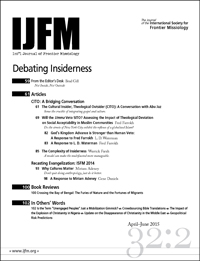
Introducing “The Complexity of Insiderness” (IJFM 2015)

IJFM<br />                          32_2An exciting new issue of IJFM was just released themed “Debating Insiderness” and with it the article “The Complexity of Insiderness.”

I want to point out a couple of features of the article:

  • It is a response to Farrokh and Abu Jazz’s articles in the issue (but also to missiology in general). Both have different understandings of the nature of insiderness. While I think Abu Jazz has a more sensible/realistic/healthy approach, both are still treating the issue in way that I feel is too basic. Thus, I’m advocating to at least recognize the complexity of insiderness. Yet it is actually more complex than I have described!
  • I also wrote the article as an introduction to the phenomenon of insiderness, so that someone with a basic understanding of the issues could quickly see what is happening in the world of mission today.
  • One could think of the model as an I-Scale (Insiderness) à la the C-Scale, but I would prefer that not be the case.
  • I also don’t intend for anyone to say, “This is as far as we contextualize…” and then to refer to one of the expressions listed in this model as a kind of limit, because that would be betray the idea I tried to explain in the conclusion: “Since every context is different, we cannot assess all insiders with broad strokes nor evaluate all insiderness with the same criteria. What we say in hermeneutics also applies in missiology: “context is king.”
  • I tried to be as descriptive and neutral as possible, and then to put the “meat” in the footnotes. I think there are some good ideas in the footnotes. But still, I have been too brief and much more can be said. I’m looking forward to your feedback.

Read the whole thing: The Complexity of Insiderness (2015 IJFM 32:2)

Tuesday, April 21, 2015

Atonement Theology for Muslims?

Missionaries and theologians within the New Testament were determined not to identify a single, correct understanding of the atonement but to find context-specific ways of making the word of the cross accessible and challenging to varied audiences…. The images of the atonement that have surfaced in the history of the church have often taken shape through similar commitments to articulating the significance of the cross in particular settings.

This encourages us to believe that no one model of the atonement will fit all sizes and shapes, all needs and contexts where the church is growing and active in mission. This means, ultimately, that the next chapter of this book is being written in hundreds of places throughout the world, where communities of Jesus' disciples are practicing the craft of theologian-communicator and struggling with fresh and faithful images for broadcasting the mystery of Jesus' salvific death.

-Mark D. Baker & Joel B. Green. Recovering the Scandal of the Cross: Atonement in New Testament and Contemporary Contexts (Kindle Locations 2949-2954).

Is this a good start?

Sunday, September 21, 2014

A Patron–Client View of the Gospel in “Misreading Scripture with Western Eyes”

I have previously blogged on A Patron – Client View of the Gospel as a key way to understand MBB journeys to faith in Christ, and, by implication, how we can share the gospel with Muslims.

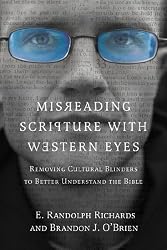
Based on some feedback I’ve received from the article, it seems extremely difficult for most Westerners to grasp the concept.  In that respect, I highly recommend Misreading Scripture with Western Eyes: Removing Cultural Blinders to Better Understand the Bible, which does a fantastic job of explaining culture and interpretation in an enjoyable and edifying way. 

Here are some selected quotes on the concept of patronage as it is found in the New Testament:

Joining words together, though, can be far more significant than merely vocabulary. Some words have special meanings when they are paired with other words. In the New Testament, for example, the word charis means "grace." Pistis means "faith." What we didn't know until recently-what went without being said in Paul's day- was that those two words together described the relationship between a patron and his or her client.

In the Roman world of the New Testament, business was conducted through an elaborate system of patrons and clients.' When we watch the movie The Godfather, we are seeing the modern remains of the ancient Roman patronage system. Like Marlon Brando who played the godfather in the movie, the ancient patron was a wealthy and powerful individual (male or female) who looked after his or her "friends" (clients). The complex world of Roman governmental bureaucracy, the far-reaching tentacles of the banking system (usually temples) and the pervasive and powerful grasp of the trade guilds made it impossible for ordinary craftspeople or farmers to conduct business on their own. They were entirely dependent upon their patrons. Like most unwritten cultural rules, everyone knew what was expected of a patron and a client, even though expectations weren't engraved on a wall. Everyone knew a patron's role was to solve problems for his or her clients, whether it was trouble with the local trade guilds, refinancing a loan or smoothing over tensions with city leaders. When Paul was staying in Thessalonica, it was reasonable to expect Jason to handle the "Paul problem," which he did by asking Paul to leave town (Acts 17).

In that world, an ordinary craftsman or farmer didn't have the social skills or connections or wealth to negotiate with the various powerbrokers of a city. He would seek out an individual, a patron, to help. Marlon Brando captures the sentiment well. The local merchant wants help. The godfather says, "So you want me to do you this favor?" Both sides understand the agreement: the godfather solves the problem, and the merchant now must be loyal to the godfather and be ready to help if he is ever summoned. In the Roman system, likewise, the client couldn't earn the "favor"; the patron showed "kindness" to help. Seneca, a philosopher from Paul's time, said the patron and the client had a relationship, a form of friendship.6 The client was now a "friend" of the patron, but not a peer. The client was expected to reciprocate with loyalty, public praise, readiness to help the patron (as much as he could) and, most importantly, gratitude.' This kind gift had strings attached. (All gifts in antiquity had strings attached.) Seneca called it "a sacred bond."' The recipient of the gift was obligated to reciprocate. Paul introduced Lydia to Christianity (Acts 16). She reciprocated by hosting Paul and his team at her estate.

The language of patronage permeated everyday life. We know well the Christian terms grace and faith, but these were common before Paul used them. They were part of the language of patronage. When the patron gave unmerited gifts of assistance, these were commonly called charis, meaning "grace/gift.."10 The client responded with faithfulness to the patron, called pistis, or "faith."" We see that when Paul explained our new relationship with God, he used something everyone understood: the ancient system of patronage.12 Taken together, this vocabulary-so central to the Christian faith-means something different than the sum of its parts.13 (Kindle Locations 847-866).

Now Paul wasn't opposed to the patronage system; he probably couldn't imagine a world without it (Kindle Location 1802).

Because it was impossible to escape the patronage system, Paul worked within it, even in his explanation of the Christian message of salvation. Patronage had its own vocabulary. Words we usually consider particularly Christian terms-grace and faith-were common parlance before Paul commandeered them. The undeserved gifts of assistance the patron offered were commonly called charis ("grace" and "gift").' The loyalty the client offered the patron in response was called pistis ("faith" and "faithfulness").9 Roman philosophers noted that when one received a god's favor (charis), one should respond with love, joy and hope.10 When Paul sought to explain the Christian's new relationship with God, then, one of the ways he did so was in terms of the ancient system of patronage - something everyone understood. In other words, it went without being said that relationship is the premier and determinative aspect of charis, grace (Kindle Locations 1808-1813).

I believe that relationships today in Africa, the Middle East, and throughout Asia are largely defined by patronage, whereas in the liberal, democratic cultures of North America and Europe, relationships are defined by equality and freedom (except in politics).  If this is even remotely close to reality, how can Westerners use the concept of patronage to share the gospel with Muslims?

Sunday, February 16, 2014

Was Paul wrong to contextualize in Acts 17?

No. See D.A. Carson (HT: Khalid Bin Malek):

SOME HAVE TAKEN 1 CORINTHIANS 2:1-5 to suggest that the way Paul preached in Athens (Acts 17:16-31) was a mistake, and that by the time he arrived at Corinth, Paul himself had recognized his error. In the passage before us he tells us how he “resolved to know nothing” while he was with them “except Jesus Christ and him crucified.” So away with the quasi-philosophical preaching of the Areopagus address in Acts 17. Just stick to the simple Gospel.

There are good reasons for rejecting this false reading:

(1) This is not the natural reading of Acts. As you work your way through that book, you do not stumble upon some flag or other that warns you that at this point Paul goofs. This false interpretation is achieved by putting together an unnatural reading of Acts with a false reading of 1 Corinthians 2.

(2) The theology of the Areopagus address is in fact very much in line with the theology of Paul expressed in Romans.

(3) The Greek text at the end of Acts 17 does not say that “a few men” believed, as if this were a dismissive or condemning assessment, but that “certain people” believed. This expression is in line with other summaries in Acts.

(4) In Athens Paul had already been preaching not only in the synagogue to biblically literate folk, but to people in the marketplace who were biblically illiterate (Acts 17:17). What he had been preaching was “the good news” (Acts 17:18), the Gospel.

(5) Transparently Paul was cut off in Acts 17 before he was finished. He had set up the framework in which alone the Gospel is coherent: one transcendent God, sovereign, providential, personal; creation; fall into idolatry; the flow of redemptive history; final judgment. He was moving into Jesus’ resurrection, and more, when he was interrupted.

(6) Paul was not a rookie. He had been through twenty years of tough ministry (read 2 Cor. 11), much of it before pagan biblical illiterates. To suppose that on this occasion he panicked and trimmed the Gospel is ridiculous.

(7) Acts 17 shows that Paul thinks “worldviewishly.” Even after 1 Corinthians 2, Paul still thinks worldviewishly: 2 Corinthians 10:5 finds him still striving to bring “every thought” into submission to Christ—and the context shows this refers not simply to isolated thoughts but to entire worldviews.

(8) 1 Corinthians 2:1-5 does not cast Paul’s resolution to preach nothing but the cross against the background of Athens (as if he were confessing he had failed there), but against the background of Corinth, which loved eloquence and rhetoric above substance. The apostle does not succumb to mere oratory: he resolves to stick with “Jesus Christ and him crucified.”

Saturday, December 14, 2013

Theology, Gospel Missions, and Insider Movements, by Nabeel Jabbour

[UPDATE: Jabbour is not the only writer of the document. See Joel’s comment below.]

Here is a resource that is worth perusing for a while (HT: MH).  230 pages long.

A CALL TO FAITHFUL WITNESS
-PART TWO –
THEOLOGY, GOSPEL MISSIONS, AND INSIDER MOVEMENTS

A PARTIAL REPORT (PART TWO OF TWO PARTS)
OF THE AD INTERIM STUDY COMMITTEE ON INSIDER MOVEMENTS
TO THE FORTY-FIRST GENERAL ASSEMBLY OF THE
PRESBYTERIAN CHURCH IN AMERICA
MARCH 20, 2013

By Nabeel Jabbour (See also www.nabeeljabbour.com)

Nabeel JabbourAmong his other works are The Crescent Through the Eyes of the Cross: Insights from an Arab Christian and The Rumbling Volcano: Islamic Fundamentalism in Egypt.

Saturday, November 23, 2013

Contextualized Prayer Beads

Some Muslims love to use prayer beadsForm and meaning aside for now, I met a colleague at a conference recently who had developed his own contextualized use for them. 

OLYMPUS DIGITAL CAMERA

The 21 colors go in order, and below is how he uses them in witness. For more information, you can contact him at storiesfromtheTauratInjil [at the link] gmail.com:

The Names of God (Prayer Beads)

1. الله الخالق God the Creator

Genesis 1: 1 In the beginning God created the heavens and the earth.

Isaiah 40: 28 Do you not know? Have you not heard? The Lord is the Everlasting God, the Creator of the ends of the earth.

Story: the story of creation (Genesis 1-2).

Point: Before all things existed, God was. It was He who created the heavens and the earth and mankind.

Bead: Green for creation.

2. الله القدّوس God the Holy One

1 Samuel 6: 20 Who can stand in the presence of the Lord, this holy God?

Leviticus 19: 2 …I, the Lord your God, am holy.

Habakkuk 1: 13 Your eyes are too pure to look on evil; You cannot tolerate wrong.

Story: The story of Adam and Eve and the Fall (Genesis 3);

Point: God is the Holy One who cannot tolerate sin in His presence and had to expel Adam and Eve from paradise;

Bead: White for God’s holiness.

3. الله القضي العادل God the Just Judge

Psalm 7: 11 God is a righteous judge, a God who displays His wrath every day.

Story: The stories of Cain and Abel (Genesis 4), and Noah and the flood (Genesis 6-9).

Point: God is a just judge and must punish man’s sin. He is grieved by it and patient with man but His patience is limited.

Bead: Black because of mankind’s sin.

4. الله القدير على كل شيء God Almighty (El Shaddai)

Genesis 17: 1 When Abram was 99 years old, the Lord appeared to him and said, “I am God Almighty; walk before me and be blameless.

Story: The story of Abraham (Genesis 12-22)

Point: This is the name by which God revealed Himself to Abraham.

Bead: Cream (no significance).

5. المولى The LORD (Yahweh)

Exodus 20: 2 I am the Lord your God who brought you out of Egypt, out of the land of slavery.

Exodus 34: 6-7 And God passed in front of Moses proclaiming, “I am the Lord . The Lord is the compassionate and gracious God, slow to anger, abounding in love and faithfulness, maintaining love to thousands, and forgiving wickedness, rebellion and sin. Yet He does not leave the guilty unpunished; He punishes the children and their children for the sin of the fathers to the third and fourth generation.”

Story: The story of Moses, the Passover and the Law (Exodus 1-14, 19-20; Leviticus 17: 10-14);

Point: This is the name by which God revealed Himself to Moses and the children of Israel;

Bead: Red for the blood of the Passover Lamb.

6. العليم God the All-Knowing

Psalm 139: 1 O Lord, You have searched me and you know me…

Story: The story of David (1 Samuel 16; 1 Samuel 13:14; Psalm 139);

Point: God the All-knowing is the One who sees and knows the heart;

Bead: Cream (no significance).

7. الله الأزلي God Eternal (the Ancient of Days)

Isaiah 40: 28 Do you not know? Have you not heard? The Lord is the Everlasting God, the Creator of the ends of the earth.

Isaiah 46: 10 Remember the former things, those of long ago; I am God and there is no other... I make known the end from the beginning, from ancient times what is still to come. I say: My purpose will stand and I will do all that I please.

Story: The promise of the Messiah;

Point: God Eternal is the One who makes known the end from the beginning. He promised to send a Savior, the Messiah.

Bead: Gold for the Messiah.

8. الله العلي God Most High

Luke 1: 76 And you, my child, will be a prophet of the Most High, for you will go before the Lord to prepare the way for Him, to give His people a knowledge of salvation through the forgiveness of their sins.

Story: The story of John the Baptist.

Point: John called people to repentance in order to prepare the way for the coming of the Messiah.

Bead: Cream (no significance).

9. الله الأمين The Faithful God

Deuteronomy 7: 9 Know therefore that the Lord your God is God; He is the Faithful God, keeping His covenant of love to a thousand generations of those who love Him and keep His commandments.

Numbers 23: 19 God is not a man that He should lie, nor the son of man that He should change His mind. Does He speak and then not act? Does He promise and not fulfill?

Story: The birth of Jesus, including His genealogies.

Point: God the Faithful is the One who keeps His covenant and fulfills His promises. Jesus’ birth fulfilled His promises about the Messiah to come. He was a descendant of Abraham and David.

Bead: Gold for the Messiah.

10. قدوس الله The Holy One of God

Mark 1: 24 What do you want with us, Jesus of Nazareth? Have you come to destroy us? I know who you are – the Holy One of God!

1 John 3: 8 The reason the Son of God appeared was to destroy the devil’s work.

Story: The story of Jesus’ baptism (Luke 3: 21-23), temptation (Luke 4: 1-13) and Him casting out a demon (Mark 1: 21-28).

Point: Jesus overcame Satan’s testing of Him, unlike Adam in paradise. He has authority over Satan and demons.

Bead: Gold for the Messiah.

11. المسيح، شافينا، المحيي The Messiah, Our Healer, the Life-Giver

Luke 4: 18-19 The Spirit of the Lord is on me, because He has anointed me to preach good news to the poor. He has sent me to proclaim freedom for the prisoners and recovery of sight for the blind, to release the oppressed, to proclaim the year of the Lord’s favor.

Story: Jesus’ healings (Luke 5: 12-14; Luke 7: 11-17; Mark 9: 14 – 27; Mark 10: 46-52)

Point: Jesus is the Messiah, the Anointed One. He has authority over sickness, disease and death.

Bead: Gold for the Messiah.

12. نور العالم The Light of the World

John 8: 12 “I am the Light of the World. He who follows me will never walk in darkness but will have the light of life.”

Story: Jesus’ teachings.

Bead: Gold for the Messiah.

13. الغفور The One who forgives

Psalm 86: 5 You are forgiving and good, O Lord, abounding in love to all who call on you.

Luke 5: 24 But just to show you that the One who became flesh has the authority on earth to forgive sins… Stand up, pick up your mat and go to your house!

Story: The healing of the paralytic (Luke 5: 17-26).

Point: Jesus is the One who has authority on earth to forgive sin.

Bead: Gold for the Messiah.

14. كلمة الله Jesus the Word of God

John 1: 1, 14 In the beginning was the Word and the Word was with God and the Word was God… And the Word became flesh and dwelt among us.

John 3: 13 No one has gone into heaven except the One who came from heaven – the One who became flesh.

Story: Nicodemas (John 3).

Point: Jesus is the Word of God who came from God. Being religious like Nicodemas is not good enough to enter Heaven.

Bead: Gold for the Messiah.

15. حمل الفداء The Lamb of Redemption

John 1: 29 The next day John (the Baptist) saw Jesus coming toward him and said, “Look, the Lamb of God, who takes away the sin of the world!”

Luke 22: 19, 20 This is my body given for you; do this in remembrance of me… This cup is the new covenant in My blood, which is poured out for you.

Story: The Last Supper (Luke 22: 7-8, 13-20; Matthew 26: 17-30);

Point: Jesus is the Lamb of Redemption;

Bead: Red for the blood of Jesus.

16. القدوس البار، عبد الله المتألم The Holy and Righteous One, the Suffering Servant

Luke 9: 22 “The One who became flesh must suffer many things and be rejected by the elders, chief priests and teachers of the law, and He must be killed and on the third day be raised to life.”

Acts 3: 14 You refused the Righteous and Holy One and asked that a murderer be released to you.

Story: Jesus’ death on the cross.

Point: Jesus is the Holy and Righteous One who was put to death as an innocent man. In going to the cross, He was the One who submitted Himself completely to God’s will.

Bead: Red for Jesus’ blood.

17. القيامة والحياة Jesus the Resurrection and the Life

John 11: 25 “I am the Resurrection and the Life.”

Revelation 1: 18 “… I am the Living One. Behold I was dead but I am now alive forever and ever. And I hold in My hands the keys of death and Hades.”

Story: The story of Jesus rising from the dead

Point: Jesus rose from the dead, conquering Satan and the power of death.

Bead: Gold because of the Messiah.

18. روح الله The Spirit of God

Acts 1: 5 “Do not leave Jerusalem, but wait for the gift my Father has promised, which you have heard me speak about. For John baptized with water, but in a few days you will be baptized with the Holy Spirit.”

Story: The coming of the Holy Spirit (John 14: 16-17, 26; Acts 1: 1-9; Acts 2: 1-47)

Point: The Holy Spirit will be with us forever in place of Jesus. He will empower us and guide us into all truth.

Bead: Orange for the Holy Spirit.

19. مولانا عيسى المسيح Our Lord Jesus Christ

Acts 16: 31 Believe on the Lord Jesus Christ, and you will be saved…

Romans 6: 23 For the wages of sin is death but the gift of God is eternal life in Christ Jesus our Lord.

Story and point: The story of the church (Acts). Because of His death on the cross, Jesus was given the name which is above all names: Jesus Christ our Lord (Phil 2: 5-11). He is the head of the church which is His body (Eph 1: 22-23);

Bead: Gold for the Messiah

20. الله ديان الأرض God the Judge of the earth

Psalm 94:2 Rise up, O Judge of the earth; pay back to the proud what they deserve.

Story: The story of the Last Day (2 Peter 3: 7, 10; Rev 20: 11-15)

Point: At the Last Day we will all stand before God. The destiny of those who have rejected God is hell and the lake of fire.

Bead: Black because mankind’s sin.

21. الله الألف والياء ، البداية والنهاية God the Alpha and the Omega, the Beginning and the End

Revelation 21: 6 “It is done. I am the Alpha and the Omega, the Beginning and the End. To Him who is thirsty I will give to drink without cost from the spring of the water of life.”

Story: The story of the Heaven (Acts 1: 9-10; John 6: 40; 14: 1-3; Revelation 21: 1-8, 27; 22: 12-14);

Point: The destiny of those whose names are written in the Lamb’s book of life is Heaven with God.

Bead: White because the white robes we will wear in heaven.

Wednesday, October 16, 2013

The Congruence of Cultural Values (Part 6 in the “How are Muslims coming to Christ?” Series)

Previous posts in this series: How are Muslims coming to Christ? Introduction, Part 1: Conversion is a Contextual Process, Part 2: The Prominence of the Affective Dimension, Part 3: The Silent Witness of Love and Integrity, Part 4: A Patron – Client View of the Gospel, and Part 5: Conversion in Layers of Identity.

Rather than getting bogged down in a debate about contextualization and syncretism, I think Greenlee’s term “The Congruence of Cultural Values”  better fits this sociological theme of factors that influence Muslims to embrace biblical faith (from this article):

6. The Congruence of Cultural Values

imageContinuing with the sociological discussion of conversion, some missiologists argue that a paradigm shift is happening in church planting and evangelism strategies (Gray and Gray 2010a). Previous strategies argued for an aggregate (or “attractional”) model of church planting, where new believers/seekers who do not previously know each other are gathered together in fellowship. In contrast, the social network[i] (or “transformational”) model seeks to implant the gospel into a group of people who have previously formed social relationships, and thus not try to introduce unknown believers to one another. “The ‘church’ meets when the normal social network gathers” (Gray and Gray 2010b, 278).

This idea of spreading the gospel through social networks is very similar the “homogeneous unit principle” (HUP) posited by Donald McGavran, who famously stated that “People like to become Christians without crossing racial, linguistic, or class barriers” (1990 [1970], 163). Arguing against this as a strategy for mission, René Padilla declared that the HUP is not only counter to the example of Jesus and the apostles who intentionally worked with an aggregate model, but also fails to take the ministry of reconciliation seriously and has “no biblical foundation” (1982, 29).

However, since research shows that “facilitating the movement of the gospel through natural social networks [contra the aggregate model] seems to be correlated with planting more churches” (Gray et al. 2010, 94), it seems best to think of social network theory as a provisional, temporary strategy until there are more robust forms of church that reach the biblical goal of the so-called “Ephesian moment” (Walls 2002), where people of different caste, race, gender, etc., who have little in common except Jesus are reconciled together in fellowship through him. In any case, a key theme in factors that influence conversion is the congruence of cultural values between the MBB and the values of the witnessing community.[ii]

Implications?

The Congruence of Cultural Values – Contextualization is not a dirty word. It is inevitable, and we need to work hard at it. But even more so, MBBs need to contextualize as they share the gospel through their social networks. We have much to learn from MBB local theologizing. 

Next: Part 7, The Differing Female Experience.

Saturday, October 12, 2013

“Bridging the Divide” Website

Bridging the Divide Networkhttp://btdnetwork.org/:

Who are we? We are a diverse network of followers of Jesus, committed to bringing the gospel to the Muslim world and engaging in useful interaction with others of similar desire and commitment, to increase biblical and effective proclamation of and obedience to the gospel.

Most of us have many years of experience in living and working among Muslims, and could be described as “scholar-practitioners.” Though many of us have positions of leadership and influence in a mission agency, church or other organization, we do not represent our various organizations in BtD. We interact as children of our heavenly Father, wrestling together to see His glory made known maximally among the Muslims of the world.

The BtD Network is led by a Facilitation Team, currently consisting of twelve leaders from a wide variety of backgrounds, ministries and convictions.

See the core documents and BtD articles.

Thursday, October 3, 2013

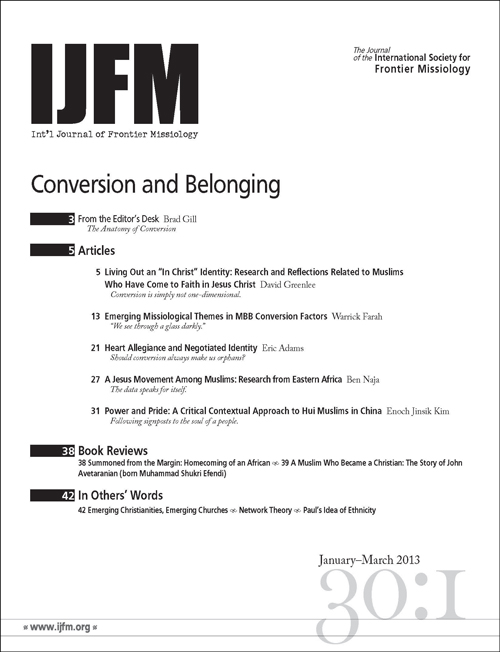
“Conversion and Belonging” IJFM issue now available

IJFM<br />                          30_1The new edition of IJFM is now available, and in my opinion, it’s one of the best issues in a while. Read the two page editorial by Brad Gill for an introduction.

The “Naja Case Study” below is an example of an indigenously-led Jesus movement (PLEASE don’t think “insider” or C5) where the Bible is followed, ekklesia are formed, and most believers still identify in some sense as Muslims, but do not hold to foundational Islamic beliefs. They are still thought of as Muslims, but they also identify with the institutional church. This is the case study that we have been waiting for, and more analysis by Naja will be forthcoming. It will be important that additional research is conducted 5-10 years from now. We need more longitudinal studies, as movements and missiological phenomenon are always in dynamic transition. Where will this movement go?

Here is the issue line-up:

TITLE AUTHOR SIZE
From the Editor’s Desk Brad Gill 107k
Living Out an “In
Christ” Identity: Research and Reflections Related to Muslims
Who Have Come to Faith in Jesus Christ
David Greenlee
268k

Emerging Missiological Themes in MBB Conversion Factors

Warrick Farah
226k
Heart Allegiance and Negotiated Identity Eric Adams
198k
A Jesus Movement Among Muslims: Research from Eastern Africa Ben Naja
117k
Power and Pride: A Critical
Contextual Approach to Hui Muslims in China

Enoch Jinsik Kim
301k
Book Reviews
H. L. Richard, Duane Alexander Miller Botero
325k
In Others' Words IJFM Staff   75k

Monday, May 6, 2013

Rejoicing Within a Zone of Ambiguity

“When I hear reports of movements of “Muslim followers of Christ” (MFC) who retain their “socio-religious identity,” I find myself rejoicing within a zone of ambiguity.”

- Bartlotti, Leonard N. Seeing “Inside” the Insider Movement: Exploring our Theological Lenses and Presuppositions. 2012.

Now that’s a nice opening line.  The debate has certainly benefited from charitable voices like this which frame the discussion outside of its tired categories.  Add this paper to your list of must-reads and study it as an exercise in humility.  Here is the abstract:

Insider Missiology is actually based on multiple theological presuppositions. Examining the various “strands” of IM assumptions can help us move toward more nuanced understandings and theological engagement. This paper identifies nine “lenses” (“filters,” assumptions, background beliefs) that affect how IM is presented, and critiqued. Where one stands on these constituent theological issues affects how one “sees” Insider Movement(s) and assesses IM missiology. The goal of this paper is to help both proponents and critics of “Insider Movements” recognize that there is a range of defensible positions on these constituent presuppositions, more than a few of which fall on a spectrum of biblical orthodoxy and evangelical faith. This paper attempts to the advance the dialogue on Muslim contextualization by calling for further study, discussion, and research, and encourages evangelicals to affirm evangelical unity, delight in (or at least tolerate) evangelical ambiguity, and create space for evangelical diversity on these issues.

I would also want to make explicit that Traditionalist (including some appearing to be Fundamentalist) missiology is also based on multiple theological/epistemological presuppositions.  At some point we need to switch the focus from Insider and instead examine more closely the assumptions within the Traditionalist position(s). In any case, Bartlotti demonstrates that there are a “range of defensible biblical positions on each issue” (26).  The issues are:

  1. Ecclesiology/Church
  2. Authority (role of the outsider)
  3. Culture
  4. Pneumatology/Holy Spirit
  5. History
  6. Doing Theology
  7. Other Religions
  8. Islam
  9. Conversion-Initiation

Read the 31 page paper for a discussion of each.