Showing posts with label Qur'an. Show all posts

Thursday, October 17, 2024

On the Side Effects of Polemics

In attending conferences recently, I’ve noticed a trend gaining traction among some ministries to Muslims. I sometimes meet individuals who are part of Muslim Background Believer (MBB) networks claiming to have access to ancient Qur'anic manuscripts that, they argue, differ significantly from the standardized Qur'an.

When I inquire further, it becomes clear that the hope behind these efforts is that new scholarship will expose the Qur'an’s flaws, ultimately undermining the foundation of Islam itself.

This approach raises some critical missiological concerns for me.

Firstly, I do not need Islam to be a priori disproven for Jesus to be Lord. My faith rests in the perfect revelation of Christ — there is no one like Him, and no one has done more for me. Whether or not Islam is polemically dismantled has no bearing on Christ’s Lordship, and it shouldn't for any of us, including Muslims.

I am deeply interested in Islamic studies, and understanding Islam’s emergence is essential for missiology. However, recognizing that many elements of Islam’s traditional narrative are mythological should not make us triumphalistic, but empathetic. We can sympathize with Muslims who are navigating their faith in a complex, real-world context. For example, I sometimes reflect on my own identity as an “Evangelical” — a term that carries its own set of contested meanings! Just as Muslims wrestle with internal questions of faith and identity, so do we as Christians.

Secondly, there has been extensive scholarly work in this area already. I am shocked when leaders in these groups are unfamiliar with key scholars like Gabriel Said Reynolds, Martin Accad, or Daniel Brown, whose work extensively explores the complexities of Qur'anic manuscripts (see also various sections in The Religious Other).

This kind of oversight suggests that such MBB-driven research, while earnest, may not be engaging with the broader academic landscape. Any attempt to dismantle “Islam” through textual criticism needs to reckon with this body of existing scholarship.

Finally, a strong focus on polemics reveals a fundamental misunderstanding of what sustains Islam. Biblical faith is grounded ontologically in the person of Jesus Christ and His Kingdom. Yet Islam, like all other religious traditions, is a socially constructed reality – without Muslims there would be no Islam. Islam does not rest simply on a textual foundation or a reality outside the realm of experience. Instead, it is Muslims themselves who decide what Islam is, and they continue to shape, evolve, and contest its meaning.

Even if one were to discredit the Qur'an academically, Islam as a lived religion would persist. In fact, polemics often have the unintended consequence of solidifying group identities. Though it’s true that some Muslims convert to Christianity through these debates, such conversions are exceptions rather than the norm. The broader impact of polemics on the Muslim ummah (community) often serves to reinforce, not weaken, religious boundaries.

If a medical treatment has severe side effects that make the patient worse than the illness being treated, one might say the treatment is worse than the disease. Let’s be discerning with our use of polemics in ministry to Muslims.

Tuesday, April 2, 2019

Outlining a Biblical Theology of Islam: Practical Implications for Disciple Makers and Church Planting | EMQ 2019

Here is full access to my article “Outlining a Biblical Theology of Islam: Practical Implications for Disciple Makers and Church Planting,” that first appeared in EMQ in January 2019.

Taking into consideration the ambiguous nature of religion, a reconsideration of the historicity of Islamic origins, and the diversity of Muslim contexts, I discuss the important topics to consider when constructing a biblical theology of Islam. In the light of authoritative biblical revelation, my approach also illuminates the connections between theology-in-context and our practice of disciple making.

Here are the topics I have paired together:

  • Religion and Kingdom Sociology
  • Biblical Anthropology and Idolatry
  • Prophecy and Muhammad
  • Revelation and the Qur’an
  • Christocentric Doxology and Allah

It is obviously a lot to discuss in just over 3,000 words (EMQ’s limit), but these are the major themes that need consideration in our contextual theology of Islam.

Wednesday, March 6, 2019

My Two Recent Articles in EMQ and IJFM

I currently have two articles out at the moment in EMQ and IJFM.

The first is with EMQ and if you are a member of Missio Nexus (most North American agencies are with Missio Nexus, and if your org is a member then you are too), then you have access. If not, I’ll make it available in April. It is called Outlining a Biblical Theology of Islam: Practical Implications for Disciple Makers and Church Planting and is something I wrote as a kind of promo piece for the annual Middle East Consultation in Beirut, Lebanon (I’ll be giving two keynotes this year). Here are the topics I have paired together in the EMQ article:

  • Religion and Kingdom Sociology
  • Biblical Anthropology and Idolatry
  • Prophecy and Muhammad
  • Revelation and the Qur’an
  • Christocentric Doxology and Allah

It is obviously a lot to discuss in just over 3,000 words (EMQ’s limit), but these are the major themes that need consideration in our theology of Islam.

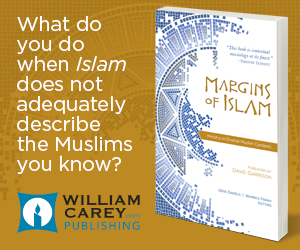
The second article is Adaptive Missiological Engagement with Islamic Contexts at IJFM. This is also Chapter 17 in our book Margins of Islam: Ministry in Diverse Muslim Contexts. Here is my outline for the article:

Changing Understandings of Muslim Contexts

  • Postcolonial Studies: “The Muslim World” vs. “The West”
  • Cultural Anthropology: Modern Essentialism and Postmodern Relativism
  • Religious Studies and the Fog of “Religions”

A Call for Adaptive Missiology

  • Towards a Missiology of Islam(s)
  • Idolatry and Mission
  • Transforming Relationships

This is a longer article that deals with epistemology and issues which inevitably color our approaches to reaching Muslims.

Let me know what you think in the comments below.


Sunday, January 29, 2017

Early Muslims Accused Christians of Misinterpretation AND Corruption of their Scriptures

It has been said that early Muslims did not accuse Christians of corrupting their Scriptures, only of misinterpreting them. Refuting that claim is the recent PhD thesis The Bible through a Qur’ānic Filter: Scripture Falsification (Taḥrīf) in 8th- and 9th-Century Muslim Disputational Literature by Ryan Schaffner:

The evidence demonstrates that Muslims were advancing accusations of the Bible’s misinterpretation and textual corruption in the earliest extant disputational literature and thus, the dichotomy prevalent in previous scholarship between early and later Muslim views on the Bible is erroneous. (362-63)

Thursday, November 26, 2015

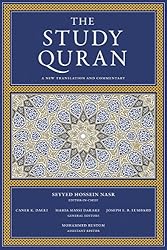
The Study Quran: A New Translation and Commentary

Here is an interesting story on CNN: Could this Quran curb extremism? about the new book, The Study Quran: A New Translation and Commentary. From Amazon:

An accessible and accurate translation of the Quran that offers a rigorous analysis of its theological, metaphysical, historical, and geographical teachings and backgrounds, and includes extensive study notes, special introductions by experts in the field, and is edited by a top modern Islamic scholar, respected in both the West and the Islamic world.

Drawn from a wide range of traditional Islamic commentaries, including Sunni and Shia sources, and from legal, theological, and mystical texts, The Study Quran conveys the enduring spiritual power of the Quran and offers a thorough scholarly understanding of this holy text.

Beautifully packaged with a rich, attractive two-color layout, this magnificent volume includes essays by 15 contributors, maps, useful notes and annotations in an easy-to-read two-column format, a timeline of historical events, and helpful indices. With The Study Quran, both scholars and lay readers can explore the deeper spiritual meaning of the Quran, examine the grammar of difficult sections, and explore legal and ritual teachings, ethics, theology, sacred history, and the importance of various passages in Muslim life.

With an introduction by its general editor, Seyyed Hossein Nasr, here is a nearly 2,000-page, continuous discussion of the entire Quran that provides a comprehensive picture of how this sacred work has been read by Muslims for over 1,400 years.

Tuesday, July 10, 2012

Thursday, March 29, 2012

Qur'anic Variants

From Unchanging Word:
There is a mistaken idea perpetuated in some circles that the Topkapi and Samarqand manuscripts in Turkey and Uzbekistan are "original" copies. However, experts agree that these are not Uthmān's copies, as they are written in the Kufic Arabic script which only appeared in the late eighth century. Furthermore, even the Uthmānic copies themselves were not originals, for they were compiled many years after Muhammad's (pbuh) death to standardize the variety among Qur'ānic texts.
Here are two charts that show some of the minor differences in some of the oldest copies of the Qur'an that we have.  The important thing is this - the minor differences (in red) do not necessarily change the overall meaning of a given passage, but they do prove that traditional Islamic teaching that the Qur'an descended from Heaven and is perfectly preserved in every way until the present is simply not true. (click to enlarge)


Not included in these charts are the variants found in the Sana'a Manuscripts, the contents of which are still being processed by scholars. Yemeni authorities, however, seem to be blocking scholars access to them because of their potentially devastating blow to traditional Islamic teaching on the incorruptibility of the Qur'anic text, so we may have to wait a while for more details.  In any event, the Sana'a Manuscripts, written in the Hijazi script and dating from the 8th C. AD / 2nd C. AH, appear to be the oldest copies of the Qur'an ever found.  They too contain numerous variants, including layered revisions of the text which are clearly visible. (shown here) 


For more on the topic of Qur'anic variants, click here

p.s. For our Muslim friends who read this blog
Dear brothers and sisters, please do not think that this post is an attempt to shame or humiliate Muslims, Islam, or the Qur'an.  Rather, it is simply meant to display the actual facts about this issue. You must decide for yourself what these facts mean about Islam and the Qur'an.

Wednesday, December 21, 2011

Rick Love’s Top 10 Books of 2011

From his blog:

  1. Speaking of Jesus: the Art of Not-Evangelism by Carl Medearis
  2. Unconditional? The Call of Jesus to Radical Forgiveness by Brian Zahnd
  3. The End of Religion: Encountering the Subversive Spirituality of Jesus by Bruxy Cavey
  4. The Powers That Be: Theology For A New Millennium by Walter Wink
  5. Surprised by Hope: Rethinking Heaven, the Resurrection, and the Mission of the Church by N.T. Wright
  6. The Best Kept Secret of Christian Mission: Promoting the Gospel with More than our Lips by John Dickson
  7. Generous Justice: How God’s Grace Makes Us Just by Timothy Keller
  8. Allah: A Christian Response by Miroslav Volf
  9. Real-Time Connections: Linking Your Job with God’s Global Work by Bob Roberts Jr.
  10. Islam Without Extremes: A Muslim Case for Liberty by Mustafa Akyol

Read his post for an explanation of each book.

Here’s another book that looks very interesting, Textual Criticism and Qur'an Manuscripts.  From Amazon:

In this study, Keith Small applies the principles of textual analysis to twenty-two manuscripts—most of them early—that contain Q. 14:35-41, which describes how Abraham settled his son—presumably Ishmael—in Mecca. Based on a careful and systematic analysis of the manuscripts, Small traces the historical development of the Qur'anic text from the rise of Islam until the 10th century CE. Comparison of the manuscripts with the evidence of literary sources suggests that the text remained open and fluid during the first half of the seventh century, and that the production of a standard text was not completed until the end of that century. This editorial project, sponsored by the Umayyad caliphs, resulted in the destruction of most if not all of the earliest manuscripts, with the result that it is currently impossible to recover the original form of the text. This is an important contribution to scholarship on the Qur'an. (David S. Powers)

Tuesday, October 18, 2011

The Qur’an as a bridge to…

People use the phrase “the Qur’an as a bridge…" differently. 

Here is what I have heard:  “I use the Qur’an as a bridge to…

  1. relationships
  2. the Bible
  3. faith

In your opinion, what could be the implications of view #3?  (Hint: we get the kind of disciples we preach for.)

Thursday, August 4, 2011

Thursday, May 26, 2011

Online Qur'an Resources

shahada01

Online Qur'an Resources:

The Qur'an is the central text of Islamic ritual and belief, expanding at myriad levels in everyday life, national reflection, and transnational exchange for most of the one billion plus Muslims. Yet it remains a closed book to most non-Muslims or to anyone not familiar with the grammatical structure and semantics of the Arabic language.

Given the religious overtones of the current "war on terrorism," Islam's holy book needs to be taught to American students in a way that both stresses the multiple interpretations among Muslims and the view from a secular but respectful non-Muslim stance. This site provides access to a variety of viewpoints, Muslim and non-Muslim, on the Quran.

For a bibliography of scholarly books and articles on the Qur'an, click here.

Monday, March 28, 2011

Mohammed as the Only Mediator

I like to present Jesus to my Muslim friends as the only mediator between God and man (1 Tim. 2:5-6).  But the response I usually hear is, “Mohammed is our mediator.”  This idea is not found in the Qur’an but in the Hadith, which are seen by many Muslims to be just as authoritative as the Qur’an.

The Qur’an states that no one may mediate unless God permits him: “Who is he that can intercede with Him except with His Permission?”  (2:254-5).  This question is answered by the Bukhari collection of the Hadith 6:60:3:

Narrated Anas:

The Prophet said, "On the Day of Resurrection the Believers will assemble and say, 'Let us ask somebody to intercede for us with our Lord.'

So they will go to Adam and say, 'You are the father of all the people, and Allah created you with His Own Hands, and ordered the angels to prostrate to you, and taught you the names of all things; so please intercede for us with your Lord, so that He may relieve us from this place of ours.'

Adam will say, 'I am not fit for this (i.e. intercession for you).' Then Adam will remember his sin and feel ashamed thereof. He will say, 'Go to Noah, for he was the first Apostle, Allah sent to the inhabitants of the earth.'

They will go to him and Noah will say, 'I am not fit for this undertaking.' He will remember his appeal to his Lord to do what he had no knowledge of, then he will feel ashamed thereof and will say, 'Go to the Khalil--r-Rahman (i.e. Abraham).'

They will go to him [Abraham] and he will say, 'I am not fit for this undertaking. Go to Moses, the slave to whom Allah spoke (directly) and gave him the Torah .'

So they will go to him [Moses] and he will say, 'I am not fit for this undertaking.' and he will mention (his) killing a person who was not a killer, and so he will feel ashamed thereof before his Lord, and he will say, 'Go to Jesus, Allah's Slave, His Apostle and Allah's Word and a Spirit coming from Him.

Jesus will say, 'I am not fit for this undertaking, go to Muhammad the Slave of Allah whose past and future sins were forgiven by Allah.'

So they will come to me [Muhammad] and I will proceed till I will ask my Lord's Permission and I will be given permission. When I see my Lord, I will fall down in Prostration and He will let me remain in that state as long as He wishes and then I will be addressed.' (Muhammad!) Raise your head. Ask, and your request will be granted; say, and your saying will be listened to; intercede, and your intercession will be accepted.' I will raise my head and praise Allah with a saying (i.e. invocation) He will teach me, and then I will intercede. He will fix a limit for me (to intercede for) whom I will admit into Paradise. Then I will come back again to Allah, and when I see my Lord, the same thing will happen to me. And then I will intercede and Allah will fix a limit for me to intercede whom I will let into Paradise, then I will come back for the third time; and then I will come back for the fourth time, and will say, 'None remains in Hell but those whom the Quran has imprisoned (in Hell) and who have been destined to an eternal stay in Hell.' " (The compiler) Abu 'Abdullah said: 'But those whom the Qur'an has imprisoned in Hell,' refers to the Statement of Allah: "They will dwell therein forever." (16.29).

Bases on this hadith, I believe many of my Muslim friends actually place their faith and trust in Mohammed.  They hope Mohammed will find them to be a good Muslim on Judgment day.

HT: Abdul Musloob

Tuesday, March 15, 2011

What are the Bible and the Qur’an Basically About?

Watch this 4 minute video (HT: SM) below to answer the question, What is the Bible basically about?

Compare this with the Qur’an.  In Major Themes in the Qur’an, Fazlur Rahman says:

“The aim of the Qur’an is man and his behavior, not God” (3).

This is a repeat of what was in the first line of the book, “The Qur’an is a document that is squarely aimed at man.”  The Qur’an is “guidance for mankind” (2:185).

The Bible is written by 40 different authors over a period of 1500 years detailing God’s redemptive purposes for humankind in Christ, yet is amazingly unified on this story.

The Qur’an, however, was recorded by one author over a period of 23 years and has very little grand story in it.

It seems to me much easier to simply write an instruction manual for living than it would be to write on the character, nature, and plan of God revealed in a Messiah who would transform hearts and usher in the rule of God.

Friday, March 11, 2011

Islam is Not a Civilization, Ramachandra- Faiths in Conflict?

image This post is a summary of chapter 1 “Islam and new religious wars?” in Faiths in Conflict?: Christian Integrity in a Multicultural World (IVP Academic, 2000).  Ramachandra, who works with the International Fellowship of Evangelical Students (IFES), writes dry and intellectually, but he has a very interesting argument, especially since this was written pre-9/11.  Here I will only try to summarize his argument and let you post your comments below.

From the Preface of the book:

In chapter 1 [Islam and new religious wars?], I discuss the “Islamic resurgence” of recent decades and the alleged threat it poses to the West.  One of the most competent exponents of the view that “Islam” and the “West” are mutually hostile and irreconcilable is Samuel Huntington [The Clash of Civilizations and the Remaking of World Order], a politics professor at Harvard University and adviser on the international relations to the US governments.  In the post-Cold War world, Huntington argues, religious or civilizational clashes have replaced wars fought for economic or strategic reasons.  This chapter combines a critique of Huntington with an examination of the West’s perception of Islam and the misleading rhetoric of Islamist movements.  It also explores how dangerous stereotypes are generated in both Western and Islamic societies.  It concludes with some challenging question for Muslims and Christians alike.   

Ramachandra begins by agreeing that Huntington’s main thesis is simple, clear, and seemingly self-evident.  “In the post-Cold War world, the most important distinctions among peoples are not ideological, political, or economic.  They are cultural… The most pervasive, important and dangerous conflicts will not be between social classes, rich and poor, or other economically defined groups, but between peoples belonging to different cultural entities” (13).

Huntington defines six major contemporary civilizations: Western, Sinic [Chinese], Japanese, Hindu, Islamic, and Orthodox.  According to Huntington, the coming conflict between the West and Islam will be because Islam is obsessed with the inferiority of its power and and that the West believes in the universality of Western culture; Islamic intolerance will clash with Western arrogance.  For Huntington, the solution is that civilizations should not interfere in conflicts based in other civilizations and an international order based on civilizations is a safeguard against world war.  Ramachandra believes Huntington’s analysis is “seriously flawed” and an “unreliable guide for understanding the world in which we live” (15).  Ramachandra argues against viewing Islam in a civilizational category.

After the fall of Communism, the West is seeking new demons.  Islam now fits that bill and is seen as a threat against the West.  Correspondingly, predominantly Muslim countries portray any Western involvement in their affairs as an affront against Islam.  Both sides have utilized anti-imperialist slogans and demonization, and engaged in a process of “mutual satanization” (19).  However, the dangerous rhetoric of stereotyping the “other” in broad strokes is not a recent phenomena.

Both Islamists and and their critics refer to Islam as a specific, timeless, social and political programme.  But Islam is far from a monolithic, unchanging reality.  In the post-colonial world, nationalist or Islamist movements from Morocco to India to Indonesia have appealed to Islam to legitimate their polices and gain popular support.  “These groups are responding to specific, historical problems, often of a social and political nature, not engaging in some universal crusade against other peoples” (17). 

In order to understand the nature of these movements, it’s not necessary to examine the Qur’an, but instead to look at problems facing the populations of these peoples.  Islam is often times posed by Islamists as being under threat.  This language is “part of the rhetorical baggage of political struggle, employed by both those who wish to remain in power and those who aspire to attain power” (19).  Most Muslims are not supporters of Islamist movements!  The myth of the “Islam in danger” slogan is propagated by those who wish to maintain or gain control of the community.

Another misperception of Islam as a civilization is the myth of Islamic unity.  “Within twenty-five years of the death of Muhammad, Muslim believers were killing each other on the field of battle” (21).  A cursory look at Islamic history confirms that Islam has always been segregated, as does the animosity between Muslim countries like Saudi Arabia and Iran today.  In the Gulf war, one Islamic state attacked another Islamic state.  Even Muslim communities in the West which appear homogeneous to outsiders are fragmented around ethnic, linguistic, and political groupings.

Today, what passes for “Islamic legal code” is far from unified and always reflects the local context.  Numerous conflicting examples of shari’a law abound, all ambiguously based on the Qur’an and sunnah.  “If we want to know why most Muslims hold the views they do about sexuality, economics, democracy and the like, it is not ‘Islam’ alone that can explain it” (25).  The difficulty of establishing democracy in many parts of the Muslim world is due, not to the inherent nature of Islam, but to “low levels of development, entrenched traditions of state control, political cultures that inhibit diversity and tolerance, the absence of a tradition of private property, and the lack of separation of state and law” (26).

The way “Islam” is defined by those defending their power or by those in conflict with them is a mirror-image of the way the “West” is defined by Muslims.  “It is a prominent feature of Muslim writings, both serious and popular: the West is depicted as a monolithic entity, irredeemably materialist, immoral and decadent, and characterized by aggressiveness, expansionism and intolerance towards Islam and Muslims” (34).  It is this reductionist approach to complex cultures and peoples that creates the appearance of unbridgeable differences today.

Huntington’s overall flaw is that he claims that the reason for the increase in religious rhetoric as justification for political action on both sides is evidence that differences in culture or religion are what precipitate international conflicts. Thus, Huntington’s argument of the “clash of the incompatible civilizations” is a self-fulfilling prophecy; the more we believe it, the more it will come true (37).  In fact, numerous examples can be cited where the West has explicitly worked with Muslims when their goals were aligned (i.e. American CIA support of the Mujahidin in Afghanistan or Saudi and Israeli support of the Gulf war, to name just two).

Ramachandra offers four suggestions for living with integrity in a multicultural world. First, we should try to avoid using religious categories such as ‘Muslim’, ‘Christian’, ‘Buddhist’ or ‘Hindu’ to describe an ethnic or cultural group. Second, whatever religious traditions we belong to and whatever religious convictions we hold, we should apply the same standards to political phenomena in other societies that we apply to our own. The KKK doesn’t speak for American Christians in the same way Muslims don’t want Osama Bin Laden speaking for them as a Muslim.  Thirdly, Muslims themselves need to champion religious freedoms.  It is hypocritical for Muslim citizens in the West to enjoy religious freedom when minority citizens in their home countries are denied those very same rights.  Finally, we must take seriously the challenge to explore faiths and cultures of other people, especially those who live in our own neighborhood- this goes for both Muslims and Christians.

Monday, January 24, 2011

Islam and Mormonism

Recently in the country where I live in the Middle East, I have noticed some Mormons who are here as missionaries.   Most Muslims in this country have never heard of Mormonism or Joseph Smith.  Thus I have had several chances recently to discuss the fact that they believe in another "final" prophet from God.   My Muslim friends don't like that.  When I tell them more about Mormonism, I ask them if it is from God or from Satan.  They always say it is from Satan.  But when they hear about the similarities between their own religion and Mormonism, it often leaves them scratching their heads! 

For those of you who aren't familiar with Abu Daoud's blog, Islam and Christianity, I heartily recommend it as a wealth of knowledge.  I found this article there.  And I re-post it below for your perusal...
Islam and Mormonism
by C. Fletcher
In studying world religions, I have noticed several similarities between Mormonism and Islam. Sure, there are significant differences as well (Monotheistic Islam vs. Polytheistic Mormonism for example), and I would not suggest that they are theologically compatible, but the foundings of both religions are surprisingly similar and worth noting.

Here are 12 of the parallels that have been noted (this list is by no means exhaustive):

1. Both claimed that the original meaning of the teachings of Jesus and those who preceded him had either been forgotten or corrupted.
2. Both prophets are reported to have come from humble beginnings with no formal education and were barely literate.
3. Holy Books: Both prophets wrote a new holy book that was apparently inspired by God, and both claimed that their holy book was the most correct and perfect book on earth. Also, they both claimed that their holy books were based upon a record stored in heaven. Both religions claim that their Holy Books have been preserved and are accurate to what was originally recorded by their prophets.
4. Both prophets claimed to have had visions and to have been visited by angels. For Muhammad it was the angel Gabriel, and for Smith it was the angel Moroni. Both visions revealed many new teachings that contradict the Bible.
5. Both believed that no true religion existed on Earth and they were there to restore God’s truth. Islam claims that Adam and Abraham were truly Muslim and that it is restoring 'the true faith of Abraham'. Mormons claim to have restored 'the true faith/church' that was on the earth during and after the time of Jesus, before the supposed "Great Apostasy".
6. Both prophets were practicing polygamists and advocated polygamy (and condemn polyandry) by supposed revelation from God. Additionally, both men married very young girls.

Thursday, January 20, 2011

Aaron Goerner: An Example to Follow

It's not everyday that a local church pastor from North America makes meaningful dialogue with Muslims a part  of his regular ministry.  That's why when I learned of Aaron Goerner's ministry and his new book, I was so thankful for his example to the Western Church.  Aaron Goerner is a pastor of a local church in Upstate New York, where face to face encounters with Muslims are not an everyday occurrence.  However, he takes his role as a messenger of the Gospel and a leader of the Church seriously, and has undertaken an extensive and ongoing dialogue with Muslims online as a part of his regular ministry.

I recommend you purchase an e-copy of his book, Is the Qur'an the Word of God? for your own resources.  It contains candid and respectful dialogue with Muslims from all over the world on all of the "typical" Muslim misunderstandings of Christianity.  I am so grateful for Aaron's example of taking personally his responsibility for the Great Commission among Muslims as a local church pastor.

Tuesday, January 11, 2011

The Sana'a Manuscripts and the Syriac Connection to the Qur'an

If you haven't heard about the Sana'a Manuscripts, there's probably a reason - because their revelation is so potentially shocking to the foundations of Islamic theology that it's in the best interests of the scholars involved to keep it hushed.  The following video talks a bit about them, as well as a publication about the connection between ancient Syriac and some of the very hapaxic passages in the Qur'an.  I don't know how helpful this video is to use with Muslim friends, since their first response is usually anger and outright disbelief.  But the fact remains that this video brings up facts that modern Muslims need to face.

Wednesday, December 29, 2010

Bible and Qur'an Distribution

While I don't agree with everything in this article from the Economist posted by Notes of an Indian Muslim, I think it's well worth reading (thanks Ronnie!)...

The battle of the books: The Bible v The Quran

The business of marketing the Bible and the Koran says a lot about the state of modern Christianity and Islam
This article appeared in The Economist dated Dec. 22, 2007.
Christians and Muslims have one striking thing in common: they are both “people of the book”. And they both have an obligation to spread the Word—to get those Holy Books into the hands and hearts of as many people as they can. (The Jews, the third people of the book, do not feel quite the same obligation.)
Spreading the Word is hard. The Bible is almost 800,000 words long and littered with tedious passages about begetting. The Koran is a mere four-fifths of the length of the New Testament; but some Westerners find it an even more difficult read. Edward Gibbon complained about its “endless incoherent rhapsody of fable and precept”. Thomas Carlyle said that it was “as toilsome reading as I ever undertook; a wearisome, confused jumble, crude, incondite”.
Yet over 100m copies of the Bible are sold or given away every year. Annual Bible sales in America are worth between $425m and $650m; Gideon's International gives away a Bible every second. The Bible is available all or in part in 2,426 languages, covering 95% of the world's population.
The Koran is not only the most widely read book in the Islamic world but also the most widely recited (“Koran” means “recitation”). There is no higher goal in Muslim life than to become a human repository of the Holy Book; there is no more common sound in the Muslim world than the sound of Koranic recitation.

Sunday, July 4, 2010

Surah al-Mulk

From Islam Future:

The Messenger of Allah said: “There is a Surah in the Quran which contains thirty ayaat which kept interceding for a man until his sins are forgiven. This Surah is ‘Blessed is He in Whose Hand is the dominion.’ (Surah Mulk)” [At-Tirmidi & Abu Dawood]

Another example of an duty in Islam providing forgiveness of sins.  (See the posts below for other examples.)  Although it is possible that the argument of Surah al-Mulk 67 provides the motivation (hellfire) to keep one from sinning.

In any case, forgiveness of sins is definitely a concern in the Islamic worldview.

Related posts:

Monday, June 14, 2010

Is The New Testament God’s Word?

From Islam Future:

The Gospel that Allah (S.W.) revealed to Jesus (PBUH) is not necessarily the chapters of the New Testament, which Christians consider holy, and was written by Jesus’ (PBUH) disciples and those after them. These human stories, biographies, and letters are not the revelation that Allah (S.W.) had revealed to Jesus (PBUH).

How could people attribute their own writings to Allah (S.W.) falsely? “Then woe to those who write the Book with their own hands and then say, ‘This is from Allâh,’ to purchase with it a little price! Woe to them for what their hands have written and woe to them for that they earn thereby.” (Al- Baqarah: 79)

This verse is clear divine evidence that the people of the book (Jews and Christians) had altered and changed the word of God. It declares that what they have now, Old and New Testaments is not the word of Allah (S.W.).

I haven’t heard this verse from the Qur’an before.  How would you interpret this verse in its context?

Related: Jay Smith’s historical comparison of the Qur’an and Bible