Showing posts with label Church Planting. Show all posts

Saturday, July 9, 2022

The Genesis and Evolution of Church Planting Movements Missiology

I have recently written a contemporary history of the CPM/DMM phenomenon: The Genesis and Evolution of Church-Planting Movements Missiology. Originally, the article was 8,500 words but I had to trim it down to 5,000 words for publication. I will include more details at a later time but what you can read right now is a concise explanation of how CPM/DMM – a specific type of missiological movement in history – originated and continues to develop.

Here is the abstract:

While the dramatic growth of church-planting movements (CPMs) in non-Christian contexts around the world provides ample opportunity to explain their emergence and significance, a missiology of these movements is struggling to keep pace. This article argues that CPM is a unique feature in the field of mission studies that emerged in the later 20th century. Although it shares some of the same characteristics as the early Church Growth Movement discourse, CPMs today are a specific type of movement occurring mostly in least-reached Muslim and Hindu contexts. CPM missiology contains a number of features and unknowns which demonstrate that the discourse is both evolving and invaluable for how the global church understands mission.

Here is the outline:

  • Introduction
  • Missiological Antecedents of CPM
  • IMB’s Cooperative Services International as the Innovation of CPM
  • David Garrison’s Research and the Formalizing of CPM
  • Flexible and Diverse CPM Strategies
  • The Challenge of Defining CPM in a “Community of Practice”
  • Missiological Discourses Parallel to CPM
  • Conclusion

You can read it here: The Genesis and Evolution of Church-Planting Movements Missiology

Citation:

Farah, Warrick. 2022. “The Genesis and Evolution of Church Planting Movements Missiology.” Missiology: An International Review, Online First: 1–13. (DOI)

Feedback welcome.

Friday, July 3, 2020

Review of Undivided Witness: Jesus Followers, Community Development, and Least-Reached Communities (Regnum Books 2020)

I commend to you a new book edited by David Greenlee (who will have a chapter on movements and the “common good” in our forthcoming Motus Dei book), Mark Galpin, and executive director at OCMS Paul Bendor-Samuel (who is also part of Motus Dei), titled Undivided Witness: Jesus Followers, Community Development, and Least-Reached Communities. From the description:
Undivided Witness presents ten key principles linking community development and the emergence of vibrant communities of Jesus followers among the ‘least reached’. Twelve practitioners explore this uncharted missiological space, drawing on decades of serving and learning among communities in Africa, the Middle East, Europe, and South, Central and Southeast Asia.
‘Tribalism’ is everywhere, including in the missions community. There are people who are passionate about church planting. Others whose heart is for community development, social justice, and the poor. Then there are those who want to reach the least reached. These different tribes only occasionally speak, and, maybe more than they care to admit- view the other tribes with suspicion.

I remember feeling this tension when I started ministry twenty years ago while I was preparing for ministry in a poor, unreached Muslim country. Books on church planting and discipleship seemed to focus on responsive contexts that already had a local church. Community development practitioners rarely spoke about evangelism. And literature on the least-reached didn’t have much to say about God’s heart for the poor and marginalized. It was as if I was forced to choose my tribe in an either-or dichotomy. Doesn’t God care about all three?
To deal with this issue, a group of practitioners, missiologists, and scholars gathered at the Oxford Center for Mission Studies in 2018 to explore this unexplored space called ‘CDLR’ (Community Development Least Reached) which is the intersection between 1) community development, 2) the least reached, and 3) emerging, multiplying vibrant communities of Jesus-followers. What resulted is a list of ten principles which form the chapter structure of Undivided Witness:
  1. Understanding the Kingdom of God is crucial to understanding how and why community development and vibrant communities of Jesus followers among the least reached are connected.
  2. Our understanding of how people enter the Kingdom of God will affect how we do ministry.
  3. The gospel impacts the whole person and people’s whole contexts.
  4. Our motivation is to glorify Christ. We long for people to come to faith in him, but our vision does not stop there. We want to see the Kingdom of God impact people and the communities we live in.
  5. Spiritual warfare and prayer are an integral part of community development.
  6. Creation glorifies, praises, and witnesses to God. Caring for creation is an act of worship. Our concern for creation is an act of obedience to God and participation in his work of reconciling all things to himself.
  7. Community development will only be truly transformational if it brings a vision for vibrant communities of Jesus followers and the renewal of the whole person and community.
  8. Community development workers are committed to professional excellence.
  9. There is significant overlap between the principles of excellence in community development and working toward the formation of vibrant communities of Jesus followers.
  10. The ‘least reached’ are so for a reason, both spiritually and often in terms of poverty and development.
Undivided Witness models some of the best integrative thinking in missiology. Their ten principles of ministry on the overlap between community development, discipleship movements, and least-reached peoples are skillfully unpacked and explained with challenging case studies and deep theological reflection. This is an important conversation on perhaps the most difficult and strategic ministry context in the world today.

In the introduction, the editors share their purpose for Undivided Witness:
Our overall hope and aim in writing this book is that it will stimulate more reflection and discussion on this area of ministry, contribute to a rarely explored theme in missiology, and encourage the discovery and recognition of the links between community development and the emergence of ‘vibrant communities of Jesus followers’ in least-reached settings. By demonstrating the synergy between church planting and community development, we hope to dissolve the perceived tension between these ministry approaches and to encourage organisations that have traditionally focused on church planting and evangelism to recognise the strategic role community development can play in achieving their Kingdom objectives in least-reached contexts—never to be used merely as a platform but as an integral feature of truly holistic mission. 
In addition, we hope that our work will influence and shape the practice of those already committed to the strategy of community development as a ministry approach in least-reached contexts, enabling them to become more effective and transformative in building God’s Kingdom. 
While we have confidence in these principles, we consider them to still be under development. Input from readers is therefore welcome to both refine the principles and to develop a robust explanation and grounding for each. In turn, this will help us contribute to a missiology that guides ministry and service involving community development among the least reached.
Buy the book now on Amazon Kindle or in print from Regnum.

Wednesday, October 24, 2012

Too Tainted by Our Own Culture for Successful Socio-Political Involvement

From Pikkert, Protestant Missionaries to the Middle East: Ambassadors of Christ or Culture?, pg. 268: 

As this thesis has shown, the missionary community to the Middle East is too tainted by its own culture to presume to initiate change on social and political issues. Hence its primary task must be to present the person of Jesus Christ in all his winsomeness, even as it trusts the Spirit to draw people to the Saviour. It must then teach and disciple new believers in core Biblical truths, and draw them into a loving fellowship of believers, but will, once again, have to defer to the Spirit with respect to the nitty-gritty application of Christian truth to socio-political and cultural specifics. In other words, the local community of believers, responding to and wrestling with Biblical truths must, ultimately, be entrusted with the job of forging a church-centered New Testament spirituality applicable to their own culture. The missionary can, at best, guide at the level of basic Biblical principles.

Related: Church Planting or Development? Word and Deed in Biblical Balance

Saturday, September 15, 2012

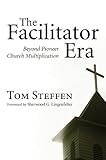
The Facilitator Era: Beyond Pioneer Church Multiplication

This looks like an interesting book: The Facilitator Era: Beyond Pioneer Church Multiplication by Tom Steffen.  One blurb:

“The Facilitator Era marks a quantum leap forward in strategic thinking and practice of mission. With an eye to planting and multiplying churches among every people, Steffen combines a readable narrative with case studies from around the globe. He examines the promise and pitfalls of current developments pointing the way forward with uncommon wisdom. If you don't want to be left behind as the church moves into the next era of global mission, read The Facilitator Era.”
—Craig Ott
Associate Professor of Mission and Intercultural Studies
Trinity Evangelical Divinity School

You can watch Dr. Steffen give a talk on this book at a recent meeting of the Evangelical Missiological Society.

Monday, February 6, 2012

Miraculous Movements: How Hundreds of Thousands of Muslims Are Falling in Love with Jesus

51VP7SzLUHL__SS500_

You’ve probably heard of the CPM that has been happening among Muslims in East Africa by now.  Thankfully, they have put many of their stories and lessons learned in a book.  I just started reading an advance copy it looks really promising. You can pre-order on Amazon-> Miraculous Movements: How Hundreds of Thousands of Muslims Are Falling in Love with Jesus:

How do the people most resistant to the transformative power of the gospel come to be its most devoted followers? Miraculous Movement recounts an amazing change taking place within Muslim communities where the truth of Jesus Christ is turning around the lives of many thousands of Muslims from more than twenty people groups. Discover through the sometimes humorous, often sobering, but always enlightening and encouraging true stories how imams, sheikhs, and entire mosques are forsaking Islam and embracing Christ.

This close look at what the Lord is doing to spread the gospel highlights the key scriptural principles that help Christians reach out in love to share the gospel in their own community. The authors outline the principle of service to others that open doors of opportunity to the work of the gospel.

Author Jerry Trousdale works with CityTeam Ministries, an organization dedicated to helping disciples make disciples through CityTeam's own ministry and through training other ministries in more than thirty countries.

Features include:

  • Outlines important principles on how to share the gospel with non-Christians
  • Explains how ordinary people can lead neighbors to Christ in love and humility
  • Tells many exciting and encouraging stories of Muslims who have accepted Jesus
  • Describes CityTeam's unique program focused on God's work through disciple-making movements, a strategy that harnesses the power of disciples making disciples and churches planting churches

Endorsements:

With Miraculous Movements, Jerry Trousdale and his colleagues at CityTeam have made an invaluable contribution to the body of Christ!

-David Garrison, PhD Author: Church Planting Movements

As a church planter for the last 10 years, our family has made it our mission to go where no one else wants to go. This book, Miraculous Movements, very much aligns with this mission of getting to know the community around you and then sharing the teachings of Jesus rather than trying to go in and hope people come to a church or, in some cases, a home church, just because you set up shop. This book shows how to attract people to follow Christ, not try to convert them to simply know Christ. If you want to read stories that will change the way you think about church plants and churches built outside our Western models, this is the book for you. Whether you are a church leader or a person who is curious to see what God is up to in other parts of the world, you won’t be disappointed.

-Charles Hill, Church Planter, National Speaker

Saturday, January 14, 2012

4,000 Churches Planted in 3 Years in Ethiopia

I’ve blogged on this before, but the below post is a great summary worth sharing again.

From Roger Thoman at Simple Church Journal aka House Church Blog: 4,000 Churches Planted in 3 Years in Ethiopia:

My thanks to David Watson for passing along Dave Hunt’s dissertation (Download 2009huntcpmdissertation) on church planting movements in East Africa.  There is so much of Hunt’s experiences that I relate to, albeit on a smaller scale and budget, that I am excited to see this compilation of what he has been involved in.  There are so many wonderful principles here that can be applied in any context!

Here are some of the concepts that Dave Hunt’s dissertation highlights:

1. True church planting is not the planning and implementing of programs but the natural, organic process that emerges spontaneously when the Gospel in its core essence is proclaimed and lived in word and deed.

Church planting becomes the natural and essential expression of the missional church as the gospel is proclaimed in word and deed, and believers are gathered together for fellowship, worship, and mission. What the Church needs to do according to Christian Schwarz is to “concentrate on the removal of obstacles to church growth and multiplication within churches. Then church growth can happen all by itself…

Believing that church planting is the work of God and that churches emerge spontaneously and naturally, perhaps the term catalyst best describes the human part in this process of church multiplication.

2. In many cases, the church has been hindered by the institutional model that has come from the West.

What we found in East Africa was a church of highly committed mostly “uneducated and untrained”1 workers, passionately in love with Jesus, but who were often bound within an institutional church structure that restricted rather than released and empowered their zealous witness of the gospel.

Much of this church planting strategy has to do with removing the barriers so that the church can more easily emerge. These barriers are largely those systems, structures, and demands which are added to the biblical requirements for doing church. When these are removed, people are introduced to and fall in love with Jesus. As they are discipled to obey all that He has commanded them, they will naturally want to gather together in fellowship to worship, learn, support and encourage one another and work together to spread the good news. As such, they become the continuing presence of Jesus in the dark places of the world.

3. The dynamic multiplication of churches is not dependent on education-level nor are long periods for disciples to mature needed before they can become involved in discipling others and starting new churches.

In this East Africa project the movements have been characterized by young believers still in a discipleship and maturing process themselves, passionately in love with Jesus who go from their newly established community of believers to make new disciples in a new region from which a new community of believers quickly emerges.

4. Church planting movements are fueled when believers discover Jesus as the head of the church rather than maintaining an unhealthy dependency on human leadership.

The believers are taught not to obey the church planter but rather to discover for themselves what the Word of God says and to obey the Word. The image of the church as the body helps to bring understanding to this critical element. The believer is not a member of an organization led by a pastor, but part of a body with Christ as the head. In Christ lies all the authority for the church.

5. Teaching simple obedience produces mature disciples rather than knowledgeable converts.  This is the key to replication.

Much of modern day discipleship is based on the acquisition of knowledge… Books, tapes, videos, and materials of all sorts have been produced to support the discipleship process.  Much of this leads to knowledgeable converts but does not make mature disciples.  Converts may be religious, but they may not be obedient.  What is a mature disciple?  It is one who is obeying all the commands of Jesus… and teaching others to do the same.  A mature disciple is a disciplemaker… Disciples replicate by making other disciples.

I will share more in future posts or you can download the entire dissertation for yourself here.

Monday, June 20, 2011

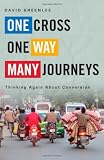
One Cross, One Way, Many Journeys, Greenlee

“How we conceive of conversion determines how we do evangelism.” –Richard Peace

This post is a summary of One Cross, One Way, Many Journeys: Thinking Again about Conversion by David Greenlee.  Greenlee did his PhD Dissertation in the 90s on conversion from Islam.  This concise book (152 pages) shares experiences of MBBs, but also includes examples from American, Asian, Latino, Hindu, Buddhist, Diaspora, and European contexts.

Below is a short summary of each chapter:

  1. Starting the Journey: People can “come to Christ” i.e. “get saved” i.e. … in an instant (Paul), or through a process (the Disciples).  Conversion includes cultural, social, spiritual, and political complexities involved in a person’s turning from sin towards God’s saving activity in Christ.  [I would add that conversion is different than regeneration. Regeneration is a work of the Holy Spirit, and conversion refers to man’s experience and interpretation of that act.]
  2. Inside Out or Heading Home?:  “Bounded set” Christianity understands that people must accept a list of new doctrines and usually also a foreign culture before they are considered “Christians.”  You’re either inside or you’re out.  But in “centered set” Christianity, what matters most is that people are pointed and moving towards the center, Jesus.  Bounded sets are very difficult for people on the “outside” because they are reluctant to jump inside- to become like one of “them.”  By contrast, centered sets illustrate that we’re really just trying to meet people where they are and get them to turn (and move) toward the center, Jesus.  “I am convinced that the key question is not how much we know but who we know.  What counts is not being inside certain boundaries of knowledge and behavior [which could actually give false assurance to “insiders”], but - by faith - being pointed to Christ” (11).  (Obviously also, it is better to be closer to Christ than further away.)
  3. Conversion at the Core: Beliefs are important, but you could have correct knowledge and still have repulsive feelings about Christ.  Or perhaps you could have the right beliefs and feel love for Jesus, but not actually have a commitment to him.  These are the the three levels that make up a worldview (from Hiebert); 1. Cognitive (beliefs, knowledge), 2. Affective (feelings, beauty), and 3. Evaluative (allegiance, commitment).  We need to foster three-dimensional conversion; transformation (the goal of conversion) only happens when all three levels are impacted.
  4. Groups, Families, and Anyone who Believes:  Conversion is an individual event, but can also happen simultaneously in groups.  “Church planting movements almost always spread through webs of family relationships” (47).  We need to foster conversion within and throughout social networks.  Most cultures are not as individualistic as the postmodern West.
  5. Congruence, Conversion, and Christian Witness:  The HUP (Homogeneous Unit Principle) famously coined by McGavran observes that people like to become Christians without crossing racial, linguistic, or class barriers.  The HUP claims that the call for ethnically heterogeneous churches actually inhibits the growth of the church and does not fully allow for fully indigenous expressions of faith.  Although it has some value as a sociological principle and a communications tool, the HUP has been widely criticized as a strategy and a method that falls short of the biblical practice and teaching of community.  “I suggest that… the Congruence of Cultural Values (CCV) principle gives a more adequate description of how God is at work than does the HUP” (55).  The CCV says that “people are more likely to come to faith when their own cultural values are significantly congruent with the cultural values of the witnessing Christian community and the means of communicating the gospel” (55).  You can foster similar cultural values without forcing ethnic homogeneity.
  6. Who’s to Judge? Looking in From the Outside:  Doctrine is vital to spiritual health and faithfulness, but “outsiders” should be very careful to judge (but we should discuss and engage them) “insider movements,” i.e. fellow believers who are trying to remain in (not extract from) their socio-religious context.  “Not all who are “in Christ” will express their faith in the same way that you or I do” (83).  As for contextualization, “I suggest, then, that Paul’s self-identification and intercultural practice as here briefly summarized point to what should be our emphasis and our limits: missionary outsiders who identify with the people we serve while maintaining a clear identity in the One we serve” (82).
  7. Worthy Witness: There is a clear difference between proselytism and evangelism.
  8. Fathoming the Unfathomable: Conversion is mysterious work of God and can never be fully understood.  But we can look at conversion through seven (dim) lenses to help us: psychology, behavior, sociology, culture, spiritual warfare, the human communicator, and God’s underlying role.  “None of these aspects gives us the full picture, but each emphasizes characteristics that get overlooked when we examine conversion for other perspectives alone… Properly understood and grounded in Scripture, these lenses… can help us gain new insights into how God is at work in conversion.  In turn, these insights can help us grow in faith and be more fruitful in ministry” (102-3).
  9. Conversion, Politics, Power, and Transformation: Conversion has undeniable political consequences (but we decry conversion for political reasons).  “If society perceives itself to be under threat, it is likely to resist a religion identified with the threatening society” (115).  But a new religion is likely to spread if it “offers a resource to leaders or to people as a whole in resisting threats to continued existence” (116, quoting Montgomery). [I would love to explore this further. Very interesting.]
  10. The Defeat of Darkness and Deception:  “Conversion is a spiritual battle that involves a change in allegiance that may include the breaking of overt demonic power in our lives” (136).  “We have a glorious eternal hope whether the battle is hidden or obvious, theological or physical, even in the face of overwhelming odds” (139).
  11. Becoming the People of God: We are not just converted to Christ, we are also converted to his body, the church.  “Becoming this God-praising people, not just saved souls in isolation, I believe is central to the goal of conversion and the purpose of God as we come to, and grow in, faith in Jesus Christ” (150).  [I would add à la Jonathan Dodson that we are also converted to mission.  See The Three Conversions.  This concept would have nicely rounded out the book.]

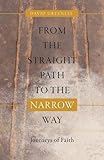
Greenlee has also edited From the Straight Path to the Narrow Way, which is a series of articles and studies that investigate the phenomenon of conversion of Muslims to Christ.

Monday, March 7, 2011

A Revolution in Church Multiplication in East Africa

Here is an excerpt [for the excerpt click on the link] of a DMin dissertation called, A Revolution in Church Multiplication in East Africa.  The entire paper can be downloaded from that link as well.

Sunday, March 6, 2011

Gospel Planting vs. Church Planting

From the footnotes of Rick Love’s paper Following Jesus in a Glocalized World:

What about the term, “church planting?” I believe it miscommunicates at a number of levels, so I prefer the term “gospel planting” for three reasons:

(1) “Gospel planting” is more biblical and accurate. Nowhere does the New Testament imply that we plant the church. But it does teach that we plant the gospel. The parable of the sower makes this most clear.

(2) “Gospel planting” helps us envision our task more clearly. The term “church planting” implies that we bring the church from the outside. To use another metaphor, “church planting” implies that we plant the gospel seed along with a flower pot. The church is then foreign rather than indigenous. “Gospel planting” implies that we sow the gospel seed, and churches spring up from indigenous soil.

(3) “Gospel planting” is more Christ-centered than “church planting,” since Jesus is the gospel.

Paul the apostle linked his apostolic aims and ambitions with the gospel. His “apostolic self-description” indicates that his goal was the gospel. His work resulted in communities of Jesus’ followers. He loved and suffered for these communities of faith. But he linked his apostolic aims and ambitions with the gospel:

“Paul, a bond-servant of Christ Jesus, called as an apostle, set apart for the gospel of God” (Romans 1:1 NASB).

“However, I consider my life worth nothing to me, if only I may finish the race and complete the task the Lord Jesus has given me—the task of testifying to the gospel of God’s grace” (Acts 20:24 NIV).

“And thus I aspired to preach the gospel, not where Christ was already named, so that I would not build on another man’s foundation” (Romans 15:20 NASB).

“I do all things for the sake of the gospel, so that I may become a fellow partaker of it” (1 Corinthians 9:23 NASB).

“I have become its servant by the commission God gave me to present to you the word of God in its fullness … ” (Colossians 1:25).

“To me, the very least of all saints, this grace [of apostleship] was given, to preach to the Gentiles the unfathomable riches of Christ” (Ephesians 3:8).

“But the Lord stood with me and strengthened me, so that through me the proclamation might be fully accomplished, and that all the Gentiles might hear” (2 Timothy 4:17).

In my previous post, Decline of the Church Planting Movement Strategy?, “Mark” criticized church planting movements, but from a different angle.

Tuesday, March 1, 2011

Decline of the Church Planting Movement Strategy?

From “Mark” at Second Thoughts on The Future of Missions (edstetzer.com):

For the last twenty years the primary strategy in evangelical missions has been the Church Planting Movement (CPM) strategy. This strategy was developed by the International Mission Board (IMB) of the Southern Baptist Convention (but is now widely used by many other organizations). The leaders of the IMB were frustrated because most of their evangelistic fruit came from only five countries: Brazil, Nigeria, Kenya, the Philippines, and Korea. They longed to see similar results from their work in all the nations. So, they developed the CPM strategy in order to emphasize the planting of rapidly reproducing churches around the world. CPM was seen as the "golden key," a strategy that will work in any place at any time. Many missions agencies have embraced CPM as their strategy. For example, Youth with a Mission (YWAM) has held seminars on CPM all over the world.

What's the problem? Surely, it is a good thing to seek to plant churches that will rapidly reproduce. Yes, indeed. CPM has much to commend it. It stresses fervent prayer, widespread evangelism, and planting indigenous churches. The problems with CPM have been discussed by Dr. David Sills in his book, Reaching and Teaching. (highly recommended!) Dr. Sills cogently argues that CPM fails because it neglects training disciples and especially church leaders. Another weakness is that CPM has a weak ecclesiology. This has been pointed out by writers at 9Marks Ministries and Mid-America Seminary. Beyond that, many of the featured CPMs seem to have a short lifespan. That is, after a few years researchers cannot find the churches. In John 15:16 Jesus told his disciples "I chose you and appointed you to bear fruit--fruit that will last." It seems the rapidity emphasized by the CPM strategy does not produce fruit that lasts. I am not predicting that CPM will disappear overnight. Missions agencies change slowly; however, it does seem that CPM will slowly decline due to inherent weaknesses.

Interesting that this criticism comes out as Mission Frontiers publishes their March-April 2011 Issue on Church Planting Movements!

See this article: Church Planting Movements Among Muslim Peoples

What do you think?

Friday, January 14, 2011

Five Questions to Answer Everything

How we answer these 5 questions will shape almost everything we do (and form a general framework for missiology):

  1. How do we know what we know?
  2. What is the gospel?
  3. What is mission?
  4. What is the church?
  5. What is the kingdom of God?

HT: Stetzer (And then answering these questions helps shape our Islamic missiology.)

Tuesday, December 28, 2010

How should we form our view of the church?

Fruitful Practices researchers Leith and Andrea Gray have stated that (63):

…church planting workers tend to view their mission strategy based on their view of what the church is.

So then, how should we form our view of the church?

Rebecca Lewis argues that pre-existing communities should become the church as she differentiates between planting the church and implanting the church (17):

Typically, when people “plant a church” they create a new social group. Individual believers, often strangers to one another, are gathered together into new fellowship groups. Church planters try to help these individual believers become like a family or a community…

By contrast, a church is “implanted” when the Gospel takes root within a pre-existing community and, like yeast, spreads within that community. No longer does a new group try to become like a family; instead, the God-given family or social group becomes the church.

Following this, the Grays say there are two models for church planting (63):

Some workers follow and attraction church planting model, in which the church is a new structure existing parallel to other social networks in the community. On the mission field, such workers share the gospel with various unrelated individuals and then gather them together into a “church” to which they gradually invite others from the surrounding community.

Other workers hold to a model of the church as the transformation of existing social networks. On the mission field, such workers share the gospel with a community of people who already know each other and that group gradually grows in knowledge of the Bible and obedience to Christ.

Where would someone form their view that the church is the transformation of a social network?  This view would not come from Scripture.  The church in the New Testament was made up of people who had nothing in common but the person of Jesus (of course there were some family conversions as well).

Instead, the “social network” model bases their views of the church primarily on their missiology, and their missiology primarily based off of observation.  Rebecca Lewis (who has been instrumental in her work in insider movements) says (36):

My opinion is that missiology must be based on seeing what God seems to be doing and evaluating that in the light of scripture (copying the apostolic process in Acts 15).

In this same vein, the Grays’ article was highly influenced by Frost and Hirsch, who argue in The Shaping of Things to Come that our Christology informs our missiology which informs our ecclesiology.

Simplistically, we can frame the issue as Jonathan Dodson does here (definitely you should read the comments to his post!):

Alan Hirsch advocates that Missiology should shape Ecclesiology.

Christology → Missiology → Ecclesiology

Ed Stetzer advocates that Ecclesiology should precede Missiology.

Christology → EcclesiologyMissiology

Which do you support and why?

This issue of the primacy of ecclesiology or missiology is a foundational paradigm for how we think about the church and mission.  Dodson follows up with this post:

…which should take priority in determining a missional ecclesiology—missiology or ecclesiology? Both Stetzer and Hirsch have kindly provided their schematics to help clarify their positions. Stetzer writes:

My point is that scripture sets the agenda and has provides direction for all three� one does not �come from� the other but they are all derived from scripture, interact with each other, etc

Ed Stetzer
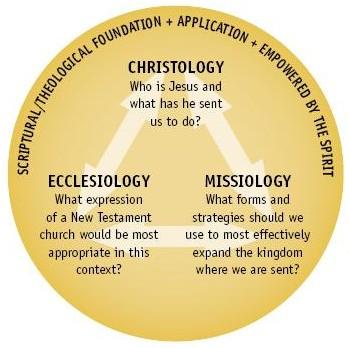
stetzer-missional-matrix

Hirsch explains: We believe that Christology is the singularly most important factor in shaping our mission to the world and the forms of ecclesia and ministry that form that engagement…Before there is any consideration given to the particular aspects of ecclesiology, such as leadership, evangelism or worship, there ought to be a thoroughgoing attempt to reconnect the church with Jesus; that is, to ReJesus.

Alan Hirsch
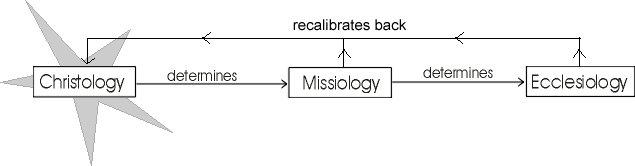
christology-v2

Stetzer sets Scripture as the starting place and Hirsch begins with [the biblical] Jesus. What are the implications for these slightly different starting places? Do these differences matter?

It is precisely these differences that determine how we form our view of the church which then creates a difference between the two models of church mentioned above.

We must come back to Scripture to inform our Christology, missiology, and ecclesiology.  And Scripture says the church is more than a transformed social network made up of people who look, talk, and think the same.  Instead, the church is in fact a new social group where allegiance to Jesus and identity in Him is paramount to all other allegiances and identities.  A simple look at the list of the scriptural metaphors for the church should remind us how diverse it is (Payne):

  • Family (Matthew 12:48–49; 1 Timothy 5:1–2)
  • Body (1 Corinthians 12:20; Ephesians 1:22–23)
  • Priests (1 Peter 2:9)
  • Fellowship (1 John 1:7)
  • Community (Acts 2:44; 4:34)
  • Temple (1 Corinthians 3:16)
  • Building (Ephesians 2:19–21)
  • Bride (Ephesians 5:22–33; Revelation 21:9)
  • Branches (John 15:5)
  • Sheep (John 10:1–18)
  • Salt (Matthew 5:13)
  • Light (Matthew 5:14)

IMHO, I think we should recognize that the social network model is a transitional form that can be helpful until we get to more robust, biblical forms of church.  Until then we need to make sure that our ecclesiology is informed primarily by Scripture.  And then, with Christ at the center, both our ecclesiology and missiology can shape each other.