Showing posts with label Culture. Show all posts

Wednesday, July 24, 2024

CPMs Within and Beyond the Oikos

The latest issue of IJFM is out, titled Homogeneity and Hybridity: Does McGavran’s Homogeneous Unit Principle fit the Realities of a Multiethnic World?

Yep, the debate surrounding the infamous HUP remains as lively as ever.

I contributed an article using the phenomenology of CPMs as a conversation partner. Historically, there have been some passionate one-sided takes on the HUP, but I believe every article in this issue of IJFM offers much needed nuance. 

Here is my contribution: The Homophilous Unit Paradox: Church Planting Movements Within and Beyond the Oikos. Pardon the quirky title—it seemed like a good idea at the time! From the intro:

At a fundamental level, the discipline of frontier missiology is based on “crossing difference:” dissimilarities between peoples are significant enough to require an intentional apostolic effort to engage such peoples. By contrast, much of contemporary missiology is based on “uniting difference:” distinctions between peoples are harmful to the unity of Church and a pastoral response requires the ministry of reconciliation. In this regard, Donald McGavran’s infamous Homogeneous Unit Principle (HUP) serves as an inflection point between frontier missiology and contemporary missiology. The apparent contradiction lies between an apostolic function and a pastoral function, both of which are needed, but at different times and in different ways. Phenomenologically, church planting movements (CPMs) highlight this tension. In this lecture, after presenting three short case studies introducing CPM’s intersection with the HUP, I’ll share what I’ve discovered specifically as it relates to the nature of church multiplication within networked oikos churches. Along the way, I’ll make two proposals: 1) that “homophilous” is a more appropriate term than “homogeneous,” and 2) the HUP is better understood as a “paradox” and not a “principle.”

So what is my proposal? The Homophilous Unit Paradox…

…guards against cultural paternalism to promote polyphonic worship from all ethne and yet can also endorse racism and segregation if left unchallenged.

Read the whole thing. Feedback welcomed.

Friday, January 29, 2021

Introducing Hermeneutical Hinges: How Different Views of Religion and Culture Impact Interpretations of Islam | The Religious Other (Langham 2020)

I’m excited to let you know about our new book, The Religious Other: A Biblical Understanding of Islam, the Qur'an and Muhammad which released in December 2020. Here is the book description:

We live at a time when religious diversity has become a fact of life in our globalized societies. Yet Christian engagement with Muslims remains complex, complicated by fear, misunderstanding and a history fraught with political and cultural tensions. These essays, drawn from the 2018 and 2019 Middle East Consultations hosted by the Arab Baptist Theological Seminary's Institute of Middle East Studies, engage the need for a carefully developed theological understanding of Islam, its origins and its sacred text. Weaving together the work of Christian scholars of Islam, the Bible, theology and missiology, along with the insights of ministry practitioners, this book combines scholarly exploration with pertinent ministry practice, offering a rich framework for the church to continue its conversation about its engagement with Muslim communities and its proclamation of Christ worldwide.

I have contributed three chapters in the volume; two of them are new. In this post I would like to highlight my essay in section 5.3, “Hermeneutical Hinges: How Different Views of Religion and Culture Impact Interpretations of Islam.” Here is my introduction.

As Martin Accad has proposed, “Your view of Islam will affect your attitude to Muslims. Your attitude will, in turn, influence your approach to Christian-Muslim interaction, and that approach will affect the ultimate outcome of your presence as a witness among Muslims.” I would like to add a more foundational layer to this proposal, namely, that your understanding of religion and culture will affect your view of Islam. In other words, your view of Islam inevitably hinges upon your approach to religion and culture, and specifically, the relationship between the two.

In this article, I would like to show how these ideas play out in the missiological discourse of ministry to Muslims. In the interest of space, I will not focus on a theology of religion (although the discerning reader will see hints of it throughout). Instead, I will focus on the more basic concepts of religion and culture. As we will see, the contemporary debate concerning approaches of ministry to Muslims is complex, and different presuppositions about culture and religion can lead to drastically different understandings of Islam.

The chapter continues with the following sections:

  • Culture: Secular, Evil or Theological?
  • Religion: Western Invention, Belief System, or Subset of Culture?
  • Epistemological Perspective: Top-Down or Bottom-Up?
  • Form and Meaning: Equated, Separate, or Corresponding?
  • Islam: Cultureligion or Religiolatry?

My approach in this essay offers examples from missiology where different answers to the above questions will take you in diverse directions as you interpret “Islam.”

Here is my final section, Concluding Reflections: Getting Comfortable with Ambiguity:

We are unlikely ever to reach a consensus on a proper biblical theology of religion and culture. With the publication of Christ and Culture in 1951, Niebuhr called this issue an “enduring problem” for the Church through the ages. While we can make some general clarifications, as I have done here, it seems to me that many of these issues can’t be solved at the abstract, theoretical level. There is simply too much knowledge rooted in experience and context making the issues extremely difficult to evaluate in a historically “Western” way, i.e. in the realm of ideas.

Interestingly, during the infamous Jerusalem Council in Acts 15, the assembled reflected on the experience of God’s work among them. A next step in this discussion would be to put approaches of ministry to Muslims in dialogue with the Muslim and MBB experience of Islam (religion? culture? both?), which, as we already know, varies. I am very sympathetic to the charge that this discussion has been dominated by Western voices. And yet I find that non-Westerners and MBBs have similar discussions and similar disagreements around these concepts as well.

Still, we may offer some concluding critiques of the discussion. Many of the approaches to contextualization surveyed here assume that Muslims are practicing, not nominal, Muslims. In my experience, however, many Muslims, if they are practicing at all, use Islamic piety to keep God at a distance, either because they are afraid of punishment or because he is seen as unknowable. A Muslim friend once told me he was looking forward to eternity in Paradise, because in heaven, there “was no more worship.” For him, heaven was a man-centered place of sensual indulgence; God was present only in theory.

Additionally, Muslims do not all share the same attachment to Islam. It should go without saying, that, depending on the context, sometimes you do not have to do anything according to the context! Many Muslims do not desire to follow Christ in ways that are culturally or religiously familiar to them, although some indeed do. And yet, the Gospel has all too often been presented in Western forms, causing it to be rejected as foreign. While this may partially explain some of the tension in our discourse, it does not explain all the historical reasons for the resistance to the gospel in Muslim lands. In some Muslim contexts, there is often a very strong connection between form and meaning. For many Muslims and MBBs, some of the forms are linked with meanings that are nearly impossible to modify.

On the other hand, the automatic equation of form and meaning practically villainizes particular Islamic cultures. For mission in a postcolonial world, we must ensure that our theology of Islam does not speak pejoratively of Muslims and Islamic cultures. Unfortunately, Evangelicals have a long history of failing to obey the Golden Rule of Ethics, “Do to others what you would have them do to you” (Matt 7:12). If we understand Christianity as a religious system, we can also demonstrate that “Christianity” has (at numerous times throughout history) done evil things seemingly rooted in the demonic. Does this also mean that “Christianity” has a demonic source? Furthermore, if God saves us from our culture (as some maintain), to what culture do we turn? What is “Christian” culture? Answers only add to the ambiguity.

So, how can we understand Islam? Islam is a process of “meaning-making,” undertaken by Muslims as they interact in their context with the revelation (according to their tradition) given to Muhammad. Islam includes diverse cultural traditions, access to social networks, a sense of belonging with others, and rituals and ceremonies. Phrases such as “leaving Islam” or “remaining in Islam” are often too vague to be meaningful and can actually be confusing in discipleship. For some, “leaving Islam” could mean that a Muslim who comes to Christ must also leave his culture and community, while for others, “remaining in Islam” could mean it is automatically permissible to participate in Islamic rituals. Issues of socioreligious identity are not always clear either. What does a “Muslim” or a “Christian” identity mean within a specific setting? Answers vary with contexts. When we look at Muslim contexts, Islam is not all we see; it is one strand in the braided rope of Muslim societies.

Finally, we haven’t discussed other important issues, such as the nature of the Kingdom of God, the Church, and the gospel. These are also disputed concepts in evangelical missiology. Although we might not agree, and although we need to become more comfortable with ambiguity and messiness, we should still strive for as much Christocentric clarity as possible as we witness to Muslims in diverse contexts. Let us not forget the command to love one another and to love the religious other as we make disciples of Jesus among all nations.

Buy the book and read the whole chapter here.

Tuesday, March 17, 2020

Hills and Hiding? A Response to Travis Myers | Kevin Higgins

Below is a guest post from Kevin Higgins (President of William Carey International University) written May 1, 2019 but not previously published. It is a response to an article published at Desiring God on April 23, 2019: A City Under a Hill: Five Problems with Insider Movements. Feel free to comment below.


Hills and Hiding? A Response to Travis Myers

Kevin Higgins | May 1, 2019

I recently received the link to the article, “City Under a Hill: 5 Problems with Insider Movements” by Travis Myers (Professor, Bethlehem College & Seminary).

I will primarily use the outline of the five points he raises, however I begin from one of his major subtitles near the beginning of his paper: “When the Gospel hides”.

By highlighting this comment and framing it as a major section of his paper he tips his hand to an assumption he is making about insider movements: they are secretive and hiding the Gospel. This is of course hinted at in his title as well (city under a hill).

While I welcome questions about insider movements and feel the discussions are a healthy process, I find responding to this idea that insider brothers and sisters are hiding their faith is just covering old territory in the long discussions about IM. The claim that insider movements are secretive or silent or don’t share their faith is a claim as old as the discussion itself (back to at least 2004). This has been frequently rebutted, and the number of Muslim followers of Jesus who face persecution and death because of their faith is also witness to the erroneous nature of this straw man argument.

Does every “insider” believer stand boldly? Certainly not. Does every Christian living in Muslim countries do so? Does every Christian in the USA? Of course not.

The real question then is what do godly leaders in such contexts teach and encourage their people to do? In the case of insider movements, the expectation is that disciples of Jesus make other disciples of Jesus. They share their faith and they bear witness.

They do not hide the Gospel.

Now to Myers’ five points. I use his terms, and each of the five is followed by a direct quotation from Myers’ article.

1) Hermeneutics

“IM is predicated on the misguided idea that faith in Jesus as Lord of one’s life can “complete” and be the apex of any religious tradition or religious identity.

Two responses. First, IM is not predicated on this point. Not every IM proponent even holds this position, and in fact, if fulfillment thinking is not true it would not change anything. IM practice or approaches or principles are not dependent on this theme. IM is predicated on many other biblical principles and passages. The literature is full on this point.

Second, in my own thinking the only mentions I have made of “fulfillment” thinking were extremely guarded and tentative and quite clearly distinguished from what we mean when we refer to Old Testament fulfillment. I was raising the point merely to explain how I understood things, because it was already being asked.

My contention is that Jesus does fulfill a number of dimensions of anyone’s cultural and religious backgrounds when a person comes to faith (and personal longings and hopes as well). It is frequently the case that in Jesus people can and do see a number of beautiful aspects of their heritage, including their religious heritage, which now seem to find a new fullness and beauty in Jesus.

Myers’ argument which assumes IM bases itself in fulfillment thinking is a generalization and inaccurate.

2) Integrity and Identity

“Core Islamic doctrine explicitly denies biblical doctrines that are central, and essential, to Christian faith.”

This is true. Core Islamic doctrine does deny biblical doctrines that are essential. No argument on this point has ever been put forward by any insider advocate I know of.

Muslims who follow Jesus (not all, but a number whom I know) do argue that on the basis of the Qur’an and the Bible a number of core Islamic teachings are incorrect and they seek to reform those understandings, including Islamic teaching about Jesus, the Bible, salvation, and more.

This is not at all the same thing as suggesting that Islam does not teach incorrect things. In fact, it assumes the opposite.

3) Discipleship

“The IM approach stunts Christian discipleship and spiritual growth.”

I am guessing, perhaps wrongly, that Myers has not met insiders personally or directly. His conclusions certainly seem to indicate this. The question here really is what are IM movements doing about these issues? How do they disciple believers?

The movements I have known and been involved with are all rooted in ongoing inductive study of whole books of the Bible in community. Also, increasingly, I see leaders focused on reflection on the doctrinal history and themes Christ’s people have wrestled with historically, as these leaders in turn wrestle with issues in their contexts.

This does not mean that every answer Christ’s people have arrived at in other epochs and contexts is simply swallowed whole into such movements. I would argue we don’t do so in the west either, and would add that I don’t think we should do so.

4) Ecclesiology

“One’s identification with Christ should entail identification with all of Christ’s people in the world today and throughout time. That is more fundamental, ultimate, and significant than ethnic, cultural, linguistic, family, or local identity.”

I hear this sort of claim from time to time from critics of IM. I can sympathize with its intentions and heart. However, several things need to be said.

First, what is meant by identification with “all Christ’s people in the world today and throughout time”? How is this even possible? How many Christians identify in this way? We have Christian denominations who do not see others as Christian, will not have communion together, do not recognize one another’s ordinations, and more. We don’t even share (fully) common creeds, confessions or canon of scripture. So, to ask insider believers to hold to a standard that the Christian church has not attained seems hypocritical. I am not suggesting Myers is hypocritical as a person, but that this standard is.

Second, even when we do pursue unity and identification as Christians with others, this happens very much on a small and personal and local scale: through relationships. And this also happens between insider believers and those who we would call Christians. I have seen it and facilitated it. There is no sense among the leaders of IM’s which I know that Christians are not also brothers and sisters in Christ. They welcome thinking of all believers in Jesus as members of the Body.

Finally, I know believers who are “insiders” who also pray regular for Christians. They do so as brothers and sisters.

5) Soils and Strategy

“Though admittedly difficult in many contexts, religious identity and ethno-cultural identity can and should indeed be differentiated. The former must be given up for Jesus and the church. We should reject the conflation of social and religious identity.”

I want to point out where I agree and disagree with Myers here.

First, where I disagree. I understand Myers’ point here but it is, from many points of view, simplistic and impossible to separate religion and culture. We think we can, in the west. And maybe in a western context this may be partly the case, with our assumptions about secular and religious life, and physical and spiritual dichotomies, and assumptions that religions are easily distinguished and identified.

But in most contexts, this simply is not as easy as Myers suggests. In a Muslim context where something as normal to daily life as brushing one’s teeth and using the toilet are guided by religious teaching, what would be culture or religion? Should one brush one’s teeth differently just to show one is not keeping one’s religion? If one continues to brush teeth as they have since childhood, is that keeping their religion or their culture? These are purposely “easy” sorts of examples, in order to show that it isn’t easy.

In the simple examples above most readers will likely be thinking, “well brushing teeth doesn’t matter so even if it is guided by religion, no problem.” This already suggests we are comfortable making distinctions about what is ok and not ok to keep, even from one’s religious heritage.

Where do I agree with Myers?

The fact is that obedient discipleship will require changes. It will require replies of yes and no to all sorts of things, cultural, religious, emotional, personal, relational, attitudinal, philosophical, etc.

Thus, for me, the point is not whether one can keep culture but must jettison religion, or even whether that is a distinction we can make. The point is how do needed changes happen, how are they identified, who makes such decisions, and how do they decide, and for what reasons and motivations?

This is why we have taken great care in the movements I have been involved with to cultivate processes for handling such questions (for example, the questions of should we continue to do this or stop doing that). We have never given a blanket “yes, just keep doing everything”. Neither have we given a blanket no, on the other hand.

What we have done is asked, “what does scripture say on this issue? How do we obey? What does being faithful mean? How do we decide which aspect of our heritage is ‘ok’ and ‘not ok’?”

Conclusion

I have no expectation of being able to persuade every critic of the viability of the biblical faithfulness of IM as movements. And my aim here is not in fact to persuade. But I do hope to explain and, where possible, correct misperceptions and assumptions which result in misrepresentations. I do not for a moment suggest Myers intends to misrepresent anything about IM. But the five points do result in that at the end of the day.

To return to the title of Myers’ article, the IM examples I know of are not “cities under a hill.” They are seeking to both receive and share Christ’s light with all those around them, hoping that Jesus and His Gospel will be impossible to be hide.

Tuesday, April 23, 2019

Is the concept of “worldview” still useful in missiology?

Conversion (coming to faith in Christ) as a “transformation of worldview” is practically canon in evangelical missiology, especially with the publication of Paul Hiebert’s Transforming Worldviews: An Anthropological Understanding of How People Change (Baker Academic 2008).

But does contemporary anthropology still use the concept of worldview today?

In his review of Kraft’s book, Worldview for Christian Witness (William Carey Library 2008), Wheaton professor of anthropology Brian Howell said:

Although the worldview concept has become mainstream in missiological circles, it is virtually defunct in use in contemporary anthropology. Kraft uses Michael Kearney’s 1984 book on worldview as the anthropological example; however, there is no anthropological reference more recent than that. Classic anthropology can still speak to us today, but there is a great deal more current theory that is helpful for understanding culture change.

So should we move on from the concept of worldview? Is it really defunct in anthropology? David Beine, in his short research article, The end of worldview in anthropology?, (SIL Electronic Working Papers 2010) concludes with this:

The worldview concept, although no longer in vogue in the dominant paradigm of American anthropology, has remained a fruitful construct of analysis over the past decade for several other valid anthropological paradigms. There seems to be agreement among those still using worldview effectively as an analytical framework, that cultures—if I can
still use that word—do have central ideas or themes that serve to organize a wide variety of things, from material culture to political behavior. And recognizing the limitations, worldview is still a valuable construct for studying and representing these ideas. In the end, I hope the rest of
us anthropologists will not throw the baby (worldview) out with the bathwater (valid concerns of about essentialism); I would rather that those most concerned just help us change the dirty diaper.

It seems to me that the worldview concept can still be employed, but it is wise to note, as Howell reminds us in his review, that “concepts of hybridity, global ethnoscapes, and practice theory-based approaches to agency yield more nuanced understandings of cultural change.”

And yet, despite the ways they are often used in missiology, worldviews and cultures do not have discrete boundaries in today’s globalizing world.

Tuesday, April 21, 2015

Atonement Theology for Muslims?

Missionaries and theologians within the New Testament were determined not to identify a single, correct understanding of the atonement but to find context-specific ways of making the word of the cross accessible and challenging to varied audiences…. The images of the atonement that have surfaced in the history of the church have often taken shape through similar commitments to articulating the significance of the cross in particular settings.

This encourages us to believe that no one model of the atonement will fit all sizes and shapes, all needs and contexts where the church is growing and active in mission. This means, ultimately, that the next chapter of this book is being written in hundreds of places throughout the world, where communities of Jesus' disciples are practicing the craft of theologian-communicator and struggling with fresh and faithful images for broadcasting the mystery of Jesus' salvific death.

-Mark D. Baker & Joel B. Green. Recovering the Scandal of the Cross: Atonement in New Testament and Contemporary Contexts (Kindle Locations 2949-2954).

Is this a good start?

Sunday, September 21, 2014

A Patron–Client View of the Gospel in “Misreading Scripture with Western Eyes”

I have previously blogged on A Patron – Client View of the Gospel as a key way to understand MBB journeys to faith in Christ, and, by implication, how we can share the gospel with Muslims.

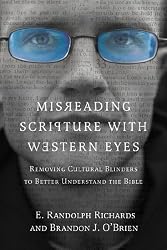
Based on some feedback I’ve received from the article, it seems extremely difficult for most Westerners to grasp the concept.  In that respect, I highly recommend Misreading Scripture with Western Eyes: Removing Cultural Blinders to Better Understand the Bible, which does a fantastic job of explaining culture and interpretation in an enjoyable and edifying way. 

Here are some selected quotes on the concept of patronage as it is found in the New Testament:

Joining words together, though, can be far more significant than merely vocabulary. Some words have special meanings when they are paired with other words. In the New Testament, for example, the word charis means "grace." Pistis means "faith." What we didn't know until recently-what went without being said in Paul's day- was that those two words together described the relationship between a patron and his or her client.

In the Roman world of the New Testament, business was conducted through an elaborate system of patrons and clients.' When we watch the movie The Godfather, we are seeing the modern remains of the ancient Roman patronage system. Like Marlon Brando who played the godfather in the movie, the ancient patron was a wealthy and powerful individual (male or female) who looked after his or her "friends" (clients). The complex world of Roman governmental bureaucracy, the far-reaching tentacles of the banking system (usually temples) and the pervasive and powerful grasp of the trade guilds made it impossible for ordinary craftspeople or farmers to conduct business on their own. They were entirely dependent upon their patrons. Like most unwritten cultural rules, everyone knew what was expected of a patron and a client, even though expectations weren't engraved on a wall. Everyone knew a patron's role was to solve problems for his or her clients, whether it was trouble with the local trade guilds, refinancing a loan or smoothing over tensions with city leaders. When Paul was staying in Thessalonica, it was reasonable to expect Jason to handle the "Paul problem," which he did by asking Paul to leave town (Acts 17).

In that world, an ordinary craftsman or farmer didn't have the social skills or connections or wealth to negotiate with the various powerbrokers of a city. He would seek out an individual, a patron, to help. Marlon Brando captures the sentiment well. The local merchant wants help. The godfather says, "So you want me to do you this favor?" Both sides understand the agreement: the godfather solves the problem, and the merchant now must be loyal to the godfather and be ready to help if he is ever summoned. In the Roman system, likewise, the client couldn't earn the "favor"; the patron showed "kindness" to help. Seneca, a philosopher from Paul's time, said the patron and the client had a relationship, a form of friendship.6 The client was now a "friend" of the patron, but not a peer. The client was expected to reciprocate with loyalty, public praise, readiness to help the patron (as much as he could) and, most importantly, gratitude.' This kind gift had strings attached. (All gifts in antiquity had strings attached.) Seneca called it "a sacred bond."' The recipient of the gift was obligated to reciprocate. Paul introduced Lydia to Christianity (Acts 16). She reciprocated by hosting Paul and his team at her estate.

The language of patronage permeated everyday life. We know well the Christian terms grace and faith, but these were common before Paul used them. They were part of the language of patronage. When the patron gave unmerited gifts of assistance, these were commonly called charis, meaning "grace/gift.."10 The client responded with faithfulness to the patron, called pistis, or "faith."" We see that when Paul explained our new relationship with God, he used something everyone understood: the ancient system of patronage.12 Taken together, this vocabulary-so central to the Christian faith-means something different than the sum of its parts.13 (Kindle Locations 847-866).

Now Paul wasn't opposed to the patronage system; he probably couldn't imagine a world without it (Kindle Location 1802).

Because it was impossible to escape the patronage system, Paul worked within it, even in his explanation of the Christian message of salvation. Patronage had its own vocabulary. Words we usually consider particularly Christian terms-grace and faith-were common parlance before Paul commandeered them. The undeserved gifts of assistance the patron offered were commonly called charis ("grace" and "gift").' The loyalty the client offered the patron in response was called pistis ("faith" and "faithfulness").9 Roman philosophers noted that when one received a god's favor (charis), one should respond with love, joy and hope.10 When Paul sought to explain the Christian's new relationship with God, then, one of the ways he did so was in terms of the ancient system of patronage - something everyone understood. In other words, it went without being said that relationship is the premier and determinative aspect of charis, grace (Kindle Locations 1808-1813).

I believe that relationships today in Africa, the Middle East, and throughout Asia are largely defined by patronage, whereas in the liberal, democratic cultures of North America and Europe, relationships are defined by equality and freedom (except in politics).  If this is even remotely close to reality, how can Westerners use the concept of patronage to share the gospel with Muslims?

Wednesday, April 2, 2014

A Basic Theology of the Relationship between Gospel and Culture

Initially adapted but modified significantly from The Gospel in Human Contexts, pages 31-32:

  1. The gospel, as revealed truth, is distinct and separate from all human cultures.
  2. Culture is simultaneously a reflection of divine creativity and human rebellion.
  3. Gospel and culture are interrelated realities: it is impossible to express the gospel apart from culture.
  4. The gospel transforms people, and transformed people transform societies.

I reserve the right to modify this in the future. Winking smile