Showing posts with label Kingdom. Show all posts

Saturday, December 14, 2013

Theology, Gospel Missions, and Insider Movements, by Nabeel Jabbour

[UPDATE: Jabbour is not the only writer of the document. See Joel’s comment below.]

Here is a resource that is worth perusing for a while (HT: MH).  230 pages long.

A CALL TO FAITHFUL WITNESS
-PART TWO –
THEOLOGY, GOSPEL MISSIONS, AND INSIDER MOVEMENTS

A PARTIAL REPORT (PART TWO OF TWO PARTS)
OF THE AD INTERIM STUDY COMMITTEE ON INSIDER MOVEMENTS
TO THE FORTY-FIRST GENERAL ASSEMBLY OF THE
PRESBYTERIAN CHURCH IN AMERICA
MARCH 20, 2013

By Nabeel Jabbour (See also www.nabeeljabbour.com)

Nabeel JabbourAmong his other works are The Crescent Through the Eyes of the Cross: Insights from an Arab Christian and The Rumbling Volcano: Islamic Fundamentalism in Egypt.

Thursday, January 31, 2013

“Kingdom”: perhaps the flabbiest term being used by Christians today (McKnight)

This is one of the best posts on kingdom theology I have ever read.  Below are some selected quotes intended to tempt you to read the whole thing (it’s brief so don’t worry).  From Scot McKnight, Steve Jobs’ Legacy: Kingdom Work?:

My beef today is that too many today have abstracted the ethical ideals from Jesus’ kingdom vision, all but cut Jesus out of the picture, and then called anything that is just, peace, good and loving the “kingdom.” The result is this equation: kingdom means goodness, goodness means kingdom. Regardless of who does it. My contention would be that kingdom goodness is done by kingdom people who live under King Jesus…

Yes, feeding the poor is good and it is God’s will for this world, whoever does it. But “kingdom” refers to that special society that does good under Jesus, that society that is buried in his death and raised in his resurrection and lives that Story out in our world today. It makes no sense to me to take this word of Jesus that he used to refer to what God was doing in and through him at that crucial new juncture in time and history and use it for something else…

Read the whole thing.

Related Posts:

Saturday, August 25, 2012

Did Jesus Preach the Gospel?

This is an important (12 minute) video that helps clarify how we read the gospels and talk about the kingdom.  I find the reason why Jesus’ Lordship replaces the “kingdom” talk in the epistles to be a very helpful reminder.  It is so wrong to pit the “gospel of Paul” and the “gospel of the kingdom against each other!!!

The article Keller refers to is Simon Gathercole, "The Gospel of Paul and the Gospel of the Kingdom" in God's Power to Save: One Gospel for a Complex World? ed. Christopher Green (UK: Apollos/Inter-Varsity Press, 2006).

Did Jesus Preach the Gospel? from The Gospel Coalition on Vimeo.

Related Posts:

Sunday, July 29, 2012

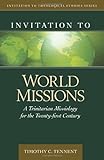
Summary and Outline of Invitation to World Missions: A Trinitarian Missiology for the Twenty-first Century (Tennent 2010)

If missiology is a puzzle, then Invitation to World Missions by Tim Tennent has helped me put more pieces in place than any other book.  Perhaps this is due to the fact that I’ve read several books on missiology and things are beginning to come into focus for me.  But Tennent’s missiology not only provides the corner pieces and the edges, it also fits several seemingly odd pieces that didn’t look compatible before (Tennent is an evangelical who loves to learn from other Christian traditions: the three most quoted missiologists in his book are Walls, Newbigin, and Sanneh).  Before reading this book I felt like I was trying to put together the puzzle without referencing the picture on the box, but now I have a clearer view of the puzzle’s shape and image.

The four major features of Tennent’s missiology (provided in the conclusion of the book) are as follows. 1. The Missio Dei.  Mission is primarily God’s, not ours.  Mission is “God's redemptive, historical initiative on behalf of His creation.”  Missiology must be articulated from a theological and theocentric framework.  Social science and business-world insights are helpful, but the Bible still rules the day.  2. The Triune God.  “The Father is the Sender, the "Lord of the harvest"; the incarnate Son is the model embodiment of mission in the world; and the Holy Spirit is the divine, empowering presence for all of mission” (Kindle Locations 722-723).  3. The New Creation.  Missions is about the in-breaking of the future reign of King Jesus into the present.  We minister in the “already but not yet” of the kingdom.  4. The Global Church.  Most missiologies have been written from a mono-cultural perspective where the West has assumed to be the major player.  But the rise of the majority-world church has changed the game and there is much to be learned.

If you want to develop your missiology and learn more about missional theology from a trusted guide, then Invitation to World Missions is a book that deserves careful study.  Readers of Circumpolar will find his discussions on Islam and the “insider movement” helpful and interesting.

Below is the outline of the book along with brief chapter summaries.

PART ONE: INTRODUCTION

Section A: Megatrends That Are Shaping Twenty-first Century Missions

1. From Moratorium and Malaise to Selah and Rebirth

Seven megatrends that are shaping missions today: 1. The Collapse of Christendom.  2. The Rise of Postmodernism: Theological, Cultural, and Ecclesiastical Crisis. “The Western church has responded in very different ways to the collapse of Christendom and the emergence of postmodernity, but none has managed the transition without experiencing some form of crisis.” (176-178).  3. The Collapse of the "West-Reaches-the-Rest" Paradigm. “Western Christians have been slow to grasp the full missiological implications of the simultaneous emergence of a post-Christian West and a post-Western Christianity” (247-248).  4. The Changing Face of Global Christianity.  Six sending and receiving continents!  5. The Emergence of a Fourth Branch of Christianity: “Independent” “Pentecostals”.  6. Globalization: Immigration, Urbanization, and New Technologies.  7.  A Deeper Ecumenism. “The simultaneous emergence of postdenominational identity among many, as well as the emergence of thousands of new denominations, requires the forging of new kinds of unity that transcend traditional denominational and confessional identities” (426-427).

Section B: The Triune God and the Missio Dei

2. A Trinitarian, Missional Theology

We must maintain a difference between mission and missions.  Mission belongs to God, missions is the church joining in God’s mission.  “Maintaining the distinction between mission and missions enables the church to be both God-centered and church-focused” (606-607).  “The only way to maintain the link between God's mission and missions in the church is to immerse the entire training in a thoroughly Trinitarian and ecclesial framework, so that everything is ultimately related to God (missio dei) and His church (missio ecclesiae)” (619-620).  LESSLIE NEWBIGIN and KWAME BEDIAKO have been key thinkers to try to advance this in the past and their contributions are summarized. 

3. A Trinitarian Framework for Missions

This chapter fleshes out what Tennent means by a Trinitarian missiology.  Missions must be talked about in the context of the Missio Dei, where each person of the trinity has a distinctive role to play.  God the Father is the source, initiator, and sender. God’s mission began with Abram in Genesis 12.  Missions is the expression of God’s relational and holy love, and the trinity is the seminal relationship that lies behind all human relationships.  God the Son is the embodiment of the Missio Dei.  God the Holy Spirit is the empowerment of the Missio Dei.    

PART Two: GOD THE FATHER: THE PROVIDENTIAL SOURCE AND GOAL OF THE MISSIO DEI

Section A: A Missional Perspective on the Bible

4. The God of Mission Reveals His Plan

The Abrahamic covenant reveals that God is the source and initiator of mission, that Yahweh is a sending God, and reveals God’s heart for all nations.  The missio Dei focuses on communities and nations- it doesn’t stop with individuals.  Tennent primarily looks at God’s blessing of the nations in the OT, and Wright is oft quoted.  “There is, therefore, a grand narrative of mission unfolding in the Bible that will ultimately follow the broad contours of creation –> covenant –> Incarnation –> Cross –> Resurrection –> Pentecost –> return of Christ –> eschaton/New Creation. Missions must be understood as the driving purpose for this grand narrative, not as some optional auxiliary of it. In other words, the missio dei is the central message of the Bible. The Bible, like the missio dei, is the story of God's redemptive, historical initiative on behalf of His creation. Missions ultimately must derive its life from that source” (1289-1293). 

5. The Sending Father and the Sent Church

This chapter reviews the “Great Commission” passages of each gospel writer.  We must listen to all in context and together in order to understand the missio Dei.  “Matthew emphasizes the role of discipleship and planting the church across ethnic and cultural boundaries among every people group in the world. Although we do not have the original words of Mark's commission, the received version is consistent with Mark's emphasis on perseverance in persecution and the central role of proclamation. Luke's commission emphasizes the importance of Spirit-empowered, holistic missions as we bear witness to the ongoing, mighty deeds of God. John's commission emphasizes the sending role of the church. Taken collectively, the commissions demonstrate the Father's initiative in missions. The Father imparts all authority to Jesus in Matthew's gospel. In Luke, the church fulfills only what the Father has promised. In John, the Father sends the Son, who, in turn, sends the church. Thus, all of the commissions are set within the larger context of the missio dei and God's original promise to Abraham that He would bless "all nations on earth" (Gen. 22:18) (1701-1706).

Section B: Creation, Revelation, and the Human Response to God's Rule

6. A Trinitarian, "New Creation" Theology of Culture

This chapter attempts to define a theology of culture.  Richard Niebuhr’s famous Christ and Culture (Christ against Culture, Christ of Culture, Christ above Culture, Christ in Paradox with Culture, Christ the Transformer of Culture) was flawed in several ways: First, Niebuhr's understanding of culture was constructed on the foundation of secular anthropology… To create a barrier between Christ and culture is to relegate God to the supracultural category, which maybe acceptable to some Islamic theologians but can scarcely be accepted as a thoroughly Christian view” (1757-1765). Second, Niebuhr's entire perspective on culture assumes a Christendom framework.  Third, the cogency of Niebuhr's argument requires a monocultural perspective and, therefore, is increasingly unpersuasive within the context of twenty-first-century multiculturalism.  Fourth, “Niebuhr's conception of culture is not set within an eschatological framework that sees the future as already breaking in to the present order… his secularized view of culture, which puts God in a supracultural category, robs his entire project of the eschatological perspective that is so central to all Christian thinking” (1795-1800).  Revelation is better described as transcultural, not supracultural.  

There are four ways Christians differ from secular anthropology in regards to culture.  First, Christians affirm that God is the source and sustainer of both physical and social culture.  Second, Christians affirm the objective reality of sin, rooted in the doctrine of the Fall, which has both personal and collective implications for human society.  “Human cultures, therefore, are simultaneously a sign of God's creative design as well as a manifestation of human sin, which stands in opposition to God's rule” (1865-1866).  Third, Christians affirm that God has revealed Himself within the context of human culture. God's revelation does not occur in a cultural vacuum apart from the particularities of culture. And fourth, Christians affirm that a future, eschatological culture, known as the New Creation, already has broken into the present.  “By relating the entire cultural process to the inbreaking of the New Creation, we are able to provide a vantage point from which to prophetically critique and enthusiastically celebrate as the gospel is embodied afresh in a potentially infinite number of new global contexts” (2094-2095).

7. An Evangelical Theology of Religions

(This identical chapter appeared in Encountering Theology of Mission.)  Tennent renames the classic paradigms of exclusivism, inclusivism, pluralism, in addition to the postmodern acceptance model.  He likes the hospitality of the pluralists, the inclusivist insistence that the missio Dei transcends the church, and the narrative emphasis of the postmoderns which reminds us that the gospel is primarily story and not simply doctrine.  He renames exclusivism to “revelatory particularism.”  Revelatory particularism should be articulated within a Trinitarian context.  The Father is the source of all revelation.  The Holy Spirit is the agent of the New Creation, and salvation is not simply justification but includes becoming a part of the New Creation.  And the Son is the “apex of God's revelation and the ultimate standard by which all is judged. Rather than comparing and contrasting Christianity with other religions, we measure all religions, including Christianity, against the revelation of Jesus Christ” (2479-2480).  Revelatory particularism embraces a canonical principle that asserts that the Bible is central to our understanding of God's self-disclosure, and positions an evangelical theology of religions within the context of the missio Dei where God desires to bless all nations.

PART THREE: GOD THE SON: THE REDEMPTIVE EMBODIMENT OF THE MISSIO DEI

Section A: Missions History as a Reflection of the Incarnation

8. Turning Points in the History of Missions before 1792

Seven snapshots of mission: 1. UNNAMED DISCIPLES FROM CYPRUS AND CYRENE in Acts 11:20.  The first instance of cross-cultural evangelism that led to the Jerusalem Council in Acts 15. 2. ST. THOMAS PREACHES THE GOSPEL IN INDIA.  Church history taught in the West misses the multidirectional spread of Christianity. 3.  THE TALE OF TWO MONKS, ALOPEN AND AUGUSTINE.  Two groups of monks in different parts of the world.  Early examples of contextualization and missional ingenuity.  4. RAYMOND LULL AND THE CHALLENGE OF ISLAM. Lull understood the long-term ill effects of the Crusades before any other.  He was also an effective apologist and mobilizer.  5.  FROM PADROADO (1493) TO PROPAGANDA FIDE (1622).  The difference between "missions as translation" and "missions as cultural diffusion" (Sanneh).  6. COUNT NICOLAS VON ZINZENDORF AND THE MORAVIAN MISSION.  The Pietist missionary movement that occurred prior to William Carrey.  7.  THE ODD ORIGINS OF KOREAN CHRISTIANITY.  The church was born outside of Korea among prisoners in Japan, and the message was first heard from Chinese, not from western missionaries.

9. The "Great Century" of Missions, 1792-1910

Five defining themes that give shape and force to the “Great Century.”  1. HOLY "SUBVERSION": THE BIRTH OF THE PROTESTANT MISSIONARY SOCIETY.  Protestants didn’t have a strucure for sending missionaries for a couple hundred years because they didn’t see the para-church structure in the Bible.  2. THE WORD MADE TEXT: VERNACULAR BIBLE TRANSLATIONS.  “Christianity is the only world religion whose primary source documents are in a language other than the language of the founder of the religion.”  Translation of the Bible was key.  3.  PERPETUATING PERPETUA: THE LEGACY OF WOMEN MISSIONARIES.  Women were mobilizers, professionals, pioneers.  4.  INDIGENOUS INGENUITY: CHURCH PLANTING IN THE "GREAT CENTURY".  Rufus Anderson and Henry Venn propose the three selfs: governing, supporting, and extending.  5.  GLOBAL COLLABORATION: THE BIRTH OF "WORLD CHRISTIANITY".  The famous Edinburgh World Missionary Conference in 1910.

10. The Flowering of World Christianity, 1910-Present

Seven portraits of twenty-first-century world Christianity. 1. PENTECOSTALISM IN LATIN AMERICA.  2. THE AFRICAN INDEPENDENT CHURCHES IN SUB-SAHARAN AFRICA.  3. MUSLIMS WHO ARE FOLLOWING CHRIST IN THE MOSQUE.  “I see C-5 as a temporary, transitional bridge over which some Muslims will be able to cross into more explicit Christian identity” (Kindle Location 3407).  4.  SOUTH INDIAN MISSIONARIES TO NORTH INDIA.  5. THE NON-REGISTERED HOUSE-CHURCH MOVEMENT IN CHINA.  6.  THE KOREAN MISSIONARY MOVEMENT.  7.  POST-CHRISTENDOM VIBRANCY IN EUROPEAN CHRISTIANITY.

Section B: Cross-Cultural Communication as a Reflection of the Incarnation

11. The Incarnation and the Translatability of the Gospel

Cross-cultural communication and contextualization.  “This chapter has demonstrated that the Incarnation provides the theological foundation for effective missionary communication. It serves as the model for all the ways that we seek to contextualize or translate the universal gospel message into a potentially infinite number of particular settings. There is indeed much to be gained from insights from anthropology, ethnography, and communication theory. However, if the whole of the missionary enterprise is to be properly rooted in the missio dei, it is essential that the foundation arise out of the missional and incarnational heart of the triune God” (Kindle Locations 3969-3972).

12. Access and Reproducibility in Missions Strategy

Mobilization for church planting among the unreached.  “The Incarnation makes the good news of God's redemptive love accessible. God, in Christ, relocates into our frame of reference and makes the inbreaking of God's rule intelligible in culturally understandable ways, summoning all cultures to the new realities of the kingdom of God. The themes of this chapter have been raised in order to help the church to better reflect the Incarnation as we seek to make the gospel accessible to every people group and as we nurture viable, reproducing churches in every people group in the world” (Kindle Locations 4358-4361).

13. Reflecting the Incarnation in Holistic Missions

The evangelism vs social action debate.  Tennent’s position is that the incarnation teaches the fundamental unity of word and deed.  “The emergence of a post-Western Christianity has finally liberated Christianity from what Kwame Bediako calls the "western possessiveness of it." The result is that a paradigm of evangelism that is focused on "saving souls" while closing our eyes and ears to human need is no longer tenable. For centuries most of the church has looked upon a world of need from the upper-side perspective of privilege and power. Today, most of the church reads the Bible from the "lower-side" perspective of poverty and powerlessness. In this respect, we may finally have come full circle to a global situation that is far closer to the vibrancy and holistic perspective of the first-century Christians” (Kindle Locations 4613-4617).

PART FOUR: GOD THE HOLY SPIRIT: THE EMPOWERING PRESENCE OF THE MISSIO DEI

Section A: Empowering the Church to Embody the Presence of the Future

14.  The Holy Spirit, the Book of Acts, and the Missio Dei

“During the twentieth century, the Pentecostal movement served to reawaken the church to the normative aspect of the Holy Spirit's activity in the church and in our witness in the world. Ultimately the Spirit is the central agent in the ongoing unfolding of the missio dei, enabling the church to experience the realities of the New Creation in the present. Of course, there have been glaring inconsistencies and theological problems within Pentecostalism, as with any Christian movement. If, in this chapter, I have neglected the "mote" in the Pentecostal eye, it is only because I am so painfully aware of the "beam" in my own eye. In other words, I maintain that despite its problems, Pentecostalism remains an important corrective to the blind spots in the pneumatology and practice that have dominated the West for centuries. As Samuel Escobar has wisely stated, evangelical Protestantism emphasized the "continuity in truth by the Word," whereas Pentecostalism has emphasized the "continuity in life by the Spirit!'" To be faithful to Christ in the twenty-first century, the church desperately needs the dynamic union of both” (Kindle Locations 4880-4886).

15. The Church as the Embodiment of the New Creation

Highlights the importance of the church AND the mission agency.  “This chapter has sought to examine the relationship between biblical ecclesiology and the emergence of various voluntary associations, parachurch ministries, and mission organizations that serve the church. Only the modality of the church infused with the Holy Spirit can embody the full realities of the New Creation in the present age. Sodalities exist only to further this goal. It has been argued that sodality structures are biblical and have historically served and assisted in the effective mobilization of the church in a wide variety of ways. However, it is essential that these organizations be held accountable to godly Christian leadership and that the individual members of the various societies be sent out from, and be held accountable to, a local church” (Kindle Locations 5196-5200).

Section B: Missionaries as Agents of Suffering and Heralds of the New Creation

16. The Suffering, Advancing Church

Chapter covers 5 perspectives on persecution.  “Now that we stand at the end of the long legacy of Christendom, it is vital that Western Christians be given a more robust theological and missiological framework to help us understand persecution better” (Kindle Locations 5242-5243).  “This chapter has provided a theological framework that places persecution and suffering within the larger context of the missio dei. Within this context, it is clear that persecution should not be viewed as an unfortunate bane in the life of the church or something that is experienced only by certain groups of Christians in history or only in a few parts of the world” (Kindle Locations 5501-5503). Persecution serves the church in various ways.

Conclusion: The Church as the Reflection of the Trinity in the World

Tennent concludes by using the “Insider Movement” as a case study to show his three step process for engaging new missiological questions.  Interesting stuff.  Read it for yourself.

Wednesday, August 24, 2011

Poverty, Getting to the Heart of the Matter

This brief editorial from Rick Wood in the July-Aug 2011 issue of Mission Frontiers is worth reading:

We've all seen them, awful pictures of little children with emaciated bodies, video scenes of long lines of desperate parents seeking help for the children they love at some overrun clinic in some desolate, fly-infested area of Africa or Asia. Or perhaps you have seen stories about the people living off of the garbage piles in Manila or Tijuana. It breaks our hearts. We all wish that something could be done to 'fix' this problem and stop the suffering. We feel helpless against such overwhelming need. Is there anything that can be done? Does the Church of Jesus Christ really have the solution to this problem?

There are many believers who feel that caring for the poor is one of their highest priorities as an expression of their faith. Others say that church planting and discipleship must take priority. Perhaps God has called us to do both in ways that reinforce each other. But how do we go about helping to raise people out of poverty? We see one generation after another grow up and die in poverty with very little change. Is it even possible to make a difference?

Money Is Not the Answer. Aid Is Not Enough.

There are many voices inside and outside the Church that say, “We just need to be more generous.” But is this really the long-term answer? If everyone in the 'developed world' were to give the poor 10 percent of their income, would this solve the problem? Would trillions of dollars collected in the West and shipped off to Africa make any long-term difference in overcoming poverty? It hasn't so far.

As Peter Greer of Hope International reports on page 7, it is estimated that over three trillion dollars has been donated to Africa since 1970. In the process the economic growth rates of many African countries have plummeted. If generosity was all that was needed, should not the three trillion dollars have been enough to at least make a dent in the poverty problem in Africa? Yet things have actually gotten worse. Should we continue to send money in the vain hope of someday making a difference or do we need to rethink our approach?

Empower the Poor to Find the Answer

Regardless of how good our intentions are, without the essential foundation of biblical character all efforts to overcome poverty will fail-no matter how much money is sent. When it comes to poverty, a lack of money is not the cause of the problem, and tons of cash is not the solution. There is nothing wrong with helping people through a desperate situation, and we should do all we can when lives are in imminent danger, but we must focus our efforts on what helps people get out of poverty--not keep them continually dependent on outsiders for their survival.

The strategies employed to help the poor must encourage and support the individual and community efforts of the poor to change their own situation. No amount of outside aid and outside solutions can replace local initiative. No amount of hard work by outsiders can replace the ongoing hard work of the local people in creating jobs and staring their own businesses. The local people have to be empowered to take responsibility for their own lives and be given the spiritual tools, business skills and freedom that can enable them to lift themselves out of poverty. Is there a role for outside help? Yes, but it has to be centered around changing lives from the inside out, not simply putting expensive band-aids on the situation that will eventually wear off. The healing and transformation must come from inside. We can help in this process, but we cannot and should not do it for them.

The Church Has What the Poor Need Most

Steve Corbett and Brian Fikkert, the authors of the marvelous book, When Helping Hurts, explain on page 16 that poverty ultimately derives from the Fall of man and the four broken relationships that have resulted. These are with God, with others, with ourselves and with creation as a whole. These broken relationships have affected all of us, but for the poor they have become a crushing burden that Satan has used to convince the poor to believe a lie and keep them in poverty.

Scott Todd explains on page 17 that the poor have internalized the lies, “Give up! You don't matter. Nobody cares about you. Look around you: Things are terrible. Always have been, always will be.” These are the lies of fatalism, victimhood and powerlessness. They have lost the hope that they or anyone else can change their situation. They have come to believe that no amount of hard work can change their circumstances. These lies must be defeated in order for the poor to get out of poverty, and they can only be defeated by presenting them with the truth of God's love and power through Jesus Christ--just what the Church is best able to provide.

As we establish Church Planting Movements within every people, we will encounter the poor and the lies that have kept them in bondage. As they come to Christ and begin to believe the Truth, they will have the power to defeat these lies and to lay the spiritual foundation from which they can raise themselves out of poverty.

In order to overcome poverty and stay out of poverty, all of us, including the poor, must be committed to doing what is right in the eyes of God--living by biblical principles. When we do, we build up what Ken Eldred calls Spiritual Capital, which is essential for any economy to flourish. See "Spiritual Development" by Ken Eldred.

Biblical principles such as honesty, integrity, trustworthiness etc. are essential for an economy to work. The foundation of successful economies is the trust that is built through honest interaction between people. If you destroy trust between people in a society through dishonest transactions and corruption, the economy will decline. The poorest countries on Earth are often riddled with corruption and violence at every level of a society, from the government on down. The biblical character traits that make a prosperous society possible come from lives transformed by Jesus through an effective discipleship process.

Ken Eldred gives the following example: “If one sells something with true weights and measures, then he has completed an honest transaction and has added spiritual capital to his and the nation's account. However, if one fails to fulfill his commitment to replace any defective products he sells, then he has proven untrustworthy and dishonest and has withdrawn spiritual capital from his and the nation's account.

This has profound implications on the development, success, and culture of an economy” (including our own). There's a relationship between economic prosperity and the pervasiveness of biblical values in the culture. Douglass North won a Nobel Prize in economics for demonstrating which "institutions" in a society characterize successful economies. He proved that the trust factor, when pervasive in a society, is one of the "institutions" that lead to a better economy.

Without a moral structure based on biblical principles, short-term self-interest becomes the prime motivation, and people will lie, cheat and steal to get what they want instead of doing the hard honest work that builds the trust and spiritual capital that makes successful economic interaction possible. Transformed lives are the foundation upon which any society can build an economy and overcome poverty.

But economic growth does not come automatically when people commit their lives to Jesus. People need training in ordinary basics like personal money management, how to run a business and good work habits. This should be part of our discipleship too as we plant churches. Church planting should lead to economic growth among the poor. If it doesn't, then something is wrong.

With a combination of effective discipleship and practical, locally-based economic solutions the poor can come to believe that they can do all things through Christ, including raising themselves and others out of poverty. They can then create their own wealth and not be dependent on outsiders for their survival.

Monday, August 22, 2011

"Kingdom" and "Church" in Frontier Mission

This ISFM conference in September looks really interesting:

"The terms ‘Kingdom’ and ‘Church’ are contested in mission today, but they are catalyzing exceptional ministries across religious and cultural frontiers. The prism of contemporary Kingdom interpretation includes the transformation of societies, bringing justice to the nations, and the eradication of evil. A younger generation in mission marches to this Kingdom cadence, opting for new models of community, deeper devotion, and more holistic service. How does this rising Kingdom commitment intersect with the emerging church movements we see and expect to see on the frontiers? At ISFM 2011 a range of international speakers will explore the interface of Kingdom, Church and Mission in frontier settings across the globe, setting a framework for interaction among participants. Students and younger adults are especially welcome."

Monday, August 15, 2011

The Eleventh Hour

Here is a mild rebuke for those of us who, like myself, can be a bit proud of our Christian pedigree.  What a sight it will be one day in God's Kingdom when those who have been Christians for generations, who have recited the creeds and catechisms from memory, who can articulate the finer points of theology, will find themselves taken aback by the rewards of Life that Jesus will bestow upon Muslims who have just now at the eleventh hour come into the Kingdom through faith in Christ and know NOTHING of church history, the creeds and catechisms, or theology.  All they know is Christ and him crucified!  Let us not be among those who are surprised, pharisaic or bitter.  Let us rather stand by and applaud the mercy of our Lord in saving them...
Jesus said:
“For the kingdom of heaven is like a master of a house who went out early in the morning to hire laborers for his vineyard. After agreeing with the laborers for a denarius a day, he sent them into his vineyard. And going out about the third hour he saw others standing idle in the marketplace,and to them he said, ‘You go into the vineyard too, and whatever is right I will give you.’ So they went. Going out again about the sixth hour and the ninth hour, he did the same. And about the eleventh hour he went out and found others standing. And he said to them, ‘Why do you stand here idle all day?’ They said to him, ‘Because no one has hired us.’ He said to them, ‘You go into the vineyard too.’ And when evening came, the owner of the vineyard said to his foreman, ‘Call the laborers and pay them their wages, beginning with the last, up to the first.’ And when those hired about the eleventh hour came, each of them received a denarius. Now when those hired first came, they thought they would receive more, but each of them also received a denarius. And on receiving it they grumbled at the master of the house,saying, ‘These last worked only one hour, and you have made them equal to us who have borne the burden of the day and the scorching heat.’ But he replied to one of them, ‘Friend, I am doing you no wrong. Did you not agree with me for a denarius? Take what belongs to you and go. I choose to give to this last worker as I give to you. Am I not allowed to do what I choose with what belongs to me? Or do you begrudge my generosity?’ So the last will be first, and the first last.”
(Matthew 20:1–16 ESV)

Friday, January 14, 2011

Five Questions to Answer Everything

How we answer these 5 questions will shape almost everything we do (and form a general framework for missiology):

  1. How do we know what we know?
  2. What is the gospel?
  3. What is mission?
  4. What is the church?
  5. What is the kingdom of God?

HT: Stetzer (And then answering these questions helps shape our Islamic missiology.)

Friday, December 10, 2010

Review of Walking with the Poor, Myers

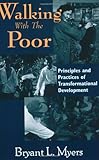
Walking With the Poor: Principles and Practices of Transformational Development (1999, 279 pgs) by Bryant Myers is a seminal book in Christian community development, perhaps the most often referred to book by Christian professors and practitioners.  His book tackles the big issue of human suffering and how we should view poverty and its causes, including how the the Kingdom of God impacts the world today to create a “better human future.”  In this review I will try to summarize the book as concisely as possible (it’s a dense, rich book) and offer a brief appraisal of its strengths and weaknesses.

Walking with the Poor begins by addressing Hiebert’s “The Flaw of the Excluded Middle,” including the sacred/secular divide promoted by the modern worldview.  The Church has been captivated by this separation, thinking Jesus is only for our spiritual life, and that God is not really concerned with the material or physical world.  What results is a dichotomy that fails to see that God cares about whole people and that Jesus is Lord of all areas of human life.  Myers explains,

We express our captivity to a modern worldview when we say that holistic ministry means combining evangelism (meeting spiritual need) with relief and development (meeting physical need) as if these were divisible realms and activities.  Then we make it worse by insisting that the church or the evangelism part of our organization do the former, while the development agency does the later.  By so doing we declare development independent of religion, something most of us do not really believe (7).  

Instead, Myers argues that people create society and society shapes people.  The “impact of the fall is on both the individual and the social system, and so the impact of the gospel of the kingdom must be on both” (49).  “The biblical story is the account of God’s project to restore the lives of individuals and communities, marred by sin, so that they can be good, just, and peaceful once again” (176).  People need to be reconciled to God, to self, to others, and to the environment.

Myers believes that the gospel is communicated through life, word, deed, and sign:

The gospel message is an inseparable mix of life, deed, word, and sign.  We are to be with Jesus (life) so that we can preach the good news (word), heal the sick (deed), and cast out the demons (sign)… Each dimension of the gospel message adds meaning to the others. Our life and deeds make our words intelligible; our words help people understand our life and deeds.  Life, word, and deed are signs of the living presence of someone greater than ourselves (134).

The “already” aspect of the kingdom of God is central in Myers’ paradigm of development, and embracing Jesus is the beginning a community’s “story.”  “Only by accepting God’s salvation in Christ can people and the community redirect the trajectory of their story towards the kingdom of God” (112).  And all people are invited to move towards the kingdom, which he defines as the better human future.  “The kingdom vision for the better human future is summarized by the idea of shalom: just, peaceful, harmonious, and enjoyable relationships with each other, ourselves, our environment, and God” (113). 

Christ’s redemptive work is cosmic in scope.  In Myers’ view,

God’s redeeming world does not separate individuals from social systems of which they are a part.  People come first, of course.  Changed people, transformed by the gospel and reconciled to God, are the beginning of transformation… At the same time, however, this individual response does not fully express the scope of God’s redemptive work (52).

Myers further believes that the local church is the center of God’s plan for transformational development (126-128).  [This is why I believe, in a pioneer setting where there is no church yet, we should see church planting as the foundational focus of mission. See Church Planting or Development? Word and Deed in Biblical Balance.]

Now we turn to the fundamental questions that Walking with the Poor addresses.  Moving people towards a better human future means having an understanding of these foundational issues.

  1. What is poverty?
  2. Why are “the poor” poor?
  3. What is transformational development?
  4. How do we work with the poor?
  5. How does Christian witness relate to transformational development?

1. What is poverty?

Poverty is a lot more complex than simply people being in deficit or lacking stuff.  Myers reviews both secular and Christian theorists who give their own definitions of poverty as:

  1. Entanglement - The poor live in a cluster of disadvantages that leave them physically weak, isolated, vulnerable, and helpless.  These dimensions make up a “poverty trap.”
  2. Lack of access to social power – The poor are excluded from the overlapping domains of state power, political power, social power, and economic power.  The values of those powers are so low for the poor that they cannot move out of poverty on their own.
  3. Disempowerment – The poor find themselves ensnared inside a system of disempowerment made up of cultural, societal, biophysical, spiritual, and personal systems.  The poor listen to a “web of lies” and are told by the world that they are God-forsaken.
  4. Lack of freedom to grow – The poor are wrapped in a series of restrictions and limitations in four areas of life: physical, mental, social, and spiritual.  People don’t have the freedom to reach their full potential.

None of these theories are complete but they are all important as they complement each other.  Poverty is a complex, multifaceted phenomena to which there are no easy answers.  Myers doubts that there will ever be a unified model of poverty.

He concludes that the nature of poverty is fundamentally relational:

Poverty is a result of relationships [with God, self, others, environment] that do not work, that are not just, that are not for life, that are not harmonious or enjoyable.  Poverty is an absence of shalom in all its meanings (86).

Understanding poverty as relationships that don’t work as they should is consistent with the biblical story as well.  The scope of sin affects every one of the five relationships in which every human lives: within ourselves, with community, with those we call “other,” with our environment, and with God (87).

And the cause of poverty is fundamentally spiritual:

Sin is what distorts these relationships.  Sin is the root cause of deception, distortion, and domination.  When God is on the sidelines or written out of our story, we do not treat each other well… Without a strong theology of sin, comprehensive explanations for poverty are hard to come by (88).

2. Why are “the poor” poor?

It is important to understand the multifaceted causes of poverty because our understanding of cause shapes our response:

Our understanding of the causes of poverty also depends on where we start looking at poverty, and more important, where we stop looking…  For example, if we are only concerned with needs, we will only seek lack of water.  Without further thought, lack of water is the cause of poverty and providing water is the answer.  However, behind needs are issues, such as ownership of the water.  If this is the cause of the lack of water, then the response is to work on ownership or access.  Yet behind issues there are structures, such as caste, that influence who gets access to water, and which often create insurmountable barriers to access.  Behind structures are groups who inhabit and enforce the structures by insisting that “it is our water and our right to control its use.”  Behind these groups are the ideologies and values that inform the group and shape the social structure, the unspoken assumptions that “we are to be served and they are subhuman and aren’t supposed to drink where we drink.” This is worldview.

This kind of social analysis deepens our understanding of what causes poverty… [But] at the end of the day, people are the cause of poverty, and it is people who must change for things to change (82-83).

3. What is transformational development?

The two goals of transformational development are 1) changed people and 2) just relationships.  By changed people he means a recovering of true identity and true vocation:

We must know who we and the purpose for which we were created.  Therefore, restoring identity and recovering vocation must be the focus of a biblical understanding of of human transformation.  The transforming truth is that the poor and non-poor are made in God’s image (identity) and are valuable enough to God to warrant the death of the Son in order to restore that relationship (dignity) and to give gifts that contribute to the well-being of themselves and their community (vocation) (115).

If poverty is the world trying to tell the poor they are god-forsaken, then transformation is the declaration that they are made in God’s image, that God allowed his Son to die for them, and that God has given gifts to the poor so that they can fulfill God’s creation mandate that they too may be fruitful and productive…

For a Christian understanding of development, restoring identity and vocation is the goal.  This is the only path that leads toward life and that hold the promise of shalom (117).

To move toward a better human future we must encourage and develop relationships that work, relationships that are just, peaceful, and harmonious.  This is the heart of shalom and the only way of leading toward abundant life for all.  Thus transformational development that enhances life works to promote relationships that work as well as they can in a world of fallen people.  Life and relationships are inseparable (120). 

4. How do we work with the poor?

In order to work for just relationships and a recovering of identity and vocation that leads to a better human future, we must work with the poor in ways that that empower them.  All the tools development practitioners use should be seen as tools that the community uses themselves in order for them to do their own social analysis, and not as tools outsiders use to plan.  We disempower the poor when we assume or communicate that we know more about their situation than they do.

Because social systems and human transformation are not linear, it is better to work from a vision-and-values approach instead of a planning-and-management approach.  We need to work with people, not with projects. “It can be argued that empowering participation is the single most critical element of transformation” (149).  The community itself needs to own the vision, and the values/philosophy of work should be biblically-based.

Two overarching approaches to development should be in reducing vulnerabilities and building capacitates.  Both must be done.  Only addressing one without the other will result in the community being frustrated.

5. How does Christian witness relate to transformational development?

For Myers, the gospel is a message of good news that must be verbally announced.  Although the goals of evangelism and transformational development are the same (changed people and changed relationships), evangelism focuses more narrowly on the relationship between man and God, while transformational development is more concerned with all relationships man has (with God, others, self, creation).  The gospel is the “best news” we have, better than making short work of dirty water, parasites, malnutrition, and poor agricultural production:

Our thinking and practice of transforming development must have an evangelistic intent, although this needs to be understood with some care.  This is not a call for proselytism; neither is it a call to coercive, manipulative, or culturally insensitive evangelism.  It is not even a call for all development practitioners to become evangelists… Rather, it is a call to be sure we do our development with an attitude that prays and years for people to know Jesus Christ (205).

Evangelism should happen the same way development does; people must be able to come to conclusions by themselves and have ownership of the truth they discover.  This happens best not by monologue (preaching down at people and thus disempowering them), but by question asking and dialogue. 

Because we are always witnessing to something (even without words), we must be sure that at the end of the day, God is the one who gets the credit.

Ultimately, the best of transformational development deeds are ambiguous.  Good development is being done every day by Buddhists, Muslims, and atheists.  The driving force for Christian witness in the context of transformational development is to be sure that credit is given where credit is due.  We must take great care that we point, not to our own sacrifices or professionalism, and to to the effectiveness of our development technology, but to the fact that the good deeds that create and enhance life in the community are evidence of the character and activity of the God of the Bible, the God whose Son makes a continuing invitation to new life and whose Spirit is daily at work in our world (244).

Some Concluding, Brief Observations

  • Highly theoretical and theological book.  Short on stories and examples.  It’s not for everyone.
  • Repetitive. Said some things over and over. And over.
  • Dense and deep.  Made me think a lot.  I wish I would have read it a couple years ago when I started working in development.  I feel my capacity for social analysis and identifying the causes of poverty has been greatly enhanced.
  • There could have been more said about our motivation and power for working with the poor.  See Generous Justice: How God's Grace Makes Us Just.
  • Myers didn’t place hardly any emphasis on man’s rebellion being primarily an offense against God.  For a book as theologically based as this was, and for a book that talked a lot about sin, I was also surprised that the topic of hell was never mentioned.  The discussion of sin was basically about the human effects of sin- and Myer’s main paradigm was the gospel for a “better human future.”  But to be fair, the book was about development work.
  • Walking With the Poor is an excellent book for building a framework to understand “the poor” and poverty alleviation.  Overall, I recommend this book even for people who don’t work in development.

Monday, December 6, 2010

Three Journeys: Jesus, Constantine, and Mohammed

An interesting essay by David Shenk called Three Journeys: Jesus - Constantine - Muhammad.  The essay addresses three different views of peace in our world today. (Shenk writes from the Anabaptist perspective.  One of my favorite comparative books is his Journeys of the Muslim Nation and the Christian Church.) 

The real value of the essay is in contrasting the journey Jesus took to the Cross with the journey Mohammed took to become a Statesman.  The kingdom of God is so radically different from the kingdoms of this world!

HT: Daniel S.

Sunday, November 21, 2010

Does the “Kingdom” Make Sense to Muslims?

Why do we hear the Synoptic Gospels talk so much about the Kingdom but then the Epistles talk so much about Jesus?  Newbigin explains (chapter 5):

In Jesus the kingdom is present.  That is why the first generation of Christian preachers used a different language from the language of Jesus: he spoke about the kingdom, they spoke about Jesus.  They were bound to make this shift of language if they were to be faithful to the facts.  It was not only that the phrase “kingdom of God” in the ears of a pagan Greek would be almost meaningless, having none of the deep reverberations that it evoked from someone nourished on the Old Testament.  It was that the kingdom, or kingship, of God was no longer a distant hope or a faceless concept.  It had now a name and a face – the name and face of the man from Nazareth.

Sometimes I feel that my “Kingdom” talk has the same effect on Muslims as it did on first century Greeks.  In my experience, Muslims interpret “Kingdom of God” as simply meaning “God’s Creation.”  I know kingdom talk is quite popular in Muslim ministry these days, but can anyone else relate to this issue I’m having? 

In any case, it is always a sure thing to just talk about Jesus.

Related Post: The Kingdom, the Cross, and the Church

Saturday, July 3, 2010

A Healthy Theology of Healing

No matter where you stand on the issue of spiritual gifts and healing, if you work with Muslims you know that this is a very important topic!  Phil Moore, of Queen's Road Church (London, UK) has done us all an excellent service in the following article (particularly his diagrams).  Please have a look and let me know what you think...

Friday, June 4, 2010

The Kingdom, the Cross, and the Church

I like all the “kingdom" talk going on these days, especially as it relates to Muslim Ministry: we are not spreading “Christianity,” but the gospel of the Kingdom.  The “Kingdom Circles” presentation can be a very helpful evangelistic tool (if modified slightly and used correctly).  To learn more about the Kingdom Circles presentation see the bottom of this article or http://kingdomcircles.net/ or here

There are times, however, when I feel that the Kingdom of God is presented Cross-less and Church-less.  I think this is a disservice to Muslims.  What is it that makes living in the Kingdom even possible?  And what is life in the Kingdom?  Ironically, a kingdom without the Cross is just another “religion.”

Here is a post from Greg Gilbert on the relationship between the cross and the kingdom that clarifies this point (HT: JT):

The kingdom is an incredibly important theme in the Bible, and it’s good that evangelicals are thinking hard about it. But it seems to me that far too often when evangelicals start talking about the kingdom, there’s an almost reactionary tendency not to say much about the cross. It’s almost like it’s a different story, and we can’t figure out very well how the cross fits into this story of the kingdom. So we manage to create in our thought and conversation a rift between the cross and the kingdom, with cross over here and kingdom over there and everyone crouching on one side or the other of the chasm, sneering suspiciously at each other.

I don’t think the Bible leaves us with such a division, though. Here’s why: The only way into the Kingdom is through the Cross. Yes, Jesus came to inaugurate a kingdom which will one day be established with perfect justice and righteousness. But that is good news only because he also came to save a people from the wrath of God so that they could be citizens of that kingdom, and the way he did that was by dying in the place of those people for their sin. Jesus is not just King; He is Suffering King.

Put another way, it is the cross—and the cross alone—which is the gateway to the blessings of the kingdom. That’s how you put all this together. You don’t get the blessings of the kingdom unless you come into them through the blood of the King. Therefore if you preach a sermon or write a chapter on the good news of the kingdom, but neglect to talk about the cross, you’ve not preached good news at all. You’ve just shown people a wonderful thing that they have no right to be a part of because they are sinners. That’s why we never see Jesus preaching, “The kingdom of God has come!” No, it’s always, “The kingdom of God has come! Therefore repent and believe!” He didn’t just preach the coming of the kingdom. He preached the coming of the kingdom and the way people could enter it.

So by all means, preach about the kingdom, talk about Jesus’ conquest of evil, write about his coming reign. But don’t pretend that all those things are glorious good news all by themselves. They’re not. The bare fact that Jesus is going to rule the world with perfect righteousness is not good news to me; it’s terrifying news, because I am not righteous! I’m one of the enemies he’s coming to crush! The coming kingdom becomes good news only when I’m told that the coming King is also a Savior who forgives sin and makes people righteous—and he does that through his death on the cross. Ignore that, downplay it, shove it out of the center of the gospel, and you make the whole thing not good news at all, but a terrifying message of judgment to rebellious sinners.

Now here is the relationship between the church and the kingdom from Grudem's Systematic Theology (pg. 863, I reformatted and underlined for clarity):

What is the relationship between the church and the kingdom of God? The differences have been summarized well by George Ladd's A Theology of the New Testament:

The Kingdom is primarily the dynamic reign or kingly rule of God, and, derivatively, the sphere in which the rule is experienced. In biblical idiom, the Kingdom is not identified with its subjects. They are the people of God’s rule who enter it, live under it, and are governed by it. The church is the community of the Kingdom but never the Kingdom itself. Jesus’ disciples belong to the Kingdom as the Kingdom belongs to them; but they are not the Kingdom. The Kingdom is the rule of God; the church is a society of men (pg, 111). 

Ladd goes on to summarize five specific aspects of the relationship between the kingdom and the church:

  1. The church is not the kingdom (for Jesus and the early Christians preached that the kingdom of God was near, not that the church was near, and preached the good news of the kingdom, not the good news of the church: Acts 8:12; 19:8; 20:25; 28:23, 31).
  2. The kingdom creates the church (for as people enter into God’s kingdom they become joined to the human fellowship of the church).
  3. The church witnesses to the kingdom (for Jesus said, “this gospel of the kingdom will be preached throughout the whole world,” Matt. 24:14).
  4. The church is the instrument of the kingdom (for the Holy Spirit, manifesting the power of the kingdom, works through the disciples to heal the sick and cast out demons, as he did in the ministry of Jesus: Matt. 10:8; Luke 10:17).
  5. The church is the custodian of the kingdom (for the church has been given the keys of the kingdom of heaven: Matt. 16:19) (pgs. 111-19)

Therefore we should not identify the kingdom of God and the church (as in Roman Catholic theology), nor should we see the kingdom of God as entirely future, something distinct from the church age (as in older dispensational theology). Rather, we should recognize that there is a close connection between the kingdom of God and the church.

  • As the church proclaims the good news of the kingdom, people will come into the church and begin to experience the blessings of God’s rule in their lives.
  • The kingdom manifests itself through the church, and thereby the future reign of God breaks into the present (it is “already” here: Matt. 12:28; Rom. 14:17; and “not yet” here fully: Matt. 25:34; 1 Cor. 6:9–10).
  • Therefore those who believe in Christ will begin to experience something of what God’s final kingdom reign will be like: they will know some measure of victory over sin (Rom. 6:14; 14:17), over demonic opposition (Luke 10:17), and over disease (Luke 10:9). They will live in the power of the Holy Spirit (Matt. 12:28; Rom. 8:4–17; 14:17), who is the dynamic power of the coming kingdom.  Eventually Jesus will return and his kingdom reign will extend over all creation (1 Cor. 15:24–28).

Muslims need it all; the Kingdom, the Cross, and the Church.  Let’s not sell them short.