Friday, January 22, 2010

The Center of the Whole Bible

[Click through to Circumpolar to get the video.]

In Grad School one of my professors referred to D.A. Carson as the Michael Jordan of biblical theology.  Since then I have read a few of his books.  He is pretty cool.  So when he comes out with a teaching sermon titled, “The Center of the Whole Bible,” it’s going to get my attention.

The center he proposes is Romans 3:21-26.  Carson’s four main points are below.  “If you get these four points well and truly absorbed into your way of thinking about the cross you’ll find it transforming.”

1.  Paul sets forth the revelation of God’s righteousness in its relationship to the Old Testament. Rom. 3:21

But now the righteousness of God has been manifested apart from the law, although the Law and the Prophets bear witness to it—

2.  Paul sets forth the availability of God’s righteousness to all human beings without racial distinction, but on condition of faith. Rom. 3:22-23

the righteousness of God through faith in Jesus Christ for all who believe. For there is no distinction: for all have sinned and fall short of the glory of God,

3.  Paul sets forth the source of God’s righteousness in God’s gracious provision of Christ Jesus as the propitiation for our sins. Rom. 3:24-25a

and are justified by his grace as a gift, through the redemption that is in Christ Jesus, whom God put forward as a propitiation by his blood, to be received by faith.

4.  Paul sets forth the demonstration of God’s righteousness in the cross of Christ. Rom. 3:25b-26

This was to show God’s righteousness, because in his divine forbearance he had passed over former sins. It was to show his righteousness at the present time, so that he might be just and the justifier of the one who has faith in Jesus.

Download the audio or the video.  Made available through the Resurgence.

Wednesday, January 20, 2010

Muslim Followers of Jesus? continued

Following Jesus from The Global Conversation on Vimeo.

Is it possible to find salvation in Jesus Christ and also be a faithful Muslim?” 

This is easily the hottest topic in global missiology right now.

Muslims comprise 1/4 of the world’s population and are perhaps the most resistant religious group to the gospel.  So in talking about our unfinished mission of making disciples of all nations, this topic was bound to come up at some point.  Unfortunately, most of the conversation is very emotional and uncivil with shallow thinking on the subject itself.  Just see these responses.

This is a continuation of my previous post Muslim Followers of Jesus? Lausanne Global Conversation.  The brief articles included in the conversation are:

  • Joseph Cumming (Main Article) - Muslim Followers of Jesus?
  • Martin Accad - Away with Sterile Debates!
  • John Azumah - The Main Question is Identity
  • Mazhar Mallouhi - A Muslim Follower of Jesus
  • John Travis - God is Doing Something New
  • Phil Parshall - The Bible is Our Guide

    There are presently over 50 subscribers to this blog.  I am very interested to hear from you and what your thoughts are on this topic.  Go ahead and leave your comments!

    Related:

  • Identity and Community
  • Defining Cultural and Religious Identity
  • Sunday, January 17, 2010

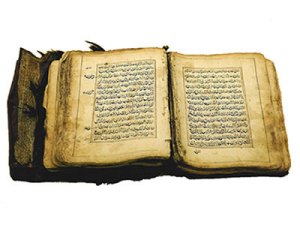
    The Islamic View of the Transmission of the Qur’an

    Below is a concise, accurate presentation about how the Qur’an was written down, according to majority Islamic belief:

    Question

    There were many versions of the Qur’an all of which were burnt by Uthman (R.A.) except for one. Therefore is it not true that the present Qur’an is the one compiled by Uthman (R.A.) and not the original revelation of God?
    quran-old

    Answer

    One of the most common myths about the Qur’an, is that Hazrath Uthman (R.A.), the third Caliph of Islam authenticated and compiled one Qur’an, from a large set of mutually contradicting copies. The Qur’an, revered as the Word of Allah (swt) by Muslims the world over, is the same Qur’an as the one revealed to Prophet Muhammad (Pbuh). It was authenticated and written under his personal supervision. We will examine the roots of the myth, which says that Uthman (R.A.) had the Qur’an authenticated.

    1. Prophet Muhammad (Pbuh) himself supervised and authenticated the written texts of the Qur’an

    Whenever the Prophet received a revelation, he would first memorise it himself and later declare the revelation and instruct his Companions who would also memorise it. The Prophet would immediately ask the scribes to write down the revelation he had received, and he would reconfirm and re-check it himself. Prophet Muhammad (Pbuh) was an Ummi who could not read and write. Therefore, after receiving each revelation, he would repeat it to his Companions. They would write down the revelation, and he would re-check by asking them to read what they had written. If there was any mistake, the Prophet would immediately point it out and have it corrected and re-checked. Similarly he would even re-check and authenticate the portions of the Qur’an memorised by the Companions. In this way, the complete Qur’an was written down under the personal supervision of the prophet (Pbuh).

    2. Order and sequence of Qur’an divinely inspired

    The complete Qur’an was revealed over a period of 23 years portion by portion, as and when it was required. The Qur’an was not compiled by the Prophet (Pbuh) in the chronological order of revelation. The order and sequence of the Qur’an too was Divinely inspired and was instructed to the Prophet (Pbuh) by Allah (swt) through Archangel Gabriel. Whenever a revelation was conveyed to his companions, the Prophet (Pbuh) would also mention in which Surah (chapter) and after which ayat (verse) this new revelation should fit.

    Every Ramadan, all the portions of the Qur’an that had been revealed, including the order of the verses, were revised and reconfirmed by the Prophet (Pbuh) with Archangel Gabriel. During the last Ramadan, before the demise of the Prophet (Pbuh), the Qur’an was rechecked and reconfirmed twice.

    It is therefore clearly evident that the Qur’an was compiled and authenticated by the Prophet (Pbuh) himself during his lifetime, both in the written form as well as in the memory of several of his Companions.

    3. Qur’an copied on one common material

    The complete Qur’an, along with the correct sequence of the verses, was present during the time of the Prophet (Pbuh). The verses however, were written on separate pieces, scrapes of leather, thin flat stones, leaflets, palm branches, shoulder blades, etc. After the demise of the Prophet (Pbuh), Abu Bakr (R.A.), the first caliph of Islam ordered that the Qur’an be copied from the various different materials on to a common material and place, which was in the shape of sheets. These were tied with strings so that nothing of the compilation was lost.

    4. Uthman (R.A.) made copies of the Qur’an from the original manuscript

    Many Companions of the Prophet (Pbuh) used to write down the revelation of the Qur’an on their own whenever they heard it from the lips of the Prophet (Pbuh). All the verses revealed to the Prophet (pbuh) may not have been heard personally by all the Companions. There were high possibilities of different portions of the Qur’an being missed by different Companions. This gave rise to disputes among Muslims regarding the different contents of the Qur’an during the period of the third Caliph Uthman (R.A.).

    Uthman (R.A.) borrowed the original manuscript of the Qur’an, which was authorised by the beloved Prophet (Pbuh), from Hafsah (may Allah be pleased with her), the Prophet’s (Pbuh) wife. Uthman (R.A.) ordered four Companions who were among the scribes who wrote the Qur’an when the Prophet (Pbuh) dictated it, led by Zaid bin Thabit (R.A.) to rewrite the script in several perfect copies. These were sent by Uthman (R.A.) to the main centres of Muslims.

    There were other personal collections of the portions of the Qur’an that people had with them. These might have been incomplete and with mistakes. Uthman (R.A.) only appealed to the people to destroy all these copies, which did not match the original manuscript of the Qur’an in order to preserve the original text of the Qur’an. Two such copies of the copied text of the original Qur’an authenticated by the Prophet are present to this day, one at the museum in Tashkent in erstwhile Soviet Union and the other at the Topkapi Museum in Istanbul, Turkey.

    5. Diacritical marks were added for non-Arabs

    The original manuscript of the Qur’an does not have the signs indicating the vowels in Arabic script. These vowels are known as tashkil, zabar, zair, paish in Urdu and as fatah, damma and qasra in Arabic. The Arabs did not require the vowel signs and diacritical marks for correct pronunciation of the Qur’an since it was their mother tongue. For Muslims of non-Arab origin, however, it was difficult to recite the Qur’an correctly without the vowels. These marks were introduced into the Qur’anic script during the time of the fifth ‘Umayyad’ Caliph, Malik-ar-Marwan (66-86 Hijri/685-705 C.E.) and during the governorship of Al-Hajaj in Iraq.

    Some people argue that the present copy of the Qur’an that we have along with the vowels and the diacritical marks is not the same original Qur’an that was present at the Prophet’s time. But they fail to realise that the word ‘Qur’an’ means a recitation. Therefore, the preservation of the recitation of the Qur’an is important, irrespective of whether the script is different or whether it contains vowels. If the pronunciation and the Arabic is the same, naturally, the meaning remains the same too.

    6. Allah Himself has promised to guard the Qur’an

    Allah has promised in the Qur’an: “We have, without doubt, sent down the Message; and We will assuredly Guard it (from corruption).” The Holy Qur’an, Chapter 15, Verse 9

    Dr. Zakir Naik

    Related

    Wednesday, January 13, 2010

    Showing the Spirit

    Almost everyday I feel like I don’t know what I’m doing trying to advance the gospel among Muslims.  The last few years I have been yearning for God to make that possible.  And yearning for more of God has at times led me to a deeper understanding of the gift of the Holy Spirit in my life.

    One short book that helped me last year was Forgotten God: Reversing Our Tragic Neglect of the Holy Spirit by Francis Chan.

    Another book I am reading from tonight is Showing the Spirit by D.A. Carson.  This quote below was especially encouraging and instructional in a “big picture” kind of way so I thought I would pass it on to you in the hope that a deeper understanding of the enabling presence of God through the Holy Spirit would stimulate your ministry to Muslims.

    The rest of this post is a block quote from Carson:

    “Under the old covenant, God dealt with his people in what we might call a tribal fashion. Despite remnant themes, the Scriptures picture God working with his people as a tribal grouping whose knowledge of God and whose relations with God were peculiarly dependent on specially endowed leaders. The Spirit of God was poured out, not on each believer, but distinctively on prophet, priest, king, and a few designated special leaders such as Bezalel. When these leaders stooped to sin (e.g., David’s affair with Bathsheba and consequent murder of Uriah) the people were plunged into the distress of divine judgment.

    But Jeremiah foresaw a time when this essentially tribal structure would change.

    “In those days people will no longer say, ‘The fathers have eaten sour grapes, and the children’s teeth are set on edge.’

    Instead, everyone will die for his own sin; whoever eats sour grapes— his own teeth will be set on edge.”

    “The time is coming,” declares the Lord, “when I will make a new covenant with the house of Israel and with the house of Judah.

    It will not be like the covenant I made with their forefathers.…

    This is the covenant I will make with the house of Israel after that time,” declares the Lord. “I will put my law in their minds and write it on their hearts. I will be their God, and they will be my people. No longer will a man teach his neighbor, or a man his brother, saying, ‘Know the Lord,’ because they will all know me, from the least of them to the greatest,” declares the Lord.

    “For I will forgive their wickedness and will remember their sins no more.” (Jer. 31:29–34)

    In short, Jeremiah understood that the new covenant would bring some dramatic changes. The tribal nature of the people of God would end, and the new covenant would bring with it a new emphasis on the distribution of the knowledge of God down to the level of each member of the covenant community. Knowledge of God would no longer be mediated through specially endowed leaders, for all of God’s covenant people would know him, from the least to the greatest. Jeremiah is not concerned to say there would be no teachers under the new covenant, but to remove from leaders that distinctive mediatorial role that made the knowledge of God among the people at large a secondary knowledge, a mediated knowledge. Under the new covenant, the people of God would find not only that their sins were forgiven but that they too would know God in a more immediate way.

    The same kind of hope is set forth by Ezekiel, who quotes the sovereign Lord in these terms:

    “I will sprinkle clean water on you, and you will be clean; I will cleanse you from all your impurities and from all your idols. I will give you a new heart and put a new spirit in you; I will remove from you your heart of stone and give you a heart of flesh. And I will put my Spirit in you and move you to follow my decrees and be careful to keep my laws.” (Ezek. 36:25–27, italics added; see 11:19–20)

    Elsewhere, we read:

    “I will pour water on the thirsty land, and streams on the dry ground; I will pour out my Spirit on your offspring, and my blessing on your descendants.

    They will spring up like grass in a meadow, like poplar trees by flowing streams. One will say, ‘I belong to the Lord’; another will call himself by the name of Jacob; still another will write on his hand, ‘The Lord’s,’ and will take the name of Israel.” (Isa. 44:3–5)

    The same theme pervades many Old Testament texts that anticipate what we might generically label the messianic age. Moses himself recognizes that the desideratum [something desired as essential] was a universal distribution of the Spirit; for when Joshua complains to him that Eldad and Medad are prophesying in the camp and indignantly demands that they be stopped, the aged leader responds, “Are you jealous for my sake? I wish that all the Lord’s people were prophets and that the Lord would put his Spirit on them!” (Num. 11:27–29).

    It is of this that Joel prophesies (Joel 2:28–32 in English versions); and according to Peter, it is this that is fulfilled on the day of Pentecost (Acts 2). But that means Joel’s concern is not simply with a picky point—more people will prophesy some day—but with a massive, eschatological worldview. What was anticipated was an entirely new age, a new relationship between God and his people, a new covenant; and experientially this turns on the gift of the Spirit. Put more generically, what the prophets foresaw was what some have labeled “the prophetic Spirit.” All who live under this new covenant enjoy the gift of this prophetic Spirit; and this is no mere creedal datum, but a lived, transforming, charismatic (in the broad, New Testament sense of that word identified in my first chapter), vital experience. It is in that sense that all who live under the new covenant are prophets: they enjoy this enduement of the Spirit, with various rich and humbling manifestations distributed among them.

    It is the dawning of the new age that was signaled by Pentecost, and that is why Peter’s quotation of Joel’s prophecy is so significant. According to all four Gospels, John the Baptist predicted that Jesus Messiah would usher in that age: he would baptize his people in the Holy Spirit. Jesus, especially in the Gospel of John, explicitly connects his death, resurrection, and exaltation with the coming of the Spirit. His return to the Father via the cross and the empty tomb is the necessary condition for the Spirit’s coming (e.g., John 7:39; 16:7). Indeed, the Holy Spirit, that “other Counselor,” is in certain respects Jesus’ replacement during this period between the “already” and the “not yet” so characteristic of New Testament eschatology; he is the means by which the Father and the Son continue to manifest themselves to believers (e.g., John 14:23). The same theme is picked up by Peter on the day of Pentecost: “Exalted to the right hand of God, [Jesus] has received from the Father the promised Holy Spirit and has poured out what you now see and hear” (Acts 2:33). It has been shown in some detail that for Luke the coming of the Spirit is not associated merely with the dawning of the new age but with its presence, not merely with Pentecost but with the entire period from Pentecost to the return of Jesus the Messiah” (pg. 151-155).

    Monday, January 11, 2010

    Jesus as The Word of God

    In the Qur’an, Jesus is called the Word of God (3:39, 45; 4:51).  Muslims take this to mean that God spoke and Jesus was.  Thus the Prophet Jesus is the “Word of God” because he was miraculously conceived in Mary simply by God’s speech:

    "She (Mary) said: ‘O my Lord! How shall I have a son when no man has touched me.' He (God) said: ‘So (it will be) for God creates what He wills. When He has decreed something, He says to it only: ‘Be!'- and it is" (3:47).

    "Verily, the likeness of Jesus in God's Sight is the likeness of Adam. He (God) created him from dust, then (He) said to him: ‘Be!'-and he was" (3:59).

    Here is how John 1 uses this title for Jesus:

    “To the Greeks the ‘logos’ was the purpose or meaning of existence. To the Jews the ‘logos’ was God’s Word — the truth or moral absolutes at the foundation of all reality. In the beginning of his gospel John addresses both world-views when he speaks of a divine ‘Word’ that was the source and foundation of all creation. But then he says something that floods the banks and bursts the boundaries of all human categories. He tells Jews that the truth and self-expression of God has become human. He tells Greeks that the meaning of life and all existence has become human. Therefore, only if you know this human being will you find what you hoped to find in philosophy or even in the God of the Bible. The difference [between any other great figure and Jesus] is the difference between an example of living and one who is the life itself.”

    – Charles Williams, quoted by Timothy Keller in Gospel Christianity, Course 1 (Redeemer Presbyterian Church, 2003), 49-50.

    HT: Of First Importance

    Sunday, January 10, 2010

    Let Your Conscience Be Your Guide?

    At the Common Ground (Insider) conference I asked this question to the presenters, “Where I live, Islam is all about Mohammed and he is highly venerated.  How can a Muslim who comes to faith in Christ remain in Islam if Mohammed is viewed as the savior?”  The answer I got was, “Well, that is up to the Muslim Believer to decide.  His conscience will guide him.

    I have struggled in forming a biblical view of conscience for years.  Below is generally the principle I have held to, articulated in David Mays’ book notes on 10 Dumb Things Smart Christians Believe.  Listed as the 7th dumbest(sp?) thing is “Let Your Conscience Be Your Guide:”

    "The idea that our conscience is a trustworthy moral guide is a myth." (108) "Our conscience doesn't tell us if we're violating God's standards. It tells us when we're violating our standards." (109) "Our conscience is also easy to reset." (110) Our sin nature clouds our understanding of spiritual truth and God's leading. It puts static on the line and creates spiritual blind spots. Over time, if we continue in sin, it can become callused and loses its sensitivity. Our ability to feel guilt goes away. (115) Prisons are full of people who let their conscience guide them. And the same is true in church. Business people break their word to make a deal. They think they have to. Many times someone's conscience is clear because it is no longer working. Our conscience is a valuable early warning device, a yellow light. But it's a terrible green light.

    I have never seen a really good article on the biblical view of conscience.  Does anyone know of one?

    Saturday, January 9, 2010

    A Muslim’s View of Christian “Missionaries”

    Thought this was an interesting article of one Muslim’s interpretation of Christian “missionary” activity called Christian Missionaries Sweeping the Islamic World.  For example the article starts like this:

    Let us first discuss some of the new ways that Christian missionaries are using in the Islamic world, these new methods have been applied because the old methods did not prove as effective as the Christian missionaries thought they were. Some of the problems were the great gap between Islam and Christianity such as the principle of trinity and escalation of Jesus PBUH. Some of these new ways are :-

    1) Misguiding, making similar, lying (taDDlel, khida3, labs Al-7aqaiq) Many books have been written for Muslims, keeping the belief of Muslims, their ideas and general princeples in mind. The book “shahadat Al-Quran” which was distributed all around the Islamic world, even in Saudi Arabia. This book was taken from the book “The Lord is one” for Zakariya Boutros. This book talks about the similarities between Islam and Christian faith. They, for example, quote the verse that refers to prophet Jesus PBUH as a prophet, a word and a spirit. They say that is originaly the same trinity! Of course this is a false interpretation, a lie. Allah said he blew in Adam of his own spirit, allah gave his word to Moses, David, Ibraham, Adam, Mohammad PBUT and not only to Jesus. The missionaries base this whole theory on the fact that there are three nouns, ie just because of the number. One of their other arguments that they say that “In the name of Allah, the most gracious, the most merciful” means three gods!! not one! that is a worst liethan the one before, they ignore that Allah has 99 names that we know, and many more that Allah promised to tell his prophet at the day of judgment…

    Read the whole thing.

    HT: John Stringer

    Thursday, January 7, 2010

    Review of Woman to Woman: Sharing Jesus with a Muslim Friend

    Woman to Woman: Sharing Jesus with a Muslim Friend, by Joy Loewen   Forward by Brother Andrew   (Buy)

    Woman to Woman, Sharing Jesus with a Muslim Friend, Joy Loewen, 978-0-8007-9483-5

    Chosen Books, January 2010, 208 pages, ISBN 978-0-9483-5

    I believe this book will revolutionize our approaches in reaching the Muslim women with the genuine love of Christ.” – Samuel Naaman, D.Miss., Department of World Missions and Evangelism, Moody Bible Institute, Chicago

    This book is more than delightful - it is a `must read' for men as well as women. Why? If we fail to grasp the message of this book we will never really understand Muslims or their culture at all. So, whatever good books are on your reading list, move this one to the front. It will be worth it!” -Dr. Ed Hoskins, Physician and author of "A Muslim's Heart"

    Woman to Woman is a book that primarily uses narrative to show how to help Christian women befriend and share Christ with Muslim women who are living in North America.  The book has a dual purpose; (1) to introduce the reader to the personal lives of Muslim women, and (2) to introduce the reader to a North American woman’s journey of discovering and embracing the lives of Muslim women.  So the book is as much about the author as it is about Muslim women. 

    Thankfully, the author Joy Loewen is a shining example of a missional Christ-follower who has more than 30 years experience in Muslim ministry.  Woman to Woman is not a formal treatise on Muslim evangelism, but a series of enjoyable and interesting stories that pauses frequently to explain issues related to the lives of Muslims that average church-goers in America might not understand.  The tone of the book and Joy’s approach towards Muslims is irenic, sensitive, and respectful. 

    The intended audience of the book is for those who care about Muslims but who have little or no understanding of non-western culture or the Islamic worldview.  In a time where approximately 20% of Muslim Background Believers (MBBs) in the world are female, more books like this are timely.  (I have heard the most unreached bloc of people on the planet are Muslim women.)

    Being of such an introductory nature, I think the book would be more accessible if it were shorter.  I would have also appreciated more discussion around the issues of trying to integrate MBBs into the church, and more examples of contextual witness and church planting.  But again, the book is mainly a first read for a Christian woman who is curious about the Muslim women living around her.  For this kind of reader I recommend Woman to Woman because it could help many “move from fear to love and compassion.”

    Monday, January 4, 2010

    The Role of Works in Salvation

    From the January 2010 issue of EMQ, A Muslim-Christian Dialogue on Salvation: The Role of Works, by Paul Martindale:

    One principle of effective witness with Muslims is listening and allowing them to identify the issues which they find important in the discussion. It is then up to us to formulate our biblical understanding for them in those areas. At a recent meeting betwaeen [sic] Muslims and Christians on the topic of salvation, the role of works became central in the ensuing discussion.

    The two main objections expressed by the Muslims present centered upon the apparent lack of works necessary for salvation in Christianity and the carte blanche Christians seem to have for sin in their lives after conversion…

    Both the Muslims and the Christians present were in agreement on the following formulation for the role of works:

    ISLAM
    Faith + Works + Allah’s Mercy = Salvation

    CHRISTIANITY
    Faith + Grace = Salvation + Works

    …Our dialogue with Muslims has forced us to clarify our theology of works. The biblical emphasis we place on faith and grace in salvation is certainly appropriate. However, this is not true when it is taken to the extent that the role of works in the life of the believer is ignored or becomes extinguished in our theology or praxis. For Muslims, this appears to be a central issue, and they need to see how the role of works is affirmed in Christianity…

    Read the whole thing (requires a subscription to EMQ).

    I would probably add to this the need to teach Muslims about regeneration- we receive new spiritual life when we are “born again.”  Our natures, lives, and desires and completely changed when we come to Christ.

    We are not just trying to get Muslims to make a decision for Christ; we are trying to get them to change their affections to Christ.  Aim for a heart change.  Instead of simply asking, “How can this Muslim get saved?”, the question should be, “How can this Muslim become a follower of Jesus?”  Disciples who embrace Christ as their supreme treasure are heaven-bound; but those who insincerely make a decision for “an easy road to heaven” may not.

    Sunday, January 3, 2010

    Preventing Discouragement and Keeping Church Planters Productive on the Field

    From the EMQ January 2010 issue: Preventing Discouragement and Keeping Church Planters Productive on the Field, by David A. Diaso:

    The responses to a survey I conducted [of 180 workers interviewed] demonstrated that church planters are more likely to be motivated to continue if the following are in place:

    • a clear definition of the criteria for success;
    • a clear description of tasks required to plant a church;
    • training, coaching, and mentoring in tangible church-planting principles; and  
    • consistent encouragement and feedback from the mission agency and team leader/supervisor.

    Diaso then gives 4 recommendations based on his research:

    1. Mission agencies and team leaders/supervisors must provide a clear definition of the criteria for success.
    2. Mission agencies need to provide for a clear description of tasks required to plant a church.
    3. Mission agencies need to provide training, coaching, and mentoring in tangible church-planting principles.
    4. Mission agencies and team leaders/supervisors need to provide consistent encouragement and feedback.

    Read the whole thing (requires a subscription to EMQ).

    Wednesday, December 30, 2009

    Three Reasons the Church in Iran is Growing

    clip_image001[4]

    Iran Open Hearts in a Closed Land

    Mark Bradley

    Authentic, 2007, 114 pp., ISBN 978-1-85078-770-9

    To order this book click here.  

    From David Mays book notes:

    Mark Bradley gives a very concise and readable overview of the historical and current reasons Iran is so closed to the Gospel and why the hearts of the people are so open to Jesus.  The author also recommends a very attractive 30-day prayer guide for Iran.   See it at www.iran30.org

    While the Iranian government is actively strangling the established churches, the underground churches are growing.  Its continued growth is likely for three reasons.  One, it is very secretive and hidden from authorities.  Two, the churches are very active and vibrant.  Most have never been in a church building, so Christianity grows up around the Scripture, spreads by relationships, and takes on natural cultural forms.  Three, new members recognize the urgency of telling others and take on a sense of ownership very quickly.

    Read all David’s notes on the book.  Buy the book.

    Wednesday, December 23, 2009

    Why do Muslims Send Prayers on the Prophet Mohammed?

    You can read about it here (I tried to make it more readable):

    Of the greatest blessings that Allah (ta’ala) has given to mankind is sending the Prophet (sal Allahu alayhi wa sallam) as our guide and the Qur’an as our Book.

    With the exception of Muhammad (sal Allahu alayhi wa sallam), every Prophet and Messenger sent by Allah (azza wa jal) was sent to a specific nation for a specific time period. Allah (ta’ala) chose Muhammad (sal Allahu alayhi wa sallam) as the Messenger for all the worlds and raised his status and mention among all of mankind.

    Allah (ta’ala) describes this bounty that He gave to the Prophet (sal Allahu alayhi wa sallam) in the Qur’an,

    وَرَفَعْنَا لَكَ ذِكْرَكَ

    and We have raised for you your mention. (94:4)

    We bear witness five times a day that he is the Messenger of Allah, we send peace upon him during our prayers, we open our gatherings with his mention after the mention of Allah (azza wa jal) and we ask Allah to bless him before we make a duaa [prayer request]. All of these acts show that we bear witness that he (sal Allahu alayhi wa sallam) delivered the message. Bearing witness that he delivered the message necessitates his love, his obedience and sending salah when he is mentioned, sal Allahu alayhi wa sallam.

    Allah (azza wa jal) says,

    إِنَّ اللَّهَ وَمَلَائِكَتَهُ يُصَلُّونَ عَلَى النَّبِيِّ يَا أَيُّهَا الَّذِينَ آمَنُوا صَلُّوا عَلَيْهِ وَسَلِّمُوا تَسْلِيمًا

    Allah and His angels send blessings on the Prophet: O you that believe! Send your blessings on him, and salute him with all respect. (33:56)

    The ayaat in the Qur’an that commands the believers to do good deeds or refrain from evil actions begins with “Ya ayyuhal latheena aamano”, “O you who have believed” however this ayah does not begin in this way. Rather, Allah (ta’ala) mentions that He and His Angels send blessings and greetings on the Prophet (sal Allahu alayhi wa sallam) first before calling the Believers to follow. Allah (subhanahu wa ta’ala) calls the believers, because of your emaan [faith], send salah and salaam on the Messenger. The Scholars of tafseer [interpretation] state that this is to show the honorable and elevated status of the Prophet (sal Allahu alayhi wa sallam) as well as to show the honor in the act of sending salah on him. If Allah and His Angels do this action, it should motivate the Believers to do so as well…

    Why do we Send Salawat [Prayers] on the Prophet?

    If a close relative of ours passed away, such as a parent or a sibling, we would vehemently ask Allah to forgive them, to grant them security, and to enter them into Jannah [paradise]. The Believers are those who love the Prophet (sal Allahu alayhi wa sallam) more than their family, wealth and their own selves so just as we would ask Allah to forgive and bless our relative, we should send prayers upon our Messenger (sal Allahu alayhi wa sallam) who, by the bounty and mercy of Allah, has taught us our faith. Allah azza wa jal says,

    هُوَ الَّذِي بَعَثَ فِي الْأُمِّيِّينَ رَسُولًا مِّنْهُمْ يَتْلُو عَلَيْهِمْ آيَاتِهِ وَيُزَكِّيهِمْ وَيُعَلِّمُهُمُ الْكِتَابَ وَالْحِكْمَةَ وَإِن كَانُوا مِن قَبْلُ لَفِي ضَلَالٍ مُّبِينٍ وَآخَرِينَ مِنْهُمْ لَمَّا يَلْحَقُوا بِهِمْ وَهُوَ الْعَزِيزُ الْحَكِيمُ ذَ‌ٰلِكَ فَضْلُ اللَّهِ يُؤْتِيهِ مَن يَشَاءُ وَاللَّهُ ذُو الْفَضْلِ الْعَظِيمِ

    It is He Who has sent amongst the unlettered a Messenger from among themselves, to rehearse to them His Signs, to purify them, and to teach them the Book and Wisdom (Sunnah),- although they had been, before, in manifest error;-As well as (to confer all these benefits upon) others of them, who have not already joined them: And He is exalted in Might, Wise. Such is the Bounty of Allah, which He bestows on whom He wills: and Allah is the Lord of the highest bounty. [62:2-4]

    We send salawat on the Prophet (sal Allahu alayhi wa sallam) to acknowledge the great blessing that Allah has given us by sending the Messenger to us. Just as prayer is a manifestation of our love, gratitude and obedience to Allah (azza wa jal), sending salawat on the Prophet (sal Allahu alayhi wa sallam) shows our love for him, our respect for him, and our obedience to him.

    We must also remember that Rasul [the Messenger of] Allah (sal Allahu alayhi wa sallam) was only a man who does not possess any power to harm or benefit us. Many from amongst our Ummah have taken their love of the Prophet (sal Allahu alayhi wa sallam) to an extreme that is not only forbidden in our religion, but does the exact opposite of their intended goal. Worship is exclusive for Allah (azza wa jal) and obeying and loving the Prophet (sal Allahu alayhi wa sallam) falls under the worship of Allah…

    Read the whole thing, especially the “Benefits and Virtues of Salawat.”

    Tuesday, December 22, 2009

    Suffering and Persecution, Mission Frontiers Jan-Feb 2010 Issue

    Ralph Winter

    Recapturing the Role of Suffering Nik Ripken (4 pages) [This is an important article on persecution and church planting.]

    The testimony of believers living in the midst of persecution challenges the church in the West, and its emissaries, to recapture a biblical missiology—a missiology that is mature enough to embrace suffering, persecution, and even martyrdom. Believers in settings of persecution, through numerous interviews, suggest that the church in the West has lost its missiological edge and that it has grown soft in the face of overt persecution.

    Filling Up the Afflictions of Christ John Piper (2 pages)

    More and more I am persuaded from Scripture and from the history of missions that God’s design for the evangelization of the world and the consummation of his purposes includes the suffering of his ministers and missionaries. To put it more plainly and specifically, God designs that the suffering of his ambassadors is one essential means in the triumphant spread of the Good News among all the peoples of the world.

    The Other Side of the Cross: Suffering and the Glory of God Bob Sjogren (2 pages)

    A contemporary worship song includes these lines for the believer to voice to Christ: "Like a rose, trampled on the ground, you took the fall and thought of me, above all."

    Excuse me? Did Christ think of me “above all” while he was on the cross? The Scriptures don’t point us in that direction. Did he think of us on the cross? Yes. Above all? No. Let’s get this straight!

    Just as there are two sides to a coin, so are there two sides to the cross. For generations, many in the Church have only known one side of the cross. It’s a side that can point to ease, safety and comfort. But it’s now time for the Church to grow up and look at the other side of the cross—the one that points us to suffering.

    The first side we are all familiar with: Christ died for us. But there is a second side to the cross: Christ died to magnify and vindicate the glory of his Father. This is the side with which we are unfamiliar. This is the side where we are weak and need to grow deep roots.

    Read the entire issue.

    Wednesday, December 16, 2009

    Encountering the World of Islam Online Courses

    Online Classes (www.encounteringislam.org/online)

    Take EWI Online!

    Encountering the World of Islam is now available online for those who do not have a course available in their area.

    EWI Online is a 12-week course featuring expert speakers and an online mentor with experience living among Muslims. Students will complete each lesson's work and assignments at their convenience and discuss the week's material using discussion forums. Though the class is not self-paced, there are no live online sessions required.

    Course Assignments
    To complete this course online, students will have weekly assignments, including: textbook readings, downloading and listening to audio or video lectures, and online discussions with other class members. In addition, students must meet a Muslim and visit an Islamic center in their local area and take four quizzes and one exam online. A certificate will be issued for successful course completion.

    Software Requirements
    To take EWI Online, you will need Internet access, a valid email address and the ability to download and listen to mp3 files; viewing lectures as streaming video is optional.

    Course Fees
    Tuition for EWI Online is $229.00 and includes a course textbook shipped to you (international shipping requires an additional fee).

    Registration
    See Online Classroom Registration Instructions for information on how to register for an online class.

    Upcoming course dates:

    Winter 2010 will begin January 4, 2010.  Register now.

    Questions? Contact us at info@encounteringislam.org

    Monday, December 14, 2009

    5 Reasons the Gospel is “Inimical” to the Islamic Worldview

    Here are the reasons from Muslims themselves at islamonline.net:

    “Question: “I want to know why didn’t Muhammad die for your sins?” -John  [I wonder if “John” thought he stumped them with this question?]

    Answer: In the Name of Allah, Most Gracious, Most Merciful.
    All praise and thanks are due to Allah, and peace and blessings be upon His Messenger.

    Dear questioner, we would like to thank you for the great confidence you place in us, and we implore Allah Almighty to help us serve His cause and render our work for His Sake.

    First of all, it is to be made clear that the entire concept of someone dying for our sins is in utter contradiction with the Islamic view of the nature of man and God. In Islam, every individual is responsible for his/her own salvation. Everyone, male or female, can directly approach God without any intermediary of a prophet, saint or priest.

    Answering the question you raised, Sheikh Ahmad Kutty, a senior lecturer and Islamic scholar at the Islamic Institute of Toronto,Ontario, Canada, states:

    It seems to me that you are coming from a Christian background. In order for you to be able to understand the Islamic position, it is important to be clear about certain points.

    First, Islam, unlike Christianity, does not teach a concept of “original sin”. Adam’s sin was his and his alone; and, according to the Qur’an (for the Qur’anic narration of the story of Adam and Eve, see: the Qur’an: 2: 30-39; 7: 19-25; 17: 61; 18: 50; 20: 116-122, etc.), God forgave both Adam and Eve when they turned to God in repentance; accordingly they were once again restored to divine mercy. Hence, there is no concept of Adam passing on to his progeny an original sin, and therefore no need for stipulating a redeemer for such sins.

    Second, as there is no original sin, every one is born into a state of fitrah, a state of natural innocence; sin is acquired later by our own conscious and willful actions. The Prophet (peace and blessings be upon him) said, “Every child is born into a state of fitrah (natural state of innocence.)”

    Third, Islam teaches that God is All-Compassionate and All-Merciful; He is not bound by the rule of a blood sacrifice in order to forgive His servants. To assume that God can forgive only by accepting a blood sacrifice and therefore to state that Jesus or Muhammad died for our sins is not acceptable in Islam. Allah says: (O My servants who have wronged against their souls! Do not despair of Allah’s mercy! For Allah forgives all sins; for He is indeed Forgiving, Compassionate. Turn to your Lord repentant, and submit to Him before the torment overtakes you when you shall not be helped.) (Az-Zumar 39: 53-54)

    Fourth, Islam teaches that every individual is responsible for his/her own salvation. Not Abraham, or Moses, or Jesus, or Muhammad can save us; they are only capable of saving themselves through God’s grace. In the words of the Qur’an: (Whoever commits a sin commits it only against himself. Allah is Knowing, Wise.) (An-Nisa' 4: 111); (Allah does not charge a soul with more than it can bear. It gets every good that it earns, and it suffers every ill that it earns.) (Al-Baqarah 2: 286); (Each soul earns only on its own account, nor does any laden (soul) bear another’s load.) (Al-An`am 6: 164) (Whosoever goeth right, it is only for (the good of) his own soul that he goeth right, and whosoever erreth, erreth only to its hurt. No laden soul can bear another's load.) (Al-Israa' 17: 15)

    Fifth, everyone, male or female, can directly approach God without any intermediary of a prophet, saint or priest. God is closer to us than our own jugular veins. Almighty Allah says in the Qur’an: (We verily created man and We know what his soul whispereth to him, and We are nearer to him than his jugular vein.) (Qaf 50: 16) (When My servants ask you about Me, tell them I am nigh, ready to answer the prayer of the suppliant when he prays to Me; therefore let them respond to Me and believe in Me, that they may walk in the right way.) (Al-Baqarah: 186)

    So, the entire concept of someone dying for our sins is inimical to the Islamic world-view or understanding of the natures of man and God. Islam beckons us all to respond to God’s message and receive His grace and salvation through faith, good works and leading a responsible moral and ethical life.

    Excerpted, with some modifications, from: www.islam.ca

    Related Questions

    - Is Man Born Sinful?

    - Is the Prophet (PBUH) an Intermediary Between Man and Allah?

    Allah Almighty knows best.”

    How would you respond to this?

    Friday, December 11, 2009

    Discovering Church Planting

    Here is a book I am currently reading onlineDiscovering Church Planting, An Introduction to the Whats, Whys, and Hows of Global Church Planting, by J.D. Payne.  

    Alan Hirsch said this about the book: “J.D. Payne has here gifted the church with a missiologically sound, theologically literate, and practically thorough guidebook on the vital task of multiplication church planting.  Of the plethora of books on the subject, this is a standout work.”

    (If you subscribe to Circumpolar via email or a reader, and you can’t see the Google book reader below, view this post on the blog.)

    The 25 chapters of the book are organized into four sections, (1) Discovering Biblical and Theological Foundations, (2) Discovering Missiological Principles, (3) Discovering Historical Paradigms, and (4) Discovering Contemporary Issues.

    In a recent interview, the author J.D. Payne said this about the purpose of the book: “I begin by ironically writing that ultimately the book is not about church planting, but Kingdom expansion through disciple-making. While there are many ways to plant churches, biblical church planting is evangelism that results in new churches. Therefore, a heavy focus of this book is about Kingdom growth through the multiplication of disciples, leaders, and yes, churches. As the gospel transforms lives and churches are planted, those new Kingdom citizens must set out to expand the Kingdom by living according to a Kingdom Ethic, thus transforming their societies with the gospel.”  This sounds like a really helpful book!

    Here are chapter summaries of his first 3 chapters.

    Chapter 1. Understanding Biblical Church Planting

    1. There is no command in the Bible to plant churches.
    2. It is in the process of making disciples that churches are planted. [We are told to make disciples, not plant churches. It is out of a disciple making movement that churches are planted.]
    3. Biblical church planting is evangelism that results in new churches.
    4. Church planting is at the intersection of ecclesiology and missiology.
    5. A theological framework for church planting should at least include missio dei, incarnation, and the Kingdom of God.
    6. A Great Commission theology supports the missionary practice of church planting.
    7. The four necessities of church planting are (1) sowers, (2) seed, (3) soil, and (4) Spirit.

    Chapter 2. Ecclesiology and Church Planting Part 1

    1. How church planters answer the question, What is the church? influences their strategies, methods, and philosophies related to global disciple making.
    2. Biblical church planting is evangelism that results in new churches.
    3. The Bible is the starting point of the development of a biblical ecclesiology.
    4. Church planters should work to plant indigenous/ contextualized churches.
    5. Indigenous churches are self-identifying, self-teaching, self-expressing, self-governing, self-propagating, self-supporting, and self-theologizing.
    6. A paternalistic ecclesiology forces the church culture of the church planters onto the newly planted churches because it is believed that the church planters’ culture is best.
    7. A pragmatic ecclesiology assumes that a particular expression of the church is healthy and beneficial to all because it “works.”

    Chapter 3. Ecclesiology and Church Planting Part 2

    1. The New Testament refers to a universal and a local expression of the body of Christ.
    2. In the New Testament those who are part of the [universal] Church are also part of a [local] church.
    3. It is very important for church planters to understand Jesus’ teachings on the C/church as well as the biblical metaphors describing the C/church.
    4. The church consists of kingdom citizens in accordance with the kingdom ethic as described in the Scriptures.
    5. The kingdom ethic involves the relationships between kingdom citizens with God, other kingdom citizens, and those outside the kingdom.
    6. The church comes into existence as the Holy Spirit brings baptized believers together who understand and identify themselves as the local expression of the Church.

    Buy the book.

    The Essence of the Church, Julien

    Quoted in Discovering Church Planting, pg 44:

    “In his article, “The Essence of the Church,” Tom Julien discussed the fact that many church planters often define the local church in terms of their cultural preference, which can lead to problems on the field.  Julien admonished church-planting teams first to come to an agreement on what the local church is so they will know what they are planting.

    Our problem is that we identify the local church by her cultural and historic expression, more than by her biblical essence. To arrive at a clear definition of the local church we must make a distinction between the two. Sluggish thinking here will lead to differing assumptions in the church-planting team that will affect the basic principles of any church-planting ministry. The more focused we are on essence, the less attachment we will have to any particular cultural expression of the church. On the other hand, if the form or cultural expression of the church becomes our reference point, adapting to different cultural situations will create tension.

    The New Testament reveals the church both in her essence and expression. With regard to the essence of the church, this revelation is given in images and presented as fact; with respect to the cultural expression of the church, this revelation is given as example and is descriptive rather than prescriptive…

    Let us come back to our original question: "What is a local church?" We have said that a local church is a visible manifestation of the biblical essence. Most of us, however, need something more concrete to work with. It is crucial that every church-planting team agree on a working definition, in concrete terms, that grows out of essence, and not expression. This definition must include those elements that are indispensable to the identity of a church, and omit those that are not. This definition identifies the seed for church planting.

    Here is an attempt at such a definition. Members of every church-planting team need to be unified with respect to what they are planting, even if it takes months of struggle to agree.

    A local church is an organized body of baptized believers, led by a spiritually qualified shepherd, affirming their relationship to the Lord and to each other by regular observance of the Lord's Supper, committed to the authority of the Word of God, gathering regularly for worship and the study of the Word, and turned outward to the world in witness.”

    Taken from Tom Julien, “The Essence of the Church,” EMQ April 2008.

    Sunday, December 6, 2009

    Do we share a common love for God?

    Part of the latest meeting of the Evangelical Theological Society met to discuss “A Common Word Between Us and You” and the controversy surrounding it with various Evangelical and Muslim leaders.  (Read here for more background information.)

    Desiring God has made the panel discussion available on audio.  I thought the discussion was very interesting.  Interfaith dialogue is new between mainstream Muslims and Evangelicals- it seems a bit bumpy so far.  Here are some of the audio portions of the panel:

  • Muslim Perspectives on the Writing of "A Common Word"
  • Christian Defenses of the Yale Response to "A Common Word"
  • Christian Objections of the Yale Response to a “A Common Word”
  • Q&A (this was the best portion, very interesting)

    Piper objects to the dialogue because he feels the common ground that forms the basis for the dialogue (love for God and love for neighbor) doesn’t exist.  Here is part of what he said:

    “What is the central summons of A Common Word? The phrase “a common word between us and you” is taken from the Qur’an (Aal ‘Imran 3:64; A Common Word, p. 13). Quoting God, it says, “O People of the Scripture [Jews and Christians]! Come to a common word between us and you: that we shall worship none but God . . . .” This quotation is important because it makes clear that the central summons of A Common Word is not that we agree as monotheists on the formal principles that love to God (whoever he is) and love to neighbor (whoever they are) are a formal common ground. That may be true. But what the quotation from the Qur’an makes clear is that the central summons of A Common Word is that Christians and Muslims actually love the same God…

    It’s clear from the phrase “our common love for God” that those who wrote this either misspoke (which is unlikely, since too many other traits of the document point in this direction) or that they agree with A Common Word that the common ground for Christian-Muslim dialogue is not a formal similarity in our religions but, in fact, a shared love for the one true God and for our neighbor.

    The flaw in the common ground proposed by A Common Word and embraced by the Yale Response is that Jesus makes clear that this common ground does not exist. And my contention would be that this absence of such common ground must be made explicit—not to destroy dialogue or to undermine peace, but (from the Christian side) for the sake of forthright, honest, biblically faithful, Christ-exalting, trust-preserving dialogue, and for the sake of truth-based, durable peace.

    • Jesus said, “I know that you do not have the love of God within you. I have come in my Father’s name, and you do not receive me. If another comes in his own name, you will receive him” (John 5:42-43). When Jesus says, “receive him,” he means receive him for who he really is: the divine, eternal Son of God who lays down his life for the sheep and takes it up again in three days. If a person does not receive him in this way, that person, Jesus says, does not love God.
    • Jesus said, “The Father judges no one, but has given all judgment to the Son, that all may honor the Son, just as they honor the Father. Whoever does not honor the Son does not honor the Father who sent him” (John 5:22-23). When Jesus says, “Honor the Son who sent him, he means honor the Son for who he really is as the divine, eternal Son of God who laid down his life for the sheep and took it up again in three days. The person who does not honor him in this way, Jesus says, does not honor God.
    • Jesus said, “You know neither me nor my Father. If you knew me, you would know my Father also” (John 8:18-19). This means “know” Jesus for who he really is. So the person who does not know Jesus as the divine, eternal, crucified, risen, Son of God does not know God.

    Historically Muslims do not know Jesus, honor Jesus, or receive Jesus for who he really is—the divine, eternal, Son of God, who laid down his life on the cross for sinners and rose again the third day. Therefore, Jesus says, such Muslims do not know God and do not honor God and do not love God. As offensive as this is, Jesus said it to the most Bible-saturated, ritually disciplined, God-aware, religious people of his day.

    Therefore, the central summons of A Common Word, shared by the Yale Response, is deeply flawed. In fact, the proposed common ground does not exist. I believe there is a better way forward among Christian and Muslim scholars and clergy. From the Christian side, it will be honest, biblically faithful, cross-centered, Christ-exalting, trust-preserving dialogue.

    I believe with all my heart that, as forgiven sinners, who owe our lives to blood-bought grace alone, we Christians can look with love and good will, and even tender-hearted compassion, into the eyes of a Muslim and say: I do not believe you know God or honor God or love God. I hope through our conversation that you will see the truth and beauty of Christ-crucified and risen for the sins of everyone who trusts him. And if we were threatened right now, I hope that I would lay down my life for you.

    If love toward God is to be spoken of as essential to Christian faith, it must be spoken of the way the apostle John does: “In this is love, not that we loved God but that he loved us and sent his Son to be the propitiation for our sins. Beloved, if God so loved us, we also ought to love one another” (1 John 4:10).”

    Piper’s response certainly raises a lot of issues.  I think readers of Circumpolar would all agree that Jesus is the only way to God and that all people are eternally lost without Christ.  But the question is: Do Muslims and Christians believe in the same God?  And do Muslims love or honor God, even if they try without Christ?

    What do you think?

  • Saturday, December 5, 2009

    Muslim Followers of Jesus? Lausanne Global Conversation

    From the Lausanne Global Conversation:
    gc_mbb
    “We invite you to join the conversation on Muslim-background believers.

    Can one be a Muslim and a follower of Jesus? Yale University scholar Joseph Cumming lays the foundation for the conversation in his article Muslim Followers of Jesus?
    Selected writers respond:
    Also see more on the topic from around the web.
    Join in the conversation by Adding Your Response.”

    Related:

    Monday, November 30, 2009

    A Vision for Team, by A.H.

    Here is one man's dream for healthy teams and effective ministry, called A Vision for Team.  His "5 Areas of Togetherness" that build or indicate health include a team that:
    1. Lives together
    2. Grows together
    3. Works together
    4. Prays together
    5. Plays together
    "Build a healthy team, and you will have an effective ministry."

    Read the whole thing (4 pages).

    Sunday, November 22, 2009

    Eid al Adha

    Eid al Adha or "Festival of the Sacrifice" is coming up on Friday.  The cause for the celebration is the remembrance of Ibrahim's near sacrifice of his son in obedience to Allah.  I heard some local MBBs in our country consider this Eid to be their "Easter" and the Eid at the end of Ramadaan to be their "Christmas." Ramadaan celebrates the giving of the Word or Qur'an- the local MBBs celebrate the giving of the Word of God who is Jesus (An Nissa 4:171; Al Imran 3:45). 

    This Eid is a special time for followers of Jesus to witness.  Here are two simple points I generally make during Eid al Adha:

    1. The Qur'an tells the story of the sacrifice by ending with "we redeemed him with a great sacrifice" (As Saffat 37:107).  (Arabic: وَفَدَيْنَاهُ بِذِبْحٍ عَظِيمٍ)  During this time I often tell the shaddah from the Injeel: "There is no God except God and no mediator between him and between the people except the man Christ Jesus who sacrificed himself to redeem all people" (1 Tim. 2:5-6).  I ask them "How can the ram be considered "great"?  Who is great except God alone?  The Messiah is our rescuer who sacrificed himself in our place for our redemption.
    2. As you may know, the Qur'an calls Mohammed the "seal of the prophets" (Al Izhab 33:40). (Arabic: خَاتَمَ النَّبِيِّينَ)  Muslims take this to mean that Mohammed is the last, superseding, and ultimate prophet of God (who in effect makes all previous prophets irrelevant).  Taking this phrase, I call Jesus the "seal of the sacrifices" (Arabic: خاتم التضحيات).

    Generally, using this phraseology from the Qur'an has been helpful for me.  I am interested to hear if it is helpful for you or even what you think about it.

    Thursday, November 19, 2009

    The Gospel in Three Words

    The gospel in three words: "

    “Were I asked to focus the New Testament message in three words, my proposal would be adoption through propitiation, and I do not expect ever to meet a richer or more pregnant summary of the gospel than that.”

    —J.I. Packer, Knowing God (Downers Grove, IL: 1993), 214"

    HT: KM

    What would be your 3 word definition?

    Wednesday, November 18, 2009

    Hajj Paves Way to Paradise

    The Prophet (peace and blessings be upon him) said: Hajj Paves Way to Paradise: "Abu Hurayrah (may Allah be pleased with him) reported that the Prophet (peace and blessings be upon him) said: "The performance of `Umrah is expiation for the sins committed between it and the previous ones. And the reward for Hajj Mabrur (pilgrimage accepted by Allah) is nothing but Paradise." (Sahih Al-Bukhari, Vol. 3, Book 27, hadith no. 1)"

    I want to look up the Arabic word for "expiation" in this verse- does anyone know of a good online Hadith viewer that shows Arabic-English?

    Sunday, November 15, 2009

    Authentic Publishing Offers Free Missions eBook Download (Brigada)

    Authentic Publishing offers free missions eBook download: "To serve global Christian community and accommodate the growing demand for digital books, Authentic Books is now offering titles in e-book formats through

    http://www.authenticpublishing.com/

    Their Marketing Dir., Mike, wrote recently, “Our passion is to equip the missional community with great content. With our e-books, people anywhere in the world have the ability to select a book and be reading in seconds.” Dworak sees digital formats being particularly useful in areas of the world where print titles are unwieldy or too expensive to order and ship. And in countries that restrict access to Christian materials, digital downloads can provide isolated believers with essential resources. To celebrate the launch into e-publishing, Authentic is offering visitors to its website a free ebook and a monthly e-newsletter. Books come with a satisfaction guarantee and will be replaced free if customers are not happy with them."

    Here are 4 of the 9 books they are offering for free:

    Saturday, November 14, 2009

    Identity and Community


    I have been thinking a lot about "identity" recently.  So as I was reading Total Church: A Radical Reshaping around Gospel and Community (2008), this quote jumped out at me (pg. 39):
    The church lies at the very center of the eternal purpose of God.  It is not a divine afterthought.  It is not an accident of history.  On the contrary, the church is God's new community.  For his purpose conceived in a past eternity, being worked out in history, and to be perfected in a future eternity, is not just to save isolated individuals as so perpetuate our loneliness, but rather to build his church, that is, to call out of the world a people for his own glory. (Stott, The Living Church, 2007, pgs.19-20).
    Here are some other quotes from the Chapter 2 "Why Community?":
    An identity that I construct for myself is far removed from an identity I receive by grace (40).

    The Bible shows that we are communal creatures, made to be lovers of God and of others (40).

    I cannot be who I am without regard to other people (41).

    If the church is the body of Christ, then we should not live as disembodied Christians (41).

    The church gives us a new community and a new identity (41).

    The church, then, is not something additional or optional.  It is at the very heart of God's purposes.  Jesus came to create a people who would model what it means to live under his rule.  It would be a glorious outpost of the kingdom of God, an embassy of heaven.  This is where the world can see what it means to be truely human (50).

    Our identity as human beings is found in community.  Our identity as Christians is found in Christ's new community.  And our mission takes place through communities of light (50).
    More on Total Church here, including 3 videos on "Community Training" and a pdf study guide of the book.