Here is a link to three fantastic papers by Joseph Cumming on three critical topics:
1. Did Jesus Die on the Cross? (English, Arabic, Turkish)
2. The Word of God in Islam and Christianity (English, Arabic)
3. The Meaning of the Expression "Son of God" (English, Arabic)
The first is a paper he wrote at Yale. The second and third were originally written in Arabic for Mazhar Mallouhi's Arabic Gospels. I can't recommend them highly enough! Joseph has a knack for communicating with the utmost relevance and sensitivity to a Muslim reader, yet without compromising the kerygma (core) of the Gospel message. All three papers are posted on the Yale Center for Faith and Culture Reconciliation Program website.

Sunday, February 28, 2010
Friday, February 26, 2010
Hello from Abdul Asad

I want to thank Warrick for the chance to team up on this blog. I am of the opinion that two heads are better than one. So in this case, I hope and pray that together we can succeed in keeping the glorious Messiah continually visible before Muslims - directly, in our own lives, and indirectly, through the lives of those who we seek to resource on this blog.
Thursday, February 25, 2010
Circumpolar Welcomes Abdul Asad
Circumpolar is now a team blog with a new contributor. Abdul Asad (a pen name) is originally from New York, and studied at Gordon-Conwell Theological Seminary. He is involved with ministry among Muslims in several different nations, with a home base in the Arabian Peninsula. His passion is to see Jesus Christ become
incarnate in the darkest corners of the world by living the Gospel in word and deed, and empowering followers of Jesus from the global Church to do the same.
Abdul Asad is cool guy and he is passionate about Jesus. I am looking forward to learning a lot from him.
In August 2009 St. Francis Magazine published an article written by Abdul Asad, “RETHINKING THE INSIDER MOVEMENT DEBATE: GLOBAL HISTORICAL INSIGHTS TOWARD AN APPROPRIATE TRANSITIONAL MODEL OF C5.” I highly recommend the article, especially the table/chart at the end showing the difference between what he calls “appropriate” and “syncretistic” C5. (Maybe Abdul Asad can repost that table/chart so we can read it all on one page?)
I also want to take this chance to remind you about the purpose of Circumpolar. A “circumpolar” star is one that is continually visible above the horizon. So Circumpolar exists so that the glorious Messiah would be continually visible before Muslims. Through postings on this blog we aim to equip and resource followers of Jesus to advance the gospel among Muslims.

Tuesday, February 23, 2010
Short Video: the Trinity for Muslims
From Dar al-Masih:
Here's a great little video from Crescent Project that may give you some ideas for explaining the Trinity to Muslims.
Minor Note: I don’t really like the H2O analogy. Grudem says this:
The analogy of the three forms of water (steam, water, and ice) is also inadequate [for explaining the Trinity] because (a) no quantity of water is ever all three of these at the same time, (b) they have different properties or characteristics, (c) the analogy has nothing that corresponds to the fact that there is only one God (there is no such thing as “one water” or “all the water in the universe”), and (d) the element of intelligent personality is lacking (240).
But the video is interesting and worth at least a 2 minute investment of time. I’m looking forward to more of these from Crescent Project.
Wednesday, February 10, 2010
Helpful [free!] Resources for Those Ministering to Muslims
From Brigada:
Here’s a website created for expatriate and national believers who are ministering to Muslims in the Arab world. It seeks to provide a comprehensive on-line database of information and critique of print and audio-visual resources for church planting ministry use.
http://www.resource-international.info
An https version of the site is available by sending email to

Monday, February 8, 2010
Nine Bible Studies for Muslim Seekers
Here is an evangelistic Bible study you can use for Muslim seekers. (I don’t know who wrote it- if you do please comment.) The 49 page word document includes a short description of the study and an outline of points to bring up in each passage specifically for Muslims. Also at the end of each study is the Qur'anic account of each story or passage. Here is the general outline:
Nine Bible Studies for Muslim Seekers: Preparing the Ground and Proclaiming the Gospel.
- Adam and Eve. God is Good and Holy; Man was Created Perfect (Gen. 1:1-2:7)
- Adam and Eve. Man is Separated from God Through Sin (Gen. 2:15-3:24)
- Abraham. God Wants to Save Man: Sacrifice and Substitution (Gen. 22:1-19)
- Moses. No One is Righteous in the Eyes of God (Ex. 20:1-17)
- Moses. God Regularly Reminds Man of his Need for a Savior (Lev. 16:1-34)
- David. A Man After God’s Heart (Ps. 51)
- Isaiah. The Promised Savior and His Character (Is. 52:13-53:12)
- Jesus. Who is He? (Luke 1:26-38; 2:1-40)
- Jesus. His Sacrificial Death on the Cross, His Resurrection (Luke 22:63-24:49)
Read the whole thing (49 pages).
Friday, February 5, 2010
Bob Blincoe: The Missionary Advantage
From Desiring God:
The audio of Bob Blincoe's [Blincoe is the US Director of Frontiers] message, "Christian Hedonism—The Missionary Advantage of Desiring God," is now online. You can also read the notes.
Here's how he defined "the missionary advantage":
The missionary advantage is God's clear promise that Jesus Christ will go with us as we make disciples of the "ethnē" (the nations). Jesus will go with us through our Gethsemane. Therefore we can say with the poet, "Riches I heed not nor man's empty praise; Thou my inheritance, now and always…"
Remind your missionaries one hundred times that Jesus has all authority in heaven and on earth. Remind them that they have a heavenly Father who knows their needs.
HT: Abdul Asad
Thursday, February 4, 2010
Video Conversation between Parshall and J. D. Payne
It is hard to find a book on Muslim ministry these days without finding Phil Parshall’s name somewhere on the front or back cover. And readers of this blog know that I am reading a book by J.D. Payne called Discovering Church Planting. So when a recent post at The Missional Mind featured a conversation between the two I couldn’t pass it up (I only wish they would have discussed some deeper ministry issues regarding church planting and contextualization!):
We continue to be faced with the question "what is the best way to reach Muslims for Christ?" Many voices have joined this missional conversation, but one of the most respected is Phil Parshall.
He served as a missionary in Bangladesh for 21 years. He founded the Bangladesh Bible Correspondence School, and served as Vice-president of the Bangladesh Bible Society. He has also served Muslims in the Philippines with SIM for almost 20 years, as Director of the Asian Research Center.
He completed his Doctor of Missiology degree from Fuller Theological Seminary in 1980, and also studied at Yale and Harvard and has authored nine books on Islam, including The Cross and the Crescent.
Many today look to Parshall when it comes to wisdom for navigating the challenging waters of contextualization (living incarnationally in the Muslim cultural reality).
I invite you to watch and listen carefully to this fascinating conversation between J. D. Payne, author of Discovering Church Planting, and Phil Parshall.
[Click through to Circumpolar to the get the video.]
Wednesday, February 3, 2010
Muslim Inventions that Shaped the Modern World
Important information most Westerners don’t realize.
London, England (CNN) — Think of the origins of that staple of modern life, the cup of coffee, and Italy often springs to mind.
But in fact, Yemen is where the ubiquitous brew has its true origins.
Along with the first university, and even the toothbrush, it is among surprising Muslim inventions that have shaped the world we live in today.
The origins of these fundamental ideas and objects — the basis of everything from the bicycle to musical scales — are the focus of “1001 Inventions,” a book celebrating “the forgotten” history of 1,000 years of Muslim heritage.
“There’s a hole in our knowledge, we leap frog from the Renaissance to the Greeks,” professor Salim al-Hassani, Chairman of the Foundation for Science, Technology and Civilisation, and editor of the book told CNN.
“1001 Inventions” is now an exhibition at London’s Science Museum. Hassani hopes the exhibition will highlight the contributions of non-Western cultures — like the Muslim empire that once covered Spain and Portugal, Southern Italy and stretched as far as parts of China — to present day civilization.
Here Hassani shares his top 10 outstanding Muslim inventions:
1. Surgery
Around the year 1,000, the celebrated doctor Al Zahrawi published a 1,500 page illustrated encyclopedia of surgery that was used in Europe as a medical reference for the next 500 years. Among his many inventions, Zahrawi discovered the use of dissolving cat gut to stitch wounds — beforehand a second surgery had to be performed to remove sutures. He also reportedly performed the first caesarean operation and created the first pair of forceps.
2. Coffee
Now the Western world’s drink du jour, coffee was first brewed in Yemen around the 9th century. In its earliest days, coffee helped Sufis stay up during late nights of devotion. Later brought to Cairo by a group of students, the coffee buzz soon caught on around the empire. By the 13th century it reached Turkey, but not until the 16th century did the beans start boiling in Europe, brought to Italy by a Venetian trader.
3. Flying machine
“Abbas ibn Firnas was the first person to make a real attempt to construct a flying machine and fly,” said Hassani. In the 9th century he designed a winged apparatus, roughly resembling a bird costume. In his most famous trial near Cordoba in Spain, Firnas flew upward for a few moments, before falling to the ground and partially breaking his back. His designs would undoubtedly have been an inspiration for famed Italian artist and inventor Leonardo da Vinci’s hundreds of years later, said Hassani.
4. University
In 859 a young princess named Fatima al-Firhi founded the first degree-granting university in Fez, Morocco. Her sister Miriam founded an adjacent mosque and together the complex became the al-Qarawiyyin Mosque and University. Still operating almost 1,200 years later, Hassani says he hopes the center will remind people that learning is at the core of the Islamic tradition and that the story of the al-Firhi sisters will inspire young Muslim women around the world today.
5. Algebra
The word algebra comes from the title of a Persian mathematician’s famous 9th century treatise “Kitab al-Jabr Wa l-Mugabala” which translates roughly as “The Book of Reasoning and Balancing.” Built on the roots of Greek and Hindu systems, the new algebraic order was a unifying system for rational numbers, irrational numbers and geometrical magnitudes. The same mathematician, Al-Khwarizmi, was also the first to introduce the concept of raising a number to a power.
6. Optics
“Many of the most important advances in the study of optics come from the Muslim world,” says Hassani. Around the year 1000 Ibn al-Haitham proved that humans see objects by light reflecting off of them and entering the eye, dismissing Euclid and Ptolemy’s theories that light was emitted from the eye itself. This great Muslim physicist also discovered the camera obscura phenomenon, which explains how the eye sees images upright due to the connection between the optic nerve and the brain.
7. Music
Muslim musicians have had a profound impact on Europe, dating back to Charlemagne tried to compete with the music of Baghdad and Cordoba, according to Hassani. Among many instruments that arrived in Europe through the Middle East are the lute and the rahab, an ancestor of the violin. Modern musical scales are also said to derive from the Arabic alphabet.
8. Toothbrush
According to Hassani, the Prophet Mohammed popularized the use of the first toothbrush in around 600. Using a twig from the Meswak tree, he cleaned his teeth and freshened his breath. Substances similar to Meswak are used in modern toothpaste.
9. The crank
Many of the basics of modern automatics were first put to use in the Muslim world, including the revolutionary crank-connecting rod system. By converting rotary motion to linear motion, the crank enables the lifting of heavy objects with relative ease. This technology, discovered by Al-Jazari in the 12th century, exploded across the globe, leading to everything from the bicycle to the internal combustion engine.
10. Hospitals
“Hospitals as we know them today, with wards and teaching centers, come from 9th century Egypt,” explained Hassani. The first such medical center was the Ahmad ibn Tulun Hospital, founded in 872 in Cairo. Tulun hospital provided free care for anyone who needed it — a policy based on the Muslim tradition of caring for all who are sick. From Cairo, such hospitals spread around the Muslim world.
For more information on muslim inventions go to: muslimheritage.com. For more information about the exhibition at London’s Science Museum go to: science museum.org.uk
HT: Muslim Matters
Tuesday, February 2, 2010
Short Video on Mohammed for Christians
From Dar al Masih: “Crescent Project has created this great little video about some of the positive things Muhammad did that Christians can appreciate. These are great talking points you can use with your Muslim friend that will not offend him or her and will create common ground and positive feelings without denying the Christian position. I can't wait for more of Crescent Project's video resources!”
[Click through to Circumpolar if you can’t see the video.]
Monday, February 1, 2010
Islam’s River Analogy: Prayer Purifies
On multiple occasions Muslims have shared with me this analogy of the river to explain why they reject the idea that faith in the substitutionary death of Jesus makes us pure/clean before God:
“What do you think if there was a river at the door of one of you in which he bathes five times a day: Does this leave any dirt on him?’ They answered, ‘Nothing is left.’ The Prophet (PBUH) said, ‘That is like the five prayers with which Allah remove sins.” (Bukhari & Muslim)
Read the whole post (very brief).
See also The Essence of Ramadan (and Islam) and Hajj Paves Way to Paradise for examples of how fasting and pilgrimage provide purity.
Does anyone know of any references to alms-giving (zakat) or the shahadda serving in this function?
Friday, January 22, 2010
The Center of the Whole Bible
[Click through to Circumpolar to get the video.]
In Grad School one of my professors referred to D.A. Carson as the Michael Jordan of biblical theology. Since then I have read a few of his books. He is pretty cool. So when he comes out with a teaching sermon titled, “The Center of the Whole Bible,” it’s going to get my attention.
The center he proposes is Romans 3:21-26. Carson’s four main points are below. “If you get these four points well and truly absorbed into your way of thinking about the cross you’ll find it transforming.”
1. Paul sets forth the revelation of God’s righteousness in its relationship to the Old Testament. Rom. 3:21
But now the righteousness of God has been manifested apart from the law, although the Law and the Prophets bear witness to it—
2. Paul sets forth the availability of God’s righteousness to all human beings without racial distinction, but on condition of faith. Rom. 3:22-23
the righteousness of God through faith in Jesus Christ for all who believe. For there is no distinction: for all have sinned and fall short of the glory of God,
3. Paul sets forth the source of God’s righteousness in God’s gracious provision of Christ Jesus as the propitiation for our sins. Rom. 3:24-25a
and are justified by his grace as a gift, through the redemption that is in Christ Jesus, whom God put forward as a propitiation by his blood, to be received by faith.
4. Paul sets forth the demonstration of God’s righteousness in the cross of Christ. Rom. 3:25b-26
This was to show God’s righteousness, because in his divine forbearance he had passed over former sins. It was to show his righteousness at the present time, so that he might be just and the justifier of the one who has faith in Jesus.
Download the audio or the video. Made available through the Resurgence.
Wednesday, January 20, 2010
Muslim Followers of Jesus? continued
Following Jesus from The Global Conversation on Vimeo.
“Is it possible to find salvation in Jesus Christ and also be a faithful Muslim?”
This is easily the hottest topic in global missiology right now.
Muslims comprise 1/4 of the world’s population and are perhaps the most resistant religious group to the gospel. So in talking about our unfinished mission of making disciples of all nations, this topic was bound to come up at some point. Unfortunately, most of the conversation is very emotional and uncivil with shallow thinking on the subject itself. Just see these responses.
This is a continuation of my previous post Muslim Followers of Jesus? Lausanne Global Conversation. The brief articles included in the conversation are:
There are presently over 50 subscribers to this blog. I am very interested to hear from you and what your thoughts are on this topic. Go ahead and leave your comments!
Related:
Sunday, January 17, 2010
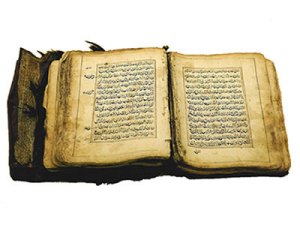
The Islamic View of the Transmission of the Qur’an
Below is a concise, accurate presentation about how the Qur’an was written down, according to majority Islamic belief:
Question
There were many versions of the Qur’an all of which were burnt by Uthman (R.A.) except for one. Therefore is it not true that the present Qur’an is the one compiled by Uthman (R.A.) and not the original revelation of God?
Answer
One of the most common myths about the Qur’an, is that Hazrath Uthman (R.A.), the third Caliph of Islam authenticated and compiled one Qur’an, from a large set of mutually contradicting copies. The Qur’an, revered as the Word of Allah (swt) by Muslims the world over, is the same Qur’an as the one revealed to Prophet Muhammad (Pbuh). It was authenticated and written under his personal supervision. We will examine the roots of the myth, which says that Uthman (R.A.) had the Qur’an authenticated.
1. Prophet Muhammad (Pbuh) himself supervised and authenticated the written texts of the Qur’an
Whenever the Prophet received a revelation, he would first memorise it himself and later declare the revelation and instruct his Companions who would also memorise it. The Prophet would immediately ask the scribes to write down the revelation he had received, and he would reconfirm and re-check it himself. Prophet Muhammad (Pbuh) was an Ummi who could not read and write. Therefore, after receiving each revelation, he would repeat it to his Companions. They would write down the revelation, and he would re-check by asking them to read what they had written. If there was any mistake, the Prophet would immediately point it out and have it corrected and re-checked. Similarly he would even re-check and authenticate the portions of the Qur’an memorised by the Companions. In this way, the complete Qur’an was written down under the personal supervision of the prophet (Pbuh).
2. Order and sequence of Qur’an divinely inspired
The complete Qur’an was revealed over a period of 23 years portion by portion, as and when it was required. The Qur’an was not compiled by the Prophet (Pbuh) in the chronological order of revelation. The order and sequence of the Qur’an too was Divinely inspired and was instructed to the Prophet (Pbuh) by Allah (swt) through Archangel Gabriel. Whenever a revelation was conveyed to his companions, the Prophet (Pbuh) would also mention in which Surah (chapter) and after which ayat (verse) this new revelation should fit.
Every Ramadan, all the portions of the Qur’an that had been revealed, including the order of the verses, were revised and reconfirmed by the Prophet (Pbuh) with Archangel Gabriel. During the last Ramadan, before the demise of the Prophet (Pbuh), the Qur’an was rechecked and reconfirmed twice.
It is therefore clearly evident that the Qur’an was compiled and authenticated by the Prophet (Pbuh) himself during his lifetime, both in the written form as well as in the memory of several of his Companions.
3. Qur’an copied on one common material
The complete Qur’an, along with the correct sequence of the verses, was present during the time of the Prophet (Pbuh). The verses however, were written on separate pieces, scrapes of leather, thin flat stones, leaflets, palm branches, shoulder blades, etc. After the demise of the Prophet (Pbuh), Abu Bakr (R.A.), the first caliph of Islam ordered that the Qur’an be copied from the various different materials on to a common material and place, which was in the shape of sheets. These were tied with strings so that nothing of the compilation was lost.
4. Uthman (R.A.) made copies of the Qur’an from the original manuscript
Many Companions of the Prophet (Pbuh) used to write down the revelation of the Qur’an on their own whenever they heard it from the lips of the Prophet (Pbuh). All the verses revealed to the Prophet (pbuh) may not have been heard personally by all the Companions. There were high possibilities of different portions of the Qur’an being missed by different Companions. This gave rise to disputes among Muslims regarding the different contents of the Qur’an during the period of the third Caliph Uthman (R.A.).
Uthman (R.A.) borrowed the original manuscript of the Qur’an, which was authorised by the beloved Prophet (Pbuh), from Hafsah (may Allah be pleased with her), the Prophet’s (Pbuh) wife. Uthman (R.A.) ordered four Companions who were among the scribes who wrote the Qur’an when the Prophet (Pbuh) dictated it, led by Zaid bin Thabit (R.A.) to rewrite the script in several perfect copies. These were sent by Uthman (R.A.) to the main centres of Muslims.
There were other personal collections of the portions of the Qur’an that people had with them. These might have been incomplete and with mistakes. Uthman (R.A.) only appealed to the people to destroy all these copies, which did not match the original manuscript of the Qur’an in order to preserve the original text of the Qur’an. Two such copies of the copied text of the original Qur’an authenticated by the Prophet are present to this day, one at the museum in Tashkent in erstwhile Soviet Union and the other at the Topkapi Museum in Istanbul, Turkey.
5. Diacritical marks were added for non-Arabs
The original manuscript of the Qur’an does not have the signs indicating the vowels in Arabic script. These vowels are known as tashkil, zabar, zair, paish in Urdu and as fatah, damma and qasra in Arabic. The Arabs did not require the vowel signs and diacritical marks for correct pronunciation of the Qur’an since it was their mother tongue. For Muslims of non-Arab origin, however, it was difficult to recite the Qur’an correctly without the vowels. These marks were introduced into the Qur’anic script during the time of the fifth ‘Umayyad’ Caliph, Malik-ar-Marwan (66-86 Hijri/685-705 C.E.) and during the governorship of Al-Hajaj in Iraq.
Some people argue that the present copy of the Qur’an that we have along with the vowels and the diacritical marks is not the same original Qur’an that was present at the Prophet’s time. But they fail to realise that the word ‘Qur’an’ means a recitation. Therefore, the preservation of the recitation of the Qur’an is important, irrespective of whether the script is different or whether it contains vowels. If the pronunciation and the Arabic is the same, naturally, the meaning remains the same too.
6. Allah Himself has promised to guard the Qur’an
Allah has promised in the Qur’an: “We have, without doubt, sent down the Message; and We will assuredly Guard it (from corruption).” The Holy Qur’an, Chapter 15, Verse 9
Dr. Zakir Naik
Related
- Authenticity of the Holy Quran, by Maurice Bucaille at Discover Islam
- Jay Smith’s (evangelical view) historical comparison of the Qur’an and Bible (very informative)
Wednesday, January 13, 2010
Showing the Spirit
Almost everyday I feel like I don’t know what I’m doing trying to advance the gospel among Muslims. The last few years I have been yearning for God to make that possible. And yearning for more of God has at times led me to a deeper understanding of the gift of the Holy Spirit in my life.
One short book that helped me last year was Forgotten God: Reversing Our Tragic Neglect of the Holy Spirit by Francis Chan.
Another book I am reading from tonight is Showing the Spirit by D.A. Carson. This quote below was especially encouraging and instructional in a “big picture” kind of way so I thought I would pass it on to you in the hope that a deeper understanding of the enabling presence of God through the Holy Spirit would stimulate your ministry to Muslims.
The rest of this post is a block quote from Carson:
“Under the old covenant, God dealt with his people in what we might call a tribal fashion. Despite remnant themes, the Scriptures picture God working with his people as a tribal grouping whose knowledge of God and whose relations with God were peculiarly dependent on specially endowed leaders. The Spirit of God was poured out, not on each believer, but distinctively on prophet, priest, king, and a few designated special leaders such as Bezalel. When these leaders stooped to sin (e.g., David’s affair with Bathsheba and consequent murder of Uriah) the people were plunged into the distress of divine judgment.
But Jeremiah foresaw a time when this essentially tribal structure would change.
“In those days people will no longer say, ‘The fathers have eaten sour grapes, and the children’s teeth are set on edge.’
Instead, everyone will die for his own sin; whoever eats sour grapes— his own teeth will be set on edge.”
“The time is coming,” declares the Lord, “when I will make a new covenant with the house of Israel and with the house of Judah.
It will not be like the covenant I made with their forefathers.…
This is the covenant I will make with the house of Israel after that time,” declares the Lord. “I will put my law in their minds and write it on their hearts. I will be their God, and they will be my people. No longer will a man teach his neighbor, or a man his brother, saying, ‘Know the Lord,’ because they will all know me, from the least of them to the greatest,” declares the Lord.
“For I will forgive their wickedness and will remember their sins no more.” (Jer. 31:29–34)
In short, Jeremiah understood that the new covenant would bring some dramatic changes. The tribal nature of the people of God would end, and the new covenant would bring with it a new emphasis on the distribution of the knowledge of God down to the level of each member of the covenant community. Knowledge of God would no longer be mediated through specially endowed leaders, for all of God’s covenant people would know him, from the least to the greatest. Jeremiah is not concerned to say there would be no teachers under the new covenant, but to remove from leaders that distinctive mediatorial role that made the knowledge of God among the people at large a secondary knowledge, a mediated knowledge. Under the new covenant, the people of God would find not only that their sins were forgiven but that they too would know God in a more immediate way.
The same kind of hope is set forth by Ezekiel, who quotes the sovereign Lord in these terms:
“I will sprinkle clean water on you, and you will be clean; I will cleanse you from all your impurities and from all your idols. I will give you a new heart and put a new spirit in you; I will remove from you your heart of stone and give you a heart of flesh. And I will put my Spirit in you and move you to follow my decrees and be careful to keep my laws.” (Ezek. 36:25–27, italics added; see 11:19–20)
Elsewhere, we read:
“I will pour water on the thirsty land, and streams on the dry ground; I will pour out my Spirit on your offspring, and my blessing on your descendants.
They will spring up like grass in a meadow, like poplar trees by flowing streams. One will say, ‘I belong to the Lord’; another will call himself by the name of Jacob; still another will write on his hand, ‘The Lord’s,’ and will take the name of Israel.” (Isa. 44:3–5)
The same theme pervades many Old Testament texts that anticipate what we might generically label the messianic age. Moses himself recognizes that the desideratum [something desired as essential] was a universal distribution of the Spirit; for when Joshua complains to him that Eldad and Medad are prophesying in the camp and indignantly demands that they be stopped, the aged leader responds, “Are you jealous for my sake? I wish that all the Lord’s people were prophets and that the Lord would put his Spirit on them!” (Num. 11:27–29).
It is of this that Joel prophesies (Joel 2:28–32 in English versions); and according to Peter, it is this that is fulfilled on the day of Pentecost (Acts 2). But that means Joel’s concern is not simply with a picky point—more people will prophesy some day—but with a massive, eschatological worldview. What was anticipated was an entirely new age, a new relationship between God and his people, a new covenant; and experientially this turns on the gift of the Spirit. Put more generically, what the prophets foresaw was what some have labeled “the prophetic Spirit.” All who live under this new covenant enjoy the gift of this prophetic Spirit; and this is no mere creedal datum, but a lived, transforming, charismatic (in the broad, New Testament sense of that word identified in my first chapter), vital experience. It is in that sense that all who live under the new covenant are prophets: they enjoy this enduement of the Spirit, with various rich and humbling manifestations distributed among them.
It is the dawning of the new age that was signaled by Pentecost, and that is why Peter’s quotation of Joel’s prophecy is so significant. According to all four Gospels, John the Baptist predicted that Jesus Messiah would usher in that age: he would baptize his people in the Holy Spirit. Jesus, especially in the Gospel of John, explicitly connects his death, resurrection, and exaltation with the coming of the Spirit. His return to the Father via the cross and the empty tomb is the necessary condition for the Spirit’s coming (e.g., John 7:39; 16:7). Indeed, the Holy Spirit, that “other Counselor,” is in certain respects Jesus’ replacement during this period between the “already” and the “not yet” so characteristic of New Testament eschatology; he is the means by which the Father and the Son continue to manifest themselves to believers (e.g., John 14:23). The same theme is picked up by Peter on the day of Pentecost: “Exalted to the right hand of God, [Jesus] has received from the Father the promised Holy Spirit and has poured out what you now see and hear” (Acts 2:33). It has been shown in some detail that for Luke the coming of the Spirit is not associated merely with the dawning of the new age but with its presence, not merely with Pentecost but with the entire period from Pentecost to the return of Jesus the Messiah” (pg. 151-155).
Monday, January 11, 2010
Jesus as The Word of God
In the Qur’an, Jesus is called the Word of God (3:39, 45; 4:51). Muslims take this to mean that God spoke and Jesus was. Thus the Prophet Jesus is the “Word of God” because he was miraculously conceived in Mary simply by God’s speech:
"She (Mary) said: ‘O my Lord! How shall I have a son when no man has touched me.' He (God) said: ‘So (it will be) for God creates what He wills. When He has decreed something, He says to it only: ‘Be!'- and it is" (3:47).
"Verily, the likeness of Jesus in God's Sight is the likeness of Adam. He (God) created him from dust, then (He) said to him: ‘Be!'-and he was" (3:59).
Here is how John 1 uses this title for Jesus:
“To the Greeks the ‘logos’ was the purpose or meaning of existence. To the Jews the ‘logos’ was God’s Word — the truth or moral absolutes at the foundation of all reality. In the beginning of his gospel John addresses both world-views when he speaks of a divine ‘Word’ that was the source and foundation of all creation. But then he says something that floods the banks and bursts the boundaries of all human categories. He tells Jews that the truth and self-expression of God has become human. He tells Greeks that the meaning of life and all existence has become human. Therefore, only if you know this human being will you find what you hoped to find in philosophy or even in the God of the Bible. The difference [between any other great figure and Jesus] is the difference between an example of living and one who is the life itself.”
– Charles Williams, quoted by Timothy Keller in Gospel Christianity, Course 1 (Redeemer Presbyterian Church, 2003), 49-50.
Sunday, January 10, 2010
Let Your Conscience Be Your Guide?
At the Common Ground (Insider) conference I asked this question to the presenters, “Where I live, Islam is all about Mohammed and he is highly venerated. How can a Muslim who comes to faith in Christ remain in Islam if Mohammed is viewed as the savior?” The answer I got was, “Well, that is up to the Muslim Believer to decide. His conscience will guide him.”
I have struggled in forming a biblical view of conscience for years. Below is generally the principle I have held to, articulated in David Mays’ book notes on 10 Dumb Things Smart Christians Believe. Listed as the 7th dumbest(sp?) thing is “Let Your Conscience Be Your Guide:”
"The idea that our conscience is a trustworthy moral guide is a myth." (108) "Our conscience doesn't tell us if we're violating God's standards. It tells us when we're violating our standards." (109) "Our conscience is also easy to reset." (110) Our sin nature clouds our understanding of spiritual truth and God's leading. It puts static on the line and creates spiritual blind spots. Over time, if we continue in sin, it can become callused and loses its sensitivity. Our ability to feel guilt goes away. (115) Prisons are full of people who let their conscience guide them. And the same is true in church. Business people break their word to make a deal. They think they have to. Many times someone's conscience is clear because it is no longer working. Our conscience is a valuable early warning device, a yellow light. But it's a terrible green light.
I have never seen a really good article on the biblical view of conscience. Does anyone know of one?
Saturday, January 9, 2010
A Muslim’s View of Christian “Missionaries”
Thought this was an interesting article of one Muslim’s interpretation of Christian “missionary” activity called Christian Missionaries Sweeping the Islamic World. For example the article starts like this:
Let us first discuss some of the new ways that Christian missionaries are using in the Islamic world, these new methods have been applied because the old methods did not prove as effective as the Christian missionaries thought they were. Some of the problems were the great gap between Islam and Christianity such as the principle of trinity and escalation of Jesus PBUH. Some of these new ways are :-
1) Misguiding, making similar, lying (taDDlel, khida3, labs Al-7aqaiq) Many books have been written for Muslims, keeping the belief of Muslims, their ideas and general princeples in mind. The book “shahadat Al-Quran” which was distributed all around the Islamic world, even in Saudi Arabia. This book was taken from the book “The Lord is one” for Zakariya Boutros. This book talks about the similarities between Islam and Christian faith. They, for example, quote the verse that refers to prophet Jesus PBUH as a prophet, a word and a spirit. They say that is originaly the same trinity! Of course this is a false interpretation, a lie. Allah said he blew in Adam of his own spirit, allah gave his word to Moses, David, Ibraham, Adam, Mohammad PBUT and not only to Jesus. The missionaries base this whole theory on the fact that there are three nouns, ie just because of the number. One of their other arguments that they say that “In the name of Allah, the most gracious, the most merciful” means three gods!! not one! that is a worst liethan the one before, they ignore that Allah has 99 names that we know, and many more that Allah promised to tell his prophet at the day of judgment…
Read the whole thing.
HT: John Stringer
Thursday, January 7, 2010
Review of Woman to Woman: Sharing Jesus with a Muslim Friend
Woman to Woman: Sharing Jesus with a Muslim Friend, by Joy Loewen Forward by Brother Andrew (Buy)

Chosen Books, January 2010, 208 pages, ISBN 978-0-9483-5
“I believe this book will revolutionize our approaches in reaching the Muslim women with the genuine love of Christ.” – Samuel Naaman, D.Miss., Department of World Missions and Evangelism, Moody Bible Institute, Chicago
“This book is more than delightful - it is a `must read' for men as well as women. Why? If we fail to grasp the message of this book we will never really understand Muslims or their culture at all. So, whatever good books are on your reading list, move this one to the front. It will be worth it!” -Dr. Ed Hoskins, Physician and author of "A Muslim's Heart"
Woman to Woman is a book that primarily uses narrative to show how to help Christian women befriend and share Christ with Muslim women who are living in North America. The book has a dual purpose; (1) to introduce the reader to the personal lives of Muslim women, and (2) to introduce the reader to a North American woman’s journey of discovering and embracing the lives of Muslim women. So the book is as much about the author as it is about Muslim women.
Thankfully, the author Joy Loewen is a shining example of a missional Christ-follower who has more than 30 years experience in Muslim ministry. Woman to Woman is not a formal treatise on Muslim evangelism, but a series of enjoyable and interesting stories that pauses frequently to explain issues related to the lives of Muslims that average church-goers in America might not understand. The tone of the book and Joy’s approach towards Muslims is irenic, sensitive, and respectful.
The intended audience of the book is for those who care about Muslims but who have little or no understanding of non-western culture or the Islamic worldview. In a time where approximately 20% of Muslim Background Believers (MBBs) in the world are female, more books like this are timely. (I have heard the most unreached bloc of people on the planet are Muslim women.)
Being of such an introductory nature, I think the book would be more accessible if it were shorter. I would have also appreciated more discussion around the issues of trying to integrate MBBs into the church, and more examples of contextual witness and church planting. But again, the book is mainly a first read for a Christian woman who is curious about the Muslim women living around her. For this kind of reader I recommend Woman to Woman because it could help many “move from fear to love and compassion.”
Monday, January 4, 2010
The Role of Works in Salvation
From the January 2010 issue of EMQ, A Muslim-Christian Dialogue on Salvation: The Role of Works, by Paul Martindale:
One principle of effective witness with Muslims is listening and allowing them to identify the issues which they find important in the discussion. It is then up to us to formulate our biblical understanding for them in those areas. At a recent meeting betwaeen [sic] Muslims and Christians on the topic of salvation, the role of works became central in the ensuing discussion.
The two main objections expressed by the Muslims present centered upon the apparent lack of works necessary for salvation in Christianity and the carte blanche Christians seem to have for sin in their lives after conversion…
Both the Muslims and the Christians present were in agreement on the following formulation for the role of works:
ISLAM
Faith + Works + Allah’s Mercy = SalvationCHRISTIANITY
Faith + Grace = Salvation + Works…Our dialogue with Muslims has forced us to clarify our theology of works. The biblical emphasis we place on faith and grace in salvation is certainly appropriate. However, this is not true when it is taken to the extent that the role of works in the life of the believer is ignored or becomes extinguished in our theology or praxis. For Muslims, this appears to be a central issue, and they need to see how the role of works is affirmed in Christianity…
Read the whole thing (requires a subscription to EMQ).
I would probably add to this the need to teach Muslims about regeneration- we receive new spiritual life when we are “born again.” Our natures, lives, and desires and completely changed when we come to Christ.
We are not just trying to get Muslims to make a decision for Christ; we are trying to get them to change their affections to Christ. Aim for a heart change. Instead of simply asking, “How can this Muslim get saved?”, the question should be, “How can this Muslim become a follower of Jesus?” Disciples who embrace Christ as their supreme treasure are heaven-bound; but those who insincerely make a decision for “an easy road to heaven” may not.
Sunday, January 3, 2010
Preventing Discouragement and Keeping Church Planters Productive on the Field
From the EMQ January 2010 issue: Preventing Discouragement and Keeping Church Planters Productive on the Field, by David A. Diaso:
The responses to a survey I conducted [of 180 workers interviewed] demonstrated that church planters are more likely to be motivated to continue if the following are in place:
• a clear definition of the criteria for success;
• a clear description of tasks required to plant a church;
• training, coaching, and mentoring in tangible church-planting principles; and
• consistent encouragement and feedback from the mission agency and team leader/supervisor.
Diaso then gives 4 recommendations based on his research:
- Mission agencies and team leaders/supervisors must provide a clear definition of the criteria for success.
- Mission agencies need to provide for a clear description of tasks required to plant a church.
- Mission agencies need to provide training, coaching, and mentoring in tangible church-planting principles.
-
Mission agencies and team leaders/supervisors need to provide consistent encouragement and feedback.
Read the whole thing (requires a subscription to EMQ).
Wednesday, December 30, 2009
Three Reasons the Church in Iran is Growing
| | Iran Open Hearts in a Closed Land Mark Bradley Authentic, 2007, 114 pp., ISBN 978-1-85078-770-9 To order this book click here. |
![clip_image001[4]](https://blogger.googleusercontent.com/img/b/R29vZ2xl/AVvXsEjJ18wl4pyb1bBFHB3vyfSMA9UjhJlO2d1HZN_NNx5x1IY2LosGRfA_Ykqoqeicy6WlwWMtXdCFvW2Q6X5qI5vVQKaEtPXDVwx2a5xIKPYcRaTlXCILEk-bLsvDsg4AE_RCAKlR6QGHq3s/s1600-h/clip_image001%5B4%5D%5B7%5D.jpg "clip_image001[4]")
From David Mays book notes:
Mark Bradley gives a very concise and readable overview of the historical and current reasons Iran is so closed to the Gospel and why the hearts of the people are so open to Jesus. The author also recommends a very attractive 30-day prayer guide for Iran. See it at www.iran30.org…
While the Iranian government is actively strangling the established churches, the underground churches are growing. Its continued growth is likely for three reasons. One, it is very secretive and hidden from authorities. Two, the churches are very active and vibrant. Most have never been in a church building, so Christianity grows up around the Scripture, spreads by relationships, and takes on natural cultural forms. Three, new members recognize the urgency of telling others and take on a sense of ownership very quickly.
Read all David’s notes on the book. Buy the book.
Wednesday, December 23, 2009
Why do Muslims Send Prayers on the Prophet Mohammed?
You can read about it here (I tried to make it more readable):
Of the greatest blessings that Allah (ta’ala) has given to mankind is sending the Prophet (sal Allahu alayhi wa sallam) as our guide and the Qur’an as our Book.
With the exception of Muhammad (sal Allahu alayhi wa sallam), every Prophet and Messenger sent by Allah (azza wa jal) was sent to a specific nation for a specific time period. Allah (ta’ala) chose Muhammad (sal Allahu alayhi wa sallam) as the Messenger for all the worlds and raised his status and mention among all of mankind.
Allah (ta’ala) describes this bounty that He gave to the Prophet (sal Allahu alayhi wa sallam) in the Qur’an,
وَرَفَعْنَا لَكَ ذِكْرَكَ
and We have raised for you your mention. (94:4)
We bear witness five times a day that he is the Messenger of Allah, we send peace upon him during our prayers, we open our gatherings with his mention after the mention of Allah (azza wa jal) and we ask Allah to bless him before we make a duaa [prayer request]. All of these acts show that we bear witness that he (sal Allahu alayhi wa sallam) delivered the message. Bearing witness that he delivered the message necessitates his love, his obedience and sending salah when he is mentioned, sal Allahu alayhi wa sallam.
Allah (azza wa jal) says,
إِنَّ اللَّهَ وَمَلَائِكَتَهُ يُصَلُّونَ عَلَى النَّبِيِّ يَا أَيُّهَا الَّذِينَ آمَنُوا صَلُّوا عَلَيْهِ وَسَلِّمُوا تَسْلِيمًا
Allah and His angels send blessings on the Prophet: O you that believe! Send your blessings on him, and salute him with all respect. (33:56)
The ayaat in the Qur’an that commands the believers to do good deeds or refrain from evil actions begins with “Ya ayyuhal latheena aamano”, “O you who have believed” however this ayah does not begin in this way. Rather, Allah (ta’ala) mentions that He and His Angels send blessings and greetings on the Prophet (sal Allahu alayhi wa sallam) first before calling the Believers to follow. Allah (subhanahu wa ta’ala) calls the believers, because of your emaan [faith], send salah and salaam on the Messenger. The Scholars of tafseer [interpretation] state that this is to show the honorable and elevated status of the Prophet (sal Allahu alayhi wa sallam) as well as to show the honor in the act of sending salah on him. If Allah and His Angels do this action, it should motivate the Believers to do so as well…
Why do we Send Salawat [Prayers] on the Prophet?
If a close relative of ours passed away, such as a parent or a sibling, we would vehemently ask Allah to forgive them, to grant them security, and to enter them into Jannah [paradise]. The Believers are those who love the Prophet (sal Allahu alayhi wa sallam) more than their family, wealth and their own selves so just as we would ask Allah to forgive and bless our relative, we should send prayers upon our Messenger (sal Allahu alayhi wa sallam) who, by the bounty and mercy of Allah, has taught us our faith. Allah azza wa jal says,
هُوَ الَّذِي بَعَثَ فِي الْأُمِّيِّينَ رَسُولًا مِّنْهُمْ يَتْلُو عَلَيْهِمْ آيَاتِهِ وَيُزَكِّيهِمْ وَيُعَلِّمُهُمُ الْكِتَابَ وَالْحِكْمَةَ وَإِن كَانُوا مِن قَبْلُ لَفِي ضَلَالٍ مُّبِينٍ وَآخَرِينَ مِنْهُمْ لَمَّا يَلْحَقُوا بِهِمْ وَهُوَ الْعَزِيزُ الْحَكِيمُ ذَٰلِكَ فَضْلُ اللَّهِ يُؤْتِيهِ مَن يَشَاءُ وَاللَّهُ ذُو الْفَضْلِ الْعَظِيمِ
It is He Who has sent amongst the unlettered a Messenger from among themselves, to rehearse to them His Signs, to purify them, and to teach them the Book and Wisdom (Sunnah),- although they had been, before, in manifest error;-As well as (to confer all these benefits upon) others of them, who have not already joined them: And He is exalted in Might, Wise. Such is the Bounty of Allah, which He bestows on whom He wills: and Allah is the Lord of the highest bounty. [62:2-4]
We send salawat on the Prophet (sal Allahu alayhi wa sallam) to acknowledge the great blessing that Allah has given us by sending the Messenger to us. Just as prayer is a manifestation of our love, gratitude and obedience to Allah (azza wa jal), sending salawat on the Prophet (sal Allahu alayhi wa sallam) shows our love for him, our respect for him, and our obedience to him.
We must also remember that Rasul [the Messenger of] Allah (sal Allahu alayhi wa sallam) was only a man who does not possess any power to harm or benefit us. Many from amongst our Ummah have taken their love of the Prophet (sal Allahu alayhi wa sallam) to an extreme that is not only forbidden in our religion, but does the exact opposite of their intended goal. Worship is exclusive for Allah (azza wa jal) and obeying and loving the Prophet (sal Allahu alayhi wa sallam) falls under the worship of Allah…
Read the whole thing, especially the “Benefits and Virtues of Salawat.”
Tuesday, December 22, 2009
Suffering and Persecution, Mission Frontiers Jan-Feb 2010 Issue

Recapturing the Role of Suffering Nik Ripken (4 pages) [This is an important article on persecution and church planting.]
The testimony of believers living in the midst of persecution challenges the church in the West, and its emissaries, to recapture a biblical missiology—a missiology that is mature enough to embrace suffering, persecution, and even martyrdom. Believers in settings of persecution, through numerous interviews, suggest that the church in the West has lost its missiological edge and that it has grown soft in the face of overt persecution.
Filling Up the Afflictions of Christ John Piper (2 pages)
More and more I am persuaded from Scripture and from the history of missions that God’s design for the evangelization of the world and the consummation of his purposes includes the suffering of his ministers and missionaries. To put it more plainly and specifically, God designs that the suffering of his ambassadors is one essential means in the triumphant spread of the Good News among all the peoples of the world.
The Other Side of the Cross: Suffering and the Glory of God Bob Sjogren (2 pages)
A contemporary worship song includes these lines for the believer to voice to Christ: "Like a rose, trampled on the ground, you took the fall and thought of me, above all."
Excuse me? Did Christ think of me “above all” while he was on the cross? The Scriptures don’t point us in that direction. Did he think of us on the cross? Yes. Above all? No. Let’s get this straight!
Just as there are two sides to a coin, so are there two sides to the cross. For generations, many in the Church have only known one side of the cross. It’s a side that can point to ease, safety and comfort. But it’s now time for the Church to grow up and look at the other side of the cross—the one that points us to suffering.
The first side we are all familiar with: Christ died for us. But there is a second side to the cross: Christ died to magnify and vindicate the glory of his Father. This is the side with which we are unfamiliar. This is the side where we are weak and need to grow deep roots.
Read the entire issue.
Wednesday, December 16, 2009
Encountering the World of Islam Online Courses
Online Classes (www.encounteringislam.org/online)
Take EWI Online!
 Encountering the World of Islam is now available online for those who do not have a course available in their area.
EWI Online is a 12-week course featuring expert speakers and an online mentor with experience living among Muslims. Students will complete each lesson's work and assignments at their convenience and discuss the week's material using discussion forums. Though the class is not self-paced, there are no live online sessions required.
Course Assignments
To complete this course online, students will have weekly assignments, including: textbook readings, downloading and listening to audio or video lectures, and online discussions with other class members. In addition, students must meet a Muslim and visit an Islamic center in their local area and take four quizzes and one exam online. A certificate will be issued for successful course completion.
Software Requirements
To take EWI Online, you will need Internet access, a valid email address and the ability to download and listen to mp3 files; viewing lectures as streaming video is optional.
Course Fees
Tuition for EWI Online is $229.00 and includes a course textbook shipped to you (international shipping requires an additional fee).
Registration
See Online Classroom Registration Instructions for information on how to register for an online class.
Upcoming course dates:
Winter 2010 will begin January 4, 2010. Register now.
Questions? Contact us at info@encounteringislam.org
Subscribe to:
Posts (Atom)