Junaid ibn Amjad at Muslim Matters posts his list here.

Friday, April 29, 2011
Thursday, April 21, 2011
Polygamy and Creation
Recently I was in a discussion with a close Muslim friend in the Arabian Peninsula. He was listing all the benefits of polygamy and talking about how virtuous it was to protect women in such a way, when finally I had enough. I asked, "When Allah created the world, how many wives did he give to Adam? One, that's right. And since Allah is perfect in all he does, that must include his original design for marriage - one man and one woman." Then I said, "So what does this mean for polygamy?" He said, "You are right, somewhere along the way Allah's plan for marriage must have been corrupted." I said, "Well, you know what Jesus said about marriage - one man and one woman." He just nodded his head and became silent and smiled. Then he said, "You're right! I'm only going to have one wife." We just started laughing.
Sometimes we just need to appeal to God's creative order to get the point across!
Sometimes we just need to appeal to God's creative order to get the point across!
Birds Don’t Fly Over Mecca
 A Western Christian friend of mine was having a heated discussion on matters of faith with an Arab Muslim friend of his when suddenly the Muslim said forcefully, “You know what- birds don’t fly over Mecca,” as if to prove once and for all that Islam is the true and final revelation of God.
This was humorous to me until I read this:
The concept of baraka pervades Muslim minds. It matters not whether it is a question of fulfilling the formal, religious duty of hajj, or of giving expression to the more magical attitudes towards Baraka as a power for healing.
Baraka is seen as ‘good’. It could, however, be ‘too good’ for one. At the very center of Islam, in Mecca itself, is a very dangerous possibility that must be avoided. If a pilgrim were to look up into the sky right above the ka’ba, he might have a glimpse into paradise and as a result suffer mental derangement; he would have been exposed to too much Baraka. That is why, if you look carefully, you will see that doves never fly across the roof of the ka’ba. It is, consequently, the place pilgrims choose to walk round and round constantly. If human pilgrims are not available, then angelic ones replace them. The gate to heaven is above the ka’ba. Never could a believer be physically closer to God. Precisely there, however, where Baraka exists in its most concentrated form, it is also unpredictably dangerous. Baraka is not to be played with.
From The Unseen Face of Islam: Sharing the Gospel with Ordinary Muslims at Street Level by Bill Musk, pgs. 238-239 (emphasis mine).
Wednesday, April 20, 2011
What is a missional hermeneutic? (The Mission of God, Wright)
Hermeneutics is the art and science of interpretation. It provides a map that guides the reader to a meaning of a text. All maps aim to simplify and represent reality, and there will necessarily be limitations in any map. But a good map is essential if you want to accurately understand where you are and where you are going.
 In The Mission of God: Unlocking the Bible's Grand Narrative, Chris Wright demonstrates how a “missional hermeneutic” is a map that approaches the whole Bible from the perspective of mission. This is the perspective which enables us to grasp the driving dynamic of the Bible’s grand narrative.
According to Wright, it is not enough to recognize the Christological focus of the Bible. (And also not enough to recognize the plain, historical, and grammatical hermeneutic.) Of course Jesus is the central interpretative key by which we understand the overall significance of the Old and New Testaments, but we must also recognize the missiological focus of the Bible because God in Christ is on a mission.
A key text in biblical hermeneutics says, “Then [Jesus] opened their minds to understand the Scriptures, and said to them, “Thus it is written, that the Christ should suffer and on the third day rise from the dead, and that repentance and forgiveness of sins should be proclaimed in his name to all nations”” (Luke 24:45-47). Wright comments that Jesus “seems to be saying that the whole of Scripture… finds its focus and fulfillment both in the life and death and resurrection of Israel’s Messiah, and in the mission to the nations, which flows out from that event… he was setting their hermeneutical orientation and agenda. The proper way for disciples of the crucified and risen Jesus to read their Scriptures, is messianically and missionally” (30).
Here’s the point- it is fundamentally inaccurate to attempt to find a biblical basis for mission. Let that sink in for a bit…! Instead, it is more appropriate to speak of a missiological basis for the Bible. “The whole Bible itself is a missional phenomenon” (22). The Bible is a product of the mission of God and thus guides and empowers his people to their participation in his mission. Mission is what the Bible is all about. This perspective brings clarity and richness to its story. For me, re-reading the Bible in light of the missional hermeneutic has been fun and enlightening.
Monday, April 18, 2011
Vision for MBB Discipleship
Don Little says, “Part of the reason for our poor success in discipling BMBs [Believers from Muslim Backgrounds] has been that we have had an inadequate understanding of how discipleship works and what is the objective of discipleship. When our discipleship vision is weak then our practice will also be weak.”
So, what is the vision for discipling MBBs?
From Little’s Effective Insider Discipling: Helping Arab World Believers From Muslim Backgrounds Persevere And Thrive In Community, pg. 227:
We endeavour to see believers from Muslim backgrounds (1) living in loving mutual submission within believing church groups that (2) experience together the transforming grace of God through the presence and power of the Holy Spirit. (3) They live their lives together in submission to the scriptures and in obedience to their Lord, (4) developing individual and corporate routines that fortify their faith (5) so that their worldviews are transformed in ways faithful to the reality of the great biblical story of creation, fall and redemption. (6) Further, they live out their faith in obedience to Christ in ways suitable to their culture and society. (7) Growing increasingly into Christ-like holiness together, (8) they compassionately serve and (9) reach out with the gospel to people in their families, social networks, communities and beyond, bringing Glory to God (10) as they grow and multiply.
Friday, April 15, 2011
Different Views Concerning Relationships and Money
Financial issues are the most difficult thing I have experienced in discipling MBBs. I found the table below to be very helpful. I wish I would have seen this a couple years ago.
From the new Perspectives edition (2009), page 483, by Joseph Cumming:
Muslim and Western views on money can be very different. These observations apply not only in Muslim cultures, but in many places of the non-Western world.
Muslim
Westerner
All true friendships involve a financial element. The healthiest, happiest friendships are those where money does not change hands. The way to refuse giving should not be by saying, “No.” The refusal must be indirect, so there is no embarrassment to the one asking. It is appropriate to be truthful and say, “No.” Rules should be honored, but to show mercy is more important because of the high value of maintaining good relationships. Rules are rules. Period. When you request and receive financial assistance or help with a job or strings pulled with government bureaucracy, this places certain obligations on you. You must become a loyal supporter of your patron. A supporter only within ethical and moral boundaries. If a needed person receives gifts for a particular need, and then an even more pressing need arises, then it is legitimate to use those gifts for a the more pressing need. This is morally wrong unless explicitly authorized by the donor. From an article by Joseph Cumming of Yale University, inspired by David Maranz’s book African Friends and Money Matters. Cumming has lived 15 years in a Muslim country.
Wednesday, April 13, 2011
Two Parallel Errors
- Asking Muslims to become “Christians”
- Telling Muslims who want to follow Jesus to remain “in Islam/as Muslims”
Why do these two errors commit the same fallacy?
Tuesday, April 12, 2011
The Dirty Little Secret of Missions
“The dirty little secret of missions is that we are sending missionaries all over the world who have not demonstrated the ability to make disciples who can make disciples.”
-Rick Wood, A Discipleship Revolution: The Key To Discipling All Peoples
Tuesday, April 5, 2011
Missions is About the Worship of Jesus
From Of First Importance:
Missions is about the worship of Jesus. The goal of missions is the global worship of Jesus by his redeemed people from every tribe, tongue, and nation. The outcome of missions is all peoples delighting to praise Jesus. And the motivation for missions is the enjoyment that his people have in him. Missions aims at, brings about, and is fueled by the worship of Jesus.
 — David Mathis
 "Missions: the Worship of Jesus and the Joy of All Peoples" in Don't Call It a Comeback
(Wheaton, Ill.: Crossway Books, 2011), 225
Sunday, April 3, 2011
When God’s Kingdom Grows Like Yeast
In the July-August 2010 issue of Mission Frontiers “Setting the Pace” is an article called When God’s Kingdom Grows Like Yeast: Frequently-Asked-Questions About Jesus Movements Within Muslim Communities by John Travis and Dudley Woodberry.
From the intro:
In Matthew 13:33 and Luke 13:20 Jesus likens the Kingdom of God to yeast, a substance that transforms from the inside out. In the days surrounding His death and resurrection, Jesus instructed His followers to proclaim the good news of the Kingdom to all peoples of the world. Today numbers of Muslims have accepted this good news, allowing the yeast of the Kingdom to transform their lives and their families, while remaining a part of their own Muslim communities. Since there is a variety of perspectives on this phenomenon, even among the Islamic Studies faculty where we teach, we here seek to address some frequently-asked questions about it.
The article answers the following questions:
- What are some examples of this type of movement to Jesus within Muslim communities?
- If Muslims confess Jesus as Savior and Lord, why would they not simply want to join the Christian religion?
- Why is the phenomenon of Jesus movements within Muslim communities only being observed in recent years?
- It is an interesting idea that the Kingdom could move like yeast within a person’s original religious community. However, are there not risks associated with Jesus movements remaining inside such communities?
- How do movements remain faithful to Jesus and the Bible when Islam contains teachings that are not compatible with biblical revelation?
- By not calling oneself a Christian, could not this be viewed as a form of denying Christ, the very thing Jesus warned of in Mark 8:38 and in Matthew 10:32-33?
- What does it mean to retain an official, social and/or cultural Muslim identity?
- Are Jesus movements within Muslim communities the only type of movement among Muslims today?
- What is the C1-C6 spectrum?
- How do these movements start?
- Scripture teaches that in Christ we are “one body” (Ephesians 4:4-6). Even though Jesus-following Muslims do not join traditional Christian churches or denominations, do they see themselves as part of the Body of Christ?
- Fellowship and commitment in a local expression of the Body of Christ is central to life in Christ. Do Muslim followers of Jesus gather together, or are they simply individuals who have believed in Jesus?
- Some have said that Jesus movements within Islam exist so that Muslims can avoid persecution and suffering for their faith in Christ. Is this true?
- It has been said that some Christians have assumed a Muslim identity in order to relate to and have an audience with Muslims. Does the existence of Jesus movements within Muslim communities suggest that Christians should take on a Muslim identity in order to reach Muslims with the Gospel?
- What about the traditional Christian sacraments of baptism and communion? Are these followed in Jesus movements within Muslim communities?
- Would Jesus-following Muslims still repeat the confession, “There is no god but God, and Muhammad is God’s Messenger”?
- Do Jesus-following Muslims still refer to God as Allah?
- How do Muslims who follow Jesus communicate with fellow Muslims about Jesus and the Bible?
HT: EO
Related Posts:
Saturday, April 2, 2011
Qur’an Burning and Deadly Protests in Response
Sad news of many dead in Afghanistan after the recent Qur’an burning in the US. Let’s keep in mind three things as we respond to these senseless acts:
- Burning another person’s religious book is mean and childish and wrong.
- The Pastor who burned the Qur’an should not be blamed for the killing that followed. Those who killed are the ones to blame.
- Calling those murderers “Muslims” or identifying them with Islam would be the same mistake as calling the Pastor a “Christian.” Of course he is a “Christian,” but he does not speak for Christianity in the same way those murderers do not speak for Islam. Certainly Muslims around the world will rightly condemn those killings.
See these related posts, especially American Muslims Make Video to Rebut Militants.
Monday, March 28, 2011
Mohammed as the Only Mediator
I like to present Jesus to my Muslim friends as the only mediator between God and man (1 Tim. 2:5-6). But the response I usually hear is, “Mohammed is our mediator.” This idea is not found in the Qur’an but in the Hadith, which are seen by many Muslims to be just as authoritative as the Qur’an.
The Qur’an states that no one may mediate unless God permits him: “Who is he that can intercede with Him except with His Permission?” (2:254-5). This question is answered by the Bukhari collection of the Hadith 6:60:3:
Narrated Anas:
The Prophet said, "On the Day of Resurrection the Believers will assemble and say, 'Let us ask somebody to intercede for us with our Lord.'
So they will go to Adam and say, 'You are the father of all the people, and Allah created you with His Own Hands, and ordered the angels to prostrate to you, and taught you the names of all things; so please intercede for us with your Lord, so that He may relieve us from this place of ours.'
Adam will say, 'I am not fit for this (i.e. intercession for you).' Then Adam will remember his sin and feel ashamed thereof. He will say, 'Go to Noah, for he was the first Apostle, Allah sent to the inhabitants of the earth.'
They will go to him and Noah will say, 'I am not fit for this undertaking.' He will remember his appeal to his Lord to do what he had no knowledge of, then he will feel ashamed thereof and will say, 'Go to the Khalil--r-Rahman (i.e. Abraham).'
They will go to him [Abraham] and he will say, 'I am not fit for this undertaking. Go to Moses, the slave to whom Allah spoke (directly) and gave him the Torah .'
So they will go to him [Moses] and he will say, 'I am not fit for this undertaking.' and he will mention (his) killing a person who was not a killer, and so he will feel ashamed thereof before his Lord, and he will say, 'Go to Jesus, Allah's Slave, His Apostle and Allah's Word and a Spirit coming from Him.
Jesus will say, 'I am not fit for this undertaking, go to Muhammad the Slave of Allah whose past and future sins were forgiven by Allah.'
So they will come to me [Muhammad] and I will proceed till I will ask my Lord's Permission and I will be given permission. When I see my Lord, I will fall down in Prostration and He will let me remain in that state as long as He wishes and then I will be addressed.' (Muhammad!) Raise your head. Ask, and your request will be granted; say, and your saying will be listened to; intercede, and your intercession will be accepted.' I will raise my head and praise Allah with a saying (i.e. invocation) He will teach me, and then I will intercede. He will fix a limit for me (to intercede for) whom I will admit into Paradise. Then I will come back again to Allah, and when I see my Lord, the same thing will happen to me. And then I will intercede and Allah will fix a limit for me to intercede whom I will let into Paradise, then I will come back for the third time; and then I will come back for the fourth time, and will say, 'None remains in Hell but those whom the Quran has imprisoned (in Hell) and who have been destined to an eternal stay in Hell.' " (The compiler) Abu 'Abdullah said: 'But those whom the Qur'an has imprisoned in Hell,' refers to the Statement of Allah: "They will dwell therein forever." (16.29).
Bases on this hadith, I believe many of my Muslim friends actually place their faith and trust in Mohammed. They hope Mohammed will find them to be a good Muslim on Judgment day.
HT: Abdul Musloob
Tuesday, March 15, 2011
What are the Bible and the Qur’an Basically About?
Watch this 4 minute video (HT: SM) below to answer the question, What is the Bible basically about?
Compare this with the Qur’an. In Major Themes in the Qur’an, Fazlur Rahman says:
“The aim of the Qur’an is man and his behavior, not God” (3).
This is a repeat of what was in the first line of the book, “The Qur’an is a document that is squarely aimed at man.” The Qur’an is “guidance for mankind” (2:185).
The Bible is written by 40 different authors over a period of 1500 years detailing God’s redemptive purposes for humankind in Christ, yet is amazingly unified on this story.
The Qur’an, however, was recorded by one author over a period of 23 years and has very little grand story in it.
It seems to me much easier to simply write an instruction manual for living than it would be to write on the character, nature, and plan of God revealed in a Messiah who would transform hearts and usher in the rule of God.
Friday, March 11, 2011
Islam is Not a Civilization, Ramachandra- Faiths in Conflict?

From the Preface of the book:
In chapter 1 [Islam and new religious wars?], I discuss the “Islamic resurgence” of recent decades and the alleged threat it poses to the West. One of the most competent exponents of the view that “Islam” and the “West” are mutually hostile and irreconcilable is Samuel Huntington [The Clash of Civilizations and the Remaking of World Order], a politics professor at Harvard University and adviser on the international relations to the US governments. In the post-Cold War world, Huntington argues, religious or civilizational clashes have replaced wars fought for economic or strategic reasons. This chapter combines a critique of Huntington with an examination of the West’s perception of Islam and the misleading rhetoric of Islamist movements. It also explores how dangerous stereotypes are generated in both Western and Islamic societies. It concludes with some challenging question for Muslims and Christians alike.
Ramachandra begins by agreeing that Huntington’s main thesis is simple, clear, and seemingly self-evident. “In the post-Cold War world, the most important distinctions among peoples are not ideological, political, or economic. They are cultural… The most pervasive, important and dangerous conflicts will not be between social classes, rich and poor, or other economically defined groups, but between peoples belonging to different cultural entities” (13).
Huntington defines six major contemporary civilizations: Western, Sinic [Chinese], Japanese, Hindu, Islamic, and Orthodox. According to Huntington, the coming conflict between the West and Islam will be because Islam is obsessed with the inferiority of its power and and that the West believes in the universality of Western culture; Islamic intolerance will clash with Western arrogance. For Huntington, the solution is that civilizations should not interfere in conflicts based in other civilizations and an international order based on civilizations is a safeguard against world war. Ramachandra believes Huntington’s analysis is “seriously flawed” and an “unreliable guide for understanding the world in which we live” (15). Ramachandra argues against viewing Islam in a civilizational category.
After the fall of Communism, the West is seeking new demons. Islam now fits that bill and is seen as a threat against the West. Correspondingly, predominantly Muslim countries portray any Western involvement in their affairs as an affront against Islam. Both sides have utilized anti-imperialist slogans and demonization, and engaged in a process of “mutual satanization” (19). However, the dangerous rhetoric of stereotyping the “other” in broad strokes is not a recent phenomena.
Both Islamists and and their critics refer to Islam as a specific, timeless, social and political programme. But Islam is far from a monolithic, unchanging reality. In the post-colonial world, nationalist or Islamist movements from Morocco to India to Indonesia have appealed to Islam to legitimate their polices and gain popular support. “These groups are responding to specific, historical problems, often of a social and political nature, not engaging in some universal crusade against other peoples” (17).
In order to understand the nature of these movements, it’s not necessary to examine the Qur’an, but instead to look at problems facing the populations of these peoples. Islam is often times posed by Islamists as being under threat. This language is “part of the rhetorical baggage of political struggle, employed by both those who wish to remain in power and those who aspire to attain power” (19). Most Muslims are not supporters of Islamist movements! The myth of the “Islam in danger” slogan is propagated by those who wish to maintain or gain control of the community.
Another misperception of Islam as a civilization is the myth of Islamic unity. “Within twenty-five years of the death of Muhammad, Muslim believers were killing each other on the field of battle” (21). A cursory look at Islamic history confirms that Islam has always been segregated, as does the animosity between Muslim countries like Saudi Arabia and Iran today. In the Gulf war, one Islamic state attacked another Islamic state. Even Muslim communities in the West which appear homogeneous to outsiders are fragmented around ethnic, linguistic, and political groupings.
Today, what passes for “Islamic legal code” is far from unified and always reflects the local context. Numerous conflicting examples of shari’a law abound, all ambiguously based on the Qur’an and sunnah. “If we want to know why most Muslims hold the views they do about sexuality, economics, democracy and the like, it is not ‘Islam’ alone that can explain it” (25). The difficulty of establishing democracy in many parts of the Muslim world is due, not to the inherent nature of Islam, but to “low levels of development, entrenched traditions of state control, political cultures that inhibit diversity and tolerance, the absence of a tradition of private property, and the lack of separation of state and law” (26).
The way “Islam” is defined by those defending their power or by those in conflict with them is a mirror-image of the way the “West” is defined by Muslims. “It is a prominent feature of Muslim writings, both serious and popular: the West is depicted as a monolithic entity, irredeemably materialist, immoral and decadent, and characterized by aggressiveness, expansionism and intolerance towards Islam and Muslims” (34). It is this reductionist approach to complex cultures and peoples that creates the appearance of unbridgeable differences today.
Huntington’s overall flaw is that he claims that the reason for the increase in religious rhetoric as justification for political action on both sides is evidence that differences in culture or religion are what precipitate international conflicts. Thus, Huntington’s argument of the “clash of the incompatible civilizations” is a self-fulfilling prophecy; the more we believe it, the more it will come true (37). In fact, numerous examples can be cited where the West has explicitly worked with Muslims when their goals were aligned (i.e. American CIA support of the Mujahidin in Afghanistan or Saudi and Israeli support of the Gulf war, to name just two).
Ramachandra offers four suggestions for living with integrity in a multicultural world. First, we should try to avoid using religious categories such as ‘Muslim’, ‘Christian’, ‘Buddhist’ or ‘Hindu’ to describe an ethnic or cultural group. Second, whatever religious traditions we belong to and whatever religious convictions we hold, we should apply the same standards to political phenomena in other societies that we apply to our own. The KKK doesn’t speak for American Christians in the same way Muslims don’t want Osama Bin Laden speaking for them as a Muslim. Thirdly, Muslims themselves need to champion religious freedoms. It is hypocritical for Muslim citizens in the West to enjoy religious freedom when minority citizens in their home countries are denied those very same rights. Finally, we must take seriously the challenge to explore faiths and cultures of other people, especially those who live in our own neighborhood- this goes for both Muslims and Christians.
Wednesday, March 9, 2011
Salvation sans Jesus?
Lots of stuff going on in the blogosphere about hell. This is a really difficult issue on many levels, but important nevertheless for those who labor to see Muslims, most of whom have never heard the gospel, embrace the Messiah for all he is.
I think this quote from J.I. Packer quickly gets to the heart of the matter:
It has been urged that if non-Christian devotees come to know themselves as guilty, defiled, and unworthy, and to confess and renounce their sins, asking mercy from whatever gods there may be, they will receive the forgiveness they seek because of the Jesus they do not yet know, but will know hereafter. God forbid we should dispute this. But have we reason to think there are such people? The New Testament only speaks of penitents being saved through knowing about, and coming to trust, the crucified and risen Lord.
Monday, March 7, 2011
A Revolution in Church Multiplication in East Africa
Here is an excerpt [for the excerpt click on the link] of a DMin dissertation called, A Revolution in Church Multiplication in East Africa. The entire paper can be downloaded from that link as well.
Sunday, March 6, 2011
Gospel Planting vs. Church Planting
From the footnotes of Rick Love’s paper Following Jesus in a Glocalized World:
What about the term, “church planting?” I believe it miscommunicates at a number of levels, so I prefer the term “gospel planting” for three reasons:
(1) “Gospel planting” is more biblical and accurate. Nowhere does the New Testament imply that we plant the church. But it does teach that we plant the gospel. The parable of the sower makes this most clear.
(2) “Gospel planting” helps us envision our task more clearly. The term “church planting” implies that we bring the church from the outside. To use another metaphor, “church planting” implies that we plant the gospel seed along with a flower pot. The church is then foreign rather than indigenous. “Gospel planting” implies that we sow the gospel seed, and churches spring up from indigenous soil.
(3) “Gospel planting” is more Christ-centered than “church planting,” since Jesus is the gospel.
Paul the apostle linked his apostolic aims and ambitions with the gospel. His “apostolic self-description” indicates that his goal was the gospel. His work resulted in communities of Jesus’ followers. He loved and suffered for these communities of faith. But he linked his apostolic aims and ambitions with the gospel:
“Paul, a bond-servant of Christ Jesus, called as an apostle, set apart for the gospel of God” (Romans 1:1 NASB).
“However, I consider my life worth nothing to me, if only I may finish the race and complete the task the Lord Jesus has given me—the task of testifying to the gospel of God’s grace” (Acts 20:24 NIV).
“And thus I aspired to preach the gospel, not where Christ was already named, so that I would not build on another man’s foundation” (Romans 15:20 NASB).
“I do all things for the sake of the gospel, so that I may become a fellow partaker of it” (1 Corinthians 9:23 NASB).
“I have become its servant by the commission God gave me to present to you the word of God in its fullness … ” (Colossians 1:25).
“To me, the very least of all saints, this grace [of apostleship] was given, to preach to the Gentiles the unfathomable riches of Christ” (Ephesians 3:8).
“But the Lord stood with me and strengthened me, so that through me the proclamation might be fully accomplished, and that all the Gentiles might hear” (2 Timothy 4:17).
In my previous post, Decline of the Church Planting Movement Strategy?, “Mark” criticized church planting movements, but from a different angle.
Tuesday, March 1, 2011
Decline of the Church Planting Movement Strategy?
From “Mark” at Second Thoughts on The Future of Missions (edstetzer.com):
For the last twenty years the primary strategy in evangelical missions has been the Church Planting Movement (CPM) strategy. This strategy was developed by the International Mission Board (IMB) of the Southern Baptist Convention (but is now widely used by many other organizations). The leaders of the IMB were frustrated because most of their evangelistic fruit came from only five countries: Brazil, Nigeria, Kenya, the Philippines, and Korea. They longed to see similar results from their work in all the nations. So, they developed the CPM strategy in order to emphasize the planting of rapidly reproducing churches around the world. CPM was seen as the "golden key," a strategy that will work in any place at any time. Many missions agencies have embraced CPM as their strategy. For example, Youth with a Mission (YWAM) has held seminars on CPM all over the world.
What's the problem? Surely, it is a good thing to seek to plant churches that will rapidly reproduce. Yes, indeed. CPM has much to commend it. It stresses fervent prayer, widespread evangelism, and planting indigenous churches. The problems with CPM have been discussed by Dr. David Sills in his book, Reaching and Teaching. (highly recommended!) Dr. Sills cogently argues that CPM fails because it neglects training disciples and especially church leaders. Another weakness is that CPM has a weak ecclesiology. This has been pointed out by writers at 9Marks Ministries and Mid-America Seminary. Beyond that, many of the featured CPMs seem to have a short lifespan. That is, after a few years researchers cannot find the churches. In John 15:16 Jesus told his disciples "I chose you and appointed you to bear fruit--fruit that will last." It seems the rapidity emphasized by the CPM strategy does not produce fruit that lasts. I am not predicting that CPM will disappear overnight. Missions agencies change slowly; however, it does seem that CPM will slowly decline due to inherent weaknesses.
Interesting that this criticism comes out as Mission Frontiers publishes their March-April 2011 Issue on Church Planting Movements!
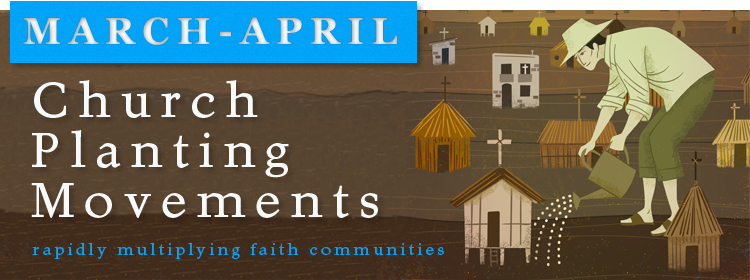
See this article: Church Planting Movements Among Muslim Peoples
What do you think?
Monday, February 28, 2011
Infinite Translatability of the Christian Faith
From Andrew Walls’ The Missionary Movement in Christian History: Studies in the Transmission of Faith, pgs. 22-23:
Each phase of Christian history has seen a transformation of Christianity as it has entered and penetrated another culture. There is no such thing as “Christian culture” or “Christian civilization” in the sense that there is an Islamic culture, and an Islamic civilization. There have been several different Christian civilizations already; there may yet be many more. The reason for this lies in the infinite translatability of the Christian faith. Islam, the only other faith hitherto to make comparable impact in such global terms, can produce a single recognizable culture (recognizable despite local assimilations and variations) across its huge geographical spread. This has surely something to do with the ultimate untranslatability of its charter document, the Qur’an. The Christian Scriptures, by contrast, are open to translation; nay, the great Act on which Christian faith rests, the Word becoming flesh and pitching tent among us, is itself an act of translation. And this principle brings Christ to the heart of each culture where he finds acceptance; to the burning questions within that culture, to the points of reference within it by which people know themselves. That is why each phase of Christian history has produced new themes: themes which the points of reference of that culture have made inescapable for those who share that framework. The same themes may be beyond the conception of Christians of an earlier or another framework of thought. They will have their own commanding heights to be conquered by Christ.
Related Posts:
Sunday, February 27, 2011
5 Reasons Muslims Follow Jesus: Woodberry Study 2007
From Leadership Journal in 2008:
A survey of 750 Muslims who converted to Christianity shows five predominant reasons they chose to follow Christ.
- The lifestyle of Christians. Former Muslims cited the love that Christians exhibited in their relationships with non-Christians and their treatment of women as equals.
- The power of God in answered prayers and healing. Experiences of God's supernatural work—especially important to folk Muslims who have a characteristic concern for power and blessings—increased after their conversions, according to the survey. Often dreams about Jesus were reported.
- Dissatisfaction with the type of Islam they had experienced. Many expressed dissatisfaction with the Qur'an, emphasizing God's punishment over his love. Others cited Islamic militancy and the failure of Islamic law to transform society.
- The spiritual truth in the Bible. Muslims are generally taught that the Torah, Psalms, and the Gospels are from God, but that they became corrupted. These Christian converts said, however, that the truth of God found in Scripture became compelling for them and key to their understanding of God's character.
- Biblical teachings about the love of God. In the Qur'an, God's love is conditional, but God's love for all people was especially eye-opening for Muslims. These converts were moved by the love expressed through the life and teachings of Jesus. The next step for many Muslims was to become part of a fellowship of loving Christians.
The respondents were from 30 countries and 50 ethnic groups. The survey was prepared at Fuller Theological Seminary's School of Intercultural Studies, and reported in Christianity Today.
Muslims are now 21 percent of the world population, increasing from 12 percent in the past 100 years. And the growth rate of Islam is higher than that of Christianity (1.81% per year, compared to 1.23%). Christians still outnumber Muslims, with one-third of the world population naming Christianity as their faith.
In some parts of the world, significant pockets of Muslims are turning to Christ, including North Africa, South Asia, and Indonesia.
The study appears as a chapter in From the Straight Path to the Narrow Way.
Tuesday, February 15, 2011
Sunday, February 13, 2011
“Sonship” and “Lordship” Translation Issues
From koinonia:
The CT article The Son and the Crescent has caused quite a stir. It examined Bible translations that use a substitute for the term “son of God” to make inroads into the Muslim community.
In response Ed Stetzer looks at reasons to retain “son of God”, Trevin Wax hosts an interview with Hansen and Greear on the issues, and Daniel Kirk argues that it’s more important to insist “Jesus is Lord.”
See also Bible Translations for Muslim Readers by Vern Poythress at Mission Frontiers.
I just want to mention that Kirk’s point is just as problematic, as “Lord” is commonly used by Muslims when addressing Allah. It is common in the Qur’an as well. I don’t know what is worse for my Muslim friends, hearing Jesus called the “Son of God” or “Lord.” Both titles are repugnant.
Andrew Walls in The Missionary Movement in Christian History (1996) indicates that the first use of “Lord” in Acts 11:20 by Jewish Christians with Greek-speaking pagans could have resulted with “the recognition of the Lord Jesus as one more cult divinity alongside the Lord Serapis or the Lord Osiris” (34). Talk about a serious translation issue in the Septuagint! Claiming Jesus as “Lord” actually “sharpened the confrontation of early Christianity with the popular religion of the Greco-Roman world” (35). The Septuagint would certainly be labeled syncretistic by today’s standards, and yet look how it was used of God.
Communicating the “lordship” of Jesus to Muslims is perhaps an even more problematic issue than his “sonship” because of all the different words for “Lord” in other languages (especially Arabic).
Saturday, February 12, 2011
Why is there a significant increase of Muslims making a commitment to Jesus? 10 Reasons
A paper by Duane Miller “Woven in the Weakness of the Changing Body: the Genesis of World Islamic Christianity.” At his blog he says, “In this paper I try to analyze some of the main trends that have allowed for a global space wherein conversions from Islam to Christ have increased very substantially since the second half of the 20th Century.” Here are the 10 factors Miller’s research identified:
- Media
- Exposure to other ways of life/thought/and religion
- Contextualized or culturally-sensitive witness
- Living Abroad/migration
- Prayers/a move of the Spirit/God‘s timing
- Dreams/Visions/Miracles
- Greater number of missionaries
- Translation of the Bible and material into local languages/dialects/forms
- Greater diversity in missionary strategies/platforms
- Great boldness in evangelization
Read the whole thing (35 pages).
Wednesday, February 9, 2011
What Insiders and Traditionalists assume or claim about each other
An irenic article from Jeff Morton, a traditionalist (“Historical” in his wording), trying to bring clarity to the debate:
Perhaps a different way to think about our differences is in these statements:
• The IMers believe the theology of the Historicals is bound to the past (a past hallmarked by extraction and failure) and lacks a real understanding of Jesus’ own methodology.
• Historicals believe IMers are blind to the insidious nature of Islam, which negatively affects their methodology.
Read the whole thing. What do you think?
Subscribe to:
Posts (Atom)