Al Qeada is to Islam what the KKK is to Christianity.

Monday, August 8, 2011
Thursday, August 4, 2011
Fasting and Sacrifice Evangelism Resources that Only Use the Qur’an
From the Arabic website: www.beautyamongtheruins.com. These two are in English:
Other resources at the website as well. Those at the bottom use the Bible.
Amreeka
I watched the film Amreeka (2009) last night. Go to www.amreeka.com for a preview and more info. The film did a good job showing the Arab (and Muslim) experience of immigrating to and living in the US. (I didn’t like the plot and the ending left me wanting more, but I did like Transformers 3 so I guess you can’t trust me.)
Tuesday, August 2, 2011
Welcome to our Muslim Brothers - !أهلا وسهلا
I have noticed that recently we have had a lot of visitors from Saudi Arabia, UAE, Pakistan, Iraq, Jordan, and other nations. I want to welcome our brothers (and sisters) from the Muslim world to Circumpolar. I want you to know that although we have a general idea of where our visitors come from through viewing national ISP's, we do not precisely track your visits, so that you retain your privacy. Even though we do not know exactly who you are, Allah does! And we welcome you to this blog. I hope that you find our discussions here to be respectful, appropriate, and truthful. May we all learn what it means to walk the straight path (الطريق المستقيم) of 'Isa al-Masih, insh'allah! Ramadan mubarak wa Ramadan kareem, insh'allah!

Monday, August 1, 2011
Ramadan Begins - 30 Days of Prayer for Muslims

Ramadan begins today, August 1. Might I encourage some of you to fast for all or part of the month, asking the Lord to move mightily?
Learn all you need to know about praying for Muslims during Ramadan:
www.30-days.net
www.30daysprayer.com
Thursday, July 28, 2011
John Stott, 1921-2011
One of the great giants of the faith in our time. John Stott passed away today at the age of 90.
Memorial website here.
Memorial website here.
Wednesday, July 27, 2011
Praying for Iranian Christians
It's actually a relatively new term. To say "Iranian" and "Christians" together when referring to the ethnic Persian majority of that nation, and not to the ancient Armenian Christian minority, is really something amazing. The fact is, tens of thousands of Iranians inside Iran are now professing to follow Jesus, and perhaps hundreds of thousands outside of Iran. Because of this, we can now begin to speak of a new expression of Christianity arising that is authentically Persian (for more on this, have a look at Abu Daoud's article on Iranian Christianity). However, as expected, there is a major backlash coming from the Islamic government in Iran. The following video will help you get an idea of how to pray for our Iranian brothers and sisters who are suffering for their faith in Christ. We need to pray particularly for Yousef Nadarkhani, a pastor with a wife and 2 young children who is facing the death penalty if he does not recant, as well as for Farshid Fathi, who has been in prison since December of 2010. Our prayers for Yousef are very urgent, as his case, which is filled with intentional ambiguity on the part of the Iranian Islamic courts, is at a critical phase where he could be killed or released any day now. Let us pray for him to have the peace of God to hold on to his faith in the face of hanging.
Related Posts:
Three Reasons the Church in Iran is Growing
Pray for Farshid and our Iranian Brothers and Sisters
Related Posts:
Three Reasons the Church in Iran is Growing
Pray for Farshid and our Iranian Brothers and Sisters
Anti-Insider and Anti-C5 Post and Video
Here is yet another post and a video from the blog Biblical Missiology that is extremely anti “insider” and anti C4/5. Unfortunately, the video picks on a few extreme examples and misunderstands, misrepresents, and over-generalizes the C4/5 position.
Biblical Missiology may have some serious concerns and valid points, but it doesn’t help create dialogue and understanding to label those who disagree with them “heretical.” Imagine if all the Calvinists/Arminians, Presbyterians/Baptists, Cessationists/Charismatics called the other a “heretic!”
A couple questions:
- Do you think polarizing videos and posts like this from traditionalists help their cause, or hurt it?
- Can you provide any examples of someone who embraces the Insider or C5 position presenting the traditionalist position in such a mean-spirited fashion? Why do you think that is?
Tuesday, July 26, 2011
Monday, July 25, 2011
Cape Town 2010 Short Documentary
This 14 minute documentary gives an overview of the Lausanne Movement's Cape Town 2010 Congress held in October 2010.
Thursday, July 21, 2011
Movements that Change the World
Josh Reeves has a summary of the book here. "The main purpose of the book is to outline what Addison sees as the five key elements present in movements that possess the capacity to spread the Gospel. The five elements identified in the book are White-Hot Faith, Commitment to a Cause, Contagious Relationships, Rapid Mobilization, and Adaptive Methods..."
Speaking of movements, you've GOT to watch this video.

Tuesday, July 19, 2011
The Spirit of Christ is the Spirit of Missions
"The spirit of Christ is the spirit of missions. The nearer we get to Him, the more intensely missionary we become.”
Martyn was educated at Oxford, and he was deeply affected by the commitment of William Carey and the devotion of David Brainerd. He fell in love with his cousin’s sister in law, but he considered marriage an earthly joy that would distract him from missions. When he arrived in India in 1806, Carey recognized his brilliance, and encouraged him in translation work. In the next four years he was able to translate the New Testament into Urdu, Persian, and Arabic. Martyn died at the age of 31, having only one convert, and before seeing his translations make it to print. “He was one of the first Protestant workers to direct his energies almost entirely towards Muslims.”[1]
[1] Survey of Islam. Survey of Islam, Institute for the Study of Islam and Christianity. On the CDROM “The World of Islam: Resources for Understanding.” Global Mapping International: 2000.
Wednesday, July 13, 2011
Desiring God National Conference 2011
Speaking of the impulses behind this year's DG National Conference, Sept. 23-25 in Minneapolis, MN, Piper shares the Need, the Command, the Joy and the Name at stake. That he would pick this topic - Finish the Mission - for his national conference says a lot about Piper's priorities. I thank God for how he used Piper to call me into this work myself. And I pray that he uses Piper to do the same for many others through this conference. The slate of speakers is tremendous. After getting to know Michael Oh, Michael Ramsden, and Jason Mandryk at Cape Town last year, I can assure you that they will deliver! Giglio, Platt and Stetzer are no slouches either!
Monday, July 11, 2011
Wednesday, July 6, 2011
The Recent “Bridging the Divide” Conference on Contextualizing to Muslims
Warren Larson posts his thoughts on the June 2011 “Bridging the Divide” conference here. “Last week in the northeastern United States, “Bridging the Divide” brought together a group of about fifty people who have invested much of their lives in seeing Muslims come to Christ. The consultation, including five former Muslims, represented a wide spectrum of views on appropriate ways to reach Muslims…”
Tuesday, July 5, 2011
Hiebert on why it’s not always God’s will to heal
In the very influential article by Paul Hiebert “The Flaw of the Excluded Middle,” Hiebert uses a case study of an Indian pastor named Yellayya in Muchintala whose village had an epidemic of smallpox. The village elders decided a water buffalo should be sacrificed to appease the angry Goddess of Smallpox. A crisis developed when the Christians in the village refused to chip in for the cost of this sacrifice and when a Christian girl became sick herself. Hiebert reflects on his prayers for healing for this little girl:
Church and mission must guard against Christianity itself becoming a new form of magic. Magic is based on a mechanistic view — a formula approach to reality that allows humans to control their own destiny. Worship, on the other hand, is rooted in a relational view of life. Worshipers place themselves in the power and mercy of a greater being.
The difference is not one of form, but of attitude. What begins as a prayer of request may turn into a formula or chant to force God to do one's will by saying or doing the right thing. In religion, we want the will of God for we trust in his omniscience. In magic we seek our own wills, confident that we know what is best for ourselves.
The line dividing them is a subtle one as I learned in the case of Muchintala. A week after our prayer meeting, Yellayya returned to say that the child had died. I felt thoroughly defeated. Who was I to be a missionary if I could not pray for healing and receive a positive answer? A few weeks later Yellayya returned with a sense of triumph. "How can you be so happy after the child died?" I asked.
"The village would have acknowledged the power of our God had he healed the child," Yellayya said, "but they knew in the end she would have to die. When they saw in the funeral our hope of resurrection and reunion in heaven, they saw an even greater victory, over death itself, and they have begun to ask about the Christian way."
In a new way I began to realize that true answers to prayer are those that bring the greatest glory to God, not those that satisfy my immediate desires. It is all too easy to make Christianity a new magic in which we as gods can make God do our bidding.
Sunday, July 3, 2011
Al-Azhar's Grand Imam declares support for a constitutional, democratic state
From Ahram Online:
In a document that read more as a short constitutional declaration, Al-Azhar defends universal human rights and rejects 'the theocratic state' as un-Islamic and autocratic by nature.
Read the whole article. Al Azhar is the leading Islamic school in the world today.
I’m most interested in this statement by the Imam, “Islam has never, throughout its history, experienced such a thing as a religious or a theocratic state.” That certainly challenges my understanding of Islam and Islamic history!
HT: JC
Monday, June 27, 2011
Ayaan Hirsi Ali on Christianity and Islam

 For those of you who don't know about this courageous and fascinating young woman, you should read her memoir, Infidel, a New York Times bestseller published in 2008. In the memoir, Ali recounts her life as a young Somali girl born in a war-torn land, and eventually her flight to Holland. In the process, she gives penetrating insights into Somali culture, Islam, and the treatment of women. Ali also shares how she lost her faith in God (or at least the god that she knew in Islam), hence the title of the book.
 While Infidel leaves the reader with a bit of a sour taste in one's mouth because of Ali's loss of faith in God, her new book, Nomad, published in 2010, reveals some striking new thoughts on Christianity and Islam. She says:
I have a theory that most Muslims are in search of a redemptive God. They believe that there is a higher power and that this higher power is the provider of morality, giving them a compass to help them distinguish between good and bad. Many Muslims are seeking a God or a concept of God that in my view meets the description of the Christian God. Instead they find Allah. They find Allah mainly because many are born in Muslim families where Allah has been the reigning deity for generations… (p. 239, emphasis added).
The Christian leaders now wasting their time and resources on a futile exercise of interfaith dialogue with the self-appointed leaders of Islam should redirect their efforts to converting as many Muslims as possible to Christianity, introducing them to a God who rejects Holy War and who has sent his son to die for all sinners out of a love for mankind… The Vatican and all the established Protestant churches of northern Europe believed naively that interfaith dialogue would magically bring Islam into the fold of Western civilization. It has not happened, and it will not happen…. To help ground these people in Western society, the West needs the Christian churches to get active again in propagating their faith. It needs Christian schools, Christian volunteers, the Christian message… The churches should do all in their power to win this battle for the souls of humans in search of a compassionate God, who now find that a fierce Allah is closer to hand. (pp. 247, 249, 250, 251, emphasis added).
Even as we consider and marvel at the keen insights of this former Muslim who now claims no faith, let us pray that this dear sister will move from Infidel, to Nomad, to Daughter of the King!
HT: KL, DL, Seedbed
Saturday, June 25, 2011
Christ Crucified as the Very Heart of our Message
“The Missionary among Muslims (to whom the Cross of Christ is a stumbling block and the atonement foolishness) is driven daily to deeper meditation on this mystery of redemption to a stronger conviction that here is the very heart of our message and our mission.” –Samuel Zwemer
“Wherever there is the obscuring of the beauty of the Cross, it must be unveiled.” –Kenneth Cragg
These are quoted in the conclusion of Cross and Crescent: Responding to the Challenge of Islam by Colin Chapman. In closing Chapman says:
Walking the way of the cross in witnessing will mean testifying as best as we can it is “in the face of Christ” that we see “the light of the knowledge of the glory of God” (2 Corinthians 4:6). However weak our efforts to bear witness to Christ crucified as the very heart of our message, we shall find that for those whom God has called – of whatever community and whatever faith – Christ on the cross will be recognized as the supreme revelation of “the power of God and the wisdom of God” (1 Corinthians 1:23-24).
Related: When should we focus on the cross? (and especially the comments)
Friday, June 24, 2011
Musalaha - مصالحة - מוסאלחה

If you haven't heard about Musalaha (Arabic for 'reconciliation') yet, you need to. I got a chance to meet some of their folks at Lausanne this year, and I was very impressed! Who else but followers of Jesus from both sides can bridge the Israeli-Palestinian divide with love instead of guns?
Thursday, June 23, 2011
Global Survey of Evangelical Protestant Leaders
Here is a survey from the Pew Forum that Abdul Asad and I took part in when we were at Cape Town for Lausanne III in the Fall of 2010: Global Survey of Evangelical Protestant Leaders. As you may know, this was the most diverse gathering in church history.
The results of the survey are quite fascinating. Check it our for yourself. It is broad and sweeping, covering topics such as evolution, charismatic gifts, women in ministry, optimism/pessimism re the state of evangelicalism, Jesus as the only way, prosperity gospel, attitudes towards other Christians and other religions, alcohol, homosexuality, abortion, etc.
Here are some graphs relevant to Circumpolar:


Wednesday, June 22, 2011
Promoting Love and Understanding Instead of Hatred and Fear

As militant Islam increasingly rears its head all over the world, there seems to be a corresponding increase in negative talk, promotion of fearful ideology, and even hatred toward Muslims - certainly in the media, but also in the Church. If you are a reader here, you'll know that this disturbs me. I am not suggesting that we should instead gloss over important issues and pretend that everything about Islam is just perfect. No, let's deal straightforwardly with the militant side of Islam, especially as it is starkly contrasted to the grace of God found only in Christ! However, I am suggesting that we need to start seeing Muslims as individual human beings and not as terror statistics.
I continually remind Christians that we have far more in common with any average Muslim from Afghanistan to Mali than we do with any of our atheist neighbors from Arizona to Maine! Now I don't have much hope for the media on this one, as this hilarious and fear-filled video from ABC news today demonstrates. However, I do have hope for the Church. Wasn't it Jesus who said in Matthew 5:44 to "love your enemies and pray for those who persecute you," anyways? Besides, Muslims are not our enemies, Satan is our collective enemy! But even if they were our enemies (like the small portion who follow a militant ideology), we are still commanded by our Lord to love them. So let's start promoting more love and understanding instead of hatred and fear. Along these lines, I want to promote two new websites.

I think they are both great, and represent the kind of shift in thinking that I pray happens in the West, and especially in the Church. The only unfortunate part is that some of the testimonies of Americans who have converted to Islam sadden me for the lack of understanding about Islam that the people demonstrate. I fear that lots of Westerners often convert to Islam because it's the "in" thing to do in certain circles, and/or they've got a totally deficient understanding of Christianity (but that's for another post). In any case, I recommend you have a look at these sites. I for one can say that my two best friends are both Muslims. They would do anything for me, even die for me or my family. I love those two brothers as if they were my own flesh and blood. So I can certainly relate there!
Monday, June 20, 2011
One Cross, One Way, Many Journeys, Greenlee
“How we conceive of conversion determines how we do evangelism.” –Richard Peace
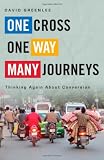 This post is a summary of One Cross, One Way, Many Journeys: Thinking Again about Conversion by David Greenlee. Greenlee did his PhD Dissertation in the 90s on conversion from Islam. This concise book (152 pages) shares experiences of MBBs, but also includes examples from American, Asian, Latino, Hindu, Buddhist, Diaspora, and European contexts.
Below is a short summary of each chapter:
- Starting the Journey: People can “come to Christ” i.e. “get saved” i.e. … in an instant (Paul), or through a process (the Disciples). Conversion includes cultural, social, spiritual, and political complexities involved in a person’s turning from sin towards God’s saving activity in Christ. [I would add that conversion is different than regeneration. Regeneration is a work of the Holy Spirit, and conversion refers to man’s experience and interpretation of that act.]
- Inside Out or Heading Home?: “Bounded set” Christianity understands that people must accept a list of new doctrines and usually also a foreign culture before they are considered “Christians.” You’re either inside or you’re out. But in “centered set” Christianity, what matters most is that people are pointed and moving towards the center, Jesus. Bounded sets are very difficult for people on the “outside” because they are reluctant to jump inside- to become like one of “them.” By contrast, centered sets illustrate that we’re really just trying to meet people where they are and get them to turn (and move) toward the center, Jesus. “I am convinced that the key question is not how much we know but who we know. What counts is not being inside certain boundaries of knowledge and behavior [which could actually give false assurance to “insiders”], but - by faith - being pointed to Christ” (11). (Obviously also, it is better to be closer to Christ than further away.)
- Conversion at the Core: Beliefs are important, but you could have correct knowledge and still have repulsive feelings about Christ. Or perhaps you could have the right beliefs and feel love for Jesus, but not actually have a commitment to him. These are the the three levels that make up a worldview (from Hiebert); 1. Cognitive (beliefs, knowledge), 2. Affective (feelings, beauty), and 3. Evaluative (allegiance, commitment). We need to foster three-dimensional conversion; transformation (the goal of conversion) only happens when all three levels are impacted.
- Groups, Families, and Anyone who Believes: Conversion is an individual event, but can also happen simultaneously in groups. “Church planting movements almost always spread through webs of family relationships” (47). We need to foster conversion within and throughout social networks. Most cultures are not as individualistic as the postmodern West.
- Congruence, Conversion, and Christian Witness: The HUP (Homogeneous Unit Principle) famously coined by McGavran observes that people like to become Christians without crossing racial, linguistic, or class barriers. The HUP claims that the call for ethnically heterogeneous churches actually inhibits the growth of the church and does not fully allow for fully indigenous expressions of faith. Although it has some value as a sociological principle and a communications tool, the HUP has been widely criticized as a strategy and a method that falls short of the biblical practice and teaching of community. “I suggest that… the Congruence of Cultural Values (CCV) principle gives a more adequate description of how God is at work than does the HUP” (55). The CCV says that “people are more likely to come to faith when their own cultural values are significantly congruent with the cultural values of the witnessing Christian community and the means of communicating the gospel” (55). You can foster similar cultural values without forcing ethnic homogeneity.
- Who’s to Judge? Looking in From the Outside: Doctrine is vital to spiritual health and faithfulness, but “outsiders” should be very careful to judge (but we should discuss and engage them) “insider movements,” i.e. fellow believers who are trying to remain in (not extract from) their socio-religious context. “Not all who are “in Christ” will express their faith in the same way that you or I do” (83). As for contextualization, “I suggest, then, that Paul’s self-identification and intercultural practice as here briefly summarized point to what should be our emphasis and our limits: missionary outsiders who identify with the people we serve while maintaining a clear identity in the One we serve” (82).
- Worthy Witness: There is a clear difference between proselytism and evangelism.
- Fathoming the Unfathomable: Conversion is mysterious work of God and can never be fully understood. But we can look at conversion through seven (dim) lenses to help us: psychology, behavior, sociology, culture, spiritual warfare, the human communicator, and God’s underlying role. “None of these aspects gives us the full picture, but each emphasizes characteristics that get overlooked when we examine conversion for other perspectives alone… Properly understood and grounded in Scripture, these lenses… can help us gain new insights into how God is at work in conversion. In turn, these insights can help us grow in faith and be more fruitful in ministry” (102-3).
- Conversion, Politics, Power, and Transformation: Conversion has undeniable political consequences (but we decry conversion for political reasons). “If society perceives itself to be under threat, it is likely to resist a religion identified with the threatening society” (115). But a new religion is likely to spread if it “offers a resource to leaders or to people as a whole in resisting threats to continued existence” (116, quoting Montgomery). [I would love to explore this further. Very interesting.]
- The Defeat of Darkness and Deception: “Conversion is a spiritual battle that involves a change in allegiance that may include the breaking of overt demonic power in our lives” (136). “We have a glorious eternal hope whether the battle is hidden or obvious, theological or physical, even in the face of overwhelming odds” (139).
- Becoming the People of God: We are not just converted to Christ, we are also converted to his body, the church. “Becoming this God-praising people, not just saved souls in isolation, I believe is central to the goal of conversion and the purpose of God as we come to, and grow in, faith in Jesus Christ” (150). [I would add à la Jonathan Dodson that we are also converted to mission. See The Three Conversions. This concept would have nicely rounded out the book.]
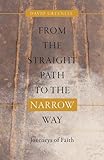 Greenlee has also edited From the Straight Path to the Narrow Way, which is a series of articles and studies that investigate the phenomenon of conversion of Muslims to Christ.
Saturday, June 18, 2011
Links
Georges Houssney explains the Trinity for Muslims.
Carl Medearis no longer believes in evangelism (dude, semantics).
Ramez Atallah on the price of freedom in Egypt.
I Heart Muslims video series.
Thursday, June 9, 2011
Missions: a Life-Giving Fallout (not a burden)
From Lesslie Newbigin in The Gospel in a Pluralistic Society:
There has been a long tradition which sees the mission of the Church primarily as obedience to a command. It has been customary to speak of "the missionary mandate." This way of putting the matter is certainly not without justification, and yet it seems to me that it misses the point. It tends to make mission a burden rather than a joy, to make it part of the law rather than part of the gospel.
If one looks at the New Testament evidence one gets another impression. Mission begins with a kind of explosion of joy. The news that the rejected and crucified Jesus is alive is something that cannot possibly be suppressed. It must be told. Who could be silent about such a fact?
The mission of the Church in the pages of the New Testament is more like a fallout which is not lethal but life-giving. One searches in vain through the letters of St. Paul to find any suggestion that he anywhere lays it on the conscience of his reader that they ought to be active in mission. For himself it is inconceivable that he should keep silent. "Woe to me if I do not preach the gospel!" (1 Corinthians 9:16). But nowhere do we find him telling his readers that they have a duty to do so. . . .
At the heart of mission is thanksgiving and praise. . . . When it is true to its nature, it is so to the end. Mission is an acted out doxology. That is its deepest secret. Its purpose is that God may be glorified.
HT: Jonathan Parnell
Subscribe to:
Posts (Atom)