Monday, February 25, 2013

“No sacred forms, only sacred meanings.”

What do you think? From Darrell Whiteman’s chapter in the book MissionShift, edited by Stetzer and Hesselgrave (2010):


One often hears the question, Can one remain a Muslim or a Hindu after becoming a Christian? I think that question needs to be reframed. Perhaps a more accurate way to pose the question is to ask, “Can someone enter the kingdom of God without becoming a follower of Jesus?” To maintain fidelity to the Bible, the answer is unequivocally “No!” (Acts 4:12; John 14:6). But if we ask, “Can someone enter the kingdom of God without becoming a Christian?” that’s a more complicated question and deserves a more nuanced response. When the term Christian was first used in Antioch (Acts 11:26), it simply meant a Gentile follower of Jesus and was often used pejoratively to describe those who were followers of Jesus. Today, however, 2,000 years later, the term Christian has become encumbered with many extrabiblical trappings that are now part and parcel of the Christian religion with all of its religious traditions. Therefore, the term Christian today is no longer synonymous with simply following Jesus. Tragically, hundreds of millions of people call themselves “Christian” but have never followed Jesus because it never occurred to them that being a Christian meant following Jesus. If we reframe the question to ask if a person can enter the kingdom of God without joining the Christian religion, then I think we are asking the right question. And here the Bible can help us think through the answer. The lessons from the decision of the Jerusalem Council in Acts 15 that Gentiles did not have to become Jews to follow Jesus, and Jesus’ own ministry among Gentiles, point to the fact that one can enter the kingdom of God and confess Jesus as Lord and Savior without necessarily changing one’s religion. At first blush this may sound scandalous to us conservative Evangelical Christians. Nevertheless, many Muslims today are attracted to Jesus but turned off to Christianity, which for them conjures up negative images of the Crusades, colonialism, a foreign religion, and the “Christian” West where we eat pork, drink alcohol, and watch R-rated movies. No wonder they don’t want to be identified as “Christians,” but they certainly want to follow Jesus and make Him Lord of their lives.

The question is frequently asked, “Where should we draw the line before contextualization becomes syncretism?” Because many of the debates seem to circle around where to draw the line, some are comfortable with a C5 expression of Christianity, but others are uncomfortable with going that far in contextualizing the gospel. As long as we argue over where to draw the line, we will never get far in understanding what God is doing in the world, encouraging people to know and understand Jesus in a wide variety of religious and cultural contexts.

If the debate over where to draw the line before contextualization erodes into syncretism is an unhelpful approach, is there a better way? Hiebert’s concept of “critical contextualization” gives us a useful procedure for determining how to distinguish appropriate contextualization from inappropriate syncretism. I want to suggest that perhaps a more fruitful approach would be to look at the underlying meanings that are expressed through contextualized forms. We will find much more common agreement if we focus on the Christian meanings being expressed in different forms. However, when we focus on the diversity of forms instead of the underlying meanings, it will cause great debates in the Christian community. The global church cannot even agree on the “correct” form of baptism or what elements should be used for the Lord’s Supper. Perhaps we would find much more consensus if we focused on the underlying meanings of both ordinances.

Radical biblical contextualization such as we see in C5 expressions of Jesus movements within Islam creates much debate and sometimes dissension because the forms used by these Muslim followers of Jesus appear so unfamiliar to us. For example, if we see a Muslim follower of Jesus (Isa in Arabic) praying to Allah five times a day with forehead touching the ground, it will be hard for us to believe that he or she is praying to Jesus because the form of prayer looks so Islamic and so different to us in the Christian tradition. However, the form of the prayer is not as important as the meaning it expresses. It is the meaning of following Jesus that must be maintained to have an expression of vital Christianity. In fact, when the “Christian” forms continue but the underlying meanings are lost, the result is that “they will hold to the outward form of our religion, but reject its real power” (2 Tim 3:5 GNB). When this happens, we have classic nominal Christianity. Tragically, we find this throughout the world.

I am convinced that there are no sacred forms, only sacred meanings. This does not mean that forms are not important. They are important, but they are important precisely because of what they point to, that is, the underlying meanings. Some forms are undoubtedly incapable of carrying Christian meanings, but that decision must be made by local believers who understand their culture and who, under the guidance of the Holy Spirit, decide which forms are redeemable and which ones are not. While growing up in a conservative Evangelical church in the 1960s, I was taught that the twang of a guitar and the beat of drums in the church were not forms that could be used to worship God. They were pagan. Today that same church has a praise band, complete with noisy guitars and banging drums, all making music in praise to our Lord. What happened? Did the church go liberal? No, not at all! The people in that church came to realize over time that these musical instruments could be used in acts of meaningful worship to Almighty God.

I have developed the following grid to help us sort through the distinction between forms and the meanings they convey. If we can separate form and meaning in our thinking, it makes it much easier to understand radical biblical contextualization and movements of God’s Spirit like the Insider Movements among Muslims. The horizontal axis of FORM at the bottom of the diagram moves from Western on the left to Indigenous on the right. The vertical axis of MEANING to the far left of the diagram moves from Christian on the top to Pagan on the bottom. When you combine these two axes, you get four possible outcomes. In our cross-cultural mission efforts we need to understand the important difference between Indigenous Christianity (which we want to promote) and Syncretism (which we want to avoid).

image

This combination of the two axes, Form and Meaning, gives us four different outcomes as explained below.

Quadrant 1. When Western forms are combined with Christian meanings in other parts of the world, we have nonindigenous (typically Western) Christianity, which is frequently perceived to be foreign in that context. This was one of the consequences of mission in the age of colonialism, and we find expressions of Western Christianity all over the world today.  In other cultures this form of Christianity is more prone to becoming syncretistic or nominal over time because of the difficulty people in that culture have in adapting imported foreign Western forms and applying this imported faith to the real issues of their lives.

Quadrant 2. When Western forms are combined with pagan or non-Christian meanings, we have syncretism, which is the combination of Christian and non-Christian beliefs and practices. The resultant form is distinct from both Christianity and the pagan religion. It is neither Christianity nor traditional religion. It is something entirely new and different, as I have explained elsewhere:

Religious syncretism is essentially a response to the problem of meaning. In the interaction between Christianity and animism, if the newly introduced Christian forms are given pagan meaning, then syncretism results—the new belief system is neither Christianity nor is it traditional primal religion; it is a mixing of both, and thus the product is qualitatively new.

Quadrant 3. When indigenous forms are combined with pagan meanings, we have no change at all and so the traditional non-Christian religion continues. But how does one encounter traditional religion with the claims of Christ? Our standard approach has often been to introduce Western Christianity, perhaps because we felt confident that if potential converts adopted our forms they would also follow our Christian meaning. Yet this approach is more likely to lead to syncretism because syncretism comes from striving after meaning. So, if the introduced foreign forms do not make sense to converts, it will be easy to revert to traditional non-Christian meanings in order to fill the void left by foreign forms.

Quadrant 4. When indigenous forms are combined with Christian meanings, we have indigenous followers of Christ, that is, contextualized Christianity that is appropriate to the context.  Christ-centered communities that fit the C5 category are good examples of those found in this quadrant, where the forms are appropriate to the context, but they are used to communicate Christian meanings. Far from being the slippery slope that so many neocolonial missionaries fear will lead to syncretism, contextualized Christianity is the best hedge against syncretism.

I believe the answer to the debate over where to draw the line in contextualization is better understood if we ask a different question: “Do the forms that are appropriate to the culture of the converts adequately convey biblical meanings?” Forms are easy to see; meanings are hard to detect. But we must trust the Holy Spirit to lead followers of Christ into discerning what forms are usable in a particular cultural context for the sake of the gospel.

Much of Hiebert’s writing has been aimed to help us find a way through the sometimes complex world of contextualization so that the universal meanings of the gospel can be understood and lived out in contexts appropriate to the culture in which followers of Jesus live. To move into this missiological arena of radical biblical contextualization will require that we relinquish our need for certainty in exchange for our quest for understanding. May God give us the wisdom and courage to do so.
Saturday, February 23, 2013

The Mobile Ministry Forum

From 2012 MMF Consultation Executive Summary (HT: Missions Catalyst):

Overview

119 mission strategists representing 56 organizations* participated in the third Mobile Ministry Consultation sponsored by the Mobile Ministry Forum (MMF). This more than doubled the 2011 Consultation participation. Presentations and discussions addressed a wide variety of issues critical to the use of mobile devices in ministry (see the topic list below). Collaborative outcomes of the consultation include plans to expand the four-week course into a six-week course, develop a training manual to equip ministries and local believers to use social media, create a mobile ministry pathway for ministries considering mobile ministry, develop a centralized online hub for all resources related to mobile ministry, design a three hour introductory online course, and create a taxonomy for discipleship criteria on the mobile platform.

Opportunity

Never before in human history has there been a technology as highly personal, rapidly deployed, and universally embraced as the mobile device. In late 2011, the number of people living on earth passed seven billion, while mobile phone subscriptions may surpass seven billion by the end of 2012. By 2015, the majority of all Internet access will be through mobile devices. The mobile device presents a unique, two-way communication channel that represents the most important technology available for kingdom advancement.

Content

(Some of links are for Google Docs and may require a Google log-in)

Slide Show – A 90-second slide show from the consultation.

Schedule – The detailed program flow.

Notes – The detailed, crowd-sourced notes from each session on Google Docs.

Mobile Ministry Course – The current four-week mobile ministry course (online).

Presentations

(Links to recorded presentations are being added as they become available)

Keynotes
Strategy Workshops
Tactics Workshops
For More Information, contact members of the steering committee:

Brad

Clyde Taber

Jay Clark

Johnathan Pulos

Keith Williams

The Mobile Ministry Forum

The Mobile Ministry Forum (MMF) is a coalition of ministries working towards the goal of giving every unreached person a chance to encounter Christ and His kingdom in a compelling, contextualized fashion through their personal mobile device by 2020.

* This included 31 participants who joined through interactive, remote access.

Related Posts:

Mobile Phone-Empowered Ministry

How do we respond to the mobile phone revolution?

Wednesday, February 13, 2013

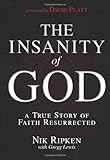
The Insanity of God (Ripkin 2013)

Twice I’ve had the privilege of attending “The Bleeding Edge: Managing Faith in the Midst of Persecution” seminar on the persecuted church led by Nik Ripkin, himself a RNBB (Redneck Background Believer).  It is one of the best trainings I’ve had; here’s a good summary (highly recommended resource).

I’m excited to see The Insanity of God: A True Story of Faith Resurrected finally published.  These stories have significant implications for how we minister to Muslims.

Make sure to check out http://www.nikripken.com/ for a wealth of important articles.  Ripken’s unique missiology stems from his experience in interviewing more than 600 persecuted believers, mostly from a Muslim background.

About The Insanity of God: A True Story of Faith Resurrected:

The Insanity of God is the personal and lifelong journey of an ordinary couple from rural Kentucky who thought they were going on just your ordinary missionary pilgrimage, but discovered it would be anything but. After spending over six hard years doing relief work in Somalia, and experiencing life where it looked like God had turned away completely and He was clueless about the tragedies of life, the couple had a crisis of faith and left Africa asking God, "Does the gospel work anywhere when it is really a hard place? It sure didn't work in Somalia.”

Nik recalls that, “God had always been so real to me, to Ruth, and to our boys. But was He enough, for the utter weariness of soul I experienced at that time, in that place, under those circumstances?” It is a question that many have asked and one that, if answered, can lead us to a whole new world of faith.

How does faith survive, let alone flourish in a place like the Middle East? How can Good truly overcome such evil? How do you maintain hope when all is darkness around you? How can we say “greater is He that is in me than he that is in the world” when it may not be visibly true in that place at that time? How does anyone live an abundant, victorious Christian life in our world’s toughest places? Can Christianity even work outside of Western, dressed-up, ordered nations? If so, how?

The Insanity of God tells a story—a remarkable and unique story to be sure, yet at heart a very human story—of the Ripkens’ own spiritual and emotional odyssey. The gripping, narrative account of a personal pilgrimage into some of the toughest places on earth, combined with sobering and insightful stories of the remarkable people of faith Nik and Ruth encountered on their journeys, will serve as a powerful course of revelation, growth, and challenge for anyone who wants to know whether God truly is enough.

Sunday, February 10, 2013

Another nail in the C Spectrum’s coffin?

Here is presentation from Jens Barnett called “Refusing to Choose” from the Coming to Faith in Christ Consultation II in 2010.  Barnett has recently modified it and allowed us to post it on Circumpolar with the hopes of furthering the discussion on socio-religious identity as it relates to our beloved MBB brothers and sisters.

Barnett has two chapters in the upcoming book Longing for Community: Church, Ummah, or Somewhere in Between?  The presentation is a preview of these chapters and includes some very helpful diagrams that enable us to think in terms of identity outside the confines of the C Spectrum.  Barnett’s contributions to MBB discipleship involve the theories of hybridity and multiple belonging, and need to be considered by anyone with an opinion on the Insider Movement.

(See the continuing discussion with evangelical leaders weighing in after the CT Cover Story.)

Download “Refusing to Choose” here and be sure to comment below.  Barnett will be following the comments.  Is this another nail in the C Spectrum’s coffin?

Thursday, January 31, 2013

“Kingdom”: perhaps the flabbiest term being used by Christians today (McKnight)

This is one of the best posts on kingdom theology I have ever read.  Below are some selected quotes intended to tempt you to read the whole thing (it’s brief so don’t worry).  From Scot McKnight, Steve Jobs’ Legacy: Kingdom Work?:

My beef today is that too many today have abstracted the ethical ideals from Jesus’ kingdom vision, all but cut Jesus out of the picture, and then called anything that is just, peace, good and loving the “kingdom.” The result is this equation: kingdom means goodness, goodness means kingdom. Regardless of who does it. My contention would be that kingdom goodness is done by kingdom people who live under King Jesus…

Yes, feeding the poor is good and it is God’s will for this world, whoever does it. But “kingdom” refers to that special society that does good under Jesus, that society that is buried in his death and raised in his resurrection and lives that Story out in our world today. It makes no sense to me to take this word of Jesus that he used to refer to what God was doing in and through him at that crucial new juncture in time and history and use it for something else…

Read the whole thing.

Related Posts:

Monday, January 28, 2013

Longing for Community: Church, Ummah, or Somewhere in Between?

[UPDATE: Longing for Community now available on Kindle.]

One book you’ll want to read in 2013 is Longing for Community: Church, Ummah, or Somewhere in Between? forthcoming. Edited by David Greenlee. Pasadena, CA: William Carey.  I’ll link to it when it releases later this year.  It’s a collection of essays from the second “Coming to Faith Consultation” in 2010. The first consultation in 2004 also resulted in a book: From the Straight Path to the Narrow Way: Journeys of Faith (2006) which is a key contribution to the field of MBB conversions in missiological research.  

David Greenlee wrote an article detailing the highlights of the 2010 conference which gives a glimpse into the themes and topics covered in Longing for Community.  Here it is below from this source.


Identity, Discipling Women, and Diversity:

Highlights from the Second Coming to Faith Consultation

One of the major themes of Paul’s letter to the Ephesians is centered on the phrase “in Christ.” To list a few of Paul’s expressions, we are blessed, chosen, and included in Christ. We hope in Christ and are marked in Christ in accord with God’s plan purposed in Christ to bring all things in heaven and earth together under Christ. We were once far away but now in Christ are brought near to God, Gentiles together with Israel sharers in the promise in Christ.

Six years ago, at the first “Coming to Faith Consultation” (CTFC) the focus of research and reflection tended to be on the processes and factors involved in how our Muslims neighbors are coming to faith in Jesus Christ. As presented in From the Straight Path to the Narrow Way (Authentic 2006, and just released in Korean), three key, typical factors emerged: those Muslims who come to faith in Jesus Christ have generally experienced a touch of God’s love, seen a sign of his power, and encountered the truth of God’s Word.

Early in 2010 a similar consultation, CTFC2, was held, both events having a focus on understanding what “coming to faith in Christ” means from the perspective of the believers. At CTFC2, Dudley Woodberry helped us to see how this “emic” approach complements the approach of the Fruitful Practice Research (described in the article by John Becker in this journal), in which the emphasis is on understanding the fruitful approaches and attitudes of those witnessing among Muslims. Combining their findings, as Woodberry has done, gives a fuller picture of how God is at work.

At CTFC2 we observed a shift in the theme of many research papers as compared to the 2004 consultation. Rather than focusing on how people are coming to faith in Christ, the core questions were centered on issues of identity: who we were and are in our society, and, as believers, who we are in Christ and how this affects our social identity.

Selected papers from CTFC2 are now being compiled and will be published in 2011 - notice will be given in this journal. However, as a preview, let me point to the themes of some papers that will appear in that book.

Social identity is multi-dimensional. The one-dimensional C-Scale is helpful to describe a range of practices of communities of believers. However, it is not adequate when we try to extend it to describe the complexities of human identity - corporate or individual.

Jens Barnett suggests that we describe identity in terms of dialogue or multiple narratives.

This is true not only of those who suggest that ‘converts’ should be fully identified with the established churches as well as those who argue for new believers to remain, to the extent possible, within their birth community. As he notes,

In practice then, a purely Muslim ‘insider’ identity, free from all other cultural influences is both an impossible and a misguided ideal. Every believer has internalised a unique combination of narratives from multiple cultural sources. Each of these narratives contains its own scripts, roles, and belongings, and each of these in turn, can appear as a voice of identity within the dialogical self.

The son of a prosperous Muslim businessman added to the discussion, reflecting on the experience he and other Indian believers have shared in attempts to assimilate into the Christian community.

Understanding the strength and unity of the Umma and the role of the Umma in an individual’s identity is essential to understand the struggles that a Muslim seeker will undergo. His life within the Umma has been a place of security, acceptance, protection, and identity. For a seeker it is an enormous sacrifice to lose his place in the Umma. As a Muslim seeker moves into fellowship with the Christian community, it is important that his sacrifice should be acknowledged and understood. The community of Christian believers should become a new place of belonging and inclusion.

In comparison, Enoch Kim noted the changes among the urban Hui of China who, through the impact of modernization and social network changes, have developed multiple identities or “faces” that grant more freedom to make individual choices.

The most important and ultimate decision-maker in [China’s] modern world is “I.” The Hui used to make decisions by what “we” or “others” want, but now it is by what “I” want. . . . the community pressure that the Muslim individual feels has lightened up because now “I” have more rights and abilities than before. As community pressure lessens, individuals will choose what they want.

Discipling women. Often we have emphasized the limitations on women in Muslim societies, perceptions that affect our approaches in evangelism and contributions to teaching and discipling. Mary Davidson noted, however, the important role of women both in private as well as in da’wa, in their homes, at shrines, in rites of passage, and even in impromptu Qur’an recitations she observed on the Cairo metro! Such religious gatherings have many roles, including community and connection, an acceptable reason chance to get out, as an opportunity for leadership, finding blessing and God’s power, and maintaining or challenging community norms. Davidson’s work concludes with questions and suggestions of how such existing social roles for women should be recognized and built on in our evangelism and discipleship.

Complementing Davidson’s insights, writing from Bangladesh Christine Shepherd relates her surprise when several rural women told her that they could freely travel to a village some two hours from their home on a regular basis - “We will just tell people we are visiting relatives,” they explained. Shepherd draws our attention to “the alarming fact that women followers of Jesus … are not typically receiving training through intentional discipleship programs.” Given their important role in leading their children as well as women friends to faith in Jesus Christ, not giving women adequate honor, discipling, and opportunity to fulfill their important role as followers of Jesus, she says, “may lead to a disastrous future for the Muslim background church.”

Shepherd concludes with the words of a Bangladeshi women, nothing that change can take place,

  • As men and women, based on biblical teaching, recognize women’s value from Jesus’ teaching and from his example;
  • As male leaders give the opportunity for women to take an important part in the jamaat; and,
  • As women are taught that they are created in the image of God and that they have an important role in the kingdom of God-they need to know they are necessary to the life of the jamaat. When they are aware of their identity in Christ through receiving proper Bible teaching, men will refrain from oppressing them and women will be able to share their opinions in appropriate ways.

Diverse, and yet one in Christ.

John Kim updated us on the story of “Anotoc,” one situation in which God is at work among “insiders.” (The original story told first in From the Straight Path to the Narrow Way while the updated paper appeared in an earlier edition of this journal.) Others described situations in which the new believers express their faith as part of the existing community of Christians.

While we rejoice in the variety of positive responses to the gospel, we were concerned as an Azerbaijani told us of his research among university students who, though evangelized, have not yet believed. While many Muslims of this region would consider Jesus to be “the God of Russians” this writer notes other reasons for their failure to come to faith, some of them factors that apply to youth in many settings, not just among Muslims.

Traditions of strong family bonds, respect for parents and elders, as a part of local culture, make embracing Christianity costly and troublesome for Azeri youth. Other non-theological hindrances are their indifference, their love of secular and sinful lifestyles and a belief in their own security. . . . The greatest challenge is that they do not want to believe some facts in the Qur’an and in the Injil regarding Christ, the message and authenticity of the Bible, interpreting them as it suits them.

We celebrate our diversity, but remember that it is not an undefined variety. Our identity, whatever outward expression is given, is grounded and deeply rooted in Christ that we might be “to the praise of his glory,” living carefully and wisely as children of light (Ephesians 1: 12-14; 5:15-16).

As Jean-Marie Gaudeul observed,

As we discover the many ways in which Christ, ‘lifted up from the earth, draws everyone to himself’ (John 12:32), we are struck by the extraordinary variety of the ways in which people, finding new faith in Him, discover their new identity: they are changed and yet the same. And we know that this diversity is only a small part of God’s infinite skill in leading us to His house where Unity will combine with the fulfilment of each person's originality.(AFMI)

Tuesday, January 15, 2013

www.thehardplaces.com

Photo-littleGive to support the project and watch the trailer here.

About:

“The Hard Places” will be a new documentary film profiling the powerful life story of humanitarian and optometrist Tom Little. Dr. Little worked in Afghanistan for the International Assistance Mission, an organization that provides nearly 90% of all eye-care in the war torn nation. He, his wife and their children endured over three decades there: through Soviet occupation, civil war, Taliban rule and most recently, the U.S. invasion. Despite the constant danger to their mission and their lives, they refused to leave. Tom believed it was his calling to help those who had no options, who were caught up in violent circumstances, but yet whom he also saw as fellow human beings in need of love, laughter, and a healing touch. Tom trained native Afghans to become eye doctors, and established numerous clinics throughout the country to treat the thousands of Afghans suffering from vision problems. To the Afghan people, he became affectionately known as “Dr. Tom”.

As a humanitarian, Tom Little cut an unconventional and, at times, controversial path in order to build bridges between Christians and Muslims, East and West, ‘haves’ and ‘have-nots’. He bucked the traditional stereotypes and persevered through a process of constant adaptation and imagination, shunning bureaucracy, in order to treat the sick, wounded and dying. And when it seemed that every other western family had fled from the warzone, he and his family dug in, choosing the basement of their home in Kabul during the worst days of the civil war, rather than safety of their home in the suburbs of America.

In July of 2010, Tom and a team of fellow aid workers backpacked 120 miles into the remote province of Nuristan at the invitation of village elders to serve a population of nearly 50,000 people who had no access to medical care. Tom and his team endured great personal risk to treat the never-ending lines of people, many of whom had walked for two days or more to receive care. On August 5th, 2010, as Little and his team were returning to Kabul, they were ambushed and murdered in the wilderness. In 2011, in recognition of his life’s work and sacrifice, President Obama posthumously awarded Tom Little the Presidential Medal of Freedom, the highest honor bestowed upon any U.S. citizen.

This documentary will probe the dangers and challenges involved in a decades-long mission to provide health care in a desperate nation, and reveals the lasting impact and continuing legacy of Tom Little’s work. In addressing the timeless values of service, self-sacrifice and the incredible power of forgiveness, “The Hard Places” will illuminate how the power of a man’s faith could lead him into the shadow of death, at the risk of his – and even his family’s very existence. Finally, the film will follow the extraordinary journey of an ordinary man who chose to forsake a life of comfort and security in order to reach out and touch the lives of strangers, literally delivering the gift of sight, in a country that he called one of ‘The Hard Places’.

Saturday, January 12, 2013

CT Cover Story: Worshiping Jesus in the Mosque

Wow. Christianity Today, goin’ for it!  See the new issue here.

I don’t like the title.  It’s possible to remain in “Islamic culture” without ever going to the Mosque.  But I guess you have to create a title that sells.

In any case, you know the “Insider” debate is in full stride when CT features it on the cover!  Hopefully, there will be more missiology like this in CT in the years to come.

Here is the line-up:

Worshiping Jesus in the Mosque (Cover Story)

What it's like to follow Christ embedded in Muslim culture. An interview with a Muslim follower of Isa.

Gene Daniels


The rest are for subscribers only:

The Hidden History of Insider Movements

For generations, Islam and Hinduism have had believers.

Timothy C. Tennant

Jesus Saves, Religion Doesn't

Insider followers of Jesus may not have changed religions, but their lives have been changed by Christ.

John J. Travis

Too Much Context May Harm

I learned the limits in contextualizing the gospel for Muslims.

Phil Parshall

Tuesday, January 8, 2013

Islam: Ready for Export

Why is Islam a global faith despite the untranslatability of its charter document and the Arabization that accompanies its diffusion? 

This answer sums it up pretty well:

This is the essential substance of Islam, perhaps as simple and easily marketable a religious package as has ever been prepared for export.  Lacking a formal church organization by means of which they could enforce orthodoxy, the learned doctors of Islam have of necessity a gradualist position: first the Confession, then the Pillars, later the piety, and after that the learning of the law.

Tuesday, November 20, 2012

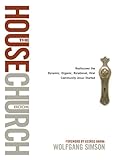
Wolfgang Simson’s 15 Theses (in English and Arabic)

Wolfgang Simson is known for being a pioneer of the house church movement. His “The House Church Book” is a brief summary of his philosophy.  I mostly agree with him, but because I believe in the principle of the irreducible ecclesiological minimum, I think the Bible prefers some flexibility in the form of the church according to the context (though I think the NT is quite clear on the leadership structure).  Simson argues that the church must be formed around the oikos.  In any case, I think his proposal is correct for pioneer settings, and especially helpful for new MBBs who, for some reason or another, think they need to do church the way CBBs do church.

To that end, here are Simson’s Fifteen Theses towards a Re-Incarnation of Church (read the whole thing, below are just the main points):

  1. Church is a Way of Life, not a series of religious meetings
  2. Time to change the system
  3. The Third Reformation
  4. From Church-Houses to house-churches
  5. The church has to become small in order to grow big
  6. No church is led by a Pastor alone
  7. The right pieces – fitted together in the wrong way
  8. God does not leave the Church in the hands of bureaucratic clergy
  9. Return from organized to organic forms of Christianity
  10. From worshipping our worship to worshipping God
  11. Stop bringing people to church, and start bringing the church to the people
  12. Rediscovering the “Lord's Supper” to be a real supper with real food
  13. From Denominations to city-wide celebrations
  14. Developing a persecution-proof spirit
  15. The Church comes home

And here is a pdf of the 15 Theses in Arabic. (HT: Jens Barnett)

Sunday, November 18, 2012

How many “pillars” in Biblical faith?

We all know Islam has 5 pillars.  Recently I’ve told a couple young (in the faith) MBBs that there are 2 pillars in the Injeel: baptism and communion (they were asking what those are so I used the word “pillars” as an analogy).  I didn’t plan on explaining it that way, it just kind of slipped out and I don’t know how to feel about it.  I think they got the point, but…

…are there more than 2?  Is it a bad idea to call these things “pillars?”  Is there a better way to explain to MBBs in unreached areas who have never met a near-culture CBB what baptism and communion are?  These are not rhetorical questions. 

Go ahead and weigh in in the comments below.  If you have any good resources on this topic (explaining baptism and communion to MBBs, esp. in Arabic) please link to them.

Tuesday, November 13, 2012

GoCorps: Mid-term is the new Short-term

www.gocorps.org:

GoCorps exists to build the movement toward going to those beyond the current reach of the gospel by enlisting passionate Christian young adults to serve globally for two years. We recruit recent college graduates from all backgrounds and career interests to go for two years to the least reached and those in extreme poverty through eight tracks of service.

GoCorps goers serve in the hardest places where both cultural and economic factors have converged to leave whole generations without access to a culturally relevant understanding of the gospel. As such, GoCorps goers are often the first to tell those in the city that they are placed in about the good news of life in Jesus Christ.

Yet we recognize that enlisting hundreds of qualified and passionate cross-cultural two year volunteers is not the ultimate solution to the great commission. We believe that the best hope for seeing the completion of the great commission in our generation is to build a massive force of World Christians in all fields who are committed to leveraging their gifts, passions and availabilities toward God's global dream of the fulfillment of the great commission.

Beyond two years of service globally, our hope is for GoCorps goers to bring strong leadership and influence to the church and the market place, instilling a commitment to lifelong involvement in the great commission task, especially advocating for and addressing the special challenges in bearing the message of Jesus Christ to those among the least reached globally.

Lead Like Jazz, Scott Olson

From Leadership Journal, November 2012, Lead Like Jazz by Scott Olson:

Jazz. I absolutely love it. I know some don't. Others say it's an "acquired taste," but for me there's nothing like it…

It's not just about the music, either. The older I get, the more I'm seeing the impact that jazz has played on my leadership style. Sounds strange, I know. But the connection between leadership and music makes sense, especially when you begin to understand the difference between classical and jazz. Both genres correlate to distinctive leadership styles…

There are times when we as leaders need to take a classical approach. Highly detailed projects require careful attention to detail. We need to play every note on the page. I don't want my dentist playing "jazz" in my mouth during a root canal. I want accuracy. I want rules followed. I want exact science applied. Many leaders are process people and have personalities that tend to make them focus on details, accuracy, and good process. But there are certain situations that call for a different approach. There are times when we encounter obstacles and ambiguity, times where a little "jazz" is just what it takes to lead on another level…

Leading with jazz is not always the best answer, but neither is playing only classical. The key is to know when to switch styles in order to match the leadership situation…

Read the whole thing (1 page).

Thursday, November 8, 2012

One of my fears…

I have no shame in sharing that I’m a wannabe missiologist.  I suspect most readers of this blog are too, and we even have some official missiologists who subscribe to Circumpolar (Missiology is a dynamic academic discipline which examines the theories and practices of Christian mission as it relates to Biblical theology, history, and the behavioral and social sciences.). 

In any case, one of my fears is that my missiology will reflect the following (pg. 175) criticism of it, which is unfortunately descriptive of most evangelical missiology today:

[Missiology is] the marriage of mediocre anthropology and shallow theology.

No Lord, may it never be!

Wednesday, October 31, 2012

Essentialist vs. Cultural Interpretation of Religion

From the editorial of a recent IJFM, quoting an “exceptional” Wikipedia entry on the insider movement.  The long-held traditional, essentialist view of world religious is fading away:

Underlying the question of following Jesus within various religio-cultural systems is an understanding of the nature of world religions. An essentialist approach suggests that each major religion has a core set of beliefs that differs from all the other major religions.  Religions are seen as monolithic, with a prevailing interpretation of core doctrine that defines the worldview of its adherents. A cultural approach to world religions, however, holds that they are a conglomeration of diverse communities, defined more by traditions, history and customs than a singular stated core theology. While the essentialist view has traditionally been held, current research in the field of religious studies challenges the essentialist view (see Religion). Evidence points to a great variety of doctrines and practices within each of the major religious traditions.  In practice, many Hindus, Muslims and Christians follow religious traditions with very minimal personal understanding of core beliefs.

The theology of religious is a broad, deep, and complex issue, but I find this simple nuance above to be quite helpful.  It has more to do with hermeneutics than anything else.

Related: The Anthropology of Islam and Islam is Not a Civilization

Friday, October 26, 2012

Happy Eid!

From www.hikayaat.com, with great videos for Muslims in English, Arabic, and Urdu.  I have these on my mobile phone and share them via Bluetooth as often as I can.  The other day a friend asked me if I was going to sacrifice a goat for the Eid.  I showed him this video and explained to him that Jesus is the “seal of the sacrifices.”

God's Love Story: Abraham's Sacrifice

Wednesday, October 24, 2012

Too Tainted by Our Own Culture for Successful Socio-Political Involvement

From Pikkert, Protestant Missionaries to the Middle East: Ambassadors of Christ or Culture?, pg. 268: 

As this thesis has shown, the missionary community to the Middle East is too tainted by its own culture to presume to initiate change on social and political issues. Hence its primary task must be to present the person of Jesus Christ in all his winsomeness, even as it trusts the Spirit to draw people to the Saviour. It must then teach and disciple new believers in core Biblical truths, and draw them into a loving fellowship of believers, but will, once again, have to defer to the Spirit with respect to the nitty-gritty application of Christian truth to socio-political and cultural specifics. In other words, the local community of believers, responding to and wrestling with Biblical truths must, ultimately, be entrusted with the job of forging a church-centered New Testament spirituality applicable to their own culture. The missionary can, at best, guide at the level of basic Biblical principles.

Related: Church Planting or Development? Word and Deed in Biblical Balance

Tuesday, October 23, 2012

Prayercast | Ishmael (Music Video)

This video inspires me to pray for Muslims. See www.prayercast.com for videos on many countries and topics.

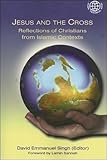
Jesus and the Cross: Reflections of Christians from Islamic Contexts

Jesus and the Cross: Reflections of Christians from Islamic Contexts (Global Theological Voices) -[Google Preview]-

Reviewed by Paul Shea:

David Emmanuel Singh brings together eighteen scholars from Afghanistan, East Africa, Egypt, India, Indonesia, Palestine, and more to explore Muslim objections and barriers to understanding the cross of Jesus. With rich experience and credibility these new (Baba Immanuel and more) and familiar (Kenneth Cragg) voices reveal how Christians in the context of the Islamic world explain the cross of Christ among those whose traditions and beliefs deny the cross and its implications.

Singh organizes the selections under: The Cross in Scriptures; Reflections from Contexts; and Theological Reflections. Themes from the Old and New Testaments, such as the “lamb of God,” “the suffering prophet-servant,” and fulfillment of prophecy, are introduced in Part One. Part Two is perhaps the most profound contribution, offering regional slants on issues of the cross. Part Three skillfully demonstrates theology from within context with a variety of sometimes complex and challenging reflections on the atonement and incarnation. These essays not only help in the proclamation of the gospel, but expand good theological debate and understanding of the great doctrine of the work of Christ. Here are exemplary case studies for wrestling with other theological issues in global contexts.

From Amazon:

“In the present day, with so much tension between the Muslim world and the nominally-Christian West, it is important to hear the voices of Christians living within Islamic contexts. Such communities have developed strategies for coexisting with their more numerous neighbors. The Christian voices in this volume call for a spirit of reconciliation, drawing on their own experiences and finding inspiration in the message of the Cross. This is a call based on hope for the future, not despair for past conflicts. Such a call deserves to be heard.” -- Peter G. Riddell, formerly Professor of Islamic Studies, and Director, Center for Islamic Studies, London School of Theology

"This work is a valuable reminder that the cross of Christ is relevant to all societies and cultures. It includes potential ways of communicating the meanings of the cross, and also reminders of the path of suffering which may need to be walked." -- Martin Whittingham, Muslim-Christian Links

"The book is an invaluable resource for reflection and study of the meaning of the cross in the world of Islam and in intercultural relations. I cannot recommend it too highly." -- Lamin Sanneh, D. Willis James Professor of Missions and World Christianity at Yale University

Wednesday, October 17, 2012

The Anthropology of Islam

From the introduction of The Anthropology of Islam, by Gabriele Marranci:

STUDENT: What is Islam?

ANTHROPOLOGIST: Lots of things, of course.

STU: Yeah, but I mean, is Islam its holy books or what Muslims do?

ANT: Neither, I suppose.

STU: Well, it should be one or the other for sure!

ANT: Why should it be so?

STU: I think that the Qur’an and Hadiths, and the other texts, tell Muslims how to be Muslims and this guides their actions.

ANT: OK, we can try an experiment. Get that copy of the Qur’an on my desk. So, tell me what this is.

STU: A book; a holy book, at least for Muslims.

ANT: What makes it holy?

STU: The fact that Muslims consider it so.

ANT: OK, but if you were a Muslim why would you have insisted that this particular book is the holiest?

STU: That’s simple Doc! Because, I would believe the book to be God’s words.

ANT: You see, Islam is not just what is written in its books.

STU: Why not? I don’t follow you.

ANT: Well, it’s very simple. You just said that this book, the Qur’an, is holy because at least one Muslim believes that God revealed it. Now you can agree with me that Muslims, each of them, have to perform cognitive operations to form a cognitive map of what for them is Islam. There is no Islam without mind.

STU: Certainly, you need Muslims to have Islam. Yet I still think that what is written in the sources of Islam shapes how Muslims are. Though there are some cultural differences, I am not sure about your point. I think that something called Islam actually exists.

ANT: OK, we will proceed point by point. Not only do we have different cultures among Muslims but also different interpretations. Which is the most basic element that you need to form interpretations?

STU: First, you need to know at least the language in which the text has been transmitted or trust a translation; but there are also other elements, like personal views and social conditions that surely influence one’s interpretation.

ANT: You are discussing a second order of elements. I asked about the basic element without which we cannot have interpretations, or any other mental process, since interpretations are complex mental processes.

STU: Well . . . the most basic is that you should be able to think. To have mental processes, like thoughts, we need a mind.

ANT: Yes, because for the ‘thing’ we call Islam to exist, we need a mind that can conceive of it, making it part of a mental process.

STU: Why refer to Islam as ‘the thing’ now?

ANT: You have just agreed that Islam exists because of the mental processes allowing some people to make sense of certain texts and practices. Are mental processes ‘real’ things?

STU: Well, I would say that they are exactly that, processes. We make sense of what is around us through mental processes.

ANT: Exactly, we, as human beings, through mental processes form what we can call maps.

STU: I can see that. So you are saying that Islam is just a map.

ANT: Well, more than one, for sure. It’s like one of those maps formed by many other different small maps, which, when put together, represent a vast territory.

STU: And, as you have reminded us many times, the map is not the territory.

ANT: But in this case, we can only know the map, since the territory consists of an endless ensemble of mental processes.

STU: At this point, I do not see the difference between a Muslim and non-Muslim forming mental processes about Islam. What makes them different?

ANT: Nothing, indeed, if we speak of the cognitive processes involved. You know, I have the impression that the most important thing that has been forgotten while studying Muslims is the otherwise obvious fact that they are human beings like me and you.

STU: But, I mean, doesn’t the fact that they believe in Islam make their mind different? Sometimes, in some articles, I come across the expression ‘Muslim mind’.

ANT: Some scholars, and unfortunately some anthropologists among them, have even suggested that a Muslim mind can exist. But how can a mind, which means cognitive processes allowed through neurological activities, be Muslim? Think if we extend this reasoning to other adjectives: Christian minds, Conservative minds, Jewish minds, Scientology minds, Jedi minds and Flying Spaghetti Monster minds.

STU: So, what makes a person a Muslim? I thought that the fact that a person believes in the Qur’an and the sunna and in the shahda, the profession of faith, makes a person a Muslim.

ANT: You are suggesting that it is the person’s act of believing that makes him a Muslim. Let me see . . . do you believe that Juan Carlos I is the king of Spain?

STU: Yes, Doc.

ANT: Are you Spanish?

STU: Of course not. You know I’m Scottish!

ANT: Why are you Scottish and not Spanish, though you believe that Juan Carlos I is the king of Spain?

STU: First, I was not born in Spain, I do not have Spanish parents and, by the way, I do not feel Spanish at all. I am not emotionally attached to the idea of being Spanish. Like during the World Cup, if Scotland is not playing, I can support another team, but when Scotland is playing, I am excited and feel something . . . a particular attachment that tells me that I’m Scottish.

ANT: Indeed, what matters here is that you feel to be Scottish.

STU: Are you suggesting that Muslims are Muslims because they consider themselves Muslim?

ANT: Does it sound so strange?

STU: Well, if you are right it means that the most important aspect is neither what the Islamic texts read, nor what Muslims believe, nor how they act, but rather whether or not they believe themselves to be Muslims, and here emotions play a very important role, as in my case of feeling to be Scottish.

ANT: Yes, this is correct. We need to restart our research, as anthropologists, from that ‘feeling to be’, in this case, Muslim.

I’m not sure every anthropologist would agree with this.  The point is, Islam is diverse and regionally based.  As Christians, we should be more interested in engaging Muslims than we should in engaging ‘Islam.’

Here are a couple more resources I’m reading right now, and I’ll let you know what I think about them:

Anjum, Ovamir. 2007. "Islam as a Discursive Tradition: Talal Asad and His Interlocutors." Comparative Studies of South Asia, Africa and the Middle East no. 656-672 (3).

Asad, Talal. 1986. The Idea of an Anthropology of Islam. Center for Contemporary Arab Studies Occasional Papers Series.

Related:

Sunday, October 14, 2012

global:church forum (Oct 16-18 LIVE STREAM)

Partners

From http://www.christianitytoday.org/globalchurch/ and http://www.resourceglobal.org/gcf/:

The global:church forum is a gathering allowing the Western church to hear what God is doing in the Global South and East and find out how ministry is done within the context of different cultures and economies. This gathering will create a context for you to hear what God is doing around the world, and then understand how this movement in the non-Western world affects movements, models and methodologies pursued by those in the West.